REVIEW · NAPLES
Private Herculaneum Tour – Top Experience with Local Guide
Book on Viator →Operated by Leisure Italy · Bookable on Viator
Herculaneum hits different. You get a private guide walking you through a calmer, better-preserved Roman town, where daily life still shows in frescoes, wood, and mosaics. What makes it special is how personal it feels: you’re not just looking at ruins, you’re learning how the place worked and why it survived.
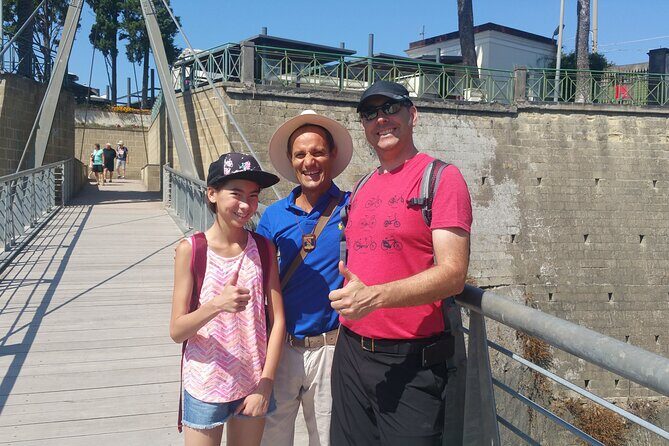
What I love most is the private attention and the way the guide names and explains what you’re standing in front of, like when Fabrizio made the newer discoveries click. I also like that the visit is heavy on human-scale details—the waterfront, the houses, and even the baths—so the story stays real instead of turning into a history lecture.
One possible drawback: the schedule includes a moderate amount of walking, so if your feet get tired quickly, plan for slow pacing and comfortable shoes. Also, if you hate crowds, go in at a quieter time of day when you can, because the park still has a lot of visitors even with a private guide.
In This Review
- Key highlights you’ll feel fast
- Why Herculaneum feels easier than Pompeii
- Getting your bearings at the Parco Acheologico Di Ercolano
- Boat Pavilion: where the sea story becomes heartbreaking
- Antiquarium: a smart warm-up before you walk the streets
- Ancient beach and the in-situ tragedy
- Casa dei Cervi: wealth, leisure, and sea views
- Palestra: the sports-and-society club of the Roman world
- Casa di Nettuno e Anfitrite: the mosaic that still dazzles
- Women’s Baths: engineering, beauty, and conversation
- Ad Cucumas: an ancient ad you can still read
- Casa del Bicentenario: refined urban living plus surviving writing tablets
- Sacello degli Augustali: politics and the imperial cult
- Casa del Tramezzo di Legno: a rare wooden partition you can still picture
- Casa dello Scheletro: the quietest, most haunting room
- Optional Cantina del Vesuvio lunch: from ruins to grapes
- Price and what you’re actually paying for
- Who this private Herculaneum tour is best for
- Should you book this tour
- FAQ
- How long is the private Herculaneum tour?
- Is pickup available?
- Is the tour private?
- What language is the tour offered in?
- Are admission tickets included?
- Is the winery visit optional?
- How much walking should I expect?
- Can I bring a service animal?
- Is cancellation possible after booking?
Key highlights you’ll feel fast
- Private guide at Herculaneum so you can ask questions and move at your pace, not a fixed group stampede
- Boat Pavilion and the waterfront evidence showing carbonized remains that connect the town to its final moments
- Antiquarium orientation first so the ruins make sense before you wander the streets
- Roman homes with rare surviving wood and mosaics like the Casa del Tramezzo di Legno and Casa di Nettuno e Anfitrite
- Optional Cantina del Vesuvio lunch and tasting with an enologist and views over the Bay of Naples
- Admission tickets included for the archaeological stops, so you’re not hunting extra paperwork on-site
Why Herculaneum feels easier than Pompeii
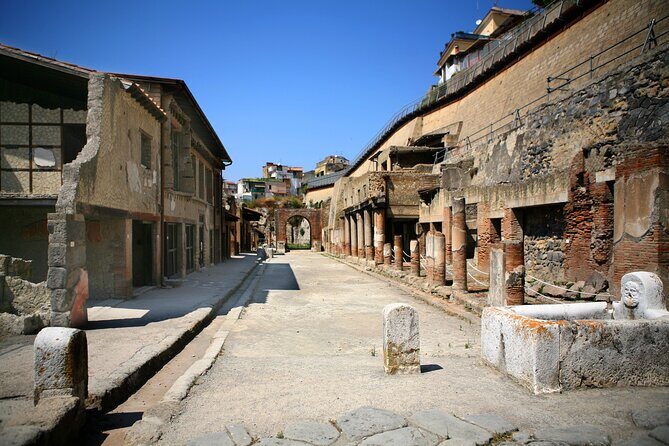
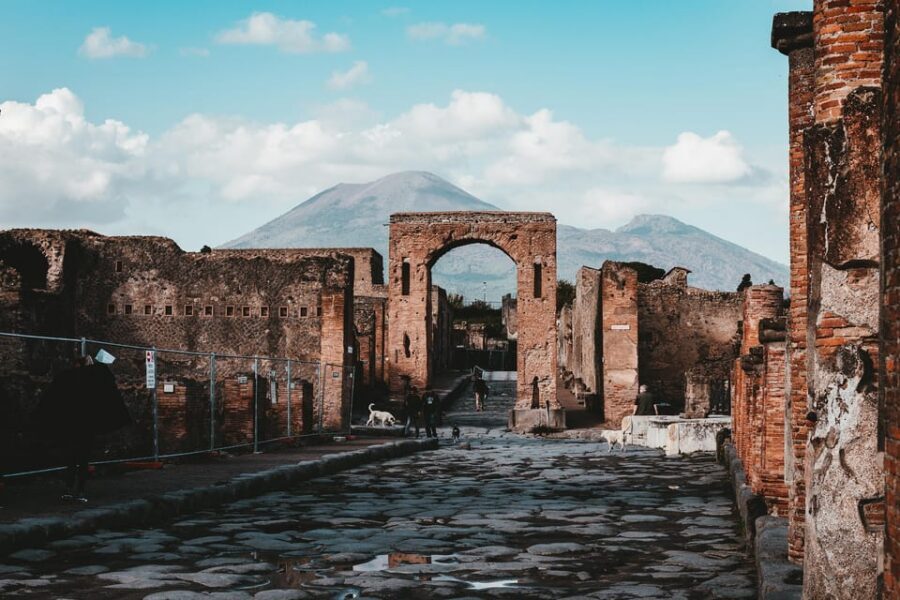
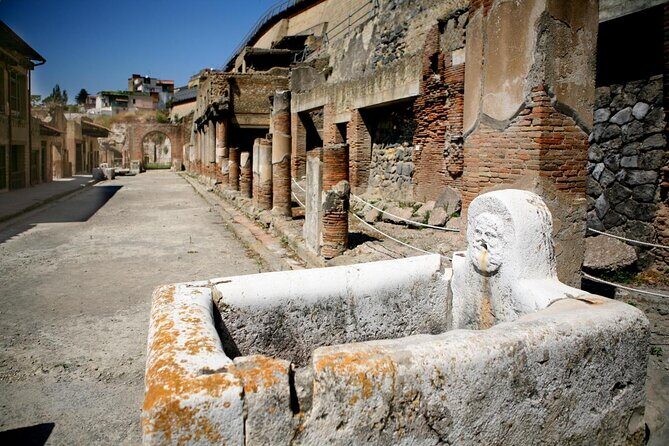
Herculaneum is smaller than Pompeii and often feels less chaotic, and that matters. When a site is cramped or crowded, you end up rushing. Here, the layout helps you settle into the town: rooms, shops, bathhouses, and streets sit close enough that the place feels like a real neighborhood.
The preservation also changes how you experience the ruins. In Herculaneum, you’re more likely to see surfaces that look like they were part of someone’s day: colorful wall paint, wooden objects, mosaics, and even traces of structures linked to the shoreline. With a private guide, you get help connecting those details to daily routines—who lived where, what spaces were used for, and what social status looked like in architecture.
If you're still narrowing it down, here are other tours in Naples we've reviewed.
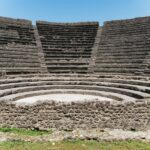
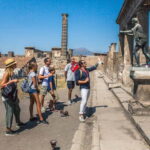
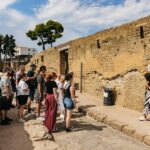
Getting your bearings at the Parco Acheologico Di Ercolano
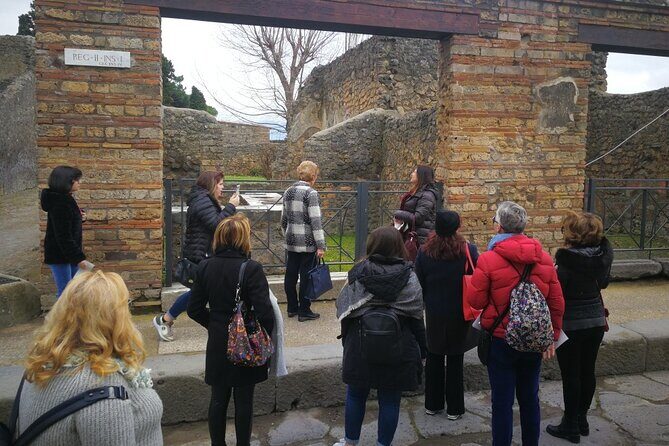
Your main start point is the Archaeological Park of Herculaneum at Corso Resina, 187, in Ercolano. If you choose the walking-only option, you meet the guide at the site; if you pick the private transportation option, you can get pickup anywhere in Naples or Sorrento.
The first part of the visit is where your guide builds the map in your head. You’ll be moving through the park with a sense of “this is a working town,” not “this is scattered stone.” Expect to spend about two hours here, and the admission ticket is included.
Good way to use this start: ask your guide to point out what makes Herculaneum different from other Roman ruins. It’s not just emotional impact—it’s the way the site preserves everyday life, which makes each next stop feel more meaningful.
Boat Pavilion: where the sea story becomes heartbreaking
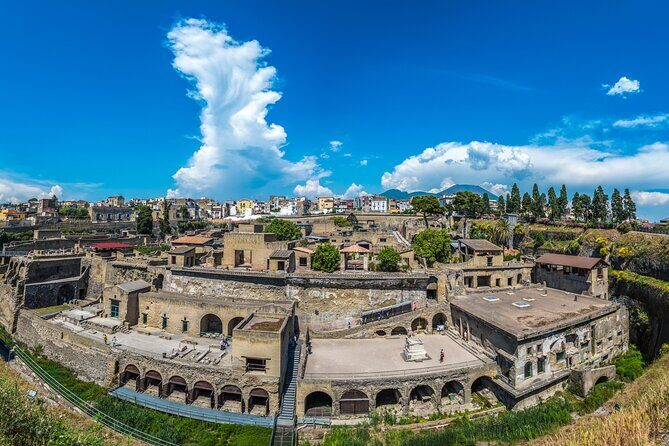
One of the tour’s most striking segments is the Boat Pavilion. This is where you see carbonized remains of boats and waterfront structures preserved under volcanic material. It’s not abstract. The survival of these vessels helps archaeologists reconstruct how the town depended on trade and movement through the harbor area.
Your guide will connect the objects to the people who likely used them—fishermen, merchants, and waterfront officials. The emotional part comes from understanding that this shoreline wasn’t a scenic backdrop; it was a workplace and a last gathering place as the eruption hit.
If you tend to get restless on tours, this stop still holds your attention because it’s visual and specific. You can point, ask questions, and get answers that make the evidence feel tied to real behavior.
Antiquarium: a smart warm-up before you walk the streets
Next comes the Antiquarium, and I like this sequencing because it prevents the common problem: walking into ruins and guessing. Inside this small museum, you’ll see original artifacts—statues, inscriptions, household objects, and personal items.
A major reason this works is that it helps you recognize patterns quickly once you’re back outside. Your guide will translate what you’re seeing into “this belongs to daily life here,” not just “this is an ancient object.”
One detail worth paying attention to is the preserved charred timbers. Wood survives here in rare ways thanks to volcanic heat, and your guide will connect those fragments to the kind of wooden architecture tied to the waterfront world outside the museum.
Ancient beach and the in-situ tragedy
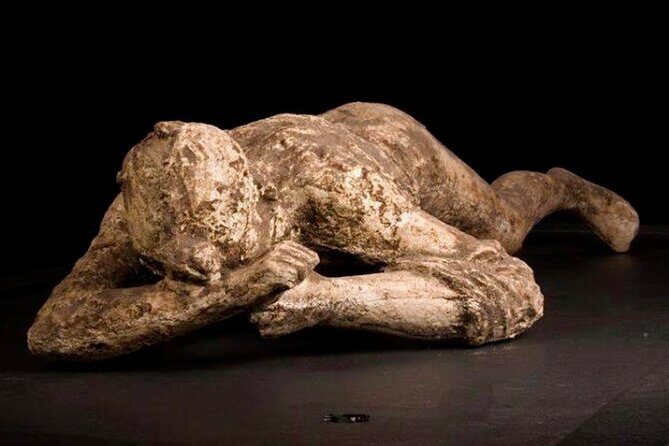
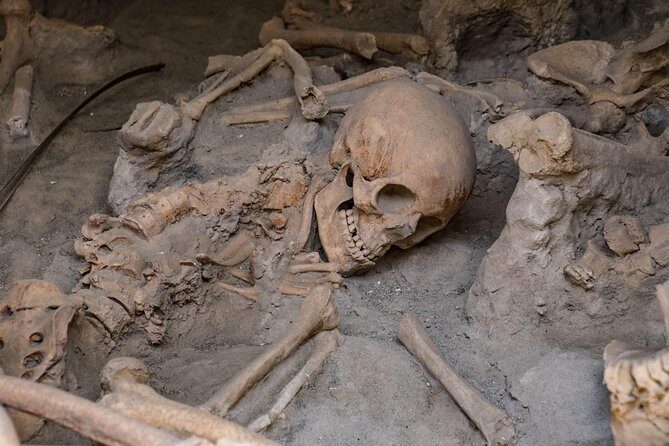
Then you’ll reach one of the most powerful areas: the ancient beach, in the vaulted boat houses near the shoreline. This is where archaeologists uncovered skeletons of hundreds of people who gathered at the water’s edge, hoping for rescue by sea.
Seeing remains in place changes the experience. You aren’t looking at a museum story; you’re reading a scene preserved in the location where it happened. Your guide will also help explain how close Herculaneum was to the sea, and how the pyroclastic surge overtook the waterfront in seconds—turning a dramatic timeline into a clearer picture.
Practical note: this is a heavy stop. If you want to handle it more comfortably, bring a little space into your pacing. The best guides don’t rush you through emotion, and a private setup makes that possible.



Casa dei Cervi: wealth, leisure, and sea views
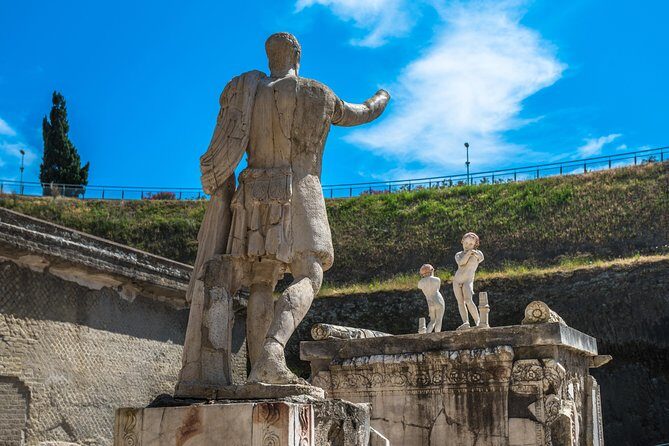
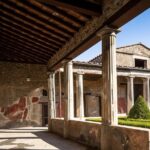
The Casa dei Cervi is one of the elegant waterfront homes you’ll visit. Expect to move through spaces with marble floors, a colonnaded garden, and rooms once decorated with fine frescoes. Your guide will paint a picture of the wealthy family who lived here and how daily life likely looked from the perspective of someone with a prime view.
This house is named for marble statues of stags being attacked by hunting dogs found in the garden. Your guide will also connect architecture and social customs—so you understand why a home like this wasn’t just fancy, it was status.
If you love details, keep an eye out for how your guide points out the social logic of the spaces: how guests would have been received, where private areas likely sat, and how ornament signals rank.
Palestra: the sports-and-society club of the Roman world
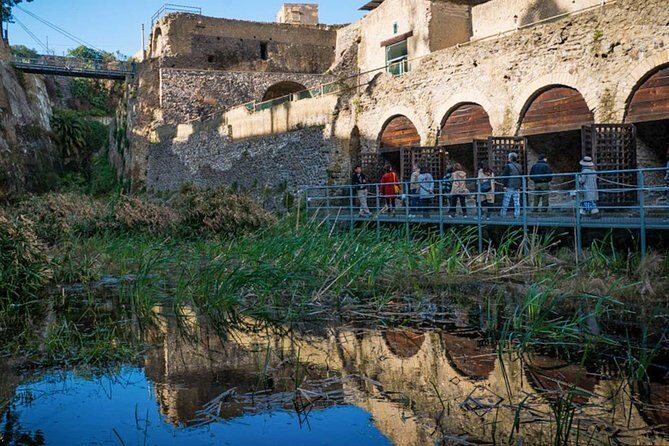
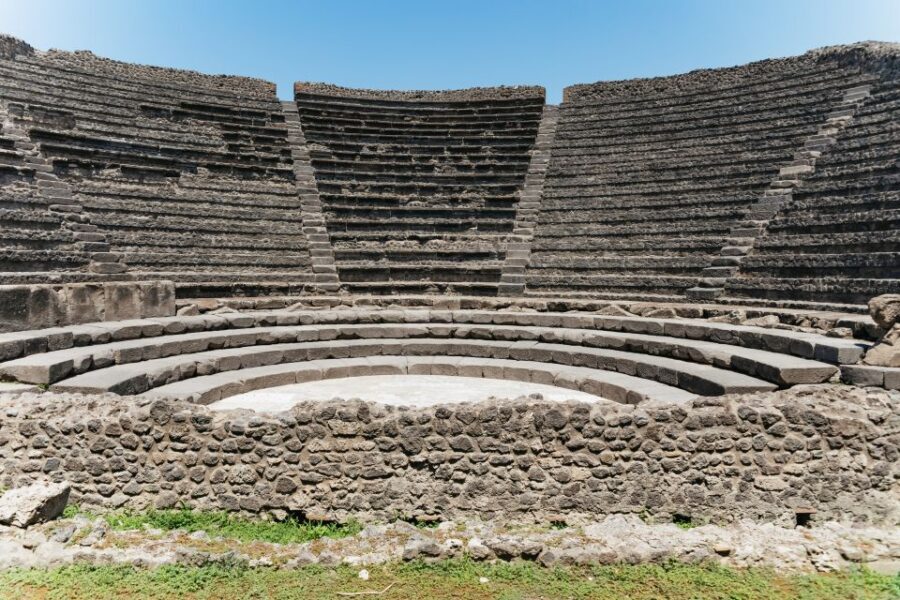
From houses to public life. The Palestra is the ancient equivalent of a sports and social club, where young men trained, exercised, and gathered for events. You’ll walk through a large open courtyard framed by porticoes, and your guide will help you interpret what you’re seeing as an active daily hub.
This stop works well because scale tells a story. The structure hints that physical training wasn’t the only goal—it linked to education, civic identity, and community. When your guide points out how the space functioned, the courtyard stops being scenery and becomes a place with routines and noise.
Casa di Nettuno e Anfitrite: the mosaic that still dazzles
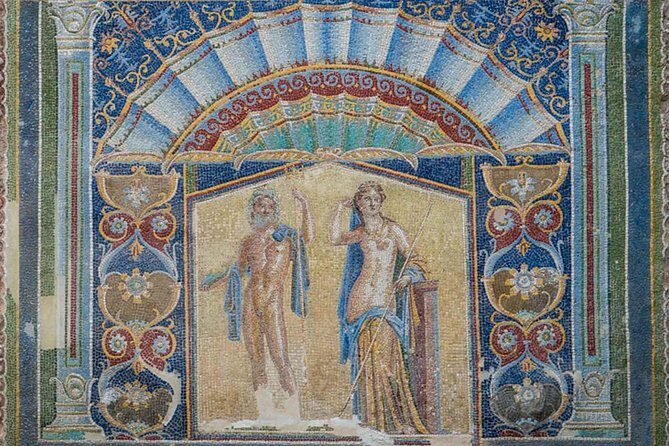
The Casa di Nettuno e Anfitrite centers on a famous wall mosaic. Even after two thousand years, the sea-god Neptune and nymph Amphitrite imagery can look startlingly clear, thanks to surviving tiny glass tesserae in blues and golds.
Your guide will also connect the mosaic to what it implies: dinners and hospitality, a home built to impress guests, and the way decorative art blended with daily domestic life. You may also notice elements like traces of a decorated dining space and a richly decorated nymphaeum area.
This is the stop to slow down. Let your guide tell you what details to hunt for, then take a little time to look without checking your watch.
Women’s Baths: engineering, beauty, and conversation
The Women’s Baths offer a different angle on Roman culture than the villas. Here you’ll see routines of personal care and social life, moving through a changing room into heated spaces.
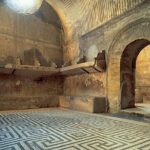
What makes it memorable is the clever engineering. Hollow floors and wall pipes once carried hot air to warm rooms. Add mosaic floors and marble benches, plus refined decoration with geometric patterns and marine themes, and you get a sense of comfort and style.
Your guide will likely help you imagine the atmosphere—steam, conversation, and social rhythms under vaulted ceilings. Even if you’re not a “bath person” normally, this stop gives you a rare window into how Romans spent time together.
Ad Cucumas: an ancient ad you can still read
In a tavern area you’ll find Ad Cucumas, an ancient wall advertisement promoting wine by the jug. The text is still legible after two millennia and includes prices for different quantities.
This stop is fun in a way that sticks. It’s commerce, street life, and practical marketing—no mythic speech, no grand politics. It reminds you that everyday life in Roman cities included bargains, drink orders, and signage that helped people decide where to spend money.
It’s short, but it changes your emotional gear. After serious scenes, this one feels like a peek into normal behavior.
Casa del Bicentenario: refined urban living plus surviving writing tablets
The Casa del Bicentenario stands out for how refined Roman townhouse life could be. You’ll see vivid wall paintings, wooden partitions, and marble thresholds that hint at rooms used for both family life and social display.
A small shrine with delicate frescoes adds a domestic religion layer. Your guide will help you understand how belief and daily routine blended inside a home.
This house also has a major documentary bonus tied to preservation: carbonized wooden writing tablets connected to property and inheritance disputes. That’s the kind of detail that turns a ruin into evidence about legal and civic life.
Sacello degli Augustali: politics and the imperial cult
Now you shift from daily life to political-religious identity. The Sacello degli Augustali is a small temple-like building connected to the imperial cult, where local elites honored the emperor as a living symbol of Rome’s power.
Inside, you can still make out fragments of frescoes that pair Hercules with members of the imperial family. Your guide will explain how this connection acted as propaganda in a provincial setting—linking local mythology with loyalty to the empire.
Even though it’s not the biggest stop, it helps you understand why Herculaneum wasn’t isolated. It was plugged into the larger Roman system of status and political allegiance.
Casa del Tramezzo di Legno: a rare wooden partition you can still picture
This is one of the most unique stops: the Casa del Tramezzo di Legno features a surviving wooden partition wall. The wall acted like a folding screen, separating reception areas from more private quarters.
Because the partition survived in carbonized form, you can follow the layout like a social map. Your guide will help you read how the space choreographed hospitality, business, and family privacy.
If you want a takeaway that feels almost impossible at a Roman site, this is it. You’ll walk out with a stronger understanding of how Romans managed visibility and status inside the home.
Casa dello Scheletro: the quietest, most haunting room
The House of the Skeleton is named for skeletal remains found there. It’s one of the places where the tragedy becomes personal in a way that no mosaic can replicate.
Around the bones, architectural details—room divisions, decorative flooring remnants, fresco fragments—hint at daily rhythm before the eruption. Your guide will help you see how the house was organized, even as you’re confronting what ended there.
This stop doesn’t rely on spectacle. It’s about the intersection of archaeology and humanity, and it often lingers in your mind long after the walk.
Optional Cantina del Vesuvio lunch: from ruins to grapes
If you add the vineyard option, the tour extends with a visit to Cantina del Vesuvio (Russo Family since 1930). This is set on the slopes of Mount Vesuvius, where volcanic soils have shaped grape cultivation for generations.
You’ll stroll through the vineyards with an enologist who explains how the terroir influences native varietals used to produce the historic Lacryma Christi wine. After that, you’ll have a relaxed lunch and tasting, pairing local dishes with the estate’s bottles.
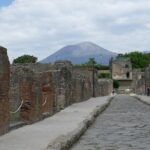
The big bonus is the view from the terrace: sweeping sights across the Bay of Naples and toward Vesuvius. It’s a good counterpoint to the ruins, letting you connect the same volcanic forces that preserved Herculaneum to the agricultural tradition that still thrives here.
Price and what you’re actually paying for
At $142.82 per person, this isn’t a bargain tour, but it’s also not trying to be one. The value is tied to the private guide and the way you get admission tickets included for the archaeological stops.
Two things you should consider when judging the price:
- You’re paying for a guide who can explain complex details on the spot, especially in a site where preservation tells the story.
- You’re also paying for time and pacing. A private format lets you linger at the Boat Pavilion, Antiquarium, and the homes where “seeing it” isn’t enough without context.
If you’re traveling with someone who really loves history but gets frustrated by rushed group tours, this price starts to make sense quickly. If you’re happy with a basic audio guide and quick highlights, you may not feel the same advantage.
Who this private Herculaneum tour is best for
This fits best if you:
- Want a true private experience where you can ask questions and set your pace
- Prefer better-preserved, easier-to-follow ruins over very large and chaotic sites
- Love Roman daily life: houses, baths, waterfront evidence, and social culture
- Might like to add something practical and tasty afterward, like a Vesuvius winery lunch
It may be less ideal if you:
- Get uncomfortable with a moderate amount of walking and long standing time at multiple stops
- Are looking only for the biggest visual hits and don’t care about historical context
One comfort note: service animals are allowed, and the tour is in English.
Should you book this tour
I’d book it if you want Herculaneum to feel like a story you can follow. The private guide format is the key. When Fabrizio and Paulo-type guides focus on details, the site becomes more than ruins—you start seeing relationships between evidence, daily life, and the eruption’s timeline.
But book smart. Wear comfortable shoes, expect a moderate walking pace, and choose the option that matches your energy. If you want a day that ends with food, wine, and views, the Cantina del Vesuvio add-on is a nice way to close the loop between volcano, preservation, and culture.
If you want a straightforward swap in your schedule: treat this as your main archaeology day, and pair it with Pompeii later only if your feet and attention span can handle it.
FAQ
How long is the private Herculaneum tour?
The tour runs for about 2 to 6 hours, depending on whether you keep it to the archaeological park only or add the optional vineyard lunch.
Is pickup available?
Yes. There’s a flexible pickup option with private transportation available anywhere in Naples or Sorrento. If you choose the walking-only option, you meet the guide at the archaeological site.
Is the tour private?
Yes. It’s a private tour/activity, so only your group participates.
What language is the tour offered in?
The tour is offered in English.
Are admission tickets included?
Yes. Admission tickets are included for the Herculaneum visit, and the winery option also includes an admission ticket.
Is the winery visit optional?
Yes. You can add Cantina del Vesuvio for a vineyard walk with an enologist, then lunch and wine tasting.
How much walking should I expect?
You should plan for a moderate amount of walking, so comfortable shoes are important.
Can I bring a service animal?
Yes. Service animals are allowed.
Is cancellation possible after booking?
Yes, you can cancel for a full refund up to 24 hours before the experience starts.