REVIEW · NAPLES
Pompeii: Small-Group Guided Tour with Skip-the-Line Ticket
Book on GetYourGuide →Operated by Walks In Europe · Bookable on GetYourGuide
Pompeii is history you can walk through. This small-group, skip-the-line tour helps you get moving fast and see the city’s big moments without losing half your day to queues. I love how the guide approach turns scattered ruins into a clear story of daily life in 79 AD. The biggest catch to think about is that it’s a walking tour and it’s not set up for wheelchair users.
Two things I like a lot: first, the guide guidance is specific, from crowd-smart route choices to practical spot-pointers as you go. Second, the stops are the Pompeii essentials people actually want, including the Amphitheater and the Forum finale. If you’re expecting a slow, free-roam museum stroll, this format moves at a guided pace.
A possible consideration: you must arrive on time. Late arrivals can miss entry because the tour won’t let people join once it starts, and everyone needs a valid ID for entry to the site.
In This Review
- Key highlights you’ll feel right away
- Why a small-group Pompeii tour feels different than going alone
- Price and what you’re really paying for
- Meeting point and the 2-hour loop (so you don’t lose time)
- Pompeii Archaeological Park: starting where the site makes sense
- Amphitheater of Pompeii: where spectacle was a daily mood
- House of the Faun: mosaics, status, and everyday living
- Temple of Apollo: religion made visible in stone
- Vetutius Placidus House and Thermopolium: the street-level reality stop
- Garden of the Fugitives: a dramatic, emotional pause
- Foro Civile di Pompei: finishing with the city’s heartbeat
- What the guides do that makes Pompeii click
- Who should book this Pompeii tour, and who might not love it
- Should you book this Pompeii skip-the-line tour?
- FAQ
- What’s included in the Pompeii small-group tour?
- How long is the tour?
- Where do we meet the guide?
- Is this tour really skip-the-line?
- Do I need an ID to enter Pompeii?
- What should I bring with me?
- Is the tour suitable for wheelchair users?
- Can I join after the tour has started?
Key highlights you’ll feel right away
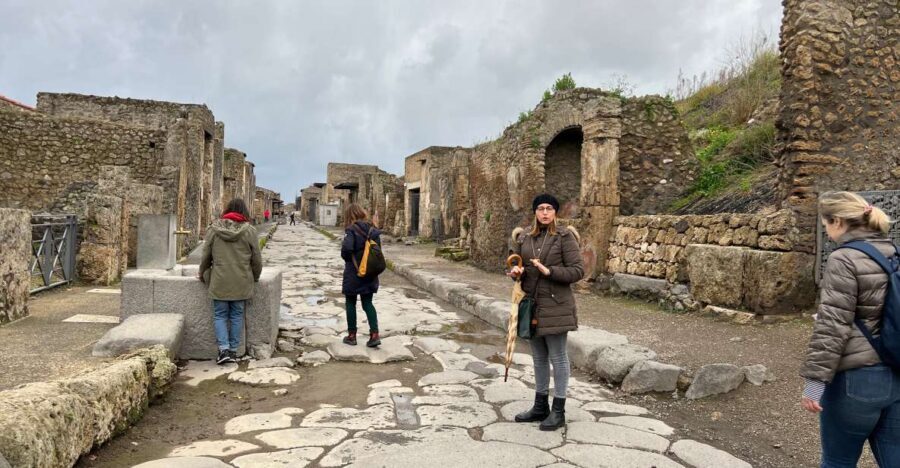
- Skip-the-line through a separate entrance so you start exploring sooner
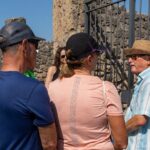
- Expert English-speaking guide who explains what you’re seeing at each major stop
- A tight 2-hour route that hits Pompeii’s most important zones without feeling rushed
- Amphitheater, House of the Faun, Temple of Apollo, Thermopolium, Garden of the Fugitives, Forum in one loop
- Small-group feel that can shrink further, with guides like Glauco, Vito, and Alessia earning standout praise
- Photo stops and route adjustments for shade, comfort, and fewer crowds when possible
Why a small-group Pompeii tour feels different than going alone
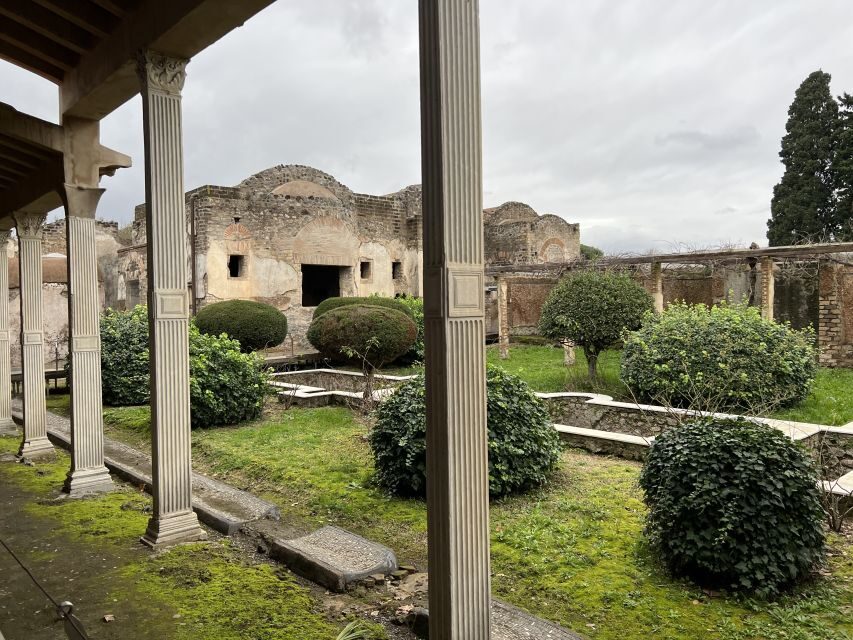
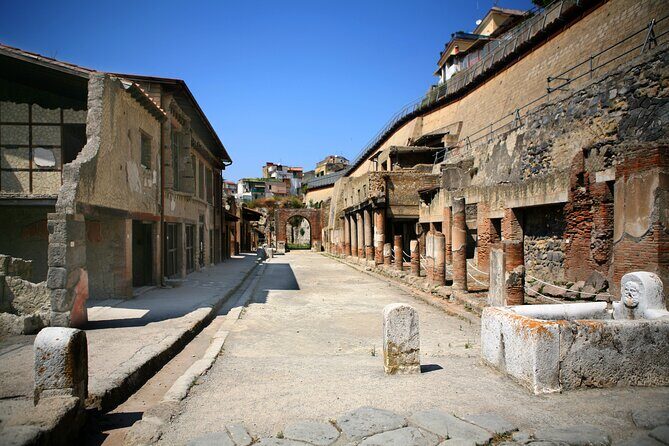
Pompeii is huge, and it’s easy to get lost in the “which house is this?” phase. With a small-group guide, you get structure right away: what matters, why it mattered, and how the pieces connect. That means you spend time looking at details instead of guessing.
I especially like that this tour is designed around highlights you can actually see in two hours. You won’t be wandering randomly through ruins while trying to read weathered signage. You’ll walk a planned loop that brings you from public life to domestic life and back to civic power.
And because it’s private-group style, it often feels more like you’re touring with a knowledgeable local than being herded. People specifically mentioned guides such as Glauco, Vito, Caterina, Laura, Giovanni, Vincenzo, Alessia, Alicia, and Kiara, with praise that they kept English clear and explanations easy to follow.
If you're still narrowing it down, here are other tours in Naples we've reviewed.
Price and what you’re really paying for
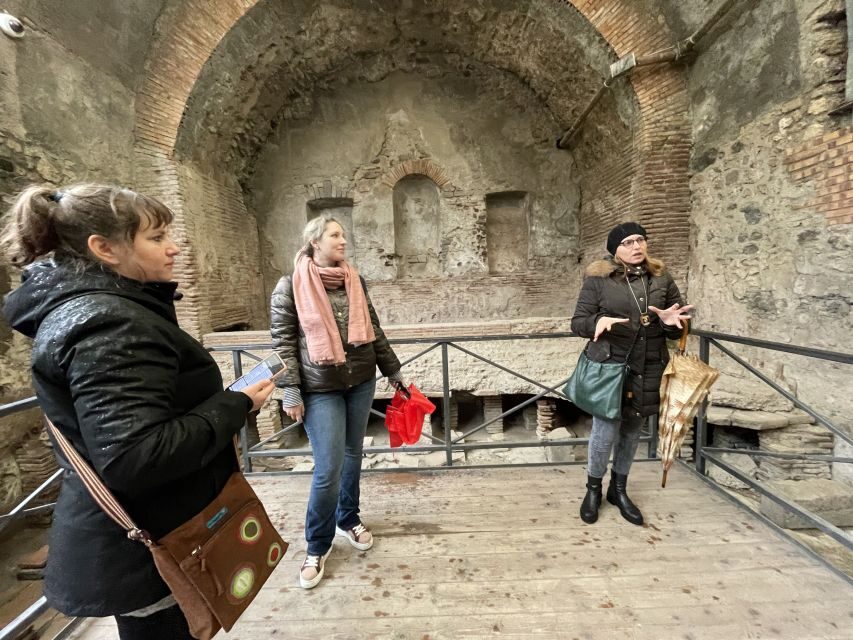
This tour runs $282.08 per group up to 2. That’s not the budget backpacker option, but it can be strong value when you factor in what’s included: Pompeii entry, pre-reserved skip-the-line tickets, and a live English guide for a structured two-hour walk.
Why the math often works:
- You’re buying time. Skip-the-line matters most at popular sites like Pompeii, where queues can eat your morning.
- You’re buying direction. Pompeii’s layout is confusing without help, and a guide saves you from “I think we’re here” guesswork.
- You’re buying flexibility of pace. A good guide can slow down for questions, photo stops, shade, and comfort (people noted this on hot days and even during rainy weather).
Meeting point and the 2-hour loop (so you don’t lose time)
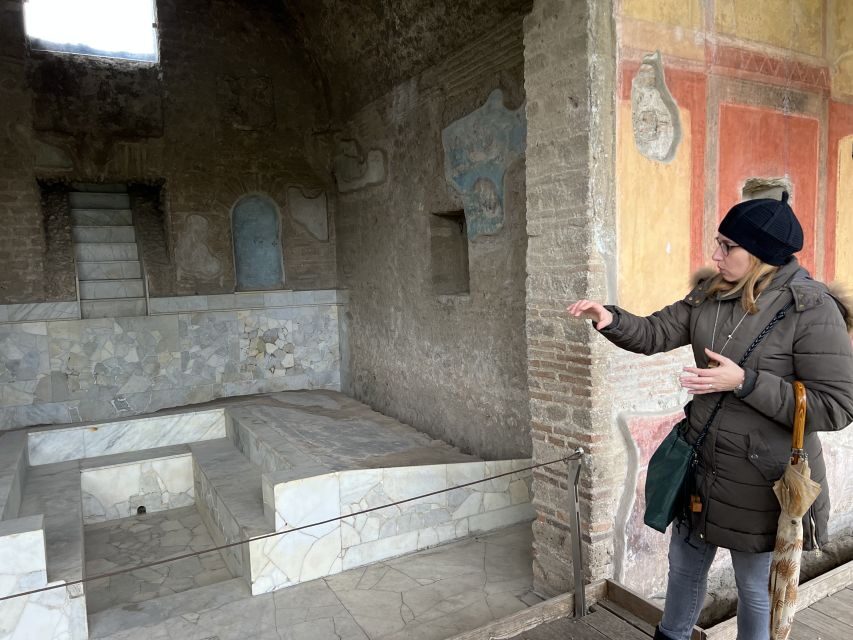
You meet at Piazza Immacolata, just opposite the entrance gate of Piazza Anfiteatro. Your guide stands by a statue of the Virgin Mary holding a sign that says Walks In Europe. The tour starts on time, and you’re asked to arrive 5 to 10 minutes early.
Important practical note: you’ll need a valid ID for entry to the Pompeii Archaeological Site, including children. Bring it with you. Also, the tour says it’s not possible to join after it has started, so don’t cut it close.
What to bring is simple: a hat and water. Pompeii is largely outdoors, and your comfort depends on how much sun (or wind) you catch.
Pompeii Archaeological Park: starting where the site makes sense
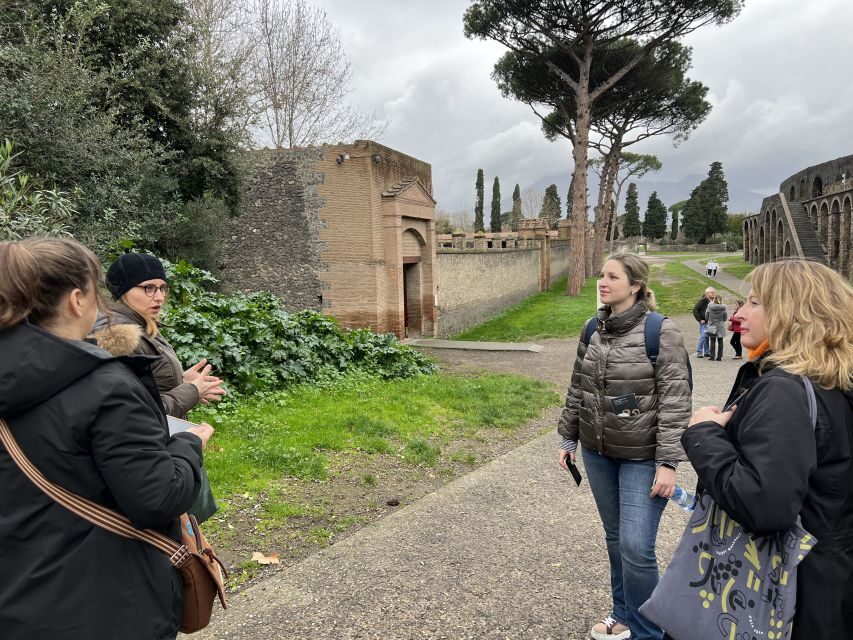
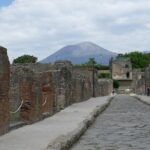
The first stop is Pompeii Archaeological Park, where you get your bearings and begin the story. This is the “set the frame” moment: your guide connects what you’ll see next to the bigger picture of the city and its sudden freeze after the eruption of Vesuvius in 79 AD.
This is also where skipping the line really pays off. Instead of losing time in a queue, you start walking through the parts that make Pompeii feel real. I like this format because it reduces the usual Pompeii problem: standing still too long early, then running out of time later.
A quiet drawback: the site can be crowded outside of your guide’s chosen timing. The positive here is that the guides described smart route choices, including avoiding bigger crowds where possible, so you’re not stuck in the densest bottlenecks all the time.
Amphitheater of Pompeii: where spectacle was a daily mood
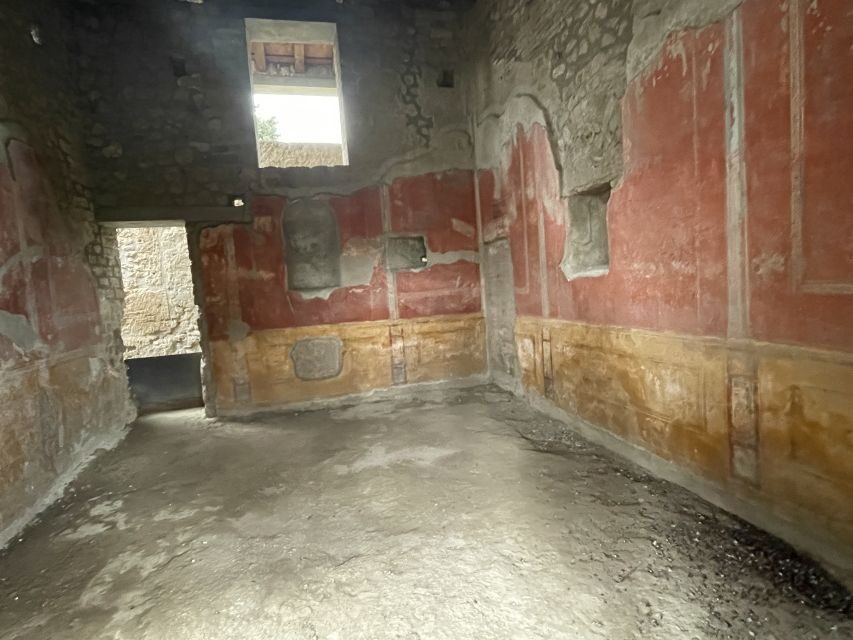
Next is the Amphitheater of Pompeii, with about 20 minutes for the visit and guided walk. This stop hits fast because it shows Pompeii’s public entertainment culture. You’ll hear how gladiators fought in a space built for dramatic spectacle.
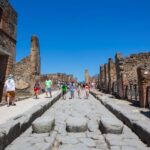
Even if you’re not a Roman history fanatic, the amphitheater helps you picture what these streets felt like on a normal day: crowds, noise, status, and ritualized violence. It’s the kind of location that makes the city stop being abstract.
One more practical point: because you’re walking an outdoor circuit, the tour pacing matters. Some guides were praised for adjusting the pace on hot days and staying in limited shade when possible. That’s not a minor detail at Pompeii. It can decide whether the experience feels comfortable or exhausting.



House of the Faun: mosaics, status, and everyday living
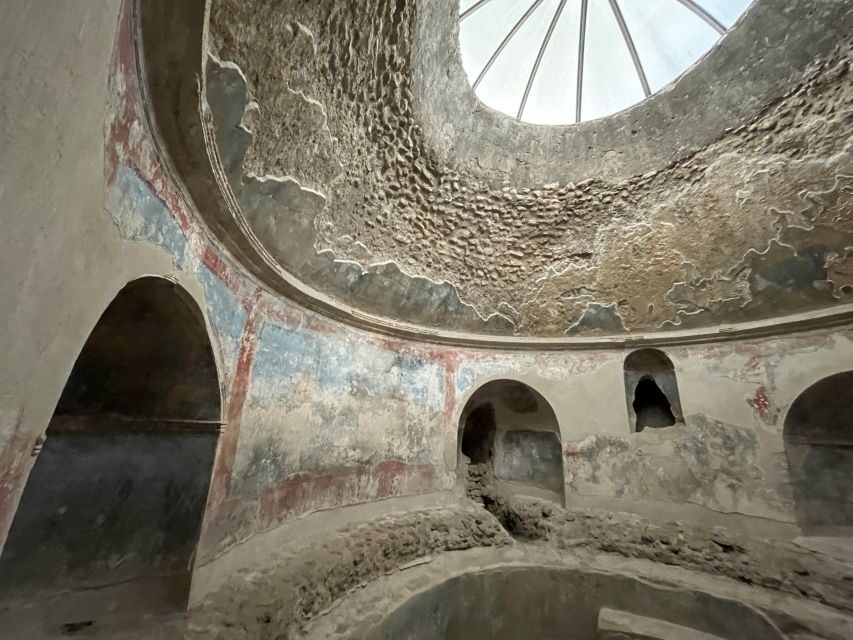
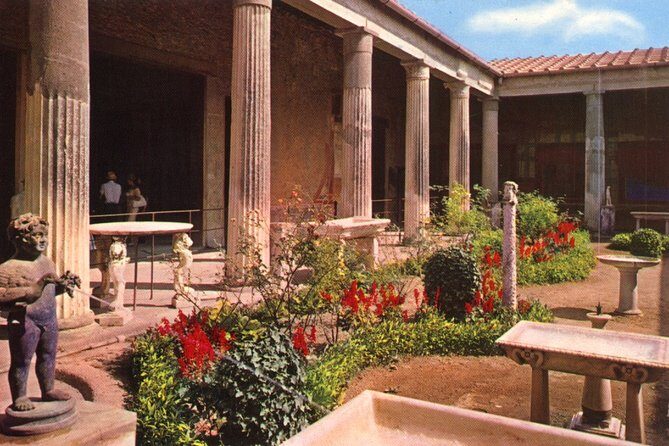
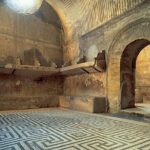
The House of the Faun is one of the big “wow” stops, and you get around 20 minutes here. This is where Pompeii’s artistry and wealth show up in physical form: you’ll see the preserved spaces and get explanations that connect architecture and artwork to how people lived.
People in the guide-praise comments kept talking about the ability to point out details others might miss. That matters here because the best parts of Pompeii are often small: floor designs, layout choices, and the way rooms connect. A good guide helps you notice what you’d otherwise skip while walking quickly.
If you’re short on time, this house is a great use of it. You don’t just “see ruins,” you learn what makes this place important.
Temple of Apollo: religion made visible in stone
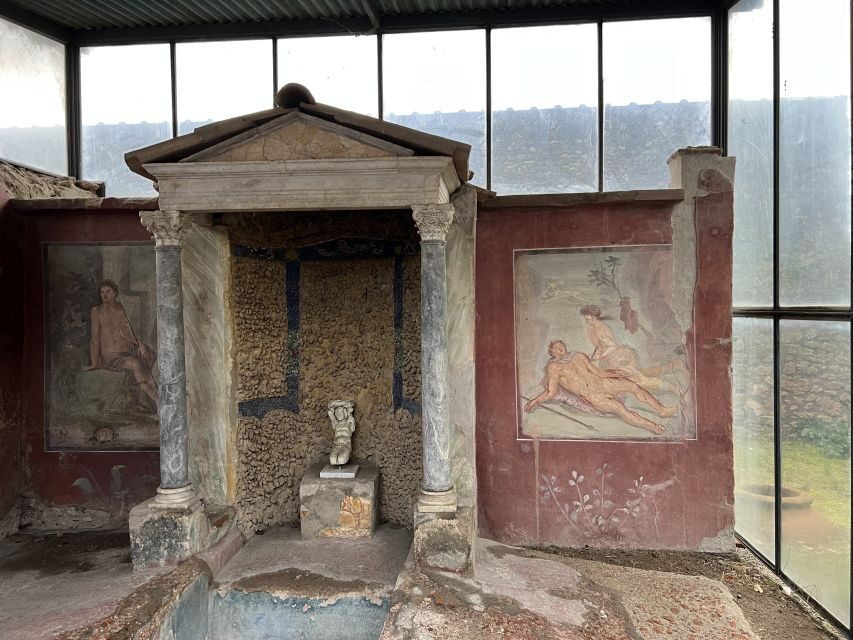
Then comes the Temple of Apollo, again about 20 minutes. This stop shifts you from domestic life and public spectacle into civic religion. You’ll see how Pompeii’s spiritual world shaped public spaces and community identity.
This is also a strong moment for the kind of questions that pop up once you understand the setting: who worshipped here, how rituals likely worked, and why certain places were built to command attention. Several guides earned praise for answering questions clearly and guiding photo stops, which helps here because temples can feel easy to “walk past” if you don’t know what to look for.
Vetutius Placidus House and Thermopolium: the street-level reality stop
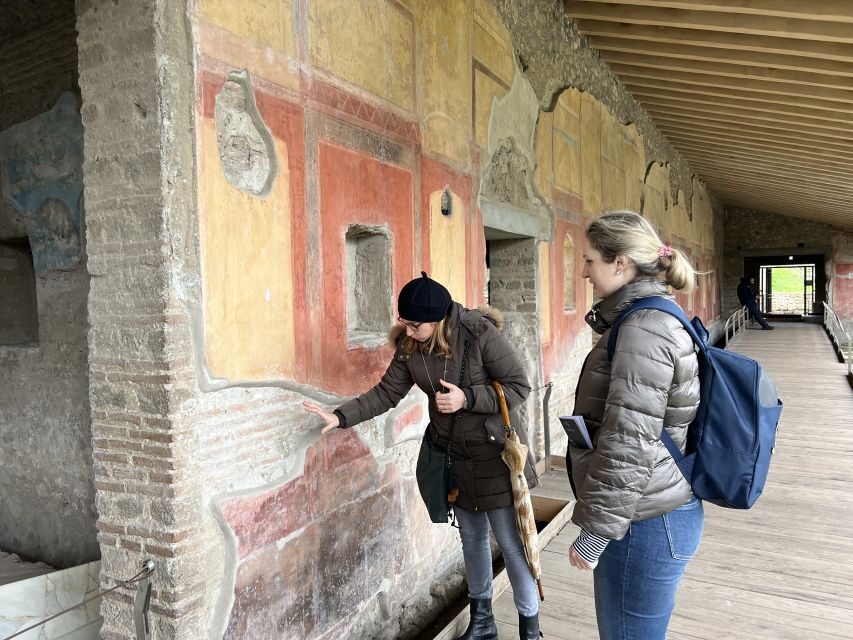
At the Vetutius Placidus House and Thermopolium, you get about 10 minutes, which is short on purpose. This stop helps you understand daily routine and the way meals, goods, and social life moved through the city.
A thermopolium is essentially a street-side place tied to eating and drinking. Even with limited time, this can be one of the most “real life” moments in the entire tour, because it brings Pompeii closer to what your brain recognizes as a normal town.
A quick drawback: because it’s shorter, you’ll want to keep your eyes up and your questions ready. If you tend to read every label slowly, this is the one stop where you might wish you had more time.
Garden of the Fugitives: a dramatic, emotional pause
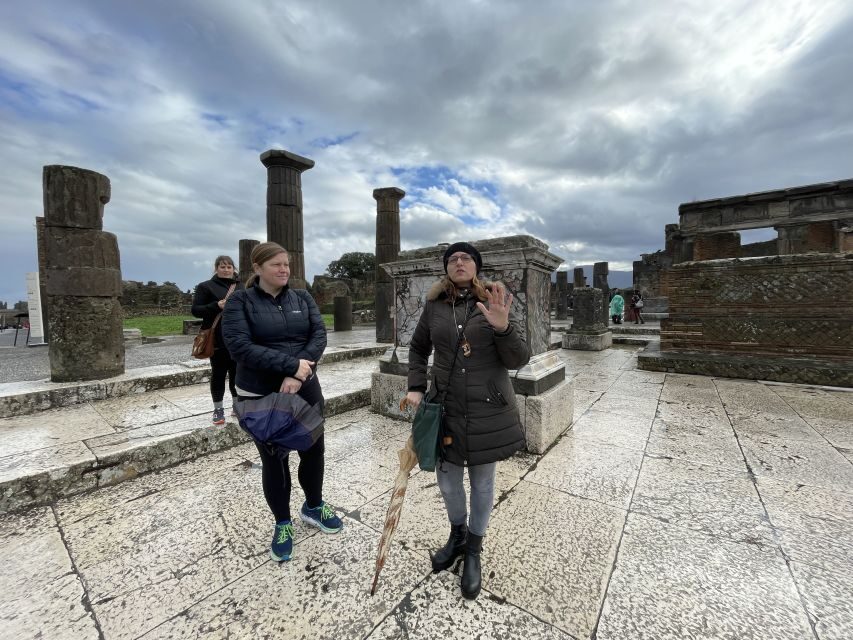
The Garden of the Fugitives is about 20 minutes, and it’s the kind of place that hits differently once you understand what happened. You’ll be guided through the space and talk through the tragedy of people caught in the eruption, including what preservation and plaster casts reveal.
This is also where the tour can become more emotional. It’s not just “old stones.” It’s the story of people trying to survive.
Guides received praise for balancing explanation with pacing, including slowing down and keeping comfort in mind on difficult weather days. That helps here because the emotional weight is real, and your ability to absorb information depends on whether you’re rushing.
Foro Civile di Pompei: finishing with the city’s heartbeat
The final major stop is the Foro Civile di Pompei, with about 20 minutes. This is often the grand payoff. You see where civic power, public meetings, and city life converged.
I like the way a guided tour ends at the Forum because it lets you connect everything you saw earlier: entertainment in the amphitheater, religion in the temple, daily rhythm through houses and street-side food, and then the public stage where the whole city met.
Several guides were praised for routing choices that helped you finish when crowds shifted. One person even mentioned a 4 pm tour being cooler and less crowded, and that the guide knew the best route to cover a lot of ground. That’s a tip worth considering when you check available start times.
What the guides do that makes Pompeii click
A theme in the standout feedback is how guides use the ruins as teaching tools, not just scenic backgrounds. Names like Glauco, Vito, Alessia, Alicia, Vincenzo, Caterina, Laura, Giovanni, and Kiara came up repeatedly with praise for making the walk feel organized and fun.
Here’s what those comments translate into for you:
- Clear English and strong storytelling: you won’t feel like you’re reading a lecture off a sign.
- Crowd-smart adjustments: some guides amended the route to avoid the biggest congestion.
- Comfort-focused pacing: on hot days, guides slowed down and aimed for limited shade.
- Good question handling: people liked that answers came naturally, not just from memorized facts.
- Extras that add value: one guide left a recommendation tied to walking on a platform while archaeologists work, described as a highlight.
Even if you’re a first-time Pompeii visitor, a guide makes it easier to remember what you saw. You leave with names, reasons, and connections instead of a pile of impressive stone.
Who should book this Pompeii tour, and who might not love it
This is best for you if:
- You want skip-the-line access and less time standing around.
- You prefer a guided highlight loop rather than wandering.
- You like asking questions and getting answers in plain English.
- You’re visiting with a small group, ideally up to 2, where the private-group vibe feels strongest.
You might not love it if:
- You want lots of free time to sit and read slowly at each location.
- You need wheelchair access, since it’s not suitable for wheelchair users.
- You dislike walking on uneven surfaces for roughly a two-hour guided route.
Should you book this Pompeii skip-the-line tour?
I think you should book this tour if you’re aiming for a smart first visit: quick entry, an organized route, and a guide who helps you actually understand Pompeii instead of just seeing it. The price looks high until you consider that you’re paying for entry + reserved skip-the-line tickets + a live guide for a focused 2-hour walk through major sites.
If you’re the type who gets energized by explanations and wants your Pompeii stop to feel complete, this format is a good match. And if you like the idea of ending at the Forum with a clear final picture of the city’s civic core, you’ll appreciate how the loop is built.
Book it when you can, pick a start time that fits your comfort (cooler late sessions can help), and bring your ID, hat, and water so you can enjoy the experience without last-minute stress.
FAQ
What’s included in the Pompeii small-group tour?
The tour includes pre-reserved tickets with skip-the-line access, entry ticket to Pompeii Archaeological Site, and a guided tour.
How long is the tour?
It’s listed as 2 hours (with starting times depending on availability).
Where do we meet the guide?
Meet at Piazza Immacolata, opposite the entrance gate of Piazza Anfiteatro. The guide will be by a statue of the Virgin Mary holding a sign that says Walks In Europe.
Is this tour really skip-the-line?
Yes. You get priority access through a separate entrance so you can enter the ruins more quickly.
Do I need an ID to enter Pompeii?
Yes. The tour notes that all visitors, including children, must provide a valid ID upon entry to the Pompeii Archaeological Site.
What should I bring with me?
Bring a hat and water.
Is the tour suitable for wheelchair users?
No, it’s not suitable for wheelchair users.
Can I join after the tour has started?
No. The activity states that it’s not possible to join once it has started.