REVIEW · NAPLES
Naples: Herculaneum Entry Ticket with Digital Audio Tour
Book on Viator →Operated by Vox City International Ltd · Bookable on Viator
Herculaneum feels like time froze mid-step. A fast-track ticket gets you inside the Archaeological Park of Ercolano, where the 79 AD eruption of Mount Vesuvius preserved a Roman town in ash. With a digital audio guide and a built-in map, you can wander the ancient streets and focus on what grabs you.
What I like most is the way the site is laid out for self-guided exploring. You’re not stuck in a tight group rhythm, and the multilingual audio commentary (English, French, Italian, Spanish) helps you make sense of what you’re seeing as you go. Second, Herculaneum is often more moving than its louder neighbor—many areas are well preserved, and you can see everyday details like stone-slab streets and the town’s wealth, all preserved under volcanic ash.
One drawback to plan for: the digital experience depends on your phone. Some people found the audio doesn’t always match the exact spot they’re standing on, so you may need patience (or a quick rethink of your walking flow) if the GPS is off.
In This Review
- Key Highlights If You Want Herculaneum on Your Terms
- Fast-Track Entry Into a Roman City Preserved Under Ash
- Where to Redeem and How You Actually Get Into the Park
- The 2-Hour Experience: What You Can See (and How to Not Rush)
- Digital Audio Tour Reality Check: How the Map and GPS Affect Your Walk
- Inside Parco Acheologico di Ercolano: The Streets and Villas That Make Herculaneum Special
- Stone-slab roads and a sense of movement
- Opulent villas and the contrast with everyday life
- Historic markets and the vibe of daily routines
- Making the Most of Your Time: A Practical Walk Plan for the Best 2 Hours
- Price and Value: Is a $29 Ticket Fair for Herculaneum?
- Who Should Book This Audio Ticket (and Who Might Prefer Another Option)
- Should You Book This Herculaneum Entry Ticket With Digital Audio?
- FAQ
- How long is the Herculaneum entry ticket with digital audio tour?
- What’s included in the ticket price?
- Do I need to bring my own headset?
- Where do I redeem the ticket?
- How do I get the e-ticket and audio access before my visit?
- Can I show my ticket on my phone at the entry gate?
- What time is the last entry?
- What are the opening hours?
- Is there free cancellation?
Key Highlights If You Want Herculaneum on Your Terms
- Fast-track entry into Parco Acheologico di Ercolano helps you start exploring earlier.
- Self-paced route means you can linger at the villas, markets, and street scenes that interest you most.
- Multilingual audio covers key areas in English, French, Italian, and Spanish.
- Digital map navigation helps you find your way through an uneven, archaeological landscape.
- A “frozen in time” preservation story: ash preserved materials like doors, papyrus, and even food.
Fast-Track Entry Into a Roman City Preserved Under Ash

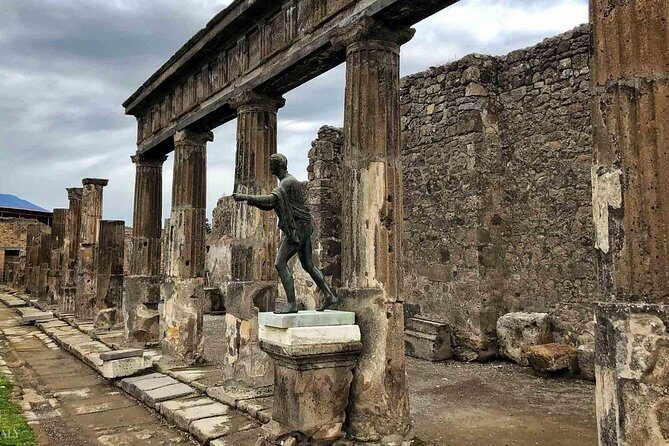
Herculaneum is the kind of place that makes you whisper without trying. The big idea here is preservation: the eruption of Mount Vesuvius in 79 AD didn’t just bury the city—it trapped daily life in place. That’s why Herculaneum often lands differently than Pompeii. It feels more intimate, and the conditions of preservation let you see more of the texture of Roman life, from household wealth to the layout of streets.
The fast-track ticket is practical value. Archaeological parks can eat up time with lines and ticket checks, and you don’t want your precious daylight spent waiting. This entry ticket is built around letting you get into the park and start moving while the site still feels fresh in your mind.
If you're still narrowing it down, here are other tours in Naples we've reviewed.


Where to Redeem and How You Actually Get Into the Park
The redemption point is straightforward: Archaeological Park of Herculaneum, Corso Resina, 187, 80056 Ercolano (NA), Italy. The park is near public transportation, which matters because getting in and out without stress keeps your visit enjoyable.
What’s also key is how you receive your documents. You get e-tickets that are available for download within 24 hours before your travel date, and they’re also delivered via WhatsApp within that same 24-hour window by Vox City. On arrival, you scan the QR code to download the audio guide prior to starting, then show the ticket on your phone to staff at entry.
Two practical tips based on how these systems usually behave:
- Have your phone charged before you arrive. The QR download is the first gate you’ll hit.
- Keep enough mobile data or offline capacity ready for the audio app/map to work smoothly.
The 2-Hour Experience: What You Can See (and How to Not Rush)
This ticket is designed around about 2 hours in the park. That’s enough time to get a real feel for Herculaneum’s layout and preservation, but it’s not a marathon. Your best strategy is to think of the visit as a sequence of stops, not one big sightseeing blur.
Because you’re self-guided, you’re in control of pace. If you like walking, you can follow the ancient road lines and take in the stone slabs. If you’re more drawn to structures, you can focus on villas and the wealthy domestic areas. If you’re curious about daily life, you’ll want to spend time around areas that reflect markets and civic activity.
A big advantage: much of Herculaneum is still not excavated. That means what you see feels like a partial view of the whole city, but it’s also a lesson in how archaeology works. You’re not looking at a complete “finished museum.” You’re looking at a working historical site where discoveries are ongoing.
Digital Audio Tour Reality Check: How the Map and GPS Affect Your Walk
The audio is the heart of this experience. You’re given a digital audio guide with multilingual commentary and it’s meant to guide you as you move around the park. You’ll also have a digital map so you can navigate through villas, historic market areas, and the rest of the archaeological park.
Here’s the reality to plan for: if your phone’s GPS struggles or your location accuracy is off, the audio might not sync perfectly to where you are. Some visitors reported the app didn’t find their position well and stops weren’t lined up with the markers on the ground. I can’t guarantee it’ll happen to you, but it’s smart to assume your phone may be less accurate inside an archaeological zone with ruins and varied terrain.
How to stay on track anyway:
- Don’t treat the audio as a strict timer. Use it as a companion.
- If the audio seems out of place, pause and confirm where you are using the park layout and map.
- If you prefer clear certainty over audio cues, be ready to slow down and read what’s in front of you.
Even with those caveats, the audio format is still valuable because it gives context to Roman architecture and daily life while you’re walking.
Inside Parco Acheologico di Ercolano: The Streets and Villas That Make Herculaneum Special
When you enter, start with orientation. You’ll want a minute to look at the layout and decide how you want to spend your time. The park rewards calm walking. Rushing makes it harder to connect what you see with the story the audio is telling.
Herculaneum’s big emotional draw is how much is preserved. Under the volcanic ash, materials survived that most people never expect to exist in a ruin—items like doors and even traces of materials associated with papyrus and food. That kind of preservation shifts the experience from “old stones” to “human routines.” You’re not just looking at walls; you’re trying to imagine rooms that once had daily purpose.






Stone-slab roads and a sense of movement
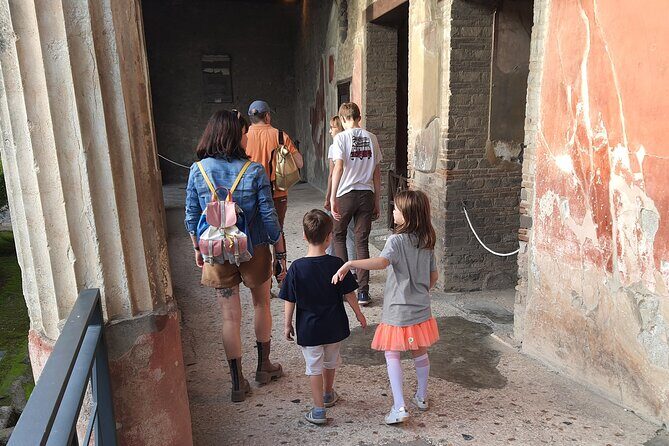
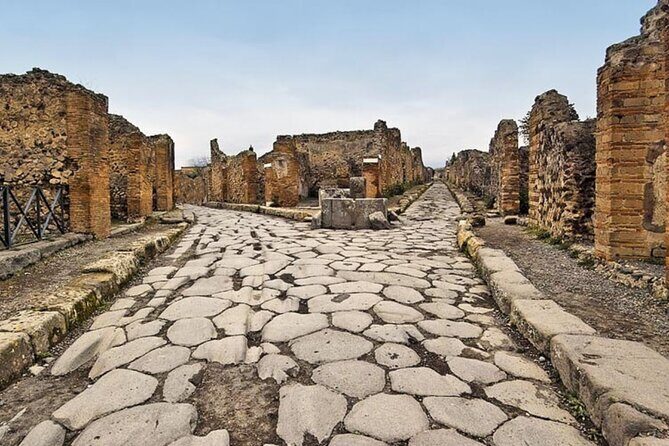
The ancient roads with stone slabs are one of the easiest ways to connect physically to the past. Walking those alignments, even for a short stretch, makes it easier to picture how people moved through the city. It’s also a great place to use the audio, because the narration can help explain what you’re seeing and why it mattered.
Opulent villas and the contrast with everyday life
The audio guide is built around major areas including villas and wealthier spaces. These are where you can see how Roman status showed up in architecture and household detail. If your goal is to understand social life—who had money, how rooms were used, and how people displayed their place—these domestic areas will likely be your focus.
One drawback to self-guided audio: if you’re expecting a deep, house-by-house explanation of every highlight, you may find the coverage less than you want. If that’s your style, treat the audio as a foundation, then spend extra time reading signs and looking closely so you build the bigger picture yourself.
Historic markets and the vibe of daily routines
Market areas and civic spaces help Herculaneum feel like a lived-in town rather than a cemetery of stone. This is where you’ll understand the rhythm of daily life: where people gathered, traded, and moved through the city’s practical spaces.
If you like context, the audio is useful here because it can turn a confusing set of ruins into something you can follow as an urban system. If the audio doesn’t sync perfectly, don’t panic. Use the map, slow down, and let your eyes connect first, then your audio story.
Making the Most of Your Time: A Practical Walk Plan for the Best 2 Hours
Because the experience is about 2 hours, you’ll have better results with a simple plan. Here’s a way to think about it that keeps you from missing the good parts:
- Start with orientation and one “anchor” segment you care about most (streets, villas, or markets).
- Use the audio to add meaning, not to rush your steps.
- Leave a buffer at the end for re-walks or slower looks.
In other words, aim to experience Herculaneum once at full attention, then use the last portion to zoom in on what you found most compelling. That approach matters because Herculaneum rewards close attention. Even small changes in view can shift your interpretation.
Also, check the site hours so you don’t get caught near closing. You’ll want to arrive with time because last entry is 90 minutes before closing.
Price and Value: Is a $29 Ticket Fair for Herculaneum?
At $29.04 per person, this isn’t priced like a premium guided tour with a live expert. Instead, it’s priced like a smart compromise: you get entry plus a digital audio guide in multiple languages. For many people, the value is that you can explore at your own pace and still have commentary.
The best value comes if:
- you’re comfortable using your phone for maps and audio,
- you don’t need a live guide to answer questions,
- you want to control how long you spend at different areas.
If you’re the type who needs deep, exact, location-by-location narration and you dislike tech that can be temperamental, you might feel shortchanged. A few people found the audio coverage limited or the syncing awkward, and that can make the experience feel more like a self-exploration with incomplete help.
So the value question becomes simple: are you paying for entry plus convenience, or are you paying for thorough guided depth? This ticket is stronger on the first side of that.
Who Should Book This Audio Ticket (and Who Might Prefer Another Option)
I think this fits best if you:
- want a relaxed visit without group timing,
- like reading and looking closely as you walk,
- can handle a phone-based audio experience.
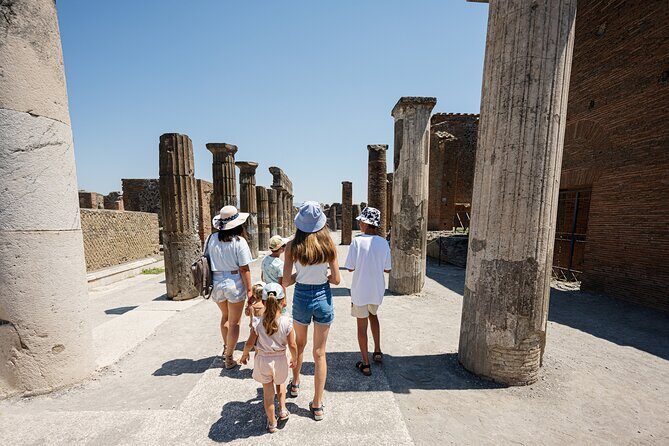
It also works well for families or mixed groups who want autonomy, as long as everyone can manage the audio device.
I’d be more cautious if you:
- depend on GPS-based syncing and find it frustrating,
- strongly prefer a live expert to explain context and details on the spot,
- want a house-by-house deep dive without doing extra reading.
In that case, you might find yourself wishing you had more on-the-ground direction.
Should You Book This Herculaneum Entry Ticket With Digital Audio?
If your goal is to see Herculaneum efficiently, with helpful context and the freedom to move at your pace, yes, I’d book it. Fast-track entry plus multilingual audio makes it easy to get value without needing a complex schedule.
But I’d also go in with the right expectations. This is not a live guide, and the digital map and GPS can be imperfect in real-world conditions. If you’re ready to be flexible—using your eyes first, audio second—you’ll likely enjoy the preserved streets, villas, and market spaces in a way that feels personal.
If you can only do one Roman city and you care about preservation and the texture of daily life, Herculaneum is a strong pick. This ticket is a practical way to experience it.
FAQ
How long is the Herculaneum entry ticket with digital audio tour?
It’s listed at about 2 hours.
What’s included in the ticket price?
You get the Herculaneum entry ticket and a digital audio guide with multilingual commentary in English, French, Italian, and Spanish.
Do I need to bring my own headset?
Yes. A mobile device and headset are not included.
Where do I redeem the ticket?
You redeem at the Archaeological Park of Herculaneum, Corso Resina, 187, 80056 Ercolano NA, Italy.
How do I get the e-ticket and audio access before my visit?
E-tickets are available for download within 24 hours before your travel date, and they’re also delivered via WhatsApp within 24 hours before. The audio guide is downloaded by scanning a QR code prior to arrival.
Can I show my ticket on my phone at the entry gate?
Yes. You’ll gain entry by showing your e-ticket on your mobile device to the park staff.
What time is the last entry?
Last entry is 90 minutes before closing.
What are the opening hours?
From 03/16/2025 to 10/14/2025, it’s 8:30 AM to 7:30 PM daily. From 10/15/2025 to 03/15/2026, it’s 8:30 AM to 5:00 PM daily.
Is there free cancellation?
Yes. You can cancel for a full refund up to 24 hours before the experience’s start time.