REVIEW · SORRENTO
Pompeii, Herculaneum and Winery on Vesuvius with an Archaeologist
Book on Viator →Operated by Fabrizio Belleni - Leisure Italy Private Guide · Bookable on Viator
Pompeii hits different with the right guide. This private 8–9 hour trip bundles two of Southern Italy’s biggest Roman wrecks—Pompeii and Herculaneum—with lunch and wine at an organic Cantina del Vesuvio inside Vesuvius National Park. I like how the day is built around a real archaeologist’s eye, not just a route on a screen. I also like the built-in break: vineyard walk, paired wines, and a sit-down meal with a view of Vesuvius. One drawback to plan for: Pompeii and Herculaneum admission fees are extra, and you’ll cover a lot of uneven walking in heat.
You’ll ride in an air-conditioned vehicle with water and Wi‑Fi on board, and it’s only your group (up to 7). The guide keeps things flexible, aiming to reduce crowds and adjust the pace—especially useful if you’re traveling with kids or anyone who needs more frequent stops. You’ll also get a few “wow” museum moments, like casts of victims at Pompeii and carbonized organic finds at Herculaneum, which make the history feel real fast.
In This Review
- Key highlights to know before you go
- Why pairing Pompeii and Herculaneum makes sense
- Meet Fabrizio Bellini and why the pacing matters
- Pompeii: Porta Marina to the Forum’s center of power
- Casa dei Vettii and the restored fresco magic
- Insula dei Casti Amanti and why the city feels alive
- Teatro Grande: the Roman theater that still works
- Antiquarium di Pompei: the casts that hit hardest
- Herculaneum: where the mud preserved real stuff
- Boat Pavilion and the Ancient Beach shoreline story
- Houses of power in Herculaneum: Cervi and Neptune mosaics
- Termas Femeninas: the women’s baths that feel unusually complete
- Palestra and the hydra fountain
- Cantina del Vesuvio winery lunch in Vesuvius National Park
- Time, tickets, and what to budget (so there are no surprises)
- Value check: why the price can work (if you fill the group)
- Who should book this Pompeii and Herculaneum day (and who might not)
- Should you book this Pompeii, Herculaneum and Vesuvius winery tour?
- FAQ
- What is included in the tour?
- Are Pompeii and Herculaneum admission tickets included?
- Is lunch and wine included?
- Does the tour go to the top of Mount Vesuvius?
- How long is the day?
- Where does pickup happen?
- What group size is this for?
- Is it family-friendly?
- Can I cancel for a full refund?
Key highlights to know before you go
- Private, small-group format (up to 7) with pickup in Naples or Sorrento
- Archaeologist-led Pompeii route focused on Forum life, elite houses, and major public spaces
- Herculaneum route that spotlights preservation with the Antiquarium and shoreline exhibits
- Winery lunch in Vesuvius National Park at Cantina del Vesuvio with vineyard walk and tasting
- Family-friendly option designed to keep children engaged through questions and hands-on attention
Why pairing Pompeii and Herculaneum makes sense
These two sites are cousins, not twins. Pompeii shows a city layout full of everyday Roman life—shops, baths, theaters, homes—frozen by the 79 AD eruption. Herculaneum shows more “what it felt like” preservation, including carbonized wood, textiles, and even parts of daily waterfront life.
Doing both in one day works because your brain starts comparing. You see how wealth and public culture looked, then you watch how burial conditions changed what survived. One moment you’re reading the Forum as a public stage; the next, you’re seeing how the eruption and the mud preserved organics that almost never survive. That contrast is the point.
If you're still narrowing it down, here are other tours in Sorrento we've reviewed.


Meet Fabrizio Bellini and why the pacing matters
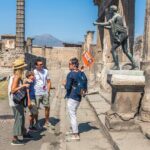
This is a private tour guided by Fabrizio Bellini (Leisure Italy Private Guide), who brings decades of experience and an archaeologist’s working style. The big practical win: he slows down when you need it and speeds up when your group is ready. You’re not stuck with a rigid “line up here, look for three minutes, move on” rhythm.
The day also tries to avoid the heaviest crowds as much as possible. In plain terms, that means fewer time-wasters in bottlenecks and more time actually looking at what you paid to see—frescoes, mosaics, architectural details, and the logic behind the layout.
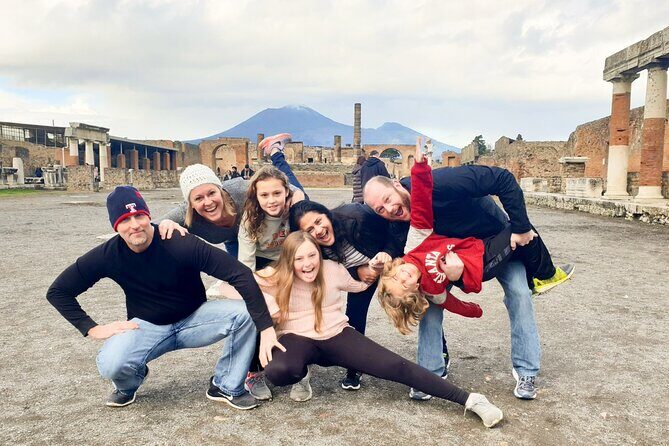
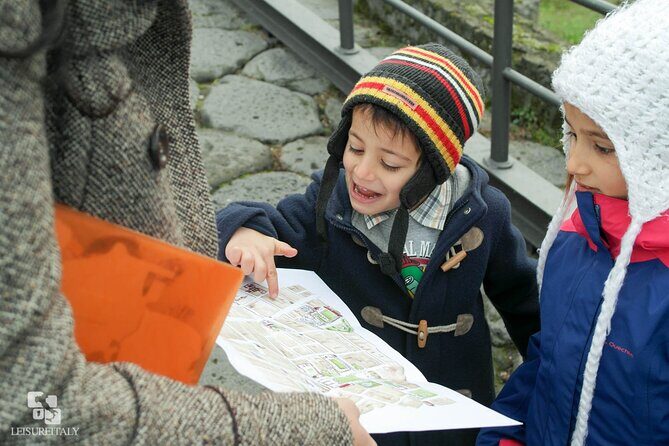
If you’re traveling with kids, this one is built for that too. The family-friendly upgrade isn’t just “they’ll be quiet.” The guide keeps children involved with questions and attention checks, and he adapts the route based on energy levels (and weather).
Pompeii: Porta Marina to the Forum’s center of power
Most Pompeii starts at the ruins and ends at the highlight names. This starts with the city’s gateway feeling like a story. You begin around Piazza Porta Marina, where the modern plaza meets the ancient Porta Marina gate in the old city walls. It’s a smart first move: it helps you get oriented before you start walking deeper into the archaeological park.
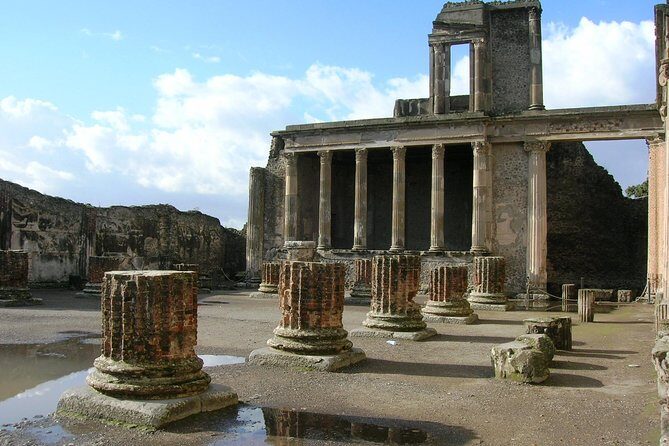
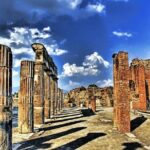
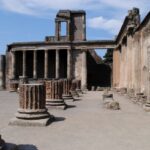
From there, you move into the Forum area—the busiest mental map of Pompeii. You’ll spend time on key public spaces, including:
- the Forum (politics, religion, and commerce in one place)
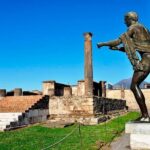
- the Temple of Apollo at the edge of the Forum
- the major Forum architecture like the Temple of Jupiter and the Basilica framing the main square
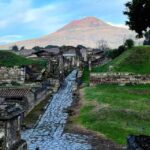
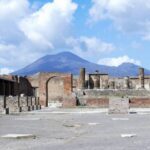
At the Temple of Apollo, you get more than columns and ruins. You can trace the shift in religious practice from Greek to Roman times. The setting is open-air, so you see the remains like an outdoor textbook, and you also get a dramatic view direction toward Mount Vesuvius.
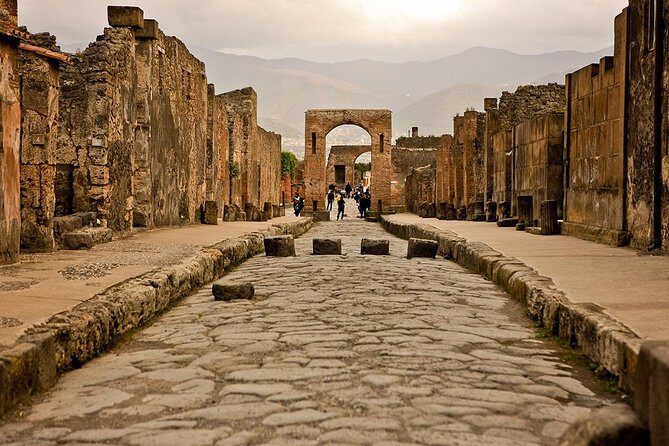
In the Forum, you’re walking on original travertine paving stones and standing in the epicenter of daily Roman life. You’ll notice the market elements like the Macellum and even the mensa ponderaria, the official weighing table—tiny details, but they make the whole place feel functional.
What I like about this Pompeii approach: it’s not just about seeing famous buildings. It’s about understanding how Roman public life was staged in stone, and how the city’s power center worked in real human terms.
Casa dei Vettii and the restored fresco magic
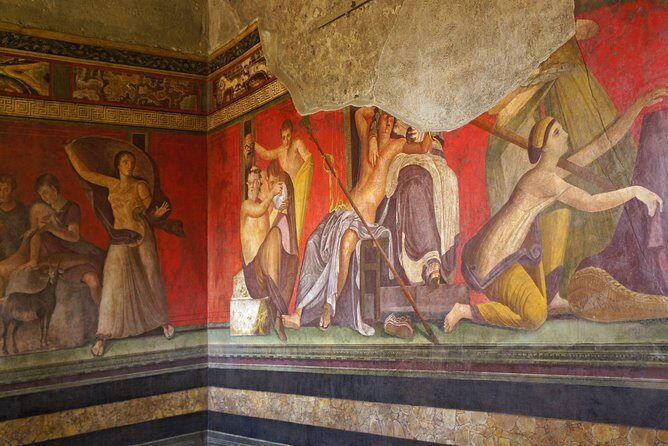
Pompeii’s houses are where you feel how Romans lived when no one was watching. The star here is Casa dei Vettii, highlighted for a major restoration and famous for Fourth Style frescoes—colors that still look startlingly fresh.
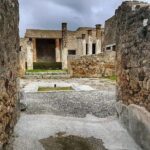
In practical terms, this stop is worth your time because it’s visually dense. You’re not just looking at one wall. You’re seeing how multiple rooms and themes fit together: myth scenes, daily-life hints, and elite luxury signals. You’ll also see the protective painting of Priapus at the entrance, plus the famous Room of the Cupids with scenes tied to trades and daily activity.
Even if you don’t care about art trivia, you’ll care about the scale of wealth and how deliberate the decoration was. These rooms were built to impress visitors, and the restoration helps you read that intention.
Insula dei Casti Amanti and why the city feels alive
Another strong Pompeii stop is the Insula of the Chaste Lovers. It’s tied to a specific fresco naming the house, but the real value is the viewing method: the site uses elevated walkways that let you look down into an entire city block excavation.
That change matters. Instead of only staring at what’s at ground level, you get a more “whole block” view—grand homes and a bakery inside the block. You also get a special emotional layer: charcoal drawings of gladiators made by children close to 2,000 years ago. That detail turns archaeology from abstract to personal.
Teatro Grande: the Roman theater that still works
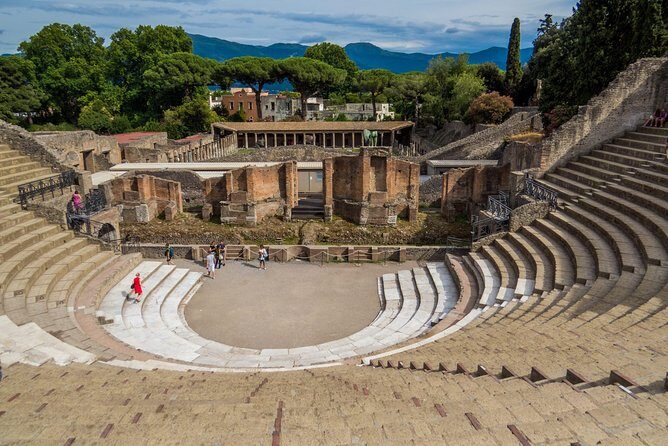
Then there’s Teatro Grande—one of the places where Pompeii stops being just “ruins” and turns back into “a culture that performed.” You’ll be looking at one of the earliest stone theaters, dating to the 2nd century BC, with a horseshoe shape and seating that shows social hierarchy.
Even if you don’t do a performance, you can understand the design. It’s famous for its acoustics, and the scale is part of the wow: about 5,000 seats, and the way sound carries from the stage.
Set against the hills and Vesuvius backdrop, it’s also where you get the sense of how Romans built entertainment as part of city identity.
Antiquarium di Pompei: the casts that hit hardest
Back near the Porta Marina area is the Antiquarium di Pompei. This museum gives you emotional and historical context before you continue through the ruins.
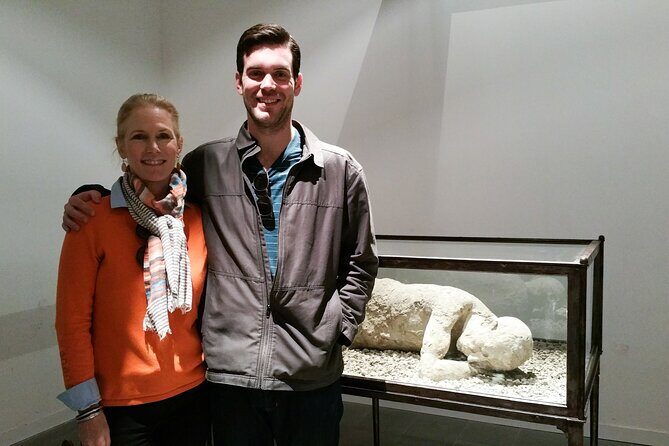
The standout is the gallery of plaster casts: victims captured in the final moments, plus even a faithful guard dog. The point isn’t gore for shock value. It’s human scale and timing. When you then return to the ruins outside, you see the streets and buildings with more weight.
This is also where the story becomes less about stone and more about people.
Herculaneum: where the mud preserved real stuff
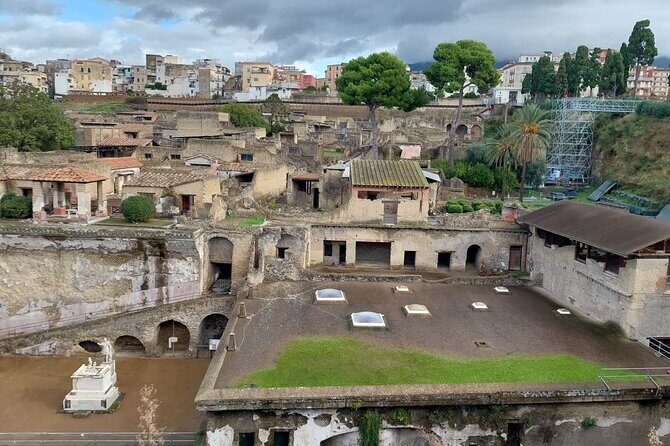
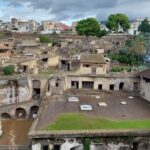
If Pompeii makes you think about a city in motion, Herculaneum makes you think about what survived. The tour moves into Herculaneum with an organized route designed so you don’t miss major highlights.
A key feature is the Antiquarium inside the Herculaneum plan. In the Antiquarium di Ercolano, you’ll see preserved organic materials—carbonized wooden furniture and textiles—things that almost never survive in the Roman world. You’ll also see the so-called Herculaneum Treasure, and you’ll connect it to what kind of rich seaside place this was.
This museum stop matters because it trains your eyes for what comes next. You start recognizing why certain objects are extraordinary—not just pretty, but rare.
Boat Pavilion and the Ancient Beach shoreline story
From there, you hit the waterfront story.
The Boat Pavilion shows a carbonized keel of a boat about 9 meters long, found upturned where it was shoved by pyroclastic flows. You can also see smaller maritime items—fishing weights, nets, and carbonized rope—so you understand Herculaneum wasn’t just villas and mosaics. It was a working coastal city.
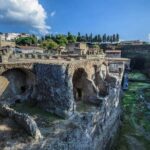
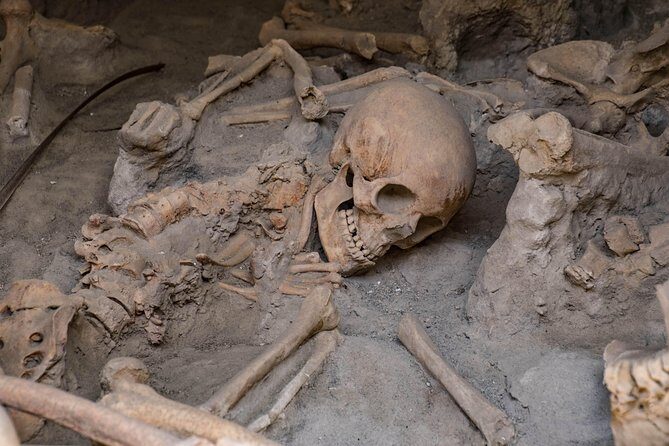
Then comes the Ancient Beach, reopened to the public in 2024 after restoration. Walking here is less about “looking at ruins” and more about walking the shoreline where the eruption reached its climax. You’re standing on volcanic sand and looking up toward the fornici (boat sheds), with skeletal remains found packed in their final moments.
The exhibit also helps you grasp the physical change in the landscape: the beach sits several meters below today’s ground level, a physical reminder that the eruption reshaped everything.
Houses of power in Herculaneum: Cervi and Neptune mosaics
Herculaneum houses are quieter than Pompeii, but they feel richer in materials and craft.
You’ll see Casa dei Cervi (House of the Stags), known for its inverted layout: a panoramic terrace and garden design aimed at sea breezes and views of the Gulf of Naples. Its name comes from the expressive marble stag statues attacked by hounds found in the garden.
Next is Casa di Nettuno e Anfitrite, one of the top mosaics in the Roman world. The mosaic uses shimmering gold and blue glass paste, and it’s set within a residence that shows off luxury details like an outdoor summer triclinium decorated with shells and lava stone.
Right next door is a huge bonus: the attached shop, widely considered one of the best-preserved grocery stores from antiquity. You can see wooden shelves and carbonized storage bins—everyday commerce, frozen in time.
Termas Femeninas: the women’s baths that feel unusually complete
In Termas Femeninas (Women’s Baths), the preservation is a major part of the attraction. You’ll see a black-and-white floor mosaic in the apodyterium, depicting Triton surrounded by dolphins. You can also spot surviving organic details like wooden shelves used to store clothing, plus intact barrel-vaulted ceilings with stucco decorations.
The flow through spaces also helps you understand how Roman bathing privacy worked in this setting:
- tepidarium (warm room) with a labyrinth-pattern mosaic
- caldarium (hot room) with a hollow-wall heating system
Even if baths aren’t your thing, the completeness and the surviving surfaces give you a sense of daily routine.
Palestra and the hydra fountain
Finally in Herculaneum, you reach the Palestra (gymnasium). This isn’t a small room. It’s a large civic complex organized around physical culture and community life.
The centerpiece is a cross-shaped swimming pool (natatio), plus a fountain shaped like a five-headed hydra. You’ll walk through the courtyard and feel the scale of the space, with columns that once framed the activity.
A bonus detail: a carbonized wooden statue of a local benefactor discovered in the site. That kind of find adds personality to what could otherwise feel like “architecture.”
You’ll also stop at a short Ad Cucumas ancient wine advertisement, a quick reminder that Roman marketing was already loud and visual.
Cantina del Vesuvio winery lunch in Vesuvius National Park
This is a well-timed break and a big reason this day feels more than “just standing in ruins.”
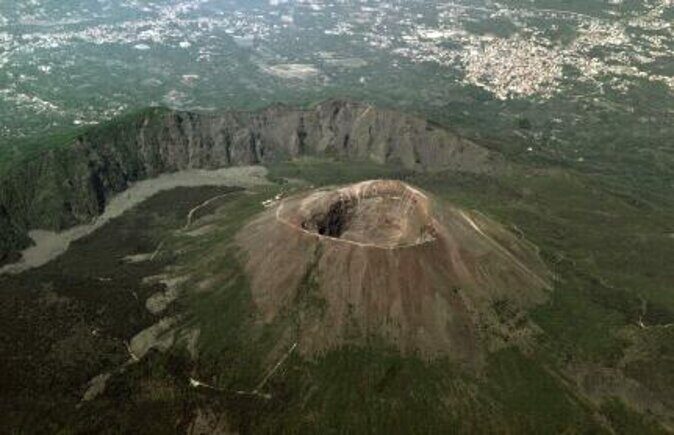
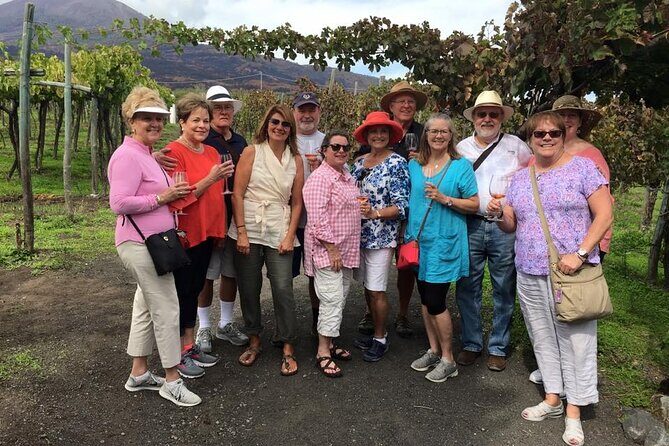
At Cantina del Vesuvio (organic), you start with a guided 15-minute stroll through vineyards. You get views of the Bay and Vesuvius crater while learning the basics behind local wines, including the famous Lacryma Christi.
Lunch is a set menu with five local wines paired in. The food list is specific and genuinely practical if you’re hungry after lots of walking:
- appetizers: bruschetta with tomatoes, provolone cheese, olives, salame, capocollo, grilled vegetables, and beans
- main: spaghetti with vesuvian cherry tomatoes (and meatballs)
- dessert: Neapolitan pastiera (vegetarian/GF options available)
The lunch package runs about €50 per person, with a €60 superior wine upgrade. Fabrizio handles the booking. Payment is done on site by card or cash. You can also ship wines and olive oils home.
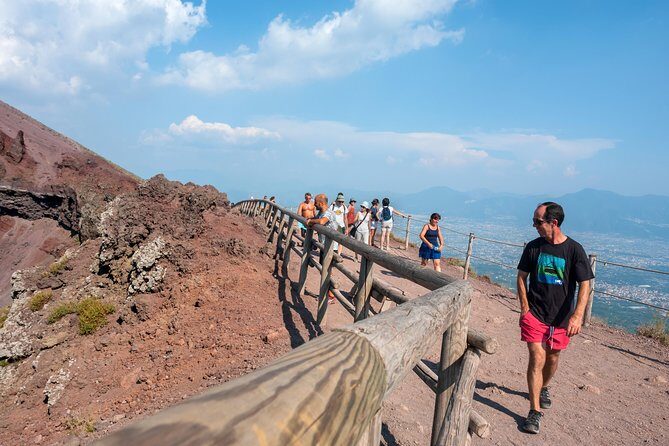
One more important detail: this tour does not reach the top of Mount Vesuvius. So if you’re dreaming of crater viewpoints from the summit, plan something else separately.
Time, tickets, and what to budget (so there are no surprises)
The full day is about 8 to 9 hours, with pickup available anywhere in the Naples or Sorrento area. It’s private for your group only, up to 7 people, with a mobile ticket.
Your main extra costs are:
- Pompeii + Herculaneum admission fees: about €40 per adult for both sites (under 18 is free with valid ID)
- Winery lunch and wine: about €50 per person (or €60 with superior wine upgrade)
Also, admission tickets to sites aren’t bundled in the listed tour price. That’s normal for private tours, but it’s worth budgeting early so you don’t get to the gate scrambling.
Walking reality check: moderate physical fitness is recommended. Pompeii’s stone surfaces, museum paths, and uneven grounds can be tough in heat. Bring sturdy shoes with grip, a hat, and a water refill plan (you’ll have water on board, but you’ll still want your own routine).
Value check: why the price can work (if you fill the group)
The tour is priced at $861.07 per group (up to 7). That can feel high until you think in group math.
If you’re traveling with 4–7 people, you’re essentially paying for:
- a private archaeologist-style guided day across two major sites
- private transport in an air-conditioned vehicle
- water and Wi‑Fi on board
- guided focus inside both Pompeii and Herculaneum
Then you add the extras you’d likely pay anyway if you self-guided:
- admissions (about €40 adult for both)
- winery lunch and tasting (about €50–€60)
The big “value” is time and clarity. Pompeii and Herculaneum are too big to wander well. A good guide helps you see the story instead of collecting random photos.
Who should book this Pompeii and Herculaneum day (and who might not)
Book it if:
- you want a guided day with expert interpretation, not just ruins with a map
- your group includes kids and you want them engaged (the family-friendly upgrade is the point here)
- you like a realistic pace with flexibility for rest breaks
Consider a different plan if:
- you need a low-walking day. This is moderate-to-active sightseeing.
- you want to drive right up to the Vesuvius summit. This itinerary doesn’t go there.
Should you book this Pompeii, Herculaneum and Vesuvius winery tour?
Yes, if you’re aiming for a single-day “best of Roman Campania” that actually makes sense. This tour is strongest when you care about explanations and you want to avoid wasting time guessing what you’re looking at.
The Pompeii side gives you the public heart and elite home life, plus theater and museum context. The Herculaneum side is the real emotional payoff thanks to the preservation and the shoreline storytelling. The winery lunch is a solid reset in the middle of a long day, and the pricing can work well when you’re traveling as a group.
If your goal is crater-summit views or a very light day, then you’ll want a different option. But for most people, this is a smart way to hit the highlights with a guide who can adapt in real time.
FAQ
What is included in the tour?
The tour includes an air-conditioned vehicle, water and Wi‑Fi on board, private guided tours in both Pompeii and Herculaneum, and private transportation. You also get a mobile ticket.
Are Pompeii and Herculaneum admission tickets included?
No. Admission fees are not included, and they’re about €40 per adult for both sites. Under 18 is free with valid ID.
Is lunch and wine included?
Lunch and the wine experience at Cantina del Vesuvio are not included in the tour price, but the winery visit is part of the day. It costs about €50 per person all-inclusive, or about €60 for a superior wine upgrade.
Does the tour go to the top of Mount Vesuvius?
No. This tour does not reach the top of Mt Vesuvius.
How long is the day?
It runs about 8 to 9 hours.
Where does pickup happen?
Pickup is offered anywhere in the Naples or Sorrento area. If you’re staying on the Amalfi Coast, you need to contact them first.
What group size is this for?
It’s a private tour for only your group, up to 7 people.
Is it family-friendly?
Yes. There is an upgrade for a family-friendly experience designed to entertain children, and the tour is offered with a pace that can be adjusted to your group’s energy.
Can I cancel for a full refund?
Free cancellation is available up to 24 hours in advance of the experience start time for a full refund. If you cancel less than 24 hours before, the amount paid is not refunded.