REVIEW · NAPLES
Pompeii and Herculaneum Private Walking Tour with an Archaeologist
Book on Viator →Operated by Askos Tours · Bookable on Viator
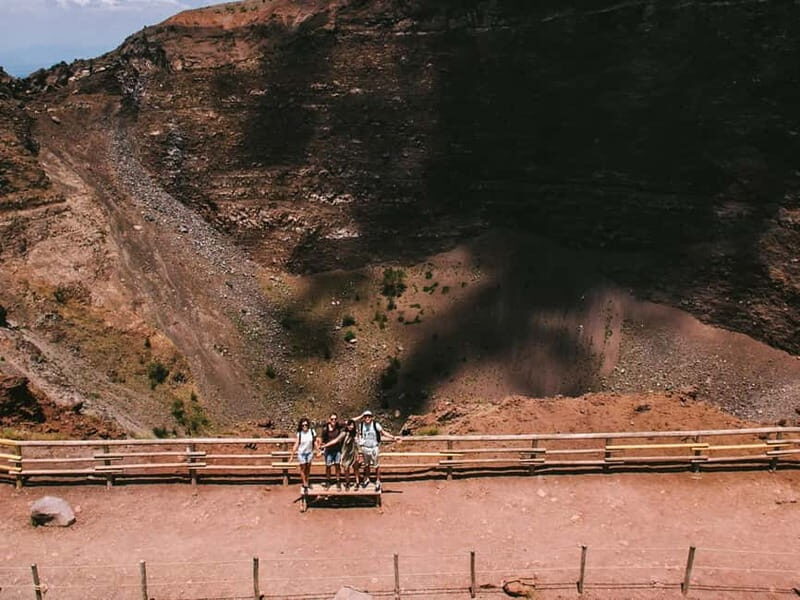
One volcano. Two cities. Much clearer than a guidebook. This private walking tour pairs Herculaneum and Pompeii in one 5.5-hour day, with an archaeologist guide explaining what you’re looking at and why it matters. You’ll move through Roman homes, baths, and public spaces that were preserved under volcanic ash from Mount Vesuvius, then connect those “cool ruins” to real daily life.
What I like most is the private, archaeologist-led format: you can ask questions as you go, and the pace stays human instead of herding you like luggage. Second, I like the way the stops work like a guided sampler, especially in Herculaneum where you see intimate houses and thermal life back-to-back. One consideration: tickets to the sites are not included, so you need to budget entry fees (and make sure you have the right tickets for Pompeii).
In This Review
- Key things that make this tour work well
- Why Herculaneum and Pompeii in one half-day makes sense
- An archaeologist guide turns ruins into context
- Getting from Herculaneum to Pompeii without turning your day into logistics
- Herculaneum highlights: a close-up look at Roman life
- House of the Deer
- La Terrazza di M. Nonio Balbo
- College of the Augustales
- Casa del Rilievo di Telefo
- Partem Domus lignea (wooden partition)
- House of the Skeleton
- Central Thermae
- House of the Black Salon
- Casa Sannitica and Casa del Bel Cortile
- House of the Grand Portal
- Pompeii: from the main street to the forum core
- Walk the main street
- Foro de Pompeya (forum)
- Granaries of the Forum
- Basilica
- Pompeii’s most memorable stops: baths, houses, theater, and the lupanar
- Stabian Baths (Terme Stabiane)
- Lupanar
- House of the Faun and House of Menander
- Teatro Grande and a quick look at Teatro Piccolo
- Tickets, entry fees, and what you should plan to pay
- Price and value: is $597.36 per group actually fair?
- What you’ll miss if you skip the private archaeologist
- Who this tour is best for (and who might want a different plan)
- Practical tips so you feel relaxed during the day
- Should you book this tour?
- FAQ
- What locations does this tour cover?
- How long is the tour?
- Is this a private tour?
- What language is the tour offered in?
- Are entrance tickets included?
- How much are Herculaneum tickets?
- How do you get to Herculaneum during the tour?
- Where do you meet the guide at Pompeii?
- What should I wear and bring?
- Is food included?
Key things that make this tour work well
- Archaeologist guidance across both sites, so names like lupanar and thermae make sense fast
- Herculaneum first, which sets the stage for how ash preserved everyday life
- Short, focused house visits (often 10 minutes each) rather than long detours
- Roman engineering details, like separate entrances for men’s and women’s baths
- Private-group pacing—useful when you’re traveling with kids or you want time to ask questions
Why Herculaneum and Pompeii in one half-day makes sense
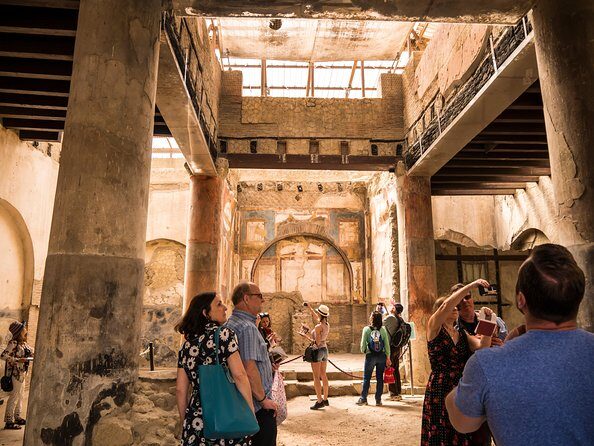
If you’ve only got one day, doing both sites together is smart. Herculaneum feels more intimate. The streets and houses are close enough that you get a real sense of how people moved through daily life. Pompeii, by contrast, is bigger and louder in scale, with grander public buildings and a long main street that’s built for crowds.
This tour’s structure helps you avoid the common mistake of “seeing a lot, understanding little.” With an archaeologist guide, you’re not just walking past features—you’re getting the story behind them: what Romans ate and drank, how they relaxed, what they valued in their homes, and how the eruption changed everything.
If you're still narrowing it down, here are other tours in Naples we've reviewed.
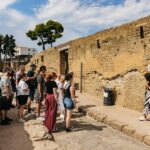
An archaeologist guide turns ruins into context
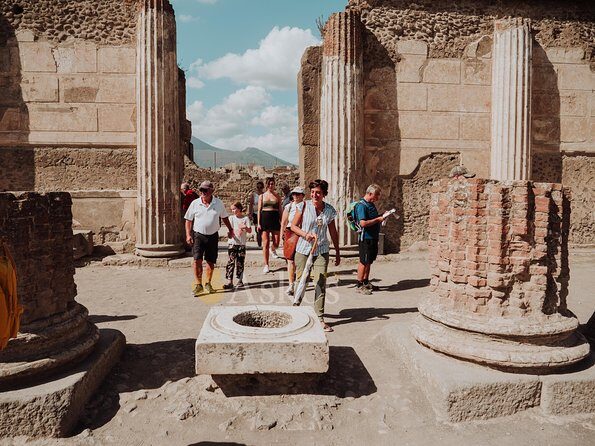
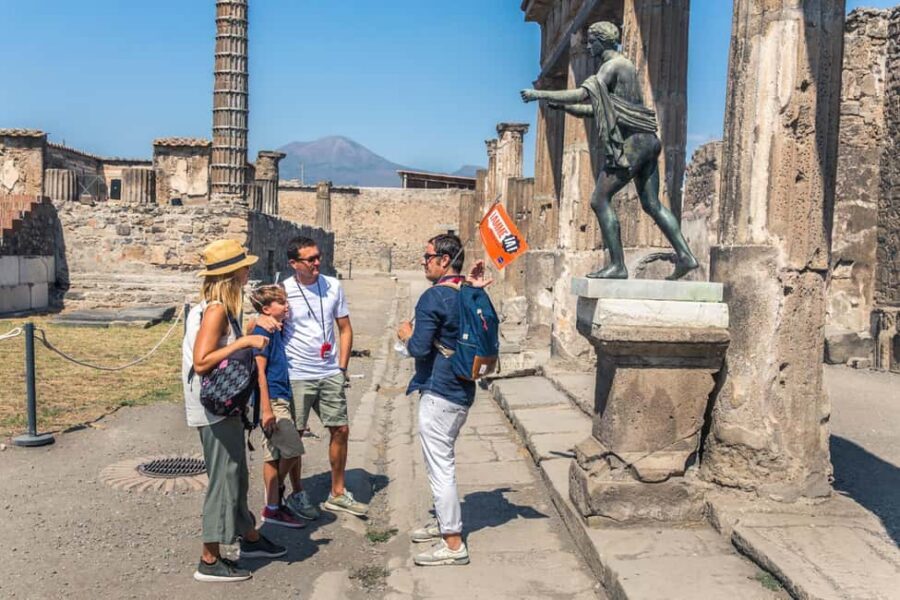
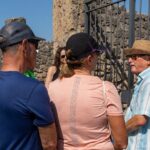
The biggest value here is the guide. People consistently praise guides such as Mena, Vincenzo, Ivan, Sylvia, Raffaele Romano, Giovanni, Paola, and Alessandra for one clear reason: they connect dots. You’ll get explanations that go beyond what’s carved on stone.
In a private setting, the payoff is practical. You’re not waiting your turn. You can ask follow-ups while you’re standing in front of the evidence—frescoes, bath layout, wooden elements that burned and carbonized, or inscriptions that explain who funded buildings and why.
That matters at both sites. In Herculaneum, tiny details like a doorway’s surviving carbonized posts can lead to a bigger explanation about construction and disaster preservation. In Pompeii, big-picture stops like the forum and basilica make more sense when you’ve already learned how Roman public space functioned.
Getting from Herculaneum to Pompeii without turning your day into logistics
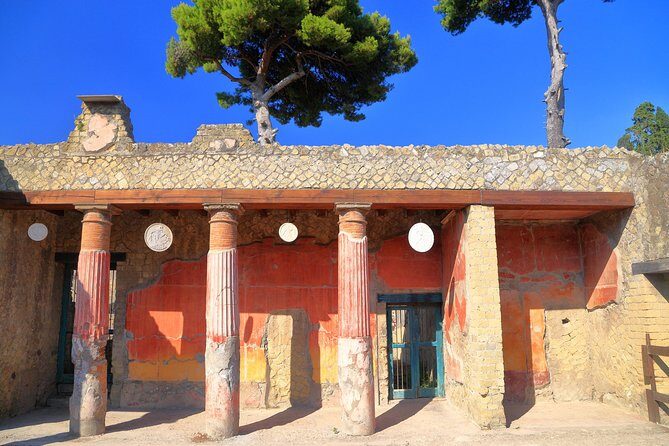
Your day starts in the Ercolano area, then you head to Herculaneum by train (about 30 minutes on the ride) plus a short walk to the ruins. The meeting point for the Herculaneum segment is at the Ticket Office of the Herculaneum ruins.
Then the tour continues into Pompeii. At Pompeii, you’ll meet at the main entrance called Porta Marina Superiore, where your guide holds a sign with the company name Askos Tours. The tour finishes inside the Pompeii ruins near Via Villa dei Misteri, 2, 80045 Pompei NA.
Two real-world tips based on what usually trips people up in this region:
- Wear comfortable shoes with grip. Uneven stone and curb edges add up.
- Keep an eye on the timing. The stops are short on purpose, so you want the day to flow.
Herculaneum highlights: a close-up look at Roman life
Herculaneum is the reason this whole combo tour works. It’s where preservation feels almost personal. Your guide moves you from notable house features to public-life buildings quickly, but each stop has a clear purpose.
Here’s what you’ll likely see and what it means:
House of the Deer
You’ll start with the House of the Deer, named for marble stag or deer statues found in the peristyle. This kind of naming matters because it shows how archaeology works: houses get “read” through artifacts, not only walls and floors.
Practical note: it’s brief (about 10 minutes), so pay attention to what your guide points out—especially how the peristyle and garden space were used.
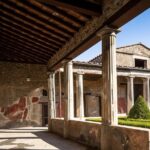



La Terrazza di M. Nonio Balbo
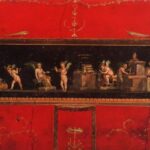
Next is La Terrazza di M. Nonio Balbo, tied to the city’s major benefactor, M. Nonius Balbus. You’ll hear how public buildings got restored and expanded, and how honors were recorded—there’s even an inscription connected to his funeral altar.
This stop gives you a shortcut to Roman power: who funded the city and how that legacy stayed visible.
College of the Augustales
You’ll visit the College of the Augustales, thought to be connected to the cult of Emperor Augustus and possibly the headquarters of the Augustales (or even the local governing body). It’s a reminder that Roman society wasn’t just private life and parties—it also ran on religious and civic organizations.
Casa del Rilievo di Telefo
The Casa del Rilievo di Telefo stands out for a detail that’s both architectural and practical: it may have belonged to a leading benefactor and had a private access route to the nearby Suburban Thermae to the south.
This is where your guide’s explanations become especially valuable. You’ll start to see “home” and “community spaces” as connected, not separate bubbles.
Partem Domus lignea (wooden partition)
One of the most compelling stops is Partem Domus lignea – Casa del Tramezzo di Legno, important because the elegant wooden partition still remains. When organic materials survive like this, it gives you a rare peek at how rooms functioned and were divided.
House of the Skeleton
The House of the Skeleton is named from the discovery of human remains found in a second-floor room in 1831. Your guide’s job is to keep it respectful and meaningful—turning a grim label into a real explanation of what happened during the eruption.
Central Thermae
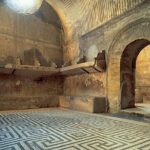
Then you’ll reach Central Thermae, built around the beginning of the 1st century AD. Here’s a key Roman-life detail your guide will use: baths were divided into men’s and women’s facilities, and each had separate entrances.
If you want a quick “feel” for Roman daily rhythm, this stop helps. People didn’t just work—they washed, socialized, and showed status in public spaces.
House of the Black Salon
The House of the Black Salon is one of Herculaneum’s more luxurious mansions. Watch for the monumental entrance where carbonized remains of doorposts and lintel are still visible. This is preservation you can almost touch with your eyes.
Casa Sannitica and Casa del Bel Cortile
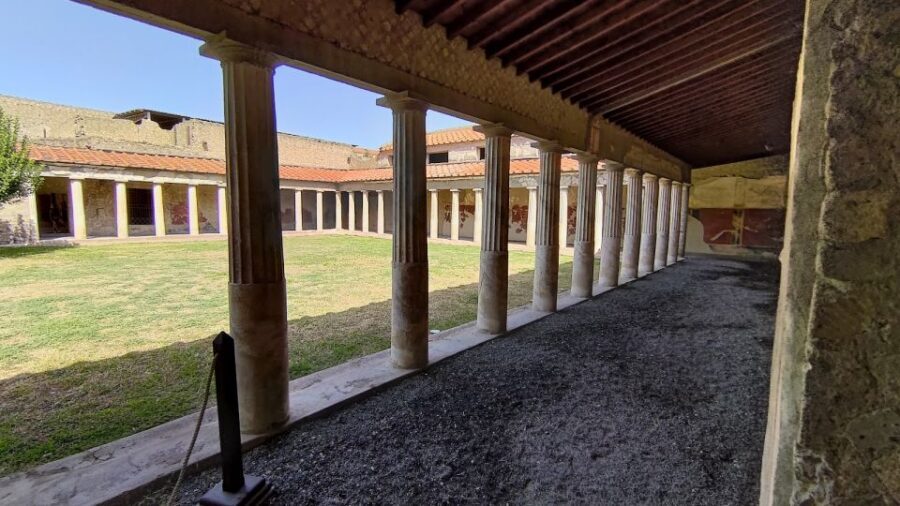
You’ll then see the Casa Sannitica, known for a layout typical of the Samnites, with an atrium and a gallery supported by Ionic columns, plus fresco decoration. After that, Casa del Bel Cortile offers a unique twist: a courtyard with a stairway and a stone balcony instead of an atrium.
These two stops are short, but they help you compare regional and stylistic choices across homes.
House of the Grand Portal
Finally, in Herculaneum you’ll reach the House of the Grand Portal, a domus in the central archaeological area with multiple environments and frescoes, plus charred remains of wooden parts. The point here isn’t just “pretty ruins.” It’s what the layout says about status, circulation, and how people lived.
Pompeii: from the main street to the forum core
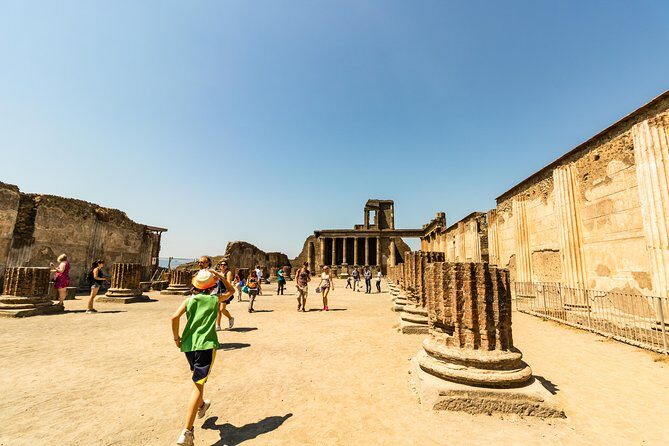
After Herculaneum, Pompeii feels like a bigger stage. You’ll enter with your guide and head into the heart of the site, including:
Walk the main street
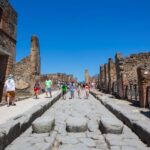
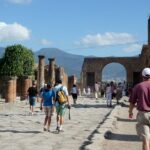
A walk through Pompeii’s main street is your orientation reset. It helps you understand where the big public buildings sit relative to where shops, houses, and daily movement would have been.
In practice, this is a gift for first-timers. It turns “I’m here” into “I can picture the city.”
Foro de Pompeya (forum)
Next is Foro de Pompeya, the ancient main square. Your guide will connect the forum to how Romans gathered, did business, and displayed civic life.
Granaries of the Forum
In the granary, you’ll see marble tables and baths for fountains at entrances of houses, plus casts of victims from the eruption, and even casts of a dog and a tree. This is one of those stops where the guide’s framing matters: it’s history with human weight.
Basilica
Then comes the Basilica, an open portico sheltering merchants and activities. It’s a “work and trade” space—so you’ll likely see how Roman commercial life wasn’t hidden. It was part of the open public flow.
Pompeii’s most memorable stops: baths, houses, theater, and the lupanar
This part of the day adds variety. It’s no longer only public squares and civic buildings. You start mixing in leisure, private wealth, and performance.
Stabian Baths (Terme Stabiane)
Terme Stabiane cover a vast area and are described as the oldest thermal complex in the city. It’s a big space, so your guide will help you interpret it without you getting lost in the scale.
If you’re trying to understand Roman comfort and social structure, baths are a strong theme: they blend function, routine, and community.
Lupanar
You’ll visit the Lupanar, the most famous brothel in the ruined Roman city. This stop is brief, but it’s useful because it expands your view beyond “elite households and temples.” Roman life included commerce and services you wouldn’t see from a distance.
House of the Faun and House of Menander
Then you’ll head into two major private residences: the House of the Faun and House of Menander. Both are noted as among Pompeii’s most impressive houses, with the Menander house singled out for richness in architecture, decoration, and contents.
This is where an archaeologist guide helps you see why these houses were powerful. It’s not just size. It’s layout, decoration, and how the home projects identity.
Teatro Grande and a quick look at Teatro Piccolo
You’ll also visit the Teatro Grande, the most important theater in Pompeii. The tour includes time for a look at the smaller Teatro Piccolo too.
Even if you’re not a theater fanatic, it’s a key Roman culture stop. Public entertainment was part of how communities bonded.
Tickets, entry fees, and what you should plan to pay
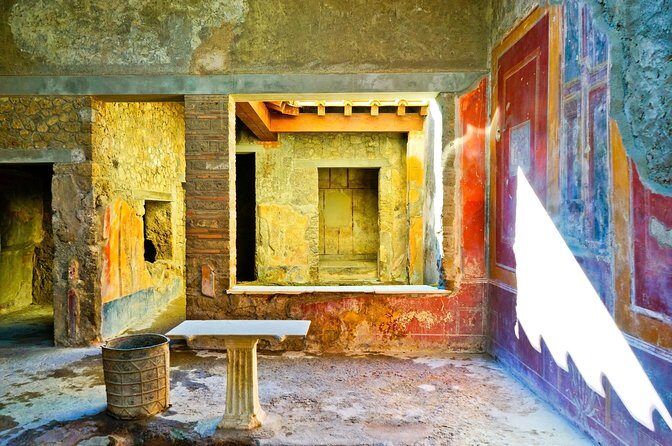
A real note on value and budgeting: site admission tickets are not included.
For Herculaneum, tickets are listed at €16 for adults and €2 for EU citizens aged 18–25. Pompeii entry tickets are also not included, and the information provided points to Pompei express entry tickets.
This doesn’t make the tour less attractive. It just means you should total the day’s cost correctly. When you compare it to self-guided visits, the guide time is the big expense you’re paying for, while tickets are the normal baseline you still have to buy.
If you’re traveling in a group, the per-person value improves, because the price is for your private group up to 15.
Price and value: is $597.36 per group actually fair?
At $597.36 per group (up to 15) for about 5 hours 30 minutes, the value depends on how many people you split it with.
- For 2–4 people, you’re paying more per head, which makes the private archaeologist part the core reason to book.
- For larger groups, the per-person number shrinks fast, and suddenly the guide becomes a cost-effective way to see more with less confusion.
This tour also saves you time in a practical way. Instead of spending your energy decoding ruins, you’re spending it asking questions and moving to the next highlight. And the private format makes a difference at these sites, where crowds and routes can slow you down.
What you’ll miss if you skip the private archaeologist
You don’t need an archaeologist to enjoy Pompeii and Herculaneum. But you do benefit from one if you want understanding.
Without a guide, you’ll likely see:
- beautiful remains
- famous names
- a few obvious landmarks
With a guide, you get meaning, like how baths worked with separate men’s and women’s entrances, or why a home is named after what was found inside it, or how inscriptions tied benefactors to civic rebuilding.
That’s why guides like Ivan, Sylvia, and Vincenzo earn high praise: they make questions answerable in the moment.
Who this tour is best for (and who might want a different plan)
This private walking tour fits best if you:
- want two major sites in one focused day
- enjoy explanations while you walk
- like having time to ask questions
- travel with kids who can benefit from patient answers (multiple guides are praised for handling families well)
It says moderate physical fitness is recommended. With that, you’ll be okay as long as you’re comfortable with steady walking on archaeological surfaces.
If you’re the type who only wants photo stops and zero talking, you might find the structured pacing a little much. But if you enjoy learning as you go, it’s a strong match.
Practical tips so you feel relaxed during the day
- Bring sunglasses and sunscreen. The sites can be bright and exposed.
- Wear comfortable shoes with no flip flops.
- Plan for a brief lunch break if you need one. You’ll have a quick break early on, but this is still a half-day route.
- For the best experience, come with one or two questions. For example: how daily routines worked in both cities, or what makes Herculaneum’s preservation different.
Should you book this tour?
I’d book it if you want the fastest way to get real context for both Herculaneum and Pompeii without spending your day stuck in “guessing mode.” The strong theme across the guide feedback is that the archaeology turns the sites into something you can actually understand, not just walk through.
I’d think twice if your group has a very low interest in explanations, or if you don’t want to manage ticket costs. In that case, a lighter option might feel easier.
If you’re aiming for a high-learning day with a private archaeologist, this is one of the best ways to do it—especially because it balances intimate Herculaneum detail with Pompeii’s major public anchors like the forum, basilica, baths, and theater.
FAQ
What locations does this tour cover?
It covers Herculaneum (Archaeological Park) and Pompeii (Pompeii Archaeological Park).
How long is the tour?
The duration is about 5 hours 30 minutes.
Is this a private tour?
Yes. It’s private, and only your group participates.
What language is the tour offered in?
It’s offered in English.
Are entrance tickets included?
No. Herculaneum entry tickets and Pompeii (Pompei express) entry tickets are not included.
How much are Herculaneum tickets?
The information provided lists €16 for adults and €2 for EU citizens aged 18–25.
How do you get to Herculaneum during the tour?
You transfer by train (about 30 minutes) plus about a 10-minute walk to the ruins.
Where do you meet the guide at Pompeii?
At Pompeii you meet at the main entrance called Porta Marina Superiore, where the guide holds a sign with the company name Askos Tours.
What should I wear and bring?
Wear comfortable shoes (no flip flops). Sunglasses and sunscreen are suggested.
Is food included?
No. Food and drinks are not included. There is a quick lunch break if required early on.