REVIEW · NAPLES
Pompeii and Herculaneum led by an Archaeologist with private transport
Book on Viator →Operated by Askos Tours · Bookable on Viator
There’s a lot of Roman drama in one day. This is a private archaeologist-led route that strings together both parks, with Mercedes comfort between stops and enough structure to avoid the usual chaos.
I like that you get curated walking time in Herculaneum and Pompeii without having to figure out logistics on your own. I also like the mix of big-ticket sights and very specific details, like the marble deer statues in the House of the Deer and the carved story of M. Nonio Balbo’s honors at La Terrazza di M. Nonio Balbo. The one thing to watch: it’s a long, active day with lots of short viewing windows, so you won’t have the slow, sit-and-stare pace some ruins lovers prefer.
In This Review
- Key things to know before you go
- A one-day Pompeii plus Herculaneum plan that actually works
- Mercedes comfort: why the drive matters here
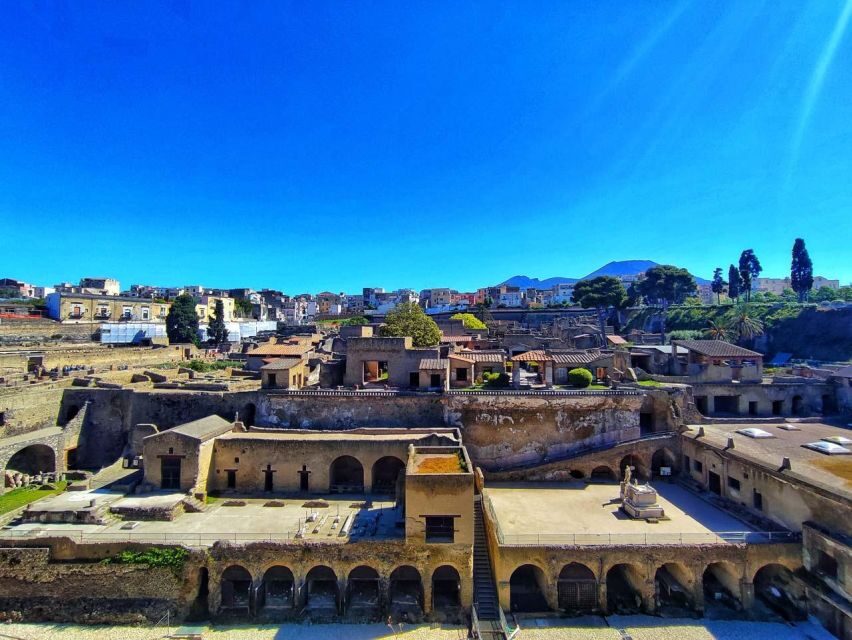
- Herculaneum: how the archaeologist walk brings the ruins to life
- The Houses and public buildings you’ll hit in Herculaneum
- Herculaneum’s “short stops” feel efficient, not rushed
- Pompeii: Forum energy plus big-house architecture and the baths
- Pompeii stops that anchor the city
- Lunch breaks and timing: the real trick is planning your energy
- Tickets, the Pompeii Express entry package, and why you’ll care
- Is the price worth it? Thinking in value, not just cost
- Who this Pompeii and Herculaneum tour fits best
- Should you book this Pompeii and Herculaneum private tour?
- FAQ
- How long is the Pompeii and Herculaneum tour?
- Where does the tour pick up you?
- Is transport included?
- Are the Pompeii and Herculaneum tickets included?
- Is lunch included?
- What sights do you visit at Herculaneum?
- What sights do you visit in Pompeii?
- What language is the tour in?
- What should I bring or wear?
- Is this tour private?
Key things to know before you go
- Herculaneum first, then Pompeii, so you cover both cities without doubling back
- Private Mercedes transport between sites for a calmer day
- Archaeologist guide who can point out what you’d miss on a self-walk
- Smart stop format: quick hits at the most distinctive houses, baths, and public spaces
- Tickets handled for both parks via the Pompeii Express entry package
A one-day Pompeii plus Herculaneum plan that actually works
If you only have one day in the Naples area, this route is built for that reality. You’re seeing two different volcanic-time “snapshots” of Roman life in the same working day, with a guide to explain what you’re looking at while you’re looking at it.
What makes this setup feel practical is the pacing. The day is structured into compact segments in Herculaneum, then a shift to Pompeii with free time for lunch and a guided walk through major highlights. You get movement, but you’re not constantly hustling to find the next place.
One more reason I like this style: you’re not treating Pompeii and Herculaneum like two unrelated stops. The guide can connect themes across both towns, so the ruins feel more like evidence and less like random ruins.
If you're still narrowing it down, here are other tours in Naples we've reviewed.
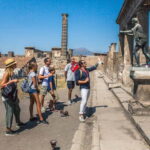
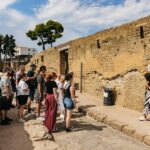
Mercedes comfort: why the drive matters here
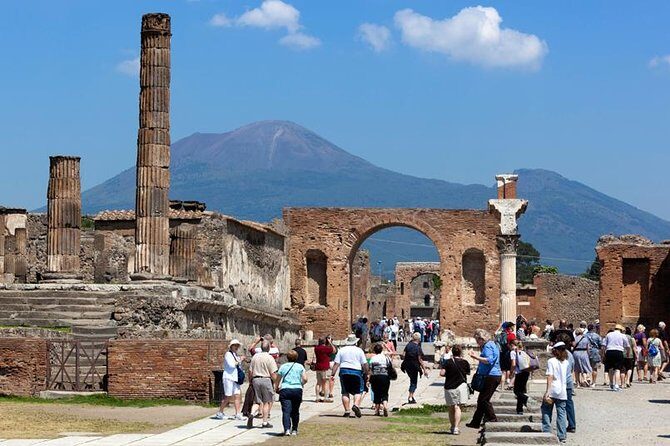
The transportation is part of what you’re paying for. This is private transport by a professional driver in an air-conditioned Mercedes car/minivan, which matters on the coast-to-ridge route and when you’re switching between two major archaeological parks.
Between Herculaneum and Pompeii, you’re saving energy for walking. That sounds small, but it changes your whole day—your legs and your attention both stay fresher when you’re not doing long public-transit transfers.
This tour also supports multiple pickup points in the Campania region, including Naples, Salerno, Sorrento, and the Amalfi Coast. For cruise days especially, this can be the difference between a smooth plan and a stressful scramble.
Herculaneum: how the archaeologist walk brings the ruins to life
Your day starts at the Archaeological Park of Herculaneum, with pickup from your accommodation (or nearby meeting locations) followed by meeting the archaeologist at the ticket office of the Herculaneum ruins. Admission timing is handled through the tour’s included ticket package, but you’ll still go through the ticket office step to get started.
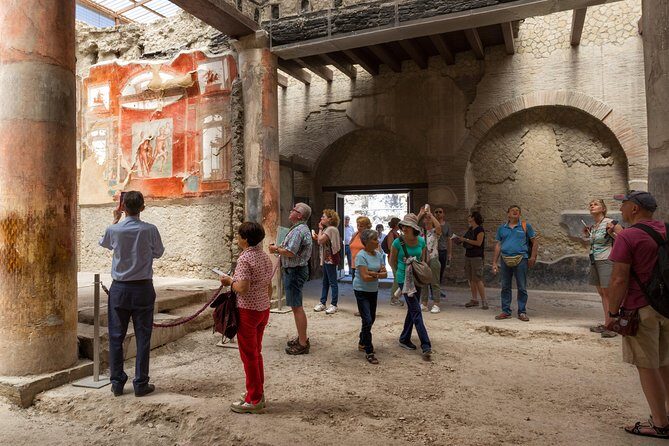
Then the tour moves house-by-house and building-by-building through some of the park’s most recognizable spots. Expect a pattern of quick explanations and direct sightlines to standout features—things that are hard to spot if you’re walking alone.
The guides assigned can include archaeologists such as Lucio, Alfredo, Daniela, Ivan, Benedetto, Giovanni (driver), Fulvio (driver) and more, depending on the day. The key point is that you’re not getting a generic “here’s a wall” walk. You’re getting someone who can connect the details to how the city worked.
The Houses and public buildings you’ll hit in Herculaneum
Herculaneum is where the stops feel most like “mini chapters.” Here’s what you’ll make time for, and what to pay attention to:
- House of the Deer (Casa dei Cervi)
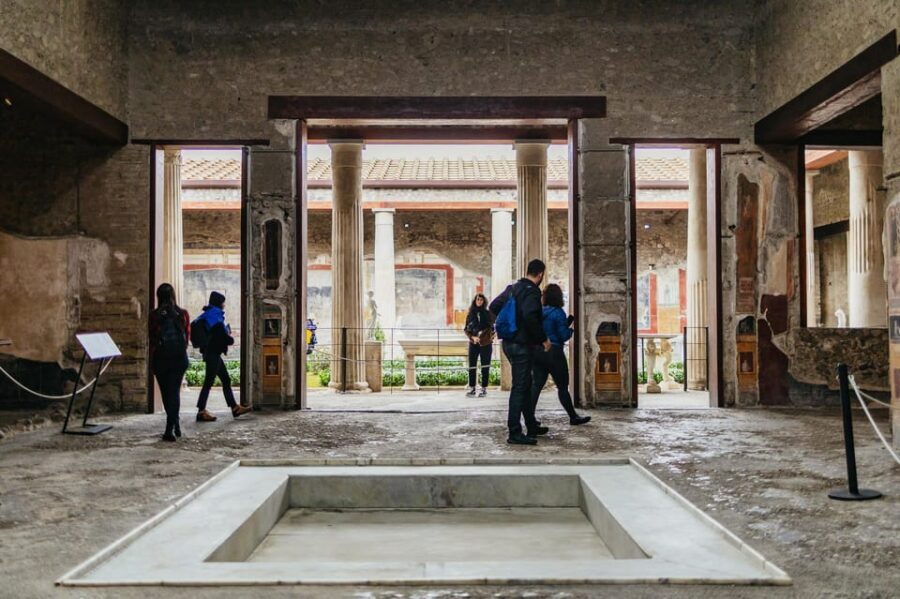
The name comes from marble statues of stags/deer found in the peristyle. Even with a brief stop, this is a great place to orient your eyes: the home isn’t just a layout, it has decoration with a specific story behind it.
- La Terrazza di M. Nonio Balbo
This focuses on M. Nonius Balbus, a major benefactor, and the long inscription tied to honors and commemorations. If you like the “who mattered and why” side of archaeology, this stop helps you understand how public life and private power overlapped.
- College of the Augustales
You’ll see a building tied to the cult of Emperor Augustus and the Collegium Augustalium (and possibly the local curia). This is one of those spots where a short visit still helps you read the city as a community, not just a collection of houses.
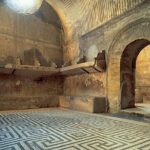
- Central Thermae
The baths were built around the beginning of the 1st century AD, and the complex is divided into men’s and women’s baths with separate entrances. This is a good reminder that daily life had routines and boundaries, and the architecture reflects that.
- Casa del Rilievo di Telefo
This house is described as unusual because it has its own private access to the adjoining Suburban Thermae. The takeaway is about design: this wasn’t just “a place to live,” it was a place built into the city’s public systems.
- House of the Skeleton
Named after human remains discovered in a second-floor room in 1831. This stop tends to hit people emotionally because it turns the site from abstract ruins into real, human traces.
- House of the Black Salon
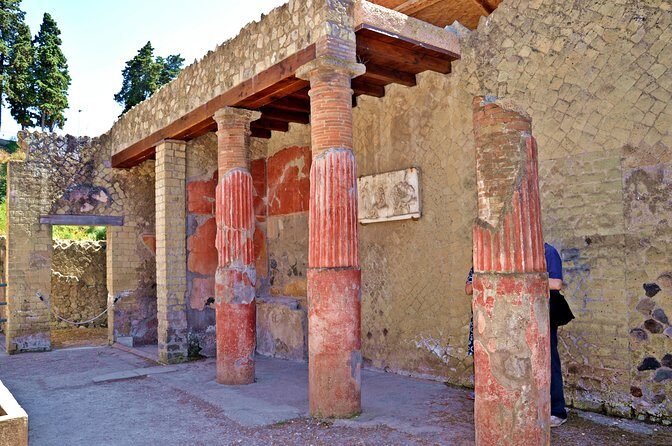
One of Herculaneum’s more luxurious mansions, with a monumental entrance retaining charred remnants of doorposts and lintel. It’s visually striking, and the guide’s job here is to help you see what the survival of those elements can tell you.
- Partem Domus lignea – Casa del Tramezzo di Legno
This is about an important wooden partition that remained. If you like the “how did anything survive” angle, this stop gives you that practical curiosity.
- Casa Sannitica
A typical Samnite arrangement, with a splendid atrium and a gallery with Ionic columns, plus fresco decoration. This is where design details can feel almost like a snapshot of taste and status.
- Casa del Bel Cortile
Known for an original courtyard with a stairway and a stone balcony instead of an atrium. If you’re the type who likes noticing differences between homes, this is a quick pattern-break.
- House of the Grand Portal
A domus with multiple environments and collonnati, plus fresco elements and charred remains of wooden parts. This stop helps you understand Herculaneum as layered wealth and layered construction.
Herculaneum’s “short stops” feel efficient, not rushed
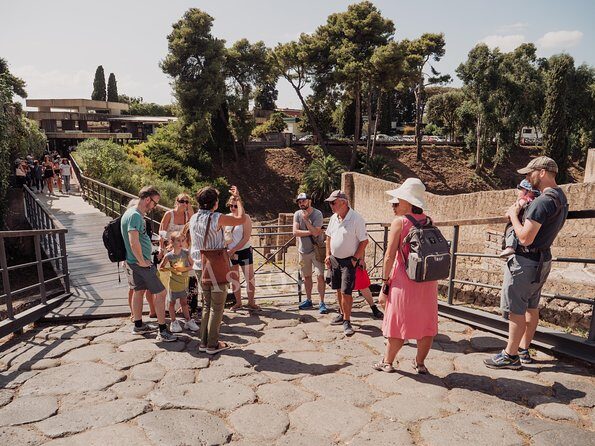
One concern with any one-day Roman ruins plan is how much you miss when every stop is only a few minutes. Here, the solution is the structure: the archaeologist points you toward what matters in each location so you don’t spend those minutes hunting for meaning.
You’ll spend around an hour total on guided content in Herculaneum before moving to the lunch window and then Pompeii. That means you’re not doing a slow museum circuit, but you are getting a high signal-to-noise day.
If you want the most out of the short stops, do this: choose one or two “favorite topics” before you arrive. Maybe you care about baths, inscriptions, or wealthy houses. Then let the guide’s explanations steer your eyes so you leave with a mental map, not just photos.
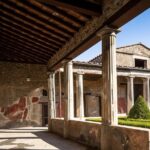


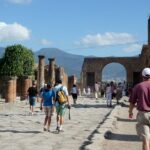
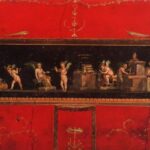

Pompeii: Forum energy plus big-house architecture and the baths
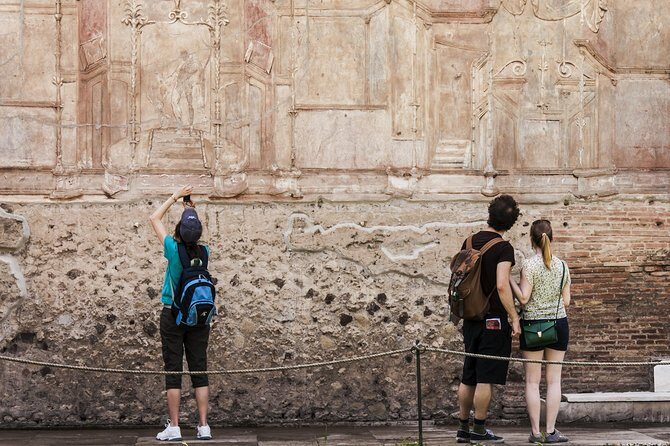
After Herculaneum, you’ll shift to Pompeii Archaeological Park for a later morning/early afternoon block. There’s also time for lunch on your own, then the tour continues into Pompeii highlights.
Pompeii is the park that many people picture first, and this tour hits the places that help you grasp the city’s layout quickly.
Pompeii stops that anchor the city
Here’s the Pompeii portion in plain terms, plus what each stop is best for:
- Lupanar (brothel)
This is the most famous brothel in the ruined Roman city. It’s brief, but it gives you a strong cultural anchor: Pompeii wasn’t only monumental buildings and rich homes, it had everyday commerce and services.
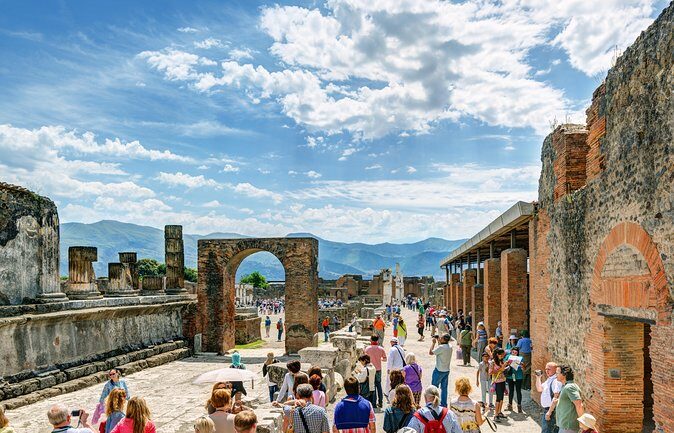
- Foro de Pompeya (main square)
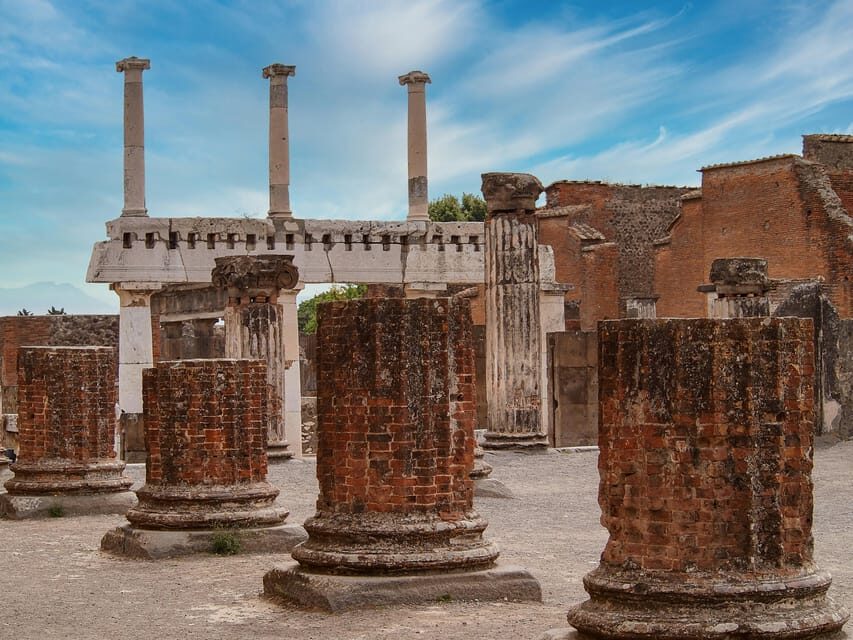
A look at the ancient main square. This is where you start understanding how people moved through the city and where civic life happened.
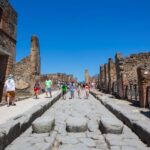
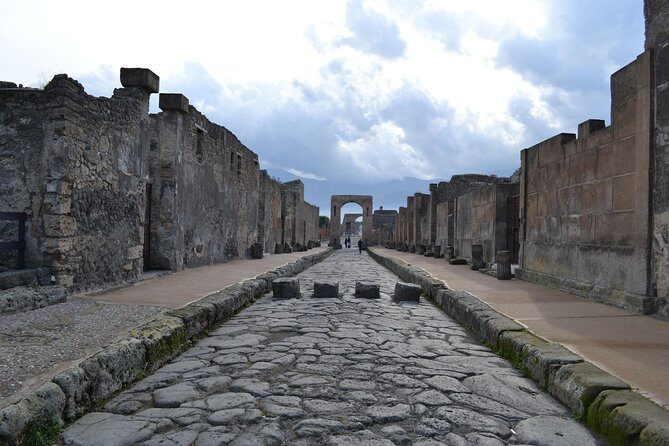
- Main street walk
Walking the main street helps your brain “connect the dots” between squares, buildings, and house clusters.
- Granaries of the Forum
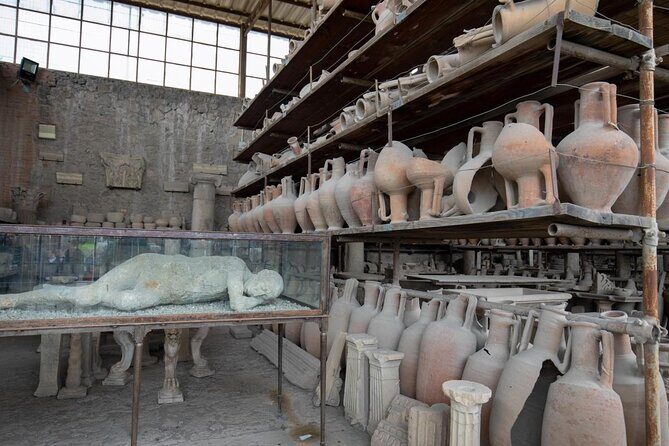
In the granary, you’ll see marble tables and baths for fountains that adorned house entrances, plus casts of victims of the eruption (as well as a dog and a tree). This stop is heavy, but it’s also where you grasp scale and impact.
- Basilica
An open portico that sheltered merchants and other activities. If you want the “how business worked” feel, this is an easy win.
- Stabian Baths (Terme Stabiane)
These occupy a vast area and represent the oldest thermal complex in the city. It’s a good contrast to Herculaneum’s baths and a reminder that bathing culture was built into Roman social life.
- House of Menander
Described as one of the richest and most magnificent homes in Pompeii in architecture, decoration, and contents. This is your big “wealth and design” stop.
- House of the Faun
One of the largest and most impressive private residences in Pompeii. If you’re comparing it to Herculaneum’s luxury mansions, the guide can help you focus on what’s different.
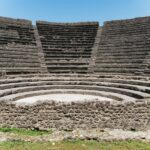
- Teatro Grande and Teatro Piccolo (peek)
You’ll visit the most important theater, with a look at the so-called Teatro Piccolo. Even in a short window, theaters help you understand public entertainment and civic culture.
Lunch breaks and timing: the real trick is planning your energy
The tour includes a lunch break window, but meals themselves are not included. You can eat during the free time between Herculaneum and Pompeii, and there’s also a lunch break built into the Pompeii segment.
To keep the day from feeling grindy:
- Wear comfortable shoes. This is a walk-heavy ruins day.
- Bring water, and use sunglasses and sunscreen as recommended.
- In summer, skip flip-flops. Heat + uneven stone is a bad match.
If you’re traveling with someone who moves slower, ask the guide ahead about pacing. In practice, guides on this route have been noted as patient with mobility limitations, which matters when your group needs flexible timing.
Tickets, the Pompeii Express entry package, and why you’ll care
The tour includes entry fees using the Pompeii Express admission/ticket package for both parks. In practical terms, this means less ticket wrangling on the day and more time walking with the archaeologist.
You’ll still meet at the ticket office for Herculaneum to start the day, but the key advantage is that admission for your tour portion is taken care of in the package. That’s one less moving piece when you’re trying to fit two major sites into about 7 hours.
Is the price worth it? Thinking in value, not just cost
At $666.75 per person for a 7-hour private tour, you’re paying for a specific bundle:
- private air-conditioned transport in a Mercedes by a professional driver
- an archaeologist-led guided walk through both parks
- admission/tickets handled through the Pompeii Express package for Pompeii and entry for Herculaneum
If you were to piece it together yourself, you’d likely spend real time coordinating transit, ticket timing, and navigating large sites without the “what am I seeing” explanations. Here, the cost is buying you the human layer plus the logistics layer.
This tour is most valuable when your time is limited. If you’re on a cruise or you’re staying on the Sorrento/Amalfi side, pickup and drop-off can also add big value because you don’t need to solve the area’s transport puzzle.
Who this Pompeii and Herculaneum tour fits best
This is a great match if you want:
- one-day coverage of both Pompeii and Herculaneum
- an archaeologist guide to spot details like inscriptions, named houses, and specific building functions
- comfort-first transport with private pickup/drop-off across Campania
It’s also a good fit for families with teens who can handle walking. Guides on this route have worked well with mixed groups, keeping the information readable and the pace realistic.
Where it’s less ideal: if you want long, independent time in only one park, this kind of itinerary won’t feel like the right tempo. It’s designed for breadth plus interpretation, not deep solo wandering.
Should you book this Pompeii and Herculaneum private tour?
Book it if your priority is getting the most meaningful version of both sites in a single day, with transport and tickets handled and a guide who can point out what you’d miss.
I’d skip it only if you strongly prefer slow pacing and lots of unstructured time. Also think twice if you’re expecting a hands-off day where you sit comfortably between stops; you’ll be walking through many highlights.
If you can handle a long ruins day, this is one of the better ways to see Pompeii and Herculaneum without the self-guided guesswork.
FAQ
How long is the Pompeii and Herculaneum tour?
The duration is about 7 hours.
Where does the tour pick up you?
Pickup is offered from your accommodation in Naples, Salerno, Sorrento, or the Amalfi Coast, and it may also include cruise port, train station, or airport pickup.
Is transport included?
Yes. The tour includes transportation by a private minivan (Mercedes) with a professional driver and air-conditioning.
Are the Pompeii and Herculaneum tickets included?
Yes. Admission is included through the Pompeii Express entry tickets package, covering Pompeii and Herculaneum entry fees for the tour.
Is lunch included?
No. Meals are not included, but there is lunch time/free time built into the day.
What sights do you visit at Herculaneum?
You visit several major stops, including House of the Deer, La Terrazza di M. Nonio Balbo, the College of the Augustales, Central Thermae, and multiple named houses such as the House of the Skeleton, the Black Salon, and Casa Sannitica.
What sights do you visit in Pompeii?
You’ll see highlights such as the Lupanar, Foro de Pompeya, the Granaries of the Forum, Basilica, Stabian Baths, the House of Menander, the House of the Faun, and the theaters.
What language is the tour in?
The tour is offered in English.
What should I bring or wear?
Wear comfortable shoes, and bring sunglasses, sunscreen, and water. In summer, it’s recommended not to wear flip-flops.
Is this tour private?
Yes. It’s a private tour/activity, and only your group will participate.