REVIEW · NAPLES
Herculaneum Private Tour with an Archaeologist
Book on Viator →Operated by ELIANA SANDRETTI · Bookable on Viator
Herculaneum hits harder than you expect. A private archaeologist-led tour turns the buried streets into something you can actually picture, with frescoes and carbonized details tied to the eruption of Vesuvius. My only caution: this is still an outdoor site, and the mix of sun, uneven ground, and steps can be rough if you move slowly.
I like how the format is simple: meet at the park, get a focused route, then move room to room without wasting time guessing. You’re in a small private group (up to 10), it runs about two hours, and it’s offered in English with a mobile ticket.
If you’ve already seen Pompeii and felt like you were bouncing from sight to sight, this one is more your speed. It’s also a strong pick if you care about how Roman homes worked day to day, not just the disaster headlines.
In This Review
- Key things I’d pay attention to
- Herculaneum with an archaeologist: why this feels different from Pompeii
- Price and tickets: what $349.98 per group really buys
- Meeting at Ercolano and the logic of the 2-hour route
- Stop 1 to Stop 4: the park entry, the eruption terrace, and the sea-view domus
- Stop 1: Parco Acheologico di Ercolano
- Stop 2: La Terrazza di M. Nonio Balbo (5 minutes)
- Stop 3: Casa dei Cervi (15 minutes)
- Stop 4: Partem Domus lignea – Casa del Tramezzo di Legno (15 minutes)
- Stop 5 to Stop 7: the Black Room, the charred boat, and frescoed myth at the College of the Augustales
- Stop 5: Casa del Salone Nero (15 minutes)
- Stop 6: Salone della Barca di Ercolano (15 minutes)
- Stop 7: College of the Augustales (15 minutes)
- Stop 8 to Stop 10: the House of the Skeleton, the older Samnite home, and Neptune’s scene-setting rooms
- Stop 8: House of the Skeleton (10 minutes)
- Stop 9: Casa Sannitica (15 minutes)
- Stop 10: Casa di Nettuno e Anfitrite (15 minutes)
- What makes this tour worth booking (and what to watch for)
- Should you book the Herculaneum private tour with an archaeologist?
- FAQ
- How long is the Herculaneum private tour with an archaeologist?
- Is this tour private?
- What language is the tour offered in?
- Where do we meet for the tour?
- Do I need to pay for entrance tickets?
- What is included in the tour price?
- Is there a mobile ticket?
- What if the weather is bad or I need to cancel?
Key things I’d pay attention to
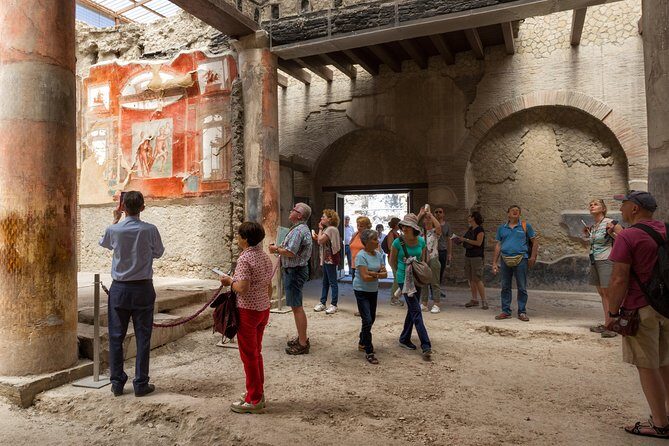
- An archaeologist guide who answers questions in real time instead of pushing a script
- A tight 2-hour route that covers the park’s top domus and key rooms
- Stop-by-stop meaning for why rooms are named things like Black Room, Boat Room, and House of the Skeleton
- Eruption context at multiple viewpoints, including the terrace where people died
- Fresco and wood preservation clues, which are the whole story at Herculaneum
- Good pace for a private group, with guides adjusting when someone needs it
Herculaneum with an archaeologist: why this feels different from Pompeii
Pompeii is famous, but Herculaneum is often the one that lingers in your mind. Here, the town is smaller and more intimate, so you don’t spend the whole visit trying to find the next landmark. Instead, you get to focus on what survived: walls, rooms, painted surfaces, and even charred wood elements that help explain how people lived.
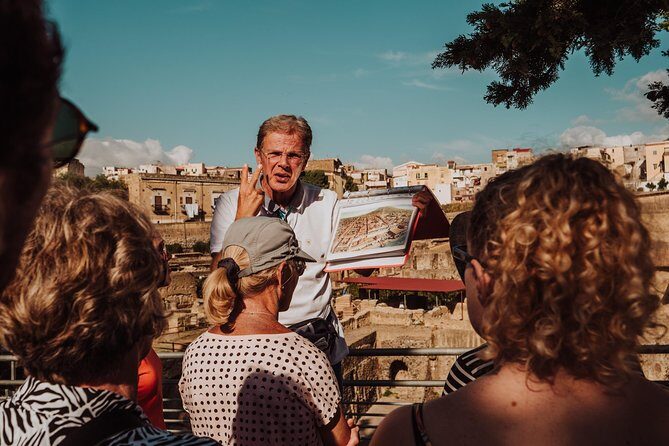
On an archaeologist-led private tour, the biggest value is interpretation. You’re not just looking at stone outlines. You’re learning what to notice: where a room’s function shows up, why certain details were found where they were, and how scholars connect artifacts to daily life right before 79 AD. In the guides’ explanations, you also hear how excavations have changed over time, including what remains buried under later habitation layers.
This kind of tour also helps you see the emotional side without turning it into a spectacle. Sites tied to the eruption are handled with context: what happened, what’s visible now, and how the evidence was preserved.
If you're still narrowing it down, here are other tours in Naples we've reviewed.
Price and tickets: what $349.98 per group really buys
The price is $349.98 per group (up to 10) for a private 2-hour experience in English. That sounds like a group rate because it is. If you’re traveling with 2–6 people, it can work out much better than paying per person for a guided walk.
But there’s one major thing to budget: entrance and/or admission fees are not included. Your tour includes the archaeological guide and assistance, and the main attractions of Herculaneum. You still need to cover the site entry separately.
Here’s what you should plan for based on the provided info:
- Admission Fee / Entrance ticket to Herculaneum: €15 for adults, and under 18 get free tickets.
- There’s also an additional €15 per person admission fee listed under not included, described as a private tour of Herculaneum. Since the wording is a bit overlapping, I’d treat it as a second charge possibility and confirm at booking or checkout so you don’t get surprised.
Also note: the park visit itself is outdoors, and the experience runs only if weather is good. It’s worth packing for heat and sun even if the ruins look cool and shaded once you’re inside.
Meeting at Ercolano and the logic of the 2-hour route
You meet at the Archaeological Park of Herculaneum (Parco Acheologico di Ercolano), at the ticket office on Corso Resina 187, 80056 Ercolano NA, Italy. The tour operator provides a mobile ticket, but you’ll still want to handle the park entry on arrival if you didn’t buy online. Your guide meets you with a sign (the name Eliana Sandretti is specifically mentioned), and then you start moving.
A smart part of this setup is that the itinerary is built like a sequence of rooms with a purpose. Each stop takes about 10–15 minutes, with one shorter viewpoint stop. That means you don’t get stuck in one area too long, and you still leave with enough context to make sense of what you saw.
Now let’s walk through the route the way you’ll experience it.
Stop 1 to Stop 4: the park entry, the eruption terrace, and the sea-view domus
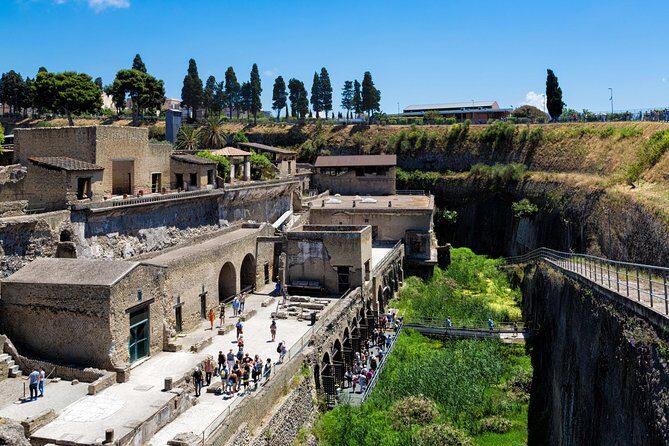
Stop 1: Parco Acheologico di Ercolano
This is where you get your foundation. The entrance ticket to the archaeological park covers the attractions you’ll see during the tour, and the guide is waiting at the ticket office so you’re not wandering around trying to connect with the right group.
Why this start matters: Herculaneum can feel confusing at first glance because the town is fragmented and layered under the modern surface. Having an archaeologist explain what you’re looking at early on helps you interpret every later stop faster. It’s also where you learn what to ask about: reconstruction limits, what was actually found versus what’s an interpretation, and what preservation can and can’t tell us.
A tip based on how the tours are described: arrive ready to listen and then start asking questions as soon as you’re oriented. The best explanations come when you steer the conversation a bit.
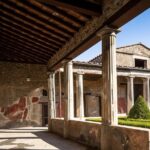


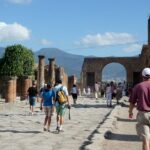
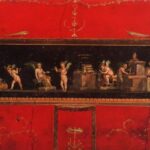

Stop 2: La Terrazza di M. Nonio Balbo (5 minutes)
You get a short but intense viewpoint here. This is the terrace where you can see evidence connected to the people who died during the eruption, and the guide helps you imagine the panorama before Vesuvius’s great explosion.
This stop is one of the tour’s most sobering moments, but it’s not random sadness. It’s evidence-based storytelling: the room-to-room details inside the domus later make more emotional sense when you first understand the geography of the moment.
If you want a tour that doesn’t rush past tragedy but also doesn’t turn it into a gimmick, this is a good sign.
Stop 3: Casa dei Cervi (15 minutes)
Next comes a luxurious house with a sea terrace. The point isn’t just that it’s pretty. It’s that Herculaneum’s wealth shows up in architecture—terraces, sightlines, and spaces designed to be used, not admired from a distance.
The house name connects to a high relief where the myth of Telephus was illustrated. In other words, you see how Greek myth was used in a Roman home as status and story. A good guide will point out how the art communicates culture and power, not just decoration.
Stop 4: Partem Domus lignea – Casa del Tramezzo di Legno (15 minutes)
This stop gets very physical. The house is named after a wooden partition that was charred due to the eruption. That charred wood detail is exactly why Herculaneum often beats Pompeii for “how did they live” curiosity.
When an archaeologist points out what survived—especially wood elements—you start noticing how people used rooms: divisions, privacy, workflow, and the practical meaning of space. It’s the kind of evidence you simply would not infer correctly on your own.
Stop 5 to Stop 7: the Black Room, the charred boat, and frescoed myth at the College of the Augustales
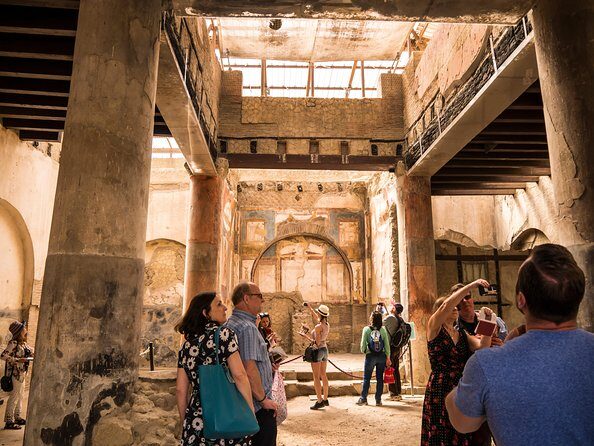
Stop 5: Casa del Salone Nero (15 minutes)
The Black Room lives up to its name: the salon is painted black. This is one of those details that feels strange until you understand what color could do in a Roman interior. Dark pigments could create a dramatic mood, frame sculpture or objects placed against the walls, and signal wealth through materials and labor.
On a private archaeologist tour, the guide helps you see the room as a designed environment, not just an empty shell.
Potential drawback to consider: painted interiors can be visually subtle from certain angles. If you care about frescoes and painted surfaces, ask your guide to show you where to look so you don’t spend the time guessing.
Stop 6: Salone della Barca di Ercolano (15 minutes)
Here you see a boat charred by the eruption, and the description notes it’s recently discovered. That combination—something so everyday as a boat, preserved in a disaster moment—makes the story feel immediate.
This is also where your guide can connect the physical evidence to Herculaneum’s harbor life. Even with no extra museum time, you get a sense of how the sea shaped daily living.
Stop 7: College of the Augustales (15 minutes)
This room preserves frescoes showing Hercules entering Olympus. It’s not only art; it’s a religious and social statement tied to the community.
The stop also includes another human evidence point: the skeleton of the keeper who died during the eruption. That’s handled with care on a private tour because the guide can explain the setting and the limits of what can be known. You’re not left to interpret alone.
If you prefer tours that explain why people held roles and how communities functioned, this is a strong stop.
Stop 8 to Stop 10: the House of the Skeleton, the older Samnite home, and Neptune’s scene-setting rooms
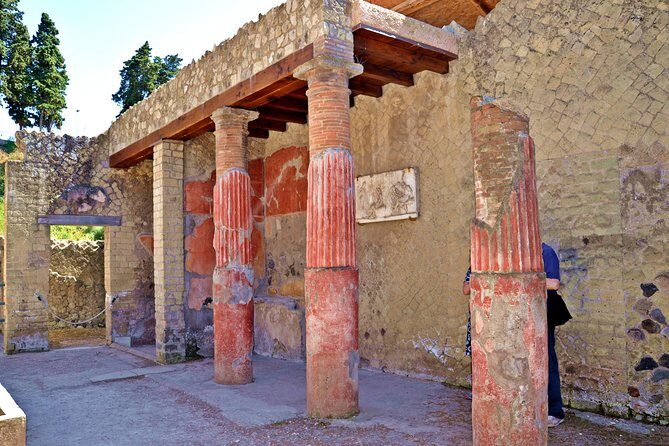
Stop 8: House of the Skeleton (10 minutes)
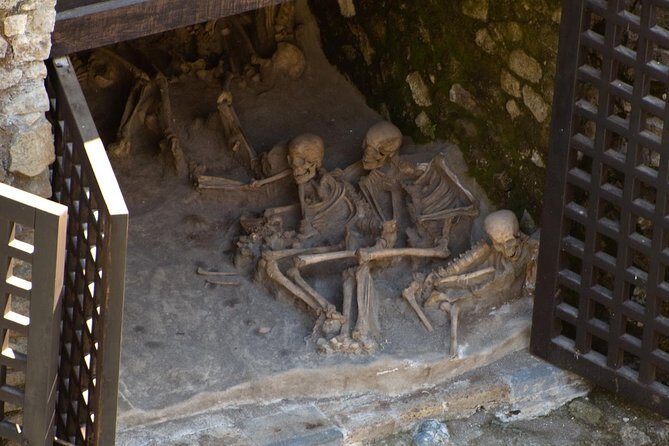
This one is called for a reason: the skeleton of an inhabitant was discovered here, and that fact shapes how the room is interpreted.
In a private setting, you’ll usually get more than the label. A skilled guide will connect it to how this house fit into the wider neighborhood, what evidence suggests about the final moments, and how archaeologists document discoveries without sensationalizing them.
If you’re sensitive to disaster-related imagery, it’s still worth knowing this stop exists so you can mentally prepare.
Stop 9: Casa Sannitica (15 minutes)
The Samnite House is described as one of the oldest houses in Herculaneum. This stop helps you shift from “the eruption story” to the bigger timeline question: how long this community existed before 79 AD, and how earlier architectural choices influenced later life.
Older houses also tend to show different layers of adaptation. If you like seeing change over time rather than one snapshot, this is where that shows up.
Stop 10: Casa di Nettuno e Anfitrite (15 minutes)
This is the room where you’re likely to stop and stare. The House of Neptune and Amphitrite is described as leaving you speechless due to its rich scenographic compositions.
In practical terms, this is where you see art used like stage design. You’re looking at painted or designed space meant to create depth, presence, and meaning. The couple Neptune and Amphitrite isn’t just a myth name—it ties to water and the identity of a town shaped by the sea.
It’s also a great final stop because it pulls together a thread: Herculaneum wasn’t only preserved by disaster. It was a place where people filled their homes with stories and symbolism.
What makes this tour worth booking (and what to watch for)
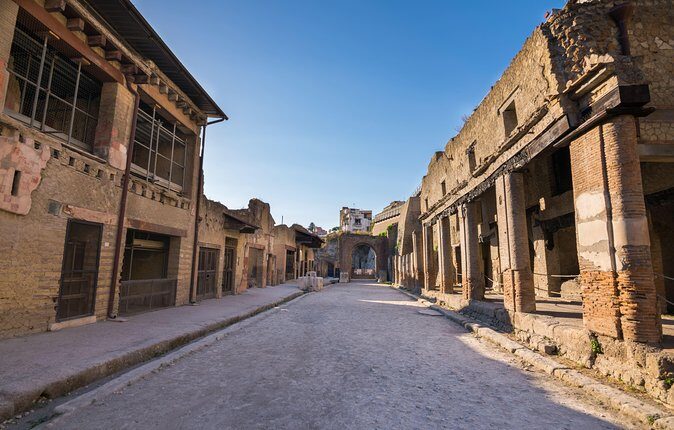
I really value private pacing at a site like Herculaneum. The domus are close enough to feel connected, but detailed enough that you can easily miss things if you rush. With this tour format, you’re more likely to understand why each room matters.
This is also one of the better ways to learn the difference between what’s visible and what’s reconstructed. Guides from the experience are described as archaeologists with strong English, and that matters here because you want clear explanations, not vague narration.
Specific high points that show up repeatedly in the way these tours are delivered:
- Guides can adjust pace when someone has trouble with stairs, and they pay attention to where people should step.
- Explanations often connect what you see to what you can imagine from daily life, not just the volcanic event.
- Some guides tailor the route when they know you’re visiting other sites the next day, including Pompeii and museums in Naples, so the story lines up instead of repeating.
The main “watch for” items are simple:
- Go expecting sun and heat. The tour is about two hours, and the stops are outdoors in an archaeological park.
- If you have mobility limits, mention it before you arrive so the guide can keep you comfortable. Some houses may require careful steps.
Should you book the Herculaneum private tour with an archaeologist?
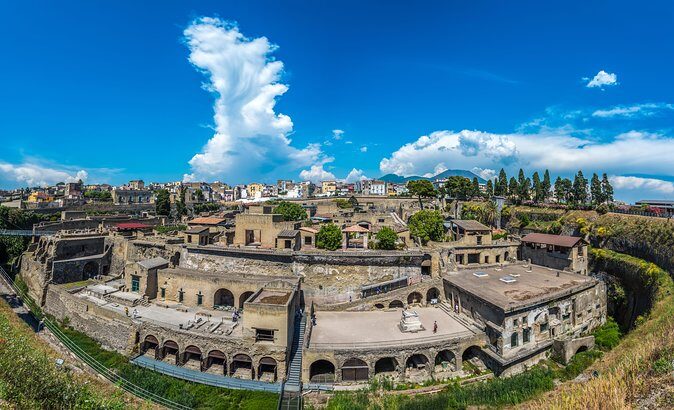
Yes—if you want the quickest route to real understanding. This is a great choice when you care about how Roman homes worked, how art and everyday objects survive, and how the 79 AD eruption can be read through architecture and human evidence. It’s also a smart alternative to spending all your time on Pompeii, because the smaller scale makes each room more meaningful.
Book it if:
- You want a private English tour with an archaeologist guide
- You like frescoes, domestic architecture, and “evidence you can point to”
- You’re visiting Pompeii too, and you want a different angle on the same disaster
Skip it only if:
- You’re not comfortable with disaster-linked exhibits in an archaeological context and would rather stick to purely general sightseeing.
If you do book, give yourself a little buffer time at the meeting point and plan for the €15 entrance ticket for adults. Then walk in ready to ask questions. This is exactly the sort of site where the right explanation changes everything you notice.
FAQ
How long is the Herculaneum private tour with an archaeologist?
The tour lasts about 2 hours.
Is this tour private?
Yes. It’s a private tour, meaning only your group participates.
What language is the tour offered in?
The tour is offered in English.
Where do we meet for the tour?
Meet at the ticket office of the Archaeological Park of Herculaneum, Corso Resina, 187, 80056 Ercolano NA, Italy.
Do I need to pay for entrance tickets?
Yes. Admission tickets to Herculaneum are not included. Adults are listed at €15, and under 18 have free tickets. The entrance ticket for the archaeological park lets you see the attractions covered during the tour.
What is included in the tour price?
It includes an archaeological guide and assistance, a specialized archaeological guide, the main attractions of Herculaneum, and taxes.
Is there a mobile ticket?
Yes. The tour includes a mobile ticket.
What if the weather is bad or I need to cancel?
The experience requires good weather. If it’s canceled due to poor weather, you’ll be offered a different date or a full refund. Free cancellation is available up to 24 hours in advance for a full refund.