REVIEW · SORRENTO
Pompeii and Herculaneum from Sorrento or Naples
Book on Viator →Operated by Mondo Guide Srl · Bookable on Viator
Two ancient cities, one morning of wonder. This Pompeii and Herculaneum tour mixes small-group touring with expert-guided ruins, plus an air-conditioned ride with Bay of Naples and Mount Vesuvius views, so your time goes where it counts: in the sites. I also like the way the schedule protects you from the usual chaos. You’re not just handed a ticket and a map—you get structured walking tours timed for real viewing, not wandering for hours.
Here’s the one thing to factor in: the price doesn’t include Pompeii and Herculaneum entrance fees. You’ll add €19 for Pompeii and €16 for Herculaneum on top, and you’ll still do a good amount of walking on uneven ancient stone.
With a start time of 8:00 am and an 8-hour day (approx.), this is a strong pick if you’re staying in Sorrento or Naples and want a complete Roman eruption story in one go. Group sizes are capped at 8 when you’re on the minivan, and the experience runs with a driver plus an English-speaking guide for larger groups.
In This Review
- Key highlights worth your attention
- Pompeii and Herculaneum from Sorrento or Naples: how the ride sets the tone
- Getting inside faster: skip-the-line and the pacing you actually need
- Stop 1: Pompeii Archaeological Park in 3 hours (what you can realistically cover)
- Stop 2: Herculaneum’s preserved villas in 2 hours (why it feels so personal)
- Price and logistics: does $188.90 deliver real value?
- Comfort and practical tips for an 8-hour eruption-story day
- Who this tour suits best (and who should think twice)
- Should you book this Pompeii and Herculaneum tour?
- FAQ
- What time does the tour start?
- How long is the Pompeii and Herculaneum day trip?
- Are entrance tickets included?
- What group sizes does this tour use?
- Does the tour include food and drinks?
- Where does the tour end?
Key highlights worth your attention
- Skip-the-line access, so you spend less time queued and more time looking at frescoes, mosaics, and street layouts
- Timed guided walking tours: about 3 hours in Pompeii and 2 hours in Herculaneum
- Small-group feel (up to 8 on the minivan), which helps you move with confidence through big crowds
- Air-conditioned transportation with dramatic views toward Vesuvius and the Bay of Naples
- Two different preservation stories: Pompeii’s ash-buried world vs. Herculaneum’s unusually intact villas
- Mobile ticket for smoother check-in
Pompeii and Herculaneum from Sorrento or Naples: how the ride sets the tone
I like that this tour gives you two departure options: Sorrento or Naples. Either way, you’re using the morning commute to “switch on” your Roman-ruins mindset instead of treating it like a boring transfer. The included transportation is air-conditioned, which matters in warmer months when you’ll be outdoors for part of the day.
The drive also buys you something you don’t get with purely city-based tours: wide-open scenery. You’ll see the Bay of Naples and Mount Vesuvius from the road, and those views help you understand why this area is both beautiful and terrifying in equal measure. It’s hard to appreciate what changed in 79 AD unless you can picture the volcano looming nearby.
A practical note for choosing between Sorrento and Naples: you’ll likely find it easier to match the 8:00 am start based on where you’re staying and how you move around locally. If getting to a meeting point is already a puzzle for you, pick the departure that minimizes “extra transit” before the tour even starts.
If you're still narrowing it down, here are other tours in Sorrento we've reviewed.


Getting inside faster: skip-the-line and the pacing you actually need
Pompeii and Herculaneum aren’t laid back sightseeing stops. They’re big, popular, and easy to do badly if you show up with a loose plan. That’s where the “skip-the-line” approach helps: it reduces the chance you waste your best morning hours waiting at the entrance.
Then comes the pacing. You get a 3-hour guided walking tour in Pompeii and 2 hours in Herculaneum. For first-timers, that’s a very workable structure. Pompeii is so vast that trying to self-tour it at full speed usually turns into a blur of random buildings. A guided route helps you see the major areas without spending half your time asking, Wait, where are we?
This is also a tour that respects group size. When you’re in a group of up to 8, you’re on a minivan and you’ll have a more intimate flow during the walks. When your group is bigger (9–19), the tour switches to a minibus but still keeps an English-speaking guide involved for the whole excursion. Either way, you’re not stuck alone with audio silence.
One more realistic consideration: you’re walking through ancient streets and uneven ground. You’ll want sturdy shoes and a calm attitude about your legs complaining politely.
Stop 1: Pompeii Archaeological Park in 3 hours (what you can realistically cover)
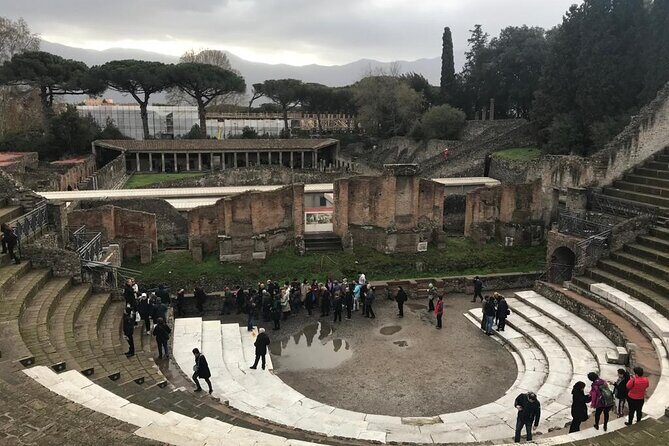
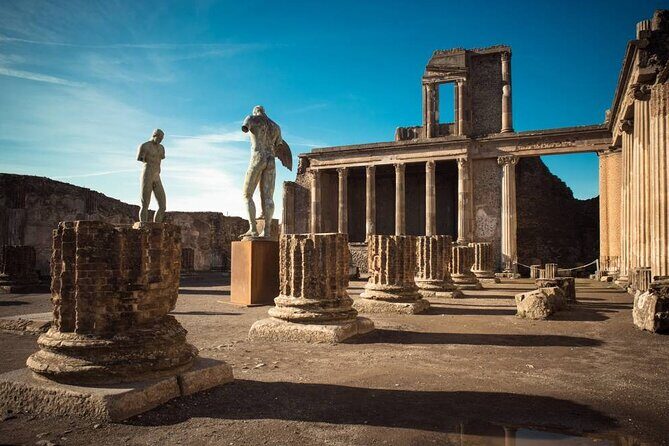
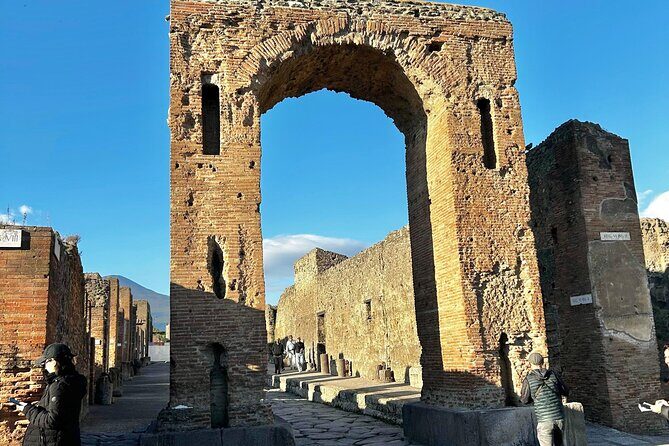
Pompeii is the headline act, and for good reason. This is an open-air museum where you can literally walk through a city that was buried under ash after the eruption and later rediscovered. The site’s modern life as a visitor destination traces back to when the excavations became established in the 18th century, with the city buried in ash until 1748.
In about 3 hours, the goal is not to “see everything.” The goal is to understand how Pompeii worked day to day and why the ruins are so gripping. With a guided route, you get context for street layouts, building functions, and the everyday Roman details that can be easy to miss when you’re just looking for famous spots.
What I like about a time-boxed Pompeii visit: it forces a focus. You can actually slow down at important moments. You’re less likely to treat Pompeii like a checklist where you sprint past murals, mosaics, and architectural clues. If you’re visiting for the first time, that’s the right strategy.
What could be a drawback for you: Pompeii is massive. If you’re the type who wants to linger on every column and corridor for hours, you may feel a little time pressure. The upside is that you’ll come away with a coherent sense of the city rather than a scattered impression.
Stop 2: Herculaneum’s preserved villas in 2 hours (why it feels so personal)
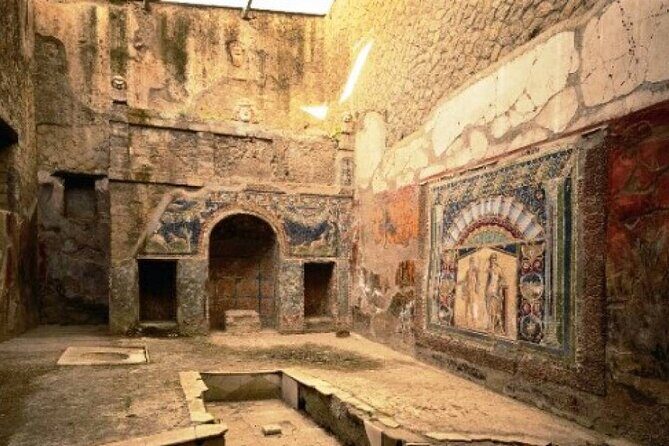
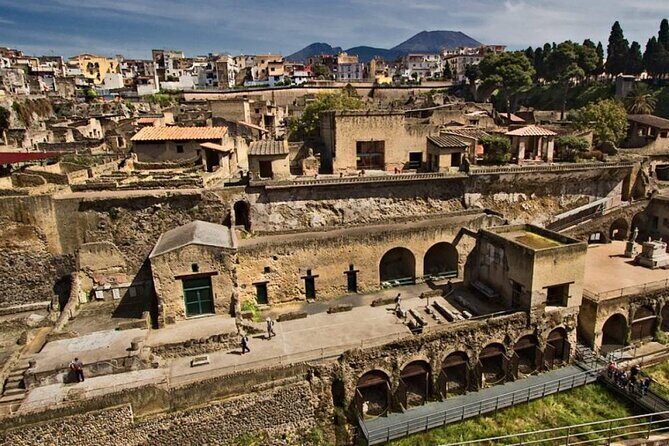
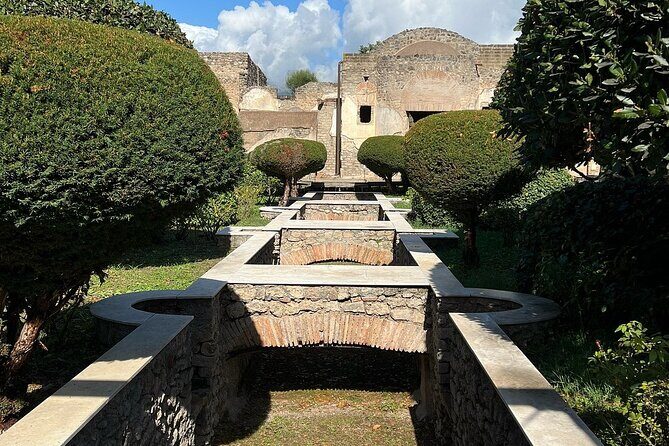
Herculaneum is the quieter sister, but it’s often the one that hits hardest visually. The site is known for unusually intact remains—especially in areas where the destruction didn’t strip away the evidence as completely as in Pompeii. The result is that Herculaneum can feel more like stepping into a still-timed moment rather than a pile of broken stones.
The tour’s 2-hour guided walk focuses on what makes Herculaneum special: preserved patrician villas and very detailed finishes. You’re in a place where even elements like wood and ropes from the 2,000-year-old setting are on display, alongside brickwork, mosaics, and frescoes. That level of preservation is remarkable given the violence of the volcanic flows, described here as around 500°C—hot enough to change the fate of everything in its path.
Why this stop is worth the trip even if you’ve seen photos: Pompeii is more about scale and citywide layout. Herculaneum is more about texture and intimacy. You get to see the visual language of daily life—where people ate, lived, and showed status—without everything being reduced to fragments.
A balanced expectation: 2 hours can go quickly because the preserved details invite close looking. Bring your patience. If you try to race through Herculaneum, you’ll miss the thing that makes it different from Pompeii.
Price and logistics: does $188.90 deliver real value?
At $188.90 per person for an 8-hour day (approx.), the value comes from what’s included—not just transportation, but also structured guide time in two major archaeological sites.
Included costs cover:
- The minivan (up to 8) or minibus (for groups 9–19), plus an English-speaking driver and guide as applicable
- Walking tours: about 3 hours at Pompeii and 2 hours at Herculaneum
- Taxes, parking, tolls, and gasoline
- Mobile ticket support
- Return to the meeting point at the end of the activity
What’s not included:
- Pompeii entrance fee: €19 per person
- Herculaneum entrance fee: €16 per person
- Food and drinks
So your real budget is the tour price plus about €35 total for entrances (before any extras like snacks or beverages). That’s a fair add-on for two separate sites with major demand.
The “skip-the-line” and guided time are the core of the value argument. If you do these sites on your own, you’ll spend more time figuring out routes and managing your own pace through crowded areas. Here, you pay for someone to handle the flow so you can focus on viewing.
If you’re price-sensitive, do the math on entrance fees in advance. If you’re time-sensitive (you only have one day in the area), paying for guided pacing usually feels worth it quickly.

Comfort and practical tips for an 8-hour eruption-story day
This is an early start tour (8:00 am), and that affects how the day feels. You’ll enjoy Pompeii more if you’re ready before crowds peak, and you’ll enjoy Herculaneum more if your energy still feels decent after walking.
Here’s what I’d do to make the day smoother based on how these sites work:
- Wear comfortable, grippy shoes. Ancient stone can be slippery or uneven.
- Bring water. Food and drinks aren’t included, so plan for a mid-day snack if you need one.
- Dress in layers. Morning can be cooler, and the day can warm up fast.
- Use your time wisely at the preserved areas. In Herculaneum especially, details are the point, not speed.
Also: this tour says most travelers can participate. That’s helpful, but it still doesn’t remove the reality of walking in archaeological terrain. If you have mobility limits, you’ll want to consider your comfort on uneven ground.
Who this tour suits best (and who should think twice)
This is a great match if:
- You want a complete Pompeii + Herculaneum visit without splitting the day into separate bookings
- You prefer a small-group pace and clearer guidance through huge sites
- You’re coming from Sorrento or Naples and want a structured day that starts early and ends back where you began
- You care about understanding Roman daily life before the eruption hit
It may not be ideal if:
- You want to spend half a day (or more) in only one site. Pompeii’s scale means you’d likely want longer.
- You dislike guided walking tours and would rather wander freely at your own speed.
Should you book this Pompeii and Herculaneum tour?
If you want the most satisfying first-timer outcome, I think this one makes sense. The biggest reason: it packages two sites with very different preservation into a single, guided day, with skip-the-line convenience and a pace that prevents you from wasting your precious hours.
Book it if you like structure and you want to leave with a clear sense of what life looked like in Roman towns right up to 79 AD—plus why Herculaneum’s survival style feels so different from Pompeii. Skip it only if your travel style is purely independent roaming or you know you’ll need far more time than 3 hours in Pompeii and 2 hours in Herculaneum.
One last tip for your decision: if entrances are an annoyance for your budget, plan for them now. Once you do, this tour stops feeling like “just transport” and starts feeling like paid time with someone guiding you to what matters.
FAQ
What time does the tour start?
The tour starts at 8:00 am.
How long is the Pompeii and Herculaneum day trip?
It runs for about 8 hours.
Are entrance tickets included?
No. You pay separately for Pompeii (€19 per person) and Herculaneum (€16 per person).
What group sizes does this tour use?
There’s a maximum of 19 travelers. Up to 8 people use a minivan with walking tours, and for groups of 9–19 you’ll use a minibus with a driver and an English-speaking guide for the full excursion.
Does the tour include food and drinks?
No. Food and drinks are not included.
Where does the tour end?
It ends back at the meeting point.