REVIEW · NAPLES
From Naples: Archeological day to Pompeii and Herculaneum
Book on GetYourGuide →Operated by Around Vesuvio · Bookable on GetYourGuide
Ash-still streets still feel eerie. On this Naples-to-Vesuvius day trip, you get two Roman towns that were wiped out and then frozen by ash in 79 AD. I like that you’re not stuck at ticket lines—both sites include skip-the-line entry. I also like the self-guided setup: a detailed Pompeii map plus an included audio/digital guide so you can move at your own pace. The main drawback to consider is that the audio is fully self-run, and some people find the controls a bit fiddly, especially when you’re trying to keep up with a big site layout.
You’ll spend real time in both places—2.5 hours in Herculaneum and 4 hours in Pompeii—which is exactly what you want for a one-day “big hitter” itinerary. The day is built around comfort too: roundtrip bus transfer from Naples, with a driver who speaks English and Italian. One more practical catch: the Pompeii audio guide is rented on-site, and you’ll need a valid ID document to get it.
In This Review
- Key things that make this day trip work
- A smooth Naples-to-Vesuvius day on an Around Vesuvio bus
- Ercolano (Herculaneum) for 2.5 hours: what ash preserved
- Pompeii for 4 hours: streets, houses, and the 79 AD shock
- Skip-the-line tickets: why they matter on a one-day plan
- Audio guides and maps: how to use them without getting stuck
- Transportation timing: building a day that doesn’t feel like a marathon
- Price and value: what you’re paying for
- Who should book this Pompeii and Herculaneum combo
- Small practical tips that make the day easier
- Should you book this tour?
- FAQ
- How long is the Pompeii and Herculaneum day trip?
- What sites does the tour visit?
- Are skip-the-line tickets included?
- Do I need ID for the Pompeii audio guide?
- What languages are available for the audio guide?
- Is food and drinks included?
Key things that make this day trip work
- Skip-the-line at both sites so you lose less time waiting.
- 2.5 hours in Herculaneum plus 4 hours in Pompeii gives you breathing room.
- Digital audio guide for Herculaneum and an audio guide plus Pompeii map for Pompeii.
- Ash-preserved details in both towns, including interiors and everyday life.
- Easy pacing with coached bus transfers between sites.
- Multiple audio languages (Chinese, English, French, German, Hebrew, Italian, Portuguese, Russian, Spanish) built in.
A smooth Naples-to-Vesuvius day on an Around Vesuvio bus

This trip is designed for convenience first. You start at Via Galileo Ferraris, 40 in Naples, and your bus has the logo Around Vesuvio. That matters because it’s one less thing to plan when you’re juggling timing, transport, and entry.
The bus ride isn’t just “getting there.” It’s a buffer so you’re not stressed about squeezing public transport schedules. You’ll have around 40 minutes on the coach early in the day, then short travel times between the two archaeological areas (about 30 minutes each way).
You’ll also have a driver who speaks English and Italian, which can be useful if you need clarification about where to stand, when to re-board, or how the meet-up timing works. Still, this is not a live guide-heavy experience—your big learning tool is the audio/digital guide. That’s fine if you like to explore on your own rhythm. If you prefer someone to answer questions on the spot, you might feel that audio has limits.
If you're still narrowing it down, here are other tours in Naples we've reviewed.
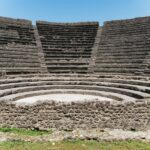


Ercolano (Herculaneum) for 2.5 hours: what ash preserved

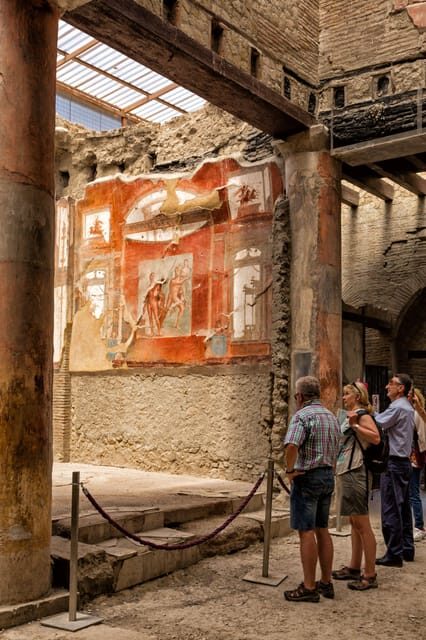
Herculaneum—called Ercolano in Italian—feels different from Pompeii almost immediately. It’s the same cataclysm, but the atmosphere can feel more enclosed and “lived-in,” because many structures held onto more of their original surfaces and interior detail.
You’ll have 2.5 hours there, including visiting and some free time. That’s a good chunk. It gives you time to do more than hit the highlights and then rush to the next stop. With the digital audio guide included, you can stop and start around key points: street level scenes, building spaces, and the kinds of everyday artifacts that help the town feel human instead of just ancient.
What I find compelling here is the way the eruption’s ash did the job of an accidental time capsule. Instead of just flattening the city, it helped preserve homes, décor, and even food—so you can picture how people actually lived, not only what they built. You’ll be walking through a place where the tragedy is part of the “material” of the site: casts and human remains are part of the story of what happened during and after the eruption.
Practical note: Herculaneum is a site where your legs do the work—so bring comfortable shoes. But the timing here is friendlier than Pompeii’s sprawl. You’ll still need focus, just less frantic pacing than you might expect.
Pompeii for 4 hours: streets, houses, and the 79 AD shock
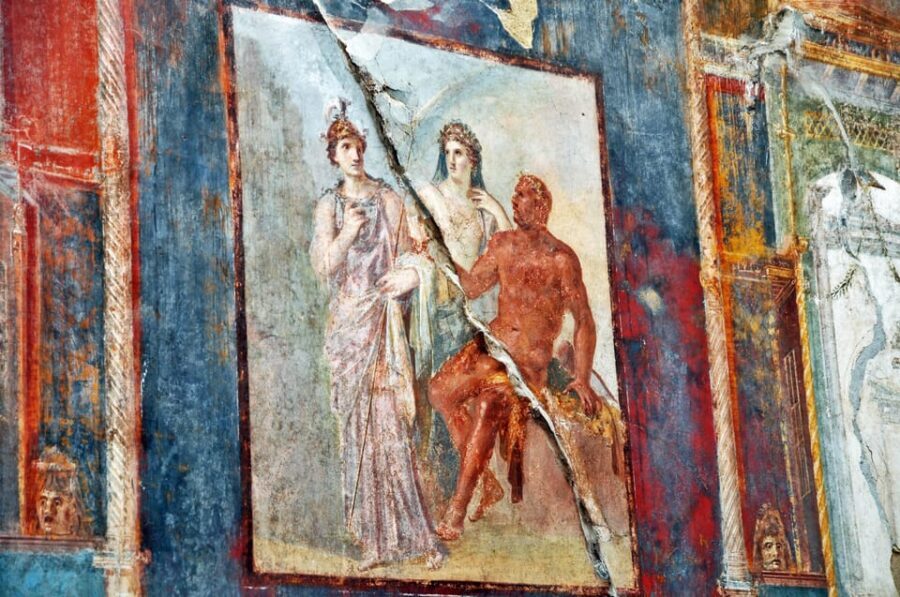
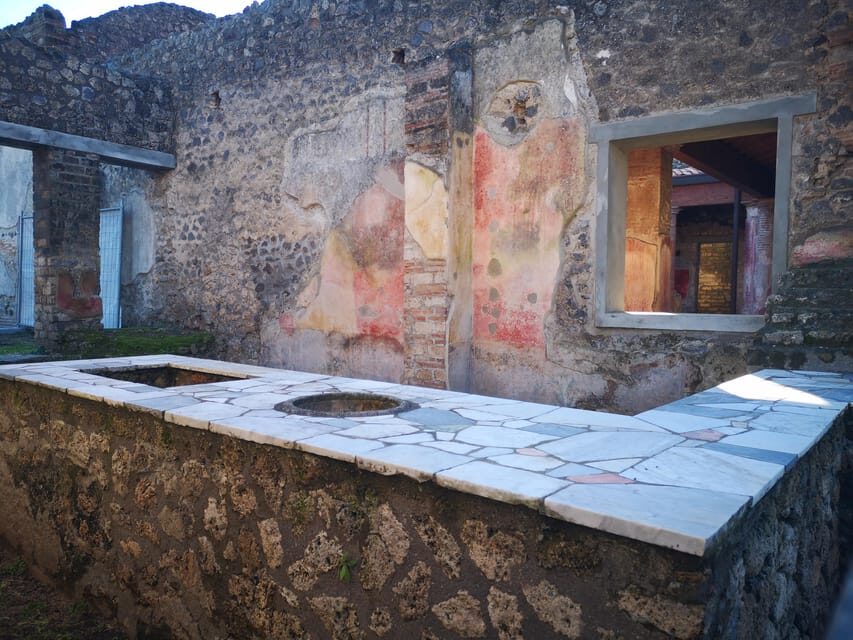
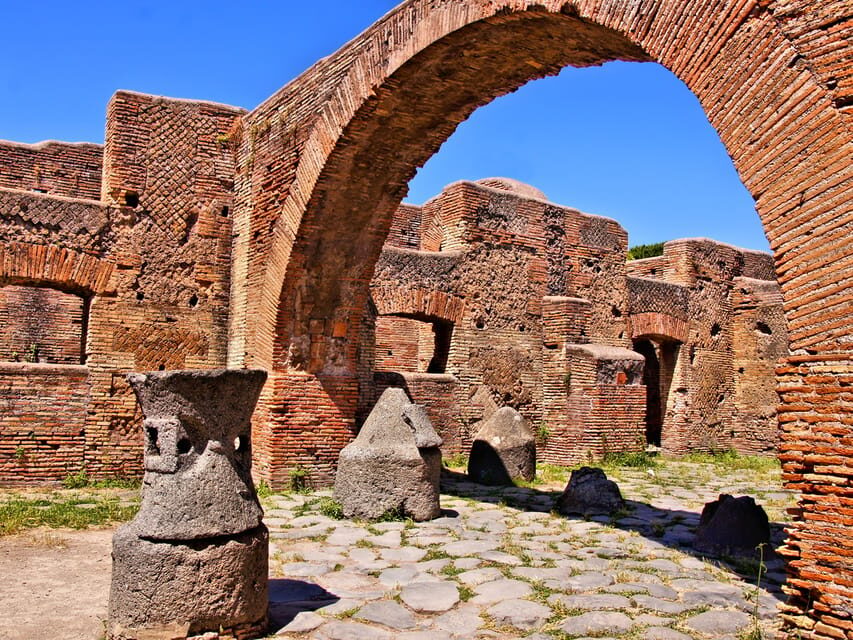
Pompeii usually steals the show—and not just because it’s famous. With 4 hours on the Pompeii archaeological site, you get enough time to look closely at architecture and “micro” details rather than turning it into a checklist.
You’ll also have skip-the-line access here, which keeps the day from getting swallowed by queues. Inside Pompeii, the plan is straightforward: explore ancient streets, look at frescoes and sculptures, and you’ll be able to enter houses and temples depending on the areas open at the time. The time structure matters: four hours gives you a fighting chance to understand how big and connected the town is.
One of the most fascinating parts is the way the ash preserved more than stone. The tour experience includes the idea that Pompeii’s ash helped preserve homes and decorations—and even food. That means you’re not only seeing public squares or grand facades. You’re also learning how people decorated rooms and used spaces, which makes the Roman town feel startlingly modern in its habits.
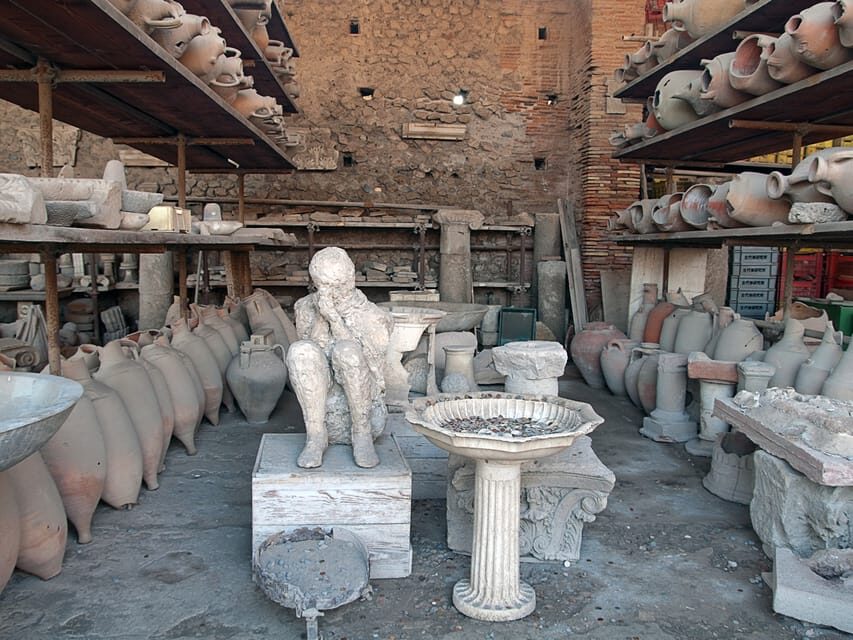
You’ll also encounter the more haunting side of the eruption story through the casts and skeletons associated with the victims. This isn’t just “look at ruins.” It’s a guided narrative, carried by the audio guide, about how the eruption changed everything in a hurry.
Skip-the-line tickets: why they matter on a one-day plan
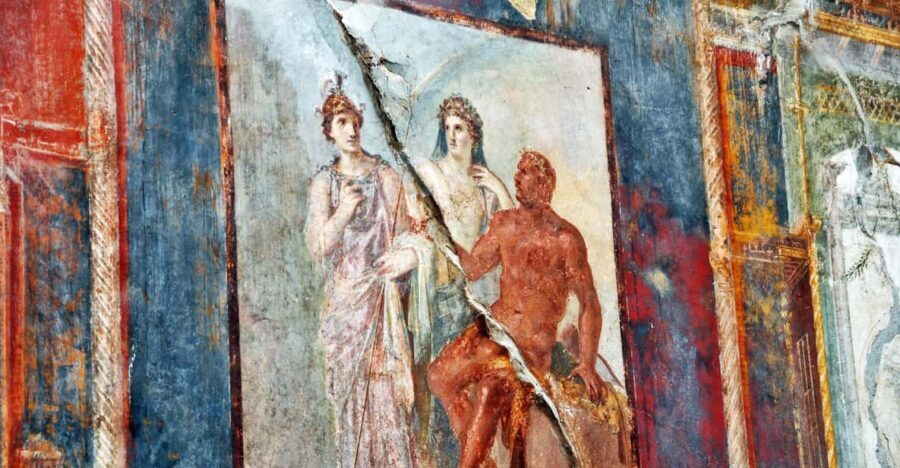
When you’re doing Pompeii and Herculaneum in one day, waiting time is your enemy. This experience solves that with skip-the-line ticket access for both sites. That’s a real value point, not just a marketing phrase.
In practical terms, skip-the-line helps you:
- Start sightseeing faster and keep your energy for walking.
- Reduce the chance that a delay at one site eats your time at the other.
- Keep the day from turning into a rushed sprint.
It also pairs well with the fact that your time is fixed: 2.5 hours in Herculaneum and 4 hours in Pompeii. When you’re on a schedule like that, saved minutes can be the difference between seeing interiors calmly and seeing them from the doorway while you check the clock.
Audio guides and maps: how to use them without getting stuck
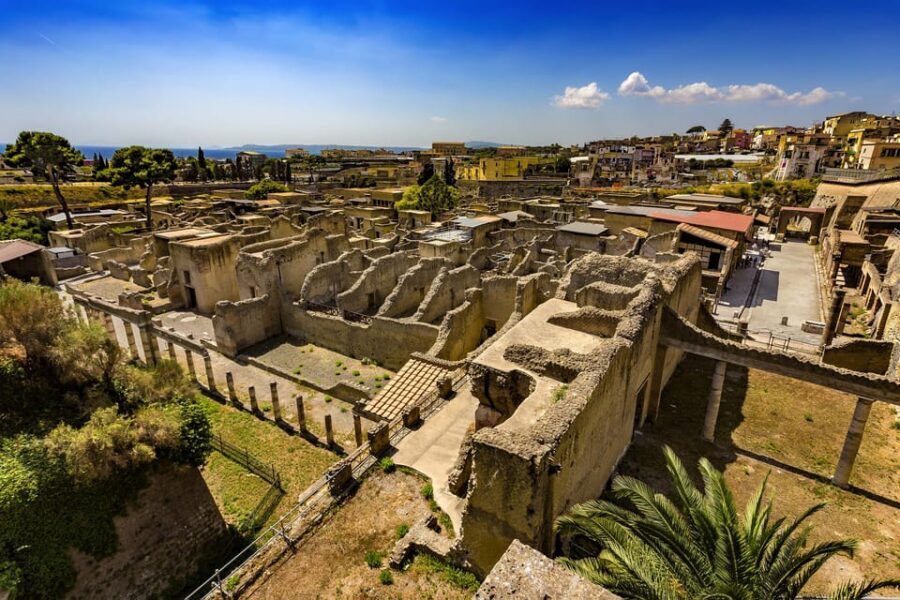
This is a self-guided experience, and the audio is your backbone. You’ll have a digital audio guide for Herculaneum, and Pompeii includes an audio guide plus a detailed map.
Here’s the key practical thing: audio guides work best when you use them like a flashlight, not like a marching order. If you try to “listen straight through” while moving quickly, it can feel frustrating. Instead, pick a handful of stops you care about most—like a temple area, a house section, or a preserved interior—and use the audio to understand what you’re looking at.
The experience spans multiple audio languages, including English and many others (Chinese, French, German, Hebrew, Italian, Portuguese, Russian, Spanish). If you choose a language you’re comfortable with, the explanations can turn the site from confusing into clear.
But there’s a downside to audio-only guidance: if your device controls are hard to interpret, you can lose your place. If you think you might run into that, I’d do two things:
- Arrive with your phone/earbuds ready and fully charged, even if the audio guide device is provided.
- At the start of each site, take a minute to learn how to start/stop and switch tracks so you don’t spend time “figuring it out” mid-walk.
Pompeii has a specific requirement: you must have a valid ID document to rent the Pompeii audio guide. Don’t forget that. It’s the kind of small condition that can derail your day if you realize it late.






Transportation timing: building a day that doesn’t feel like a marathon
A one-day combo of Pompeii plus Herculaneum can either feel efficient—or brutally rushed. The strength here is that the travel segments are short and predictable.
Your day includes:
- Around 40 minutes on the coach from the Naples meeting area.
- Short transfers of about 30 minutes between the sites.
- A return to the same meeting point (Via Galileo Ferraris, 40).
That rhythm matters because it protects your sightseeing time. You’re not constantly re-organizing your day around transit. The bus transfers keep the mental load light.
Still, you should expect real walking inside both archaeological areas. Even with enough time, Pompeii can feel like a place you need to navigate carefully. If you tend to get turned around, the included Pompeii map should help, but it won’t replace good planning on your part. The Pompeii street layout can be confusing, and street signage can vary. So use the map as your main orientation tool and don’t be shy about re-checking your position.
Price and value: what you’re paying for

At $123.48 per person for an 8.5-hour day, you’re paying for a bundle: roundtrip bus transport, both skip-the-line tickets, and included audio/digital guidance and materials.
Here’s how that stacks up for value:
- If you were to buy tickets separately and piece together transport yourself, you’d likely spend extra time coordinating.
- The skip-the-line access saves stress and keeps the schedule workable.
- Audio guidance lets you cover a lot of ground in a short window without relying on a live guide.
The main thing you’re not getting is a live expert speaking to your group the whole time. If you prefer Q&A, deeper interpretation, and on-the-spot context, you might feel the audio is thinner than a human guide. But if you’re comfortable exploring independently and want a structured day that still feels free, the price can be pretty fair.
Who should book this Pompeii and Herculaneum combo

This tour style fits best if you:
- Want to see both sites in one day without doing logistics homework.
- Like structured time blocks and a smooth bus schedule.
- Are comfortable learning through an audio/digital guide rather than a live lecture.
- Care about how daily life was preserved by the ash, not just major monuments.
It’s also a great option for first-timers to Pompeii who want enough time to understand the town layout without racing. And if you’re a Roman history fan, the format is ideal because you can slow down where the story hits—like frescoes, household spaces, and the evidence of victims preserved in casts and remains.
Small practical tips that make the day easier

- Wear shoes you trust. Pompeii and Herculaneum involve lots of walking over uneven surfaces.
- Bring a plan for orientation: use the Pompeii map early and keep checking it so you don’t zigzag too much.
- Make sure you have your ID. You need it to rent the Pompeii audio guide.
- Use the audio like a tool. Stop at key points, listen, then look around yourself.
- If you’re sensitive to confusing or busy pickup areas, arrive early and be ready to meet the bus with confidence. The meeting point is fixed at Via Galileo Ferraris, 40, and your bus has the Around Vesuvio logo.
Should you book this tour?
If you want a comfortable, one-day visit that hits both Pompeii and Herculaneum, I’d say this is a smart booking—especially because skip-the-line access and roundtrip bus transfer do the heavy lifting. The time allotments are also sensible: 2.5 hours gives Herculaneum depth, and 4 hours lets Pompeii breathe.
I’d hesitate only if you strongly prefer a live guide who can answer questions and guide you in real time, or if you know you struggle with audio-device controls. In that case, audio-only guidance might feel like work.
For most people who want the Vesuvius story told through the actual places—plus the ash-preserved details that make it so unforgettable—this is the right kind of day trip.
FAQ
How long is the Pompeii and Herculaneum day trip?
The duration is listed as 8.5 hours.
What sites does the tour visit?
You visit Ercolano (Herculaneum) and Pompei (Pompeii).
Are skip-the-line tickets included?
Yes. Skip-the-line tickets are included for both Herculaneum and Pompeii.
Do I need ID for the Pompeii audio guide?
Yes. You must have a valid ID document to rent the Pompeii audio guide.
What languages are available for the audio guide?
The audio guide is available in Chinese, English, French, German, Hebrew, Italian, Portuguese, Russian, and Spanish.
Is food and drinks included?
No. Food and drinks are not included.