REVIEW · NAPLES
Skip-the-Line Pompeii & Mt. Vesuvius Day Trip from Naples
Book on Viator →Operated by IAMME IA! - Gray Line Amalfi Coast · Bookable on Viator
Pompeii in a day, without the stress. This tour saves you from the stop-and-go hassle with an air-conditioned coach and it starts you early, then delivers skip-the-line Pompeii entry plus a guided walk. The payoff is time to look out from Vesuvius and take photos from the crater area. The one big consideration: most of the day is outdoors, so rain or fog can make the Vesuvius portion unpleasant or even closed.
Once you’re rolling, the structure is what makes it work: guided Pompeii for about two hours, then a set return to Naples the same day. You’ll still have personal time on Vesuvius—plus the option to hire a local mountain guide there at extra cost if you want deeper volcanic context.
You’ll walk a fair amount, and the group pace matters in crowds. Pompeii is huge, so this is a highlights-and-understanding day, not a see-every-street day.
In This Review
- Key points I’d plan around
- Morning Pickup in Central Naples: When Your Day Really Starts
- Pompeii Without the Queue: Skip-the-Line Entry and What You’ll Actually Get
- Pompeii Highlights You’ll Walk Past: Forum, Baths, Theaters, and Big-Villa Energy
- The Forum: Politics, business, and the center of daily life
- Macellum and the provision-market idea
- Via dell’Abbondanza: the main street feeling
- Stabian Baths (Terme Stabiane): the bathing rhythm
- Casa del Fauno: wealth and mosaics in one glance
- Teatro Grande and the Basilica: public space for performance and justice
- The Lupanar question: it’s part of the theme, but not guaranteed in the walk
- Vesuvius National Park: The 1,000–1,280 Meter Climb for Crater Views
- Weather Reality: Fog, Rain, and What Happens if Vesuvius Can’t Open
- Price and Value: Is $139.07 a Good Deal?
- Group Size, Pacing, and the Listening Problem
- Who Should Book This Tour, and Who Should Consider a Different Plan
- Should You Book This Pompeii and Vesuvius Day Trip?
- FAQ
- How long is the day trip?
- Where do I meet and where do I get dropped off?
- Is Pompeii admission included?
- Is Mt. Vesuvius admission included?
- Is lunch included in the price?
- Do I need to bring tickets for Pompeii or Vesuvius?
- What languages is the tour offered in?
- What happens if Mt. Vesuvius is closed?
- Is there a lot of walking?
- Is this tour suitable for everyone physically?
Key points I’d plan around
- Skip-the-line Pompeii entry and timed entry help you avoid the worst queues
- Official Pompeii guide + headphones make it easier to follow along in the busy ruins
- Vesuvius crater views from 1,000–1,280 meters, with photo time built in
- Air-conditioned round-trip coach keeps the long transfer from feeling like punishment
- Max 30 people means the day stays manageable, though Pompeii crowds can still scatter groups
- Weather matters; if Vesuvius can’t be visited, you may swap to Herculaneum with a skip-the-line ticket
Morning Pickup in Central Naples: When Your Day Really Starts
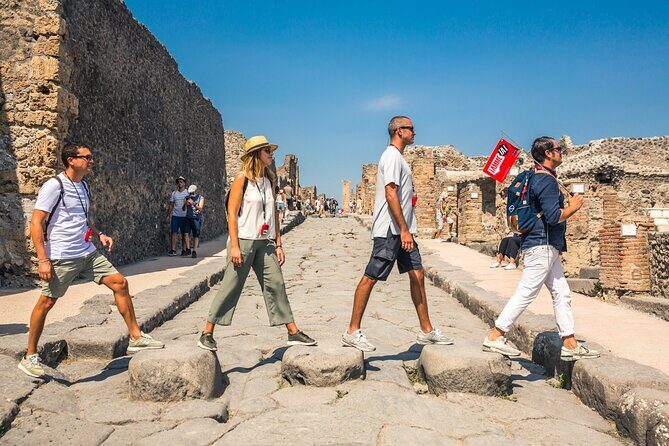
This is set up as a true day trip from central Naples. You depart from the Starhotels Terminus area and meet back at the same starting point at the end, which makes logistics simpler than a hop-on, hop-off plan.
I like this format for two reasons. First, the early departure helps you get into Pompeii before the worst crush. Second, you avoid the patchwork of transit changes—trains, buses, and ticket lines—by using one air-conditioned coach for the inland drive.
One practical note: transfers are approximate and depend on traffic. So if you’re the type who hates “timing surprises,” build in patience. Still, the tour is organized enough that most people experience it as smooth rather than chaotic.
If you're still narrowing it down, here are other tours in Naples we've reviewed.
Pompeii Without the Queue: Skip-the-Line Entry and What You’ll Actually Get
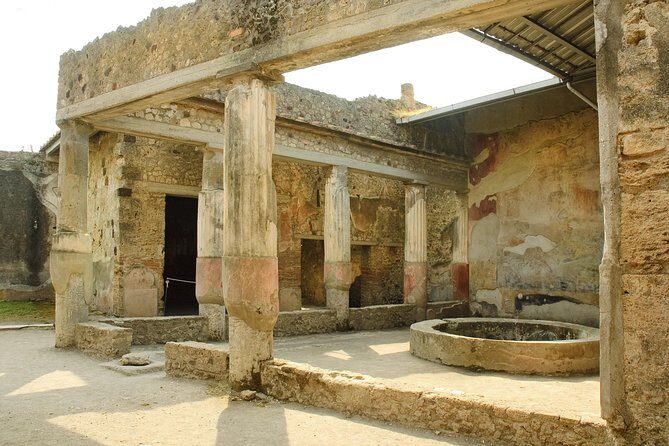
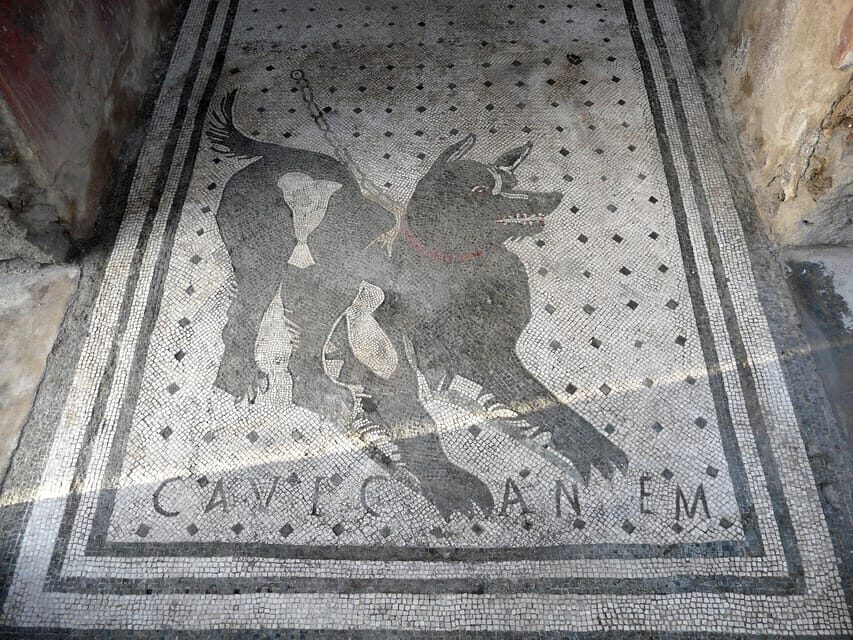
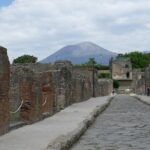
Pompeii is famous for a reason: it’s one of the best-preserved Roman cities you can visit. It was buried under volcanic ash and pumice after the eruption of Mount Vesuvius in AD 79, and that long burial is what kept buildings, street layouts, and everyday details from being completely lost.
Here’s the real value of the skip-the-line piece: it buys you usable time. Instead of spending your morning stuck in ticket lines (or losing time to last-minute entry delays), you start your guided portion with momentum. The tour includes admission to the Archaeological Park of Pompeii, so you’re not juggling ticket logistics mid-journey.
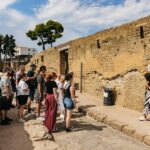
In Pompeii, group size and sound can make or break the experience. This tour uses headphones for groups bigger than 10, so you can hear the guide clearly even when the streets get crowded. That matters, because Pompeii’s highlights aren’t just “pretty ruins”—they’re clues to how people lived, worked, bathed, shopped, and worshiped.
Pompeii Highlights You’ll Walk Past: Forum, Baths, Theaters, and Big-Villa Energy
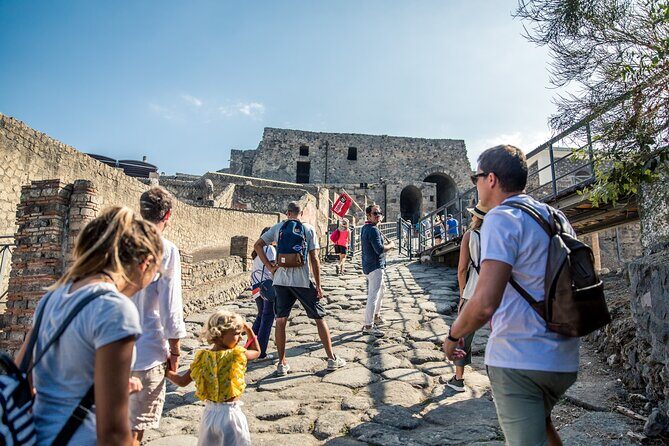
Pompeii is too large to see it all in a single 8-hour day. The strategy here is to hit the places that help you understand what you’re looking at, then give you enough time to wander key streets and take photos.
The Forum: Politics, business, and the center of daily life
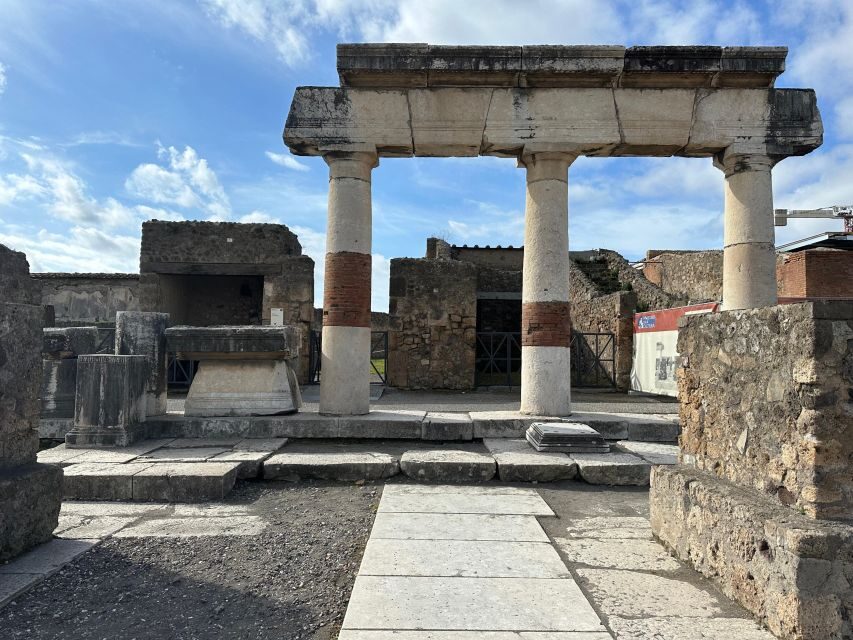
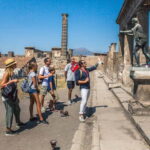
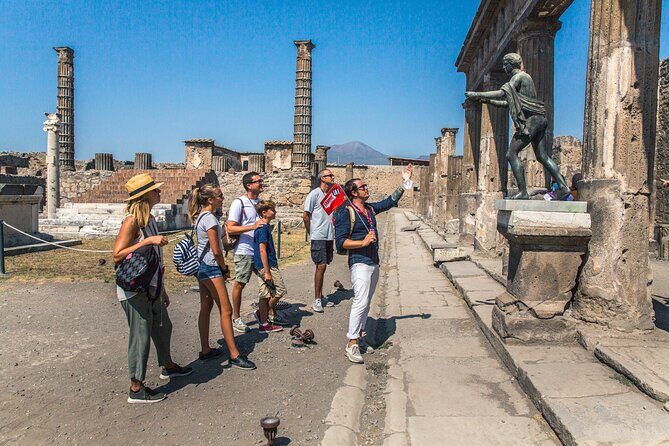
You’ll start at the heart of Pompeii: the Forum. This is where trade and market activity met politics and administration. Seeing it as a layout—space, entrances, and flow—helps you realize it wasn’t just a plaza. It was an engine of city life.
You also pass by the Tempio di Giove Capitolino (the Capitoline Temple area), dominated by statues of Jupiter, Juno, and Minerva. The guide’s role is useful here: those statues matter because they were placed for visibility from the Forum. Without that context, you might miss why certain placements feel so deliberate.
Macellum and the provision-market idea
A short stop covers the Macellum, Pompeii’s provision market. The quick-but-specific focus is helpful because it gives you a mental model: food supply wasn’t a vague “market,” it was a focal building with different phases of construction and damage history. If you enjoy understanding how the city functioned, this part will click.





Via dell’Abbondanza: the main street feeling
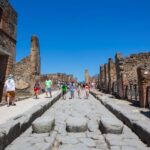
You’ll walk along Via dell’Abbondanza, the ancient main street running east/west through the city. This is the street where you can almost imagine the noise—shops, workshops (officinae), snack-bars, cafes, and restaurants all clustered around the flow of people.
The practical takeaway: if you like street-level Roman city life, this stretch is where Pompeii feels most alive. If you hate crowds, this is also where the density can be highest, so plan to move with the group and accept some jostling.
Stabian Baths (Terme Stabiane): the bathing rhythm
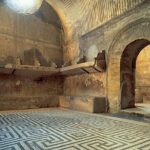
The Stabian Baths give you something different from forums and temples: the routine of everyday hygiene and social time. You’ll see the separation of women’s and men’s areas with separate entrances, plus a sense of how spaces mapped to temperatures (tepidarium, frigidarium, calidarium). You don’t need a textbook—standing in the layout makes the idea understandable.
Casa del Fauno: wealth and mosaics in one glance
For many people, Casa del Fauno is the “wow” moment. It’s one of Pompeii’s most impressive private residences, occupying an entire city block. The big draw here is the Alexander Mosaic, a famous battle-themed mosaic that signals how wealthy and internationally influenced some Roman elites could be.
If you like architecture more than narration, this is still worth it. The size and the garden layout help you grasp why homes like this weren’t just houses—they were status statements.
Teatro Grande and the Basilica: public space for performance and justice
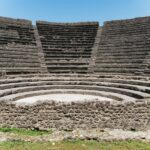
You’ll also see Teatro Grande, designed on a hillside with a natural depression turned into seating sectors. Nearby, the Basilica ties it together with public business and administration of justice. These stops work well when the guide explains how spaces were used, not just when they were built.
The Lupanar question: it’s part of the theme, but not guaranteed in the walk
The Lupanar of Pompeii is famous, including its erotic wall paintings—this tour’s standard framing often includes it as a stop. That said, your exact route can shift for crowd flow or timing. I’d treat it as a possible highlight rather than a guaranteed checkbox.
If Lupanar is a must-see for you, arrive at Pompeii with the mindset that the guide may prioritize the smoothest path through peak congestion.
Vesuvius National Park: The 1,000–1,280 Meter Climb for Crater Views
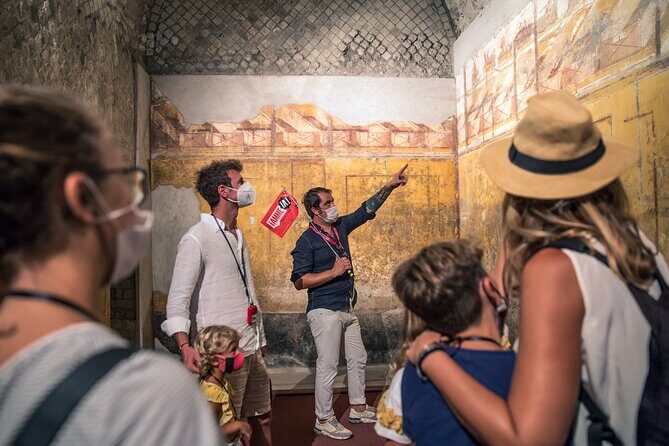
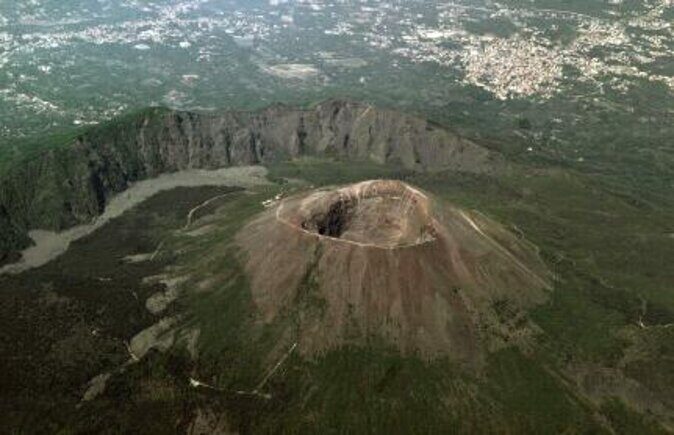
After Pompeii, you head to Vesuvius National Park. You’ll transfer by coach, then start the hike toward the crater area. This is where the day turns from history-walk to workout-for-photos.
You’ll reach the crater edge area at about 1,280 meters for panorama views over the Gulf of Naples, and there’s time allocated at the high point too. The path is described as uneven, and the climb can feel steep—especially because the ground can be loose in spots. Wear sensible footwear. Bring your “I’m going slow on the way up” mentality; people of different ages and fitness levels handle it by pacing.
One detail I really appreciate in how this tour is structured: there’s flexibility once you’re up there. A local mountain guide is on hand if you want an additional guided walk at your own expense. But the main guide generally doesn’t accompany you to the crater itself, so you’re not trapped into a strict line of narration.
If you’re chasing the best photos, I’d plan to spend your time smartly:
- take a few wider shots from the crater area
- then circle back for closer angles
- and don’t rush the return to the coach area
Also, this is an outdoor walk with minimal cover. If the forecast looks dicey, pack for it.
Weather Reality: Fog, Rain, and What Happens if Vesuvius Can’t Open
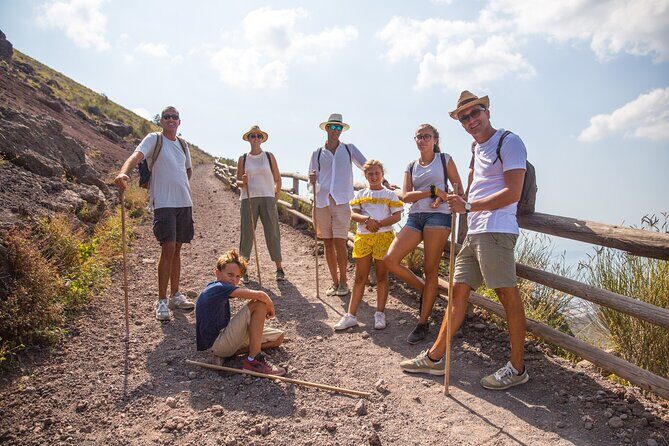
Vesuvius is weather-dependent. The tour itself notes that it requires good weather, and if conditions lead to closure, you’ll be offered an alternative.
In that case, you may switch to a skip-the-line ticket to visit Herculaneum instead. That’s a strong backup plan because Herculaneum is a similar volcanic story—just a different kind of preservation and layout—so your day doesn’t collapse into travel time only.
When conditions are bad, the big frustration is not the cancellation itself. It’s wasting the energy of driving up the mountain and then not getting the views. So I strongly suggest checking the weather the day before and again that morning.
Price and Value: Is $139.07 a Good Deal?

At $139.07 per person, this isn’t a budget-only ticket, but it’s also not inflated for what’s included. For the price, you’re getting:
- round-trip air-conditioned coach
- admission to Pompeii and Vesuvius National Park
- skip-the-line access
- an official guide in Pompeii
- headphones in larger groups
- time on Vesuvius for the crater-area climb
What you’re not getting is lunch. That’s common on these kinds of full-day routes.
Some people also mentioned paying for a set menu lunch option at a site stop. If you want better value at lunch, treat it as a “choose carefully” moment rather than automatic value.
So the value comes down to your priorities:
- If you want guidance at Pompeii plus the Vesuvius climb in one day, the price starts to look fair quickly.
- If you’d rather travel independently and spend more time in fewer places, you might find cheaper—but you’d be taking on ticket lines and routing stress.
Given how much Pompeii crowds can steal from your time, the skip-the-line and guided structure are doing real work for your day.
Group Size, Pacing, and the Listening Problem
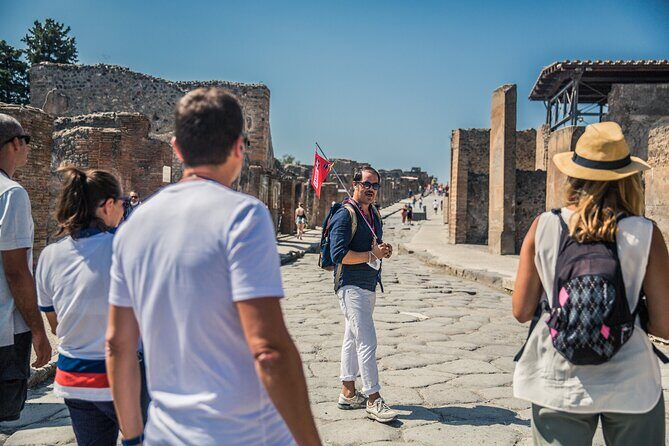
The tour caps at 30 travelers. That’s a workable size, but Pompeii’s crowds can still stretch groups, and it can be harder to see the guide when you’re at the back.
The day is also timed and structured. Pompeii is allocated about two hours for the guided portion, with short time blocks for key stops and then walking between them. If you love photography, you’ll likely get enough snaps. If you want to linger inside every building detail, the pace can trigger FOMO—the feeling that Pompeii is still begging for more time.
On the plus side, when the guide is strong, the explanations make the ruins easier to read. Guides like Roberta, Isabella, Angie, and Rebecca are repeatedly highlighted for keeping the day organized and for explaining what you’re looking at in plain language. If your guide brings energy and keeps the schedule tight, the whole experience feels smoother.
If your group runs long, it can mean you miss a stop that’s listed as part of the theme. That’s not always a “bad tour” sign—it’s often how day-trips function when you’re sharing space with dozens of other tour groups.
Who Should Book This Tour, and Who Should Consider a Different Plan
This works best if you want:
- a first-time Pompeii overview with context
- skip-the-line help (queues are real here)
- a Vesuvius crater-edge climb with photo time
- a guided structure that keeps you moving without you needing to plan every ticket step
It may not fit if you:
- hate listening to history while walking
- want a fully self-paced Pompeii exploration
- have trouble with a steep, uneven climb and uneven ground at Vesuvius
- need a rain-proof plan (because Vesuvius can be closed)
If you’re traveling with kids, older adults, or anyone with mobility concerns, make footwear and pacing your top priority. The tour asks for moderate physical fitness, and Vesuvius is the part that usually makes that requirement feel real.
Should You Book This Pompeii and Vesuvius Day Trip?
Book it if you want a sensible “two icons in one day” plan—Pompeii with guided sense-making and Vesuvius for the views. The skip-the-line access, Pompeii guide, and air-conditioned coach are the heart of the value. At this price point, you’re mainly paying for time savings and a plan that keeps you from getting stuck in logistics.
I’d think twice if weather is unpredictable for your dates, or if you know you’ll be unhappy with a shorter, highlights-only Pompeii visit. In that case, you might prefer a longer Pompeii day with more time to wander at your own pace—and save Vesuvius for a calmer day.
If you can be flexible with timing and you pack for outdoor conditions, this is the kind of day trip that leaves you with clear memories: Roman streets underfoot and Naples laid out from above.
FAQ
How long is the day trip?
It runs about 8 hours, with transfer times that can vary depending on time of day and traffic.
Where do I meet and where do I get dropped off?
You depart from the Starhotels Terminus area in central Naples and the tour ends back at the same meeting point.
Is Pompeii admission included?
Yes. Entry to the Pompeii Archaeological Park is included, along with skip-the-line access.
Is Mt. Vesuvius admission included?
Yes. Entry to Vesuvius National Park is included.
Is lunch included in the price?
Lunch is not included.
Do I need to bring tickets for Pompeii or Vesuvius?
No separate tickets are needed for admission as it’s included, and you’ll receive a mobile ticket for access.
What languages is the tour offered in?
The tour is offered in English.
What happens if Mt. Vesuvius is closed?
If Vesuvius will be closed, the alternative is a skip-the-line ticket to visit Herculaneum.
Is there a lot of walking?
Yes. Pompeii involves walking between major areas, and the Vesuvius portion includes a climb on uneven ground.
Is this tour suitable for everyone physically?
It’s listed as suitable for people with moderate physical fitness. The Vesuvius climb may be challenging for some, so plan your pace and footwear accordingly.