REVIEW · ROME
Pompeii ruins and Archaeological Museum private tour from Rome
Book on Viator →Operated by Raphael Tours & Events · Bookable on Viator
Pompeii feels bigger than you expect. This private Rome-to-Pompeii and Naples museum tour pairs hotel pickup with skip-the-line entry so your day stays calm and efficient. I especially love the way the guide ties what you see on the ground in Pompeii to what you’ll later understand in Naples at the MANN museum.
Another reason I like this setup is simple: you’re not just touring ruins. You get a guided follow-up in the museum where Pompeii’s art—especially frescoes and everyday details—actually makes emotional sense. For our visit, the private guide Anna brought extra clarity and pacing, which helped the whole day feel personal instead of rushed.
One thing to plan for: it’s a long day (about 10–11 hours) with real walking on uneven surfaces, and the tour doesn’t include food or drinks—so you’ll want to budget for lunch on your schedule.
In This Review
- Key highlights to look for
- Price and logistics: why this costs what it does
- Getting from Rome to Pompeii with hotel pickup (and fewer headaches)
- Pompeii Archaeological Park: what your guide will help you actually see
- Stop-by-stop pacing: what to expect (and what can be tiring)
- Pompeii’s Forum, temples, and everyday streets: learning the city layout
- Naples Museum (MANN): turning Pompeii art into something you can understand
- The Gabinetto Segreto del Re and the Egyptian section
- Lunch break and real-world comfort: plan for the gap
- Who this tour is best for (and who should rethink it)
- Practical tips: smart casual, smart planning
- Should you book this private Pompeii + MANN tour?
- FAQ
- How long is the Pompeii and Naples MANN private tour from Rome?
- Does the tour include hotel pickup and drop-off?
- Will I be able to skip the long lines at Pompeii?
- What is included at the Naples museum (MANN)?
- Is food included during the tour?
- What should I wear?
- What is the cancellation policy?
Key highlights to look for
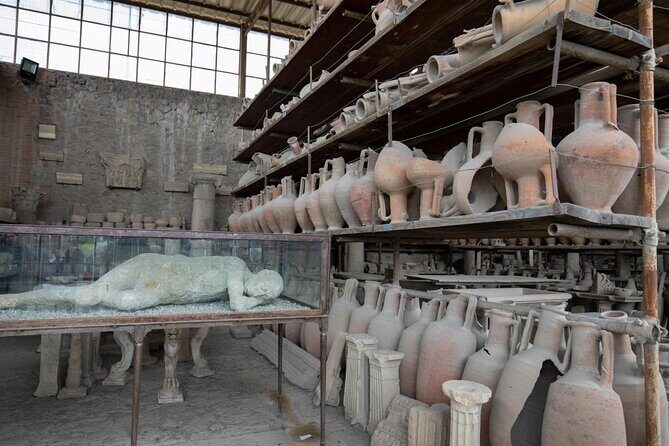
- Hotel/port pickup and drop-off in central Rome to cut out transit stress
- Prebooked Pompeii admission with guaranteed line-skips so you start seeing sooner
- Private guide commentary that connects buildings, neighborhoods, and daily life
- Pompeii highlights in one route including the baths, theaters, and the Forum
- MANN museum time with Pompeii artifacts plus the Gabinetto Segreto del Re
- Egyptian collection visit in a restored, newly opened section
Price and logistics: why this costs what it does
At $1,079.42 per person, this isn’t a bargain-basement outing. You’re paying for a few things that matter in real life: direct pickup from your central Rome hotel, a private guide for both stops, and a driver to handle the Rome-to-Naples-to-Rome route. On top of that, Pompeii entry is handled in advance so you can skip the long lines, which can easily save your day from “standing in the sun to start.”
There’s also included admission at both key stops: Pompeii is treated as admission-free in the tour setup, and the Naples museum entry is included. Add in the museum’s guided pacing and you start to see the value: this is closer to “a dedicated tutor plus transport” than “a ticket with a map.”
The trade-off is that the tour is a full-day commitment and private tours generally mean fewer shortcuts. If you dislike long transit days or prefer to move entirely at your own speed, this may feel structured. If you want maximum insight per hour, it’s a strong fit.
If you're still narrowing it down, here are other tours in Rome we've reviewed.


Getting from Rome to Pompeii with hotel pickup (and fewer headaches)
The biggest quality-of-life feature here is the door-to-door rhythm. You get picked up from your central Rome hotel (the same provider handles pickup and drop-off), which means you don’t have to coordinate trains, transfers, and tickets while you’re already thinking about Pompeii.
Timing-wise, expect a long day: the schedule runs about 10 to 11 hours, and it includes a lunch break before you head to Naples. The upside of that is psychological—your first stop starts with momentum instead of logistics. The guide also sets expectations early, so you aren’t wandering while trying to decode what you’re seeing.
You’ll want to dress for walking and for weather. The tour operates in all conditions, and the dress code is smart casual. Rome mornings can be cool and Naples afternoons can swing fast—layers are your friend.
Also note the “private” part is literal: only your group participates. That helps a lot when you want questions answered right away, and it keeps the pace from being dictated by strangers.
Pompeii Archaeological Park: what your guide will help you actually see
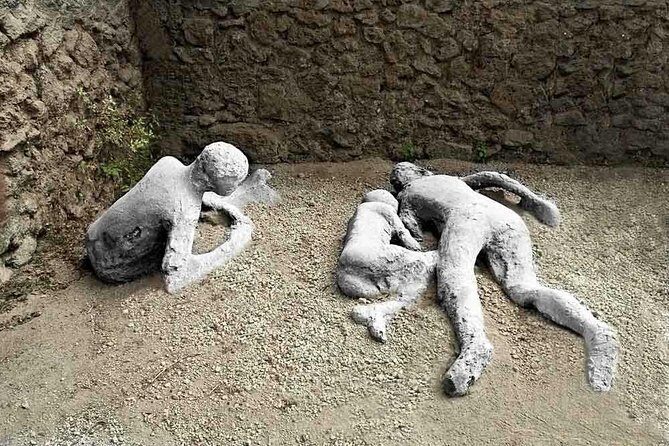
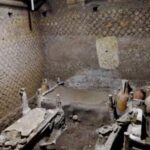
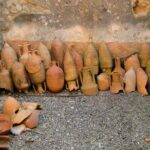
Pompeii isn’t just ruins. It’s a whole city plan you can walk. With a private guide leading you through the archaeological park, you’re not only looking at stones—you’re learning how people lived minute-by-minute.
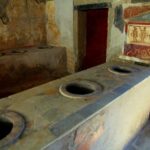
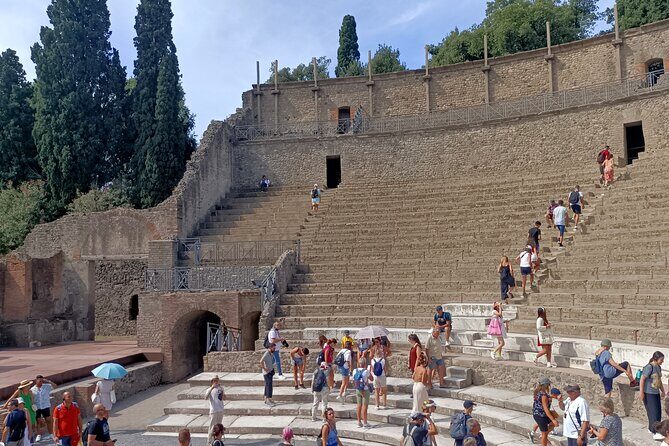
Early on, you’ll move through major civic and public spaces: the gymnasium, theaters, and old bakeries. Even the food-related stops matter here. One of the memorable details on the route is the “ancestor” of what we’d call fast food—an easy way for a guide to help you connect ancient routines to modern habits.
Next comes the religious and elite-world side of Pompeii. You’ll see the Isis temple, the house of Menander, and the baths—all great for understanding that Pompeii wasn’t one uniform neighborhood. It was a city of different social levels, different routines, and different ways of gathering.
And yes, the itinerary doesn’t skip the parts that make Pompeii feel human and messy. You’ll find the lupanariae, often described as the city’s red-light district. A good guide doesn’t treat it like scandal; they frame it in context so you understand commerce, privacy, and street life rather than just judging.
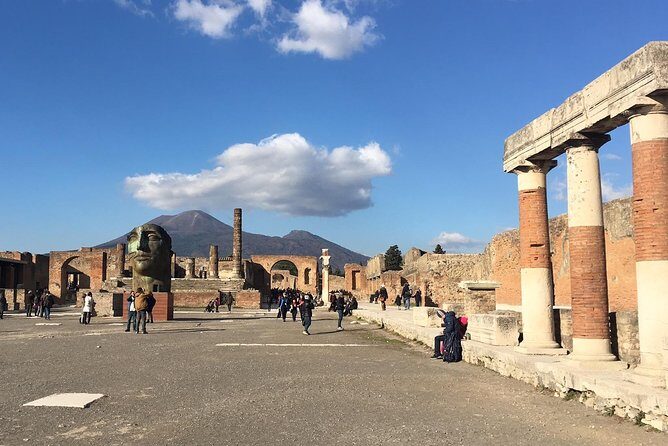
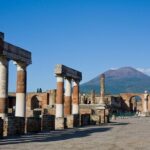
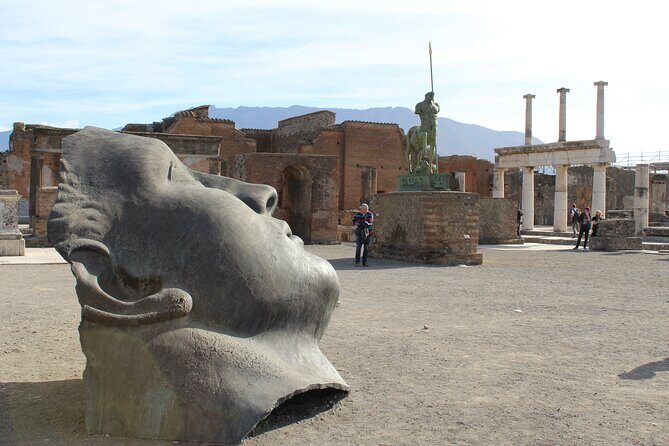
Your day culminates in the Forum, the central square where politicians made speeches, temples were built, and merchants sold products. That final viewpoint helps you “zoom out” and see Pompeii as a functioning urban center rather than a set of famous landmarks.
Stop-by-stop pacing: what to expect (and what can be tiring)
Pompeii is big. Even with a planned route, you’ll be outside for a while on paths that can be uneven. Your stamina matters most in the middle of the route, not at the start. If you have moderate physical fitness, you’ll likely manage, but it’s still a full walk day.
The guide’s private pacing helps here. If you want to slow down for photo angles, ask a question about a building function, or simply regroup, you can. That flexibility is one of the best reasons to choose a private format.
Pompeii’s Forum, temples, and everyday streets: learning the city layout
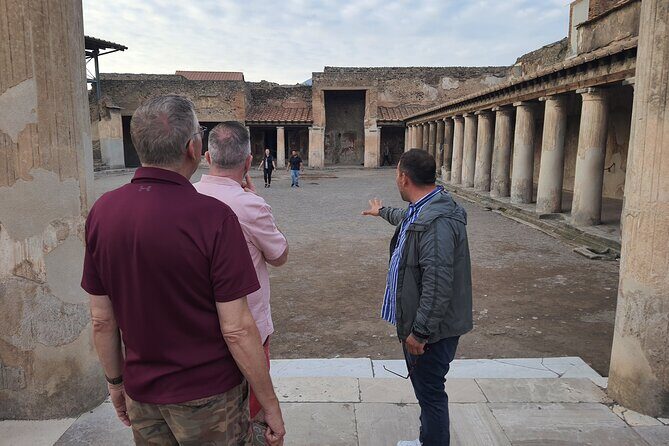
One of the best outcomes of a guided Pompeii visit is that your brain starts mapping instead of just observing. The route described here is built around that idea.
The Forum is your anchor. When you reach the central square—where speeches, temples, and merchant activity all happened—you finally understand the city’s rhythm. It’s not just “a plaza.” It’s the civic engine.
From there, the guide’s earlier stops make more sense:
- The theaters connect to public gatherings and social life.
- The bakeries help you picture daily consumption and street commerce.
- The baths show how status and routine blended in everyday spaces.
- The Isis temple adds a strong religious layer, reminding you that belief shaped how people organized their days.
And the most human details—like the lupanariae—turn the city into a place with friction, not just beauty. You get a clearer sense of how commerce worked at street level.
If you’re someone who normally rushes through ruins, this format can actually slow you down in a good way. It gives you landmarks and stories that your eyes can follow.




Naples Museum (MANN): turning Pompeii art into something you can understand
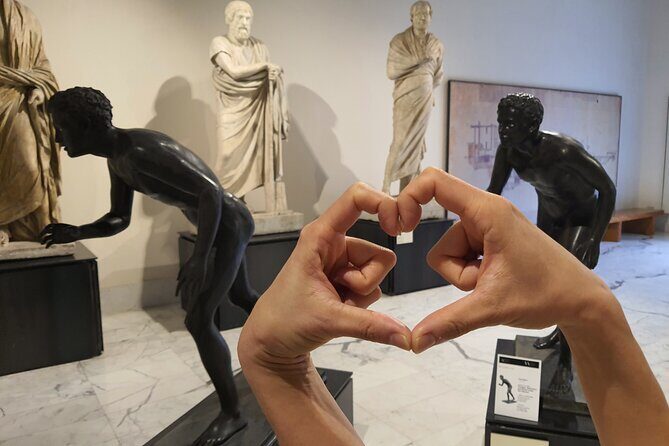
After a lunch break, you’ll drive to Naples for the Museo Archeologico Nazionale di Napoli, often called the MANN. This part is crucial. Pompeii is where the city was, but the museum is where many of its treasures make more sense.
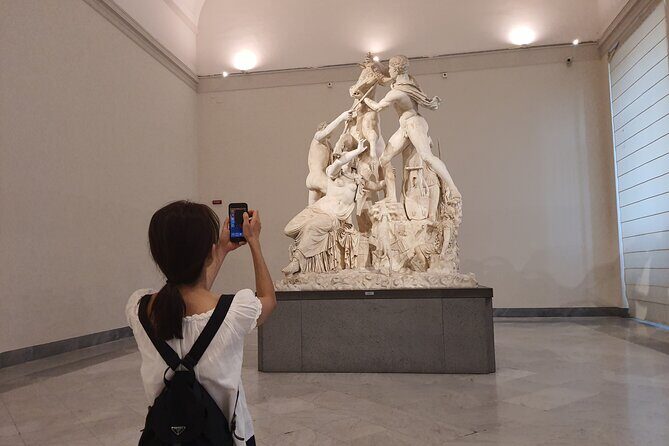
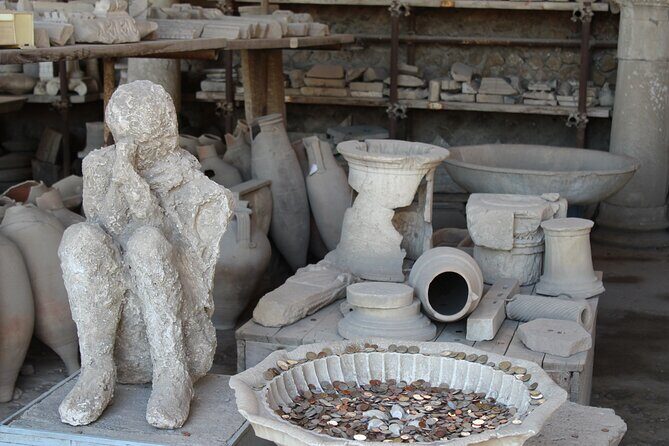
Inside, the tour focuses on why the collection exists: the museum holds statues, relics, and frescoes from Pompeii and surrounding archaeological areas. That means your Pompeii visit doesn’t end when you leave the ruins. You carry context with you.
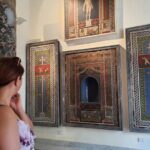
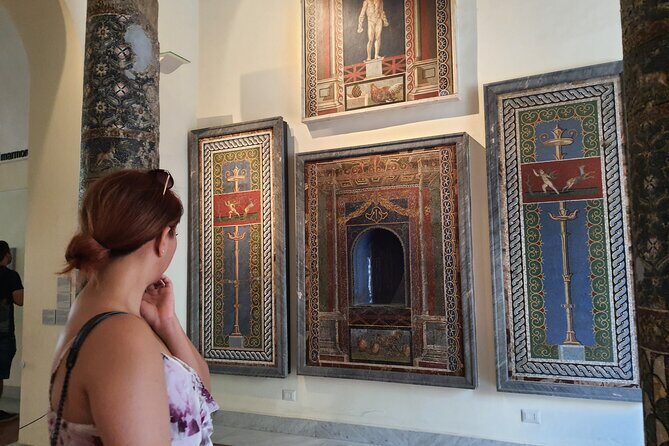
Expect a guided route that connects what you saw outside to the preserved objects inside. This is where frescoes stop being “pretty wall art” and start acting like evidence. You can see how themes repeated, what people decorated their spaces with, and how art reflected daily life and status.
The Gabinetto Segreto del Re and the Egyptian section
Two museum components deserve special mention because they change the emotional tone of the day.
First: the visit to the Gabinetto Segreto del Re, a reproduction section of the red-light district. Even if you’ve already seen the Pompeii lupanariae, this gives you another angle—one that’s interpretive and museum-framed. It’s a way to understand the same idea through artifacts and reconstruction, not just street remains.
Second: the restored and newly opened Egyptian section, described as one of the biggest in Italy. This is a smart pivot after Pompeii’s Roman world. It broadens the story of what people admired, collected, and brought into their cities—especially when foreign culture influences style and belief.
This pairing—Pompeii city life plus museum preservation—helps you leave with a stronger mental picture than a “ruins photo dump.”
Lunch break and real-world comfort: plan for the gap
The schedule includes time for a break for lunch before heading into Naples. Food and drinks are not included, so you’ll want to plan for a meal that fits your energy level.
Because the day is long, I recommend keeping your lunch simple. Choose something you can eat without turning the afternoon into a food coma. Also, keep water in mind. Even if you don’t buy it from the tour, having it on hand can make the second half of the day feel easier—especially after museum walking.
If you like to take photos, remember that Naples museum stops often mean more controlled lighting and more indoor wandering. That’s good for comfort, but it still adds steps.
Who this tour is best for (and who should rethink it)
This private tour is ideal if you:
- Want hotel pickup to make the day stress-free
- Like structured routes with a professional guide who can answer questions
- Care about seeing both the archaeological park and the museum where the artifacts are preserved
- Prefer a smaller, private group experience over long shared lines and crowds
It may be less ideal if you:
- Want a fully self-paced day with no guide timing
- Don’t handle long driving days well
- Need lots of flexibility around meals and stops (since food isn’t included and the day runs about 10–11 hours)
For families, note that children must be accompanied by an adult. The tour also calls for moderate physical fitness, so it’s not built for very limited mobility.
Practical tips: smart casual, smart planning
A few small things can noticeably improve the day:
- Wear smart casual shoes. Pompeii’s ground can be uneven, and museum floors can be slippery if you pick the wrong footwear.
- Bring layers. The tour runs in all weather conditions, so a light jacket can save you during shifting temperatures.
- Use the time your guide gives you. In Pompeii, the best photos often come when you pause to understand what you’re seeing—so ask questions rather than just walking past.
- Have a lunch plan. The tour offers a break, but you’ll handle food yourself.
One more tip: if you’re considering changes to pickup/drop-off locations, know that it may require an additional cost. It’s best to ask early so the day stays smooth.
Should you book this private Pompeii + MANN tour?
I’d book it if you want your Pompeii day to feel coherent. The combination of Pompeii’s street-level archaeology with a guided museum stop at the MANN is exactly how you get past the usual “wow, ruins” feeling and into real understanding.
This works especially well for value-minded travelers who hate wasted time. Skip-the-line entry, private guiding, and included museum admission mean you’re paying to reduce friction and increase insight. The long day is real, and there’s no included lunch, but those are predictable trade-offs.
If your priority is “see the key places with context, in one full day, without log-juggling,” this is a strong pick.
FAQ
How long is the Pompeii and Naples MANN private tour from Rome?
The duration is about 10 to 11 hours.
Does the tour include hotel pickup and drop-off?
Yes. Hotel/port pickup and drop-off are included.
Will I be able to skip the long lines at Pompeii?
Yes. The tour includes guaranteed skipping of the long lines, with admission handled in advance.
What is included at the Naples museum (MANN)?
The tour includes admission to the Museo Archeologico Nazionale di Napoli and includes a visit guided by your guide to highlights such as the Gabinetto Segreto del Re reproduction section and the restored Egyptian section.
Is food included during the tour?
No. Food and drinks are not included, though there is a break for lunch.
What should I wear?
The dress code is smart casual, and the tour operates in all weather conditions, so dress appropriately.
What is the cancellation policy?
You can cancel for a full refund up to 24 hours in advance of the experience’s start time.