REVIEW · NAPLES
Pompeii private tour from Naples. The best choice for cruisers
Book on Viator →Operated by Nino Pezzullo · Bookable on Viator
Pompeii clicks into place fast. This private outing takes you in from Porta Marina and then routes you through the city’s big public hits, so you don’t just see ruins—you understand how Pompeii worked day to day. I also love the private group setup. It keeps things calm enough to ask questions and actually follow the story.
There is one catch: the day is structured with lots of stops, and each one is timed. If you want to linger for an hour at a single wall, this may feel too fast.
In This Review
- Key highlights that matter on the ground
- Price and logistics: what you’re paying for (and what you’re not)
- Starting at Stazione Marittima: the cruise-day advantage
- Ride to Pompeii in a Peugeot 3008 (and why vehicle size matters)
- Porta Marina to the Forum: getting oriented in Pompeii’s first minutes
- Santuario di Apollo: religion in a strategic spot
- Macellum and Popidio Prisco: how Pompeii ate, shopped, and ran daily life
- Suburban Baths: private leisure and the erotic imagery warning
- Casa del Fauno and Casa dei Vettii: reading wealth from the street
- Teatro Grande and Anfiteatro Romano: performances and scale you can feel
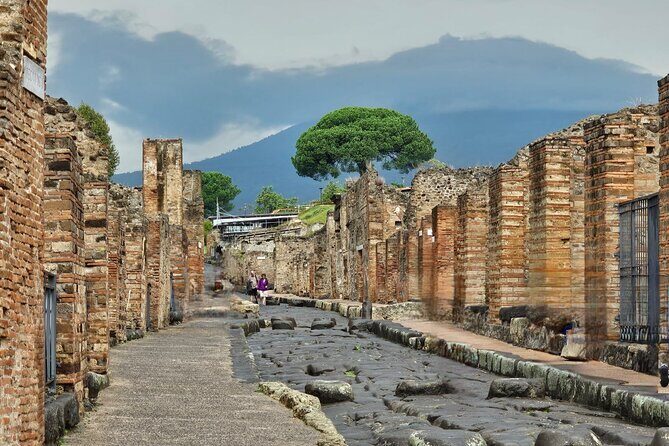
- Via dell’Abbondanza: Pompeii’s shopping street walk
- Basilica: business and justice in Pompeii’s most sumptuous center
- How the private guide experience changes the tour
- Who this Naples-to-Pompeii tour fits best
- Should you book this private Pompeii tour from Naples?
- FAQ
- FAQ
- How long is the Pompeii private tour from Naples?
- Where is the meeting point in Naples?
- Is this a private tour or a group tour?
- What language is the tour offered in?
- Are admission tickets included for the stops?
- What vehicle is used for transportation?
- Does the tour use mobile tickets?
- When does this tour operate?
- What happens if the weather is bad?
- What is the cancellation policy for a full refund?
Key highlights that matter on the ground
- Porta Marina start point: you begin at one of Pompeii’s most impressive gates and get a logical flow into the city.
- Private car from the cruise area: meet near Stazione Marittima in Naples, then get driven to Pompeii and back without the hassle.
- Admission included as you go: entry tickets are included for each main stop on your route.
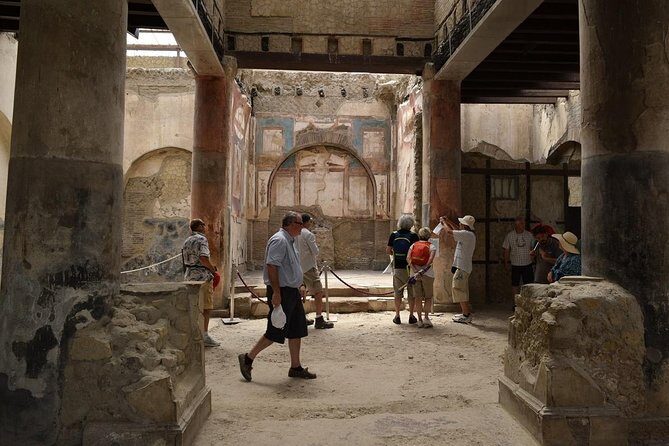
- A tight, guided “how Pompeii lived” route: Forum life, markets, homes, baths, and theaters all connect in your head.
- Adult-context heads-up at Suburban Baths: you’ll see erotic imagery in the changing rooms, tied to what happened upstairs.
- Scale lovers get fed: you’ll stand in and around major performance sites, including an amphitheater built for up to 20,000.
Price and logistics: what you’re paying for (and what you’re not)
At $216.27 per person, this isn’t the cheapest way to reach Pompeii. But for a private, cruise-friendly format, you’re paying for three concrete wins: your own group, guided time at the right spots, and transport that’s built around a day in Naples. You also get admission tickets included for the stops on your route, which helps the math.
For couples or small families, the value is strongest if you want to avoid big groups and long lines. If you’re the type who enjoys a slow museum pace, you may want to plan for a more “see a lot” day here, not a “live in one place” day. (The route is designed that way, and you can feel it.)
If you're still narrowing it down, here are other tours in Naples we've reviewed.
Starting at Stazione Marittima: the cruise-day advantage
This tour is built around a meeting point at Stazione Marittima, which is exactly the kind of anchor you want when your ship schedule is tight. You also end back at the same place, so you’re not guessing your way across town at the end of a long day.
The transport is scheduled during weekday hours, and the operation window runs from 12/26/2023 to 02/03/2027, Monday through Friday, 8:30 AM to 5:00 PM. If your cruise disembarkation lines up with that rhythm, you’re already set up for an easier day than DIY.
One small practical bonus: past guests note clear pre-tour communication and a simple handoff so you can locate the car without stress. That’s the kind of detail that saves time when you’re juggling port crowds.
Ride to Pompeii in a Peugeot 3008 (and why vehicle size matters)
You’ll travel by car—specifically a 2014 Peugeot 3008. That matters because it affects comfort, door-to-door convenience, and how easily you can get into position near busy areas.
If your group is larger, the operator can arrange a bigger car or mini van on request, with a supplement. Translation: you won’t have to “make it work” with an undersized ride.
Also, when the drive is part of a private tour plan, your guide can manage the timing so you get into Pompeii at a workable moment. One guest even highlighted how starting early helps you avoid the worst of holiday crowding.
Porta Marina to the Forum: getting oriented in Pompeii’s first minutes
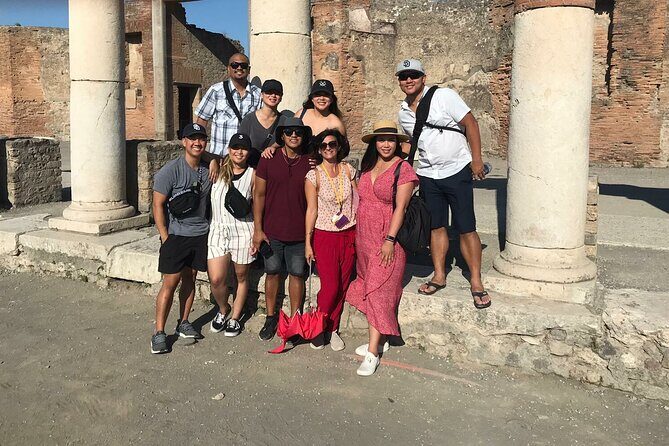
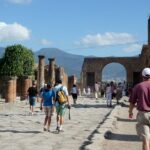
Your visit starts at Porta Marina, one of Pompeii’s seven gates and described as the most impressive. Starting at a gate isn’t just a cute detail—it helps you understand scale and direction. From here, Pompeii feels like a city you entered, not a theme park where you wander randomly.
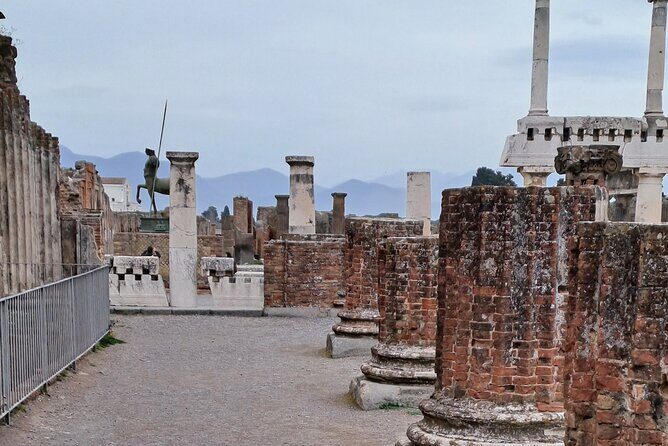
From Porta Marina, you move into the heart of daily life at the Forum. This is Pompeii’s center for public activity, with major buildings overlooking it. If you’ve ever toured ruins and felt lost in the layout, this stop fixes that. The Forum gives you a mental map: where commerce, justice, and civic life naturally clustered.
One thing I’d watch for here: the Forum area can feel like it has lots of “important” structures. A good guide keeps you from turning into a photo-taking robot and makes you connect the spaces to how people lived.
Santuario di Apollo: religion in a strategic spot
Next up is the Sanctuary of Apollo, one of the oldest worship places in Pompeii. You’re shown why Apollo mattered here, including the connection to Greek and Etruscan presence in Campania.
What I like about this stop is that it gives you more than architecture. Pompeii wasn’t only about houses and shopping—it was also about belief systems, public ritual, and the city’s cultural mix. When the guide explains the why, the sanctuary stops feel purposeful instead of random.
This is a shorter stop, and it works best if you use those minutes to ask one good question—something like what Apollo’s role was in this particular city context.



Macellum and Popidio Prisco: how Pompeii ate, shopped, and ran daily life
Pompeii’s food and trade show up in two very different places on your route: the Macellum and a working-feeling panificio (bakery).
At the Macellum, you’re in the city market. The big feature is the courtyard with a circular structure used for selling and cleaning fish. That single detail helps you picture the flow of daily transactions—food being handled where people could see it.
Later, you’ll visit the Panificio di Popidio Prisco, where you get an explanation of how bread was produced. Even if you don’t care about bread, this is one of the most grounding stops. It turns a vanished industry into something physical: heat, ingredients, work, and timing.
Small drawback to keep in mind: market and bread stops can be visually similar if you’re tired. I recommend keeping your energy for one question at each—what people bought here, and what production looked like. Those answers make the differences stick.
Suburban Baths: private leisure and the erotic imagery warning
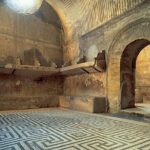
The Suburban Baths are different from other thermal spots because they were private. That changes the vibe. You’re looking at a space for leisure and social time, not just public bathing.
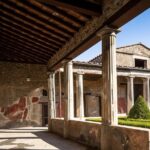
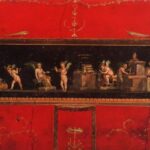
In the changing rooms, you’ll find pictures with erotic subjects that advertised activities that took place upstairs. If you’re traveling with teens, or if you’re sensitive to sexual imagery, take that seriously before you go. It’s not graphic in the way modern media can be, but it is explicit enough to be noticeable.
Even with that heads-up, this stop is valuable because it expands Pompeii beyond “stuff that survived.” It shows how adults talked, relaxed, and organized private time. That context makes the rest of the city feel more human.
Casa del Fauno and Casa dei Vettii: reading wealth from the street
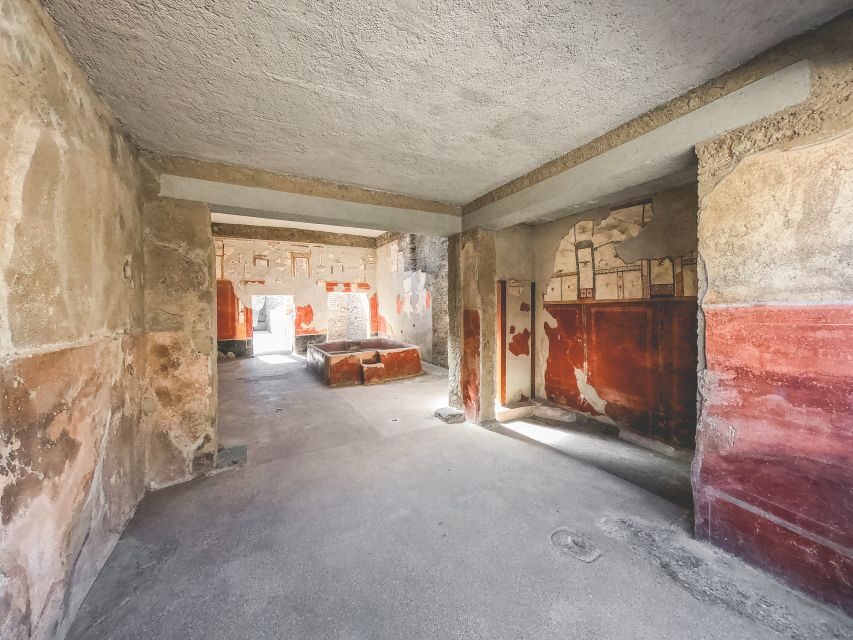
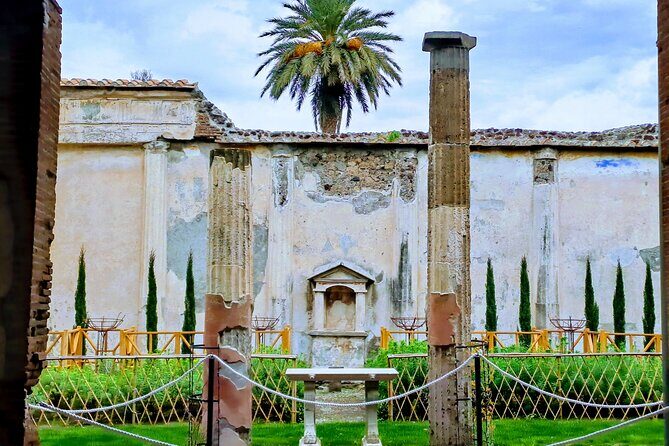
Next comes the housing section, and it’s a big reason people love Pompeii. First is the Casa del Fauno, noted as one of the largest houses. You can already sense the owner’s wealth and social level from the street. That street-level perspective matters, because it prevents you from treating Pompeii homes like isolated rooms. You’re seeing status expressed through the city’s layout.
Then you move to the Casa dei Vettii, one of Pompeii’s richest and best-known houses. The home is described as richly decorated, with a protective connection to Priapus, god of prosperity. Even if you’re not a myth person, the name Priapus matters here because it ties the decoration and symbolism to what the owners wanted to project.
Practical note: house visits can turn into “corridor photos” if you don’t slow down. Try to spot what the guide emphasizes—whether it’s wealth markers, symbolism, or how rooms functioned as part of daily life.
Teatro Grande and Anfiteatro Romano: performances and scale you can feel
Pompeii’s performance sites are dramatic in two ways: they’re built to be seen, and they’re built to handle crowds.
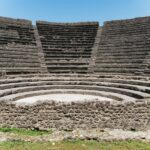
At the Teatro Grande, you’re in a large theater built around the middle of the 2nd century BC. Greco-Roman comedies and tragedies were performed here, which helps you understand that entertainment carried cultural weight—not just casual fun.
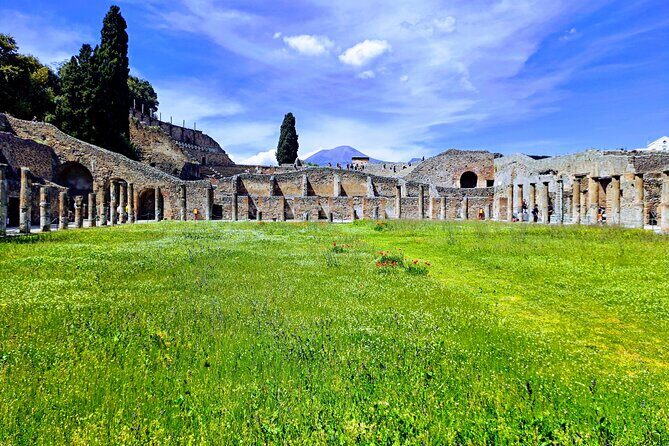
Then comes the Anfiteatro Romano, described as the oldest amphitheater in the Roman world, built in 70 BC and capable of holding up to 20,000 spectators. Standing in that scale gives you a reality check. This wasn’t a small town with a small audience. Pompeii was wired for big events.
If you’re short on energy, these two stops are still worth it because they give you “wow” without needing long walking between details. The guide’s job here is to translate the structure into what a crowd would have felt.
Via dell’Abbondanza: Pompeii’s shopping street walk
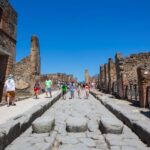
After the big crowd venues, you shift back to everyday life with Via dell’Abbondanza. This is one of Pompeii’s most important streets and is framed as the shopping street, where you could find famous, well-known shops.
This is where you get the city rhythm back in your bones. After seeing theaters and amphitheaters, it’s helpful to walk a street that feels like a routine. You start thinking like a shopper: services, goods, and the way movement through the city happened naturally.
Because this is a walking-focused stop, it works best if you keep your pace steady and don’t get stuck in photo overload. A guided route is about flow; you’ll enjoy it more if you cooperate with the timing.
Basilica: business and justice in Pompeii’s most sumptuous center
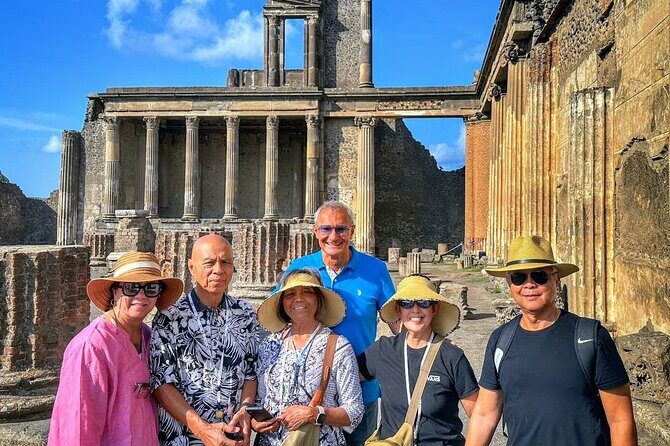
You finish at the Basilica, described as the most sumptuous building in the Forum area. This is where management of business and justice took place.
Even if you’re not a legal history person, the Basilica helps you grasp how a city organized itself. People didn’t only gather for entertainment or worship—they handled trade, disputes, and decisions in public spaces.
By the time you reach this stop, you’ll likely feel a pattern: the tour has moved from entry gates to civic space, then into food and daily work, then into private life, then back to public gatherings. That sequencing is one of the reasons the whole day feels coherent.
How the private guide experience changes the tour
This is a private tour, so you’re not stuck waiting for the slowest group member. The guide can also adjust explanations to your pace. In past experiences, guides like Nino Pezzullo have been praised for clear English and strong communication before departure—some guests even describe WhatsApp contact and a quick video showing where to meet the car.
There are also reports of Carmen, who in one account picked up guests just outside the cruise terminal. That guest described Carmen as having studied archaeology in Naples and worked on a dig in Pompeii as a student. You might not get the same exact setup every time, but the theme is consistent: you’re working with someone who can connect what you see to how people lived.
The best part of a private format is simple: your questions land. If something doesn’t make sense—like why a market is built a certain way or what a religious sanctuary’s placement tells you—you can ask and move on with a clearer head.
Who this Naples-to-Pompeii tour fits best
You’ll likely love this tour if:
- You’re a cruiser with limited time in Naples and want a safe, easy plan.
- You want a private day without the stress of big crowds.
- You prefer a guided route that connects sites into a story, not random wandering.
You might rethink it if:
- You want long free time at each stop.
- You’re uncomfortable with erotic imagery associated with the Suburban Baths.
- You’re traveling during a time when your schedule doesn’t line up with the weekday operating window.
Should you book this private Pompeii tour from Naples?
If you’re doing Pompeii from a cruise port and you want the city to make sense fast, I think this is a smart pick. The price isn’t low, but you’re buying real value: transport that fits the cruise day, a private setup, and admission handled across key sites. For groups who care about structure and avoid chaos, it’s a strong way to spend five hours.
If you’re the type who can happily lose an afternoon in one house or one street, look for options with fewer stops or more unstructured time. Otherwise, this one is built to help you see the important Pompeii pieces in the right order—without turning your day into a sprint.
FAQ
FAQ
How long is the Pompeii private tour from Naples?
It runs for about 5 hours.
Where is the meeting point in Naples?
The tour starts at Stazione Marittima, 80133 Napoli NA, Italy.
Is this a private tour or a group tour?
This is a private tour/activity. Only your group will participate.
What language is the tour offered in?
The tour is offered in English.
Are admission tickets included for the stops?
Yes. Admission tickets are included for each listed stop.
What vehicle is used for transportation?
Transport is carried out with a 2014 Peugeot 3008. Larger cars or mini vans are available on request with a supplement.
Does the tour use mobile tickets?
Yes, mobile tickets are included.
When does this tour operate?
It operates on Monday through Friday from 8:30 AM to 5:00 PM, within the stated date window (12/26/2023 – 02/03/2027).
What happens if the weather is bad?
This experience requires good weather. If it’s canceled due to poor weather, you’ll be offered a different date or a full refund.
What is the cancellation policy for a full refund?
You can cancel up to 24 hours in advance for a full refund, as long as you cancel at least 24 hours before the experience’s start time.