REVIEW · ROME
Pompeii: Entry Ticket w/ Guide and Transfers or Audio Guide
Book on GetYourGuide →Operated by Show Me Italy · Bookable on GetYourGuide
Pompeii still feels impossible to believe. Walking streets frozen by Vesuvius in 79 AD, I love having a live guide (or an audio option) and seeing the plaster casts that make the disaster feel painfully real. One catch: the site is not suitable for wheelchair users or people with mobility impairments.
If you choose the Rome option, the round-trip transfers take the stress out of getting there and back, whether you’re riding a bus or train through the Italian countryside. And if you’re lucky enough to get a guide like Giuseppe, you’ll get history with personality, not just dates.
In This Review
- Key Points Before You Go
- Why Pompeii Feels Like a Time Capsule
- Guide vs Audio Guide: Picking the Right Way to See Pompeii
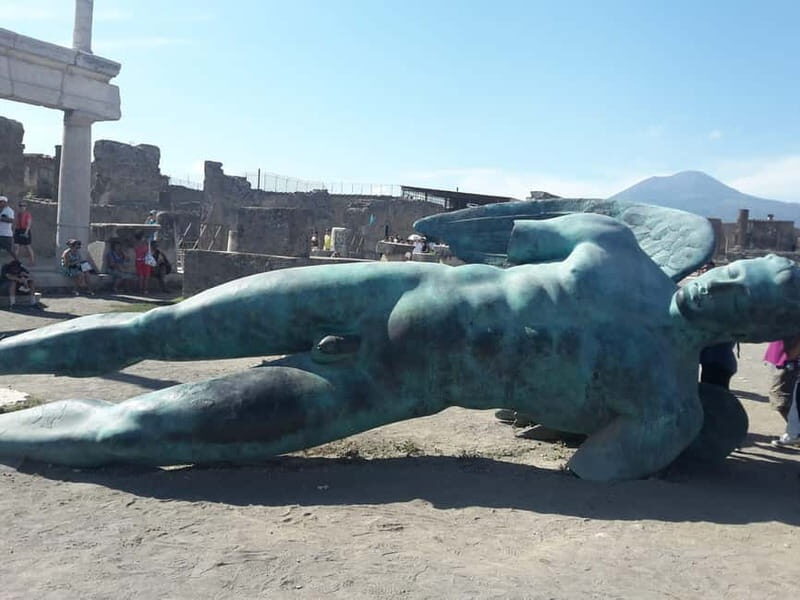
- The Forum and Amphitheater: Pompeii’s Public Face
- Houses, Villas, Frescoes, and Mosaics You Can Actually See
- The Plaster Casts: The Stop That Stays With You
- Getting There from Rome: Transfers, Meeting Points, and Day Timing
- Price and Value: What $5.55 Gets You (and What It Doesn’t)
- Who This Day Trip Suits Best
- Should You Book This Pompeii Ticket with Guide or Audio?
- FAQ
- How long is the Pompeii tour?
- Is there a guided tour or an audio guide?
- Does this include transportation from Rome?
- What stops or sights are included in Pompeii?
- Is this activity good for families?
- Can I cancel for a full refund?
- Is this tour wheelchair accessible?
- What are the rules about luggage and food?
- Does the tour run in bad weather?
Key Points Before You Go
- Choose your pace: Guided tour for structured storytelling, or an English audio guide for self-guided wandering.
- Big monuments first: You’ll get time around major landmarks like the forum and amphitheater.
- Homes of the wealthy: Expect stops tied to famous houses and villas, including the House of the Vettii and the Villa of the Mysteries.
- See Roman daily life close up: Baths, bakeries, and shops help you picture everyday routines beyond temples and rulers.
- The casts are the emotional stop: The plaster casts of victims are among the most moving moments in Pompeii.
Why Pompeii Feels Like a Time Capsule
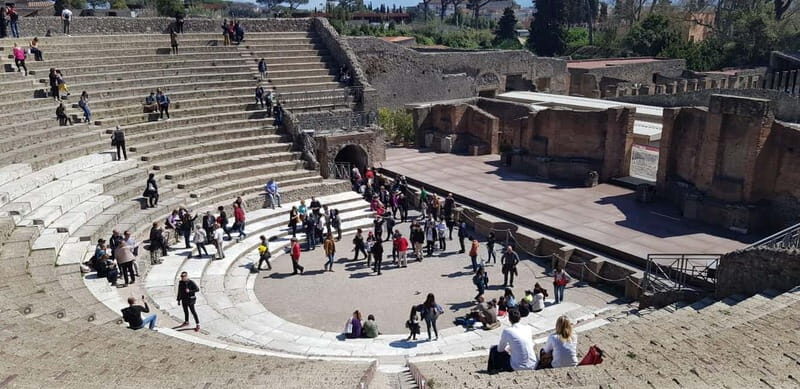
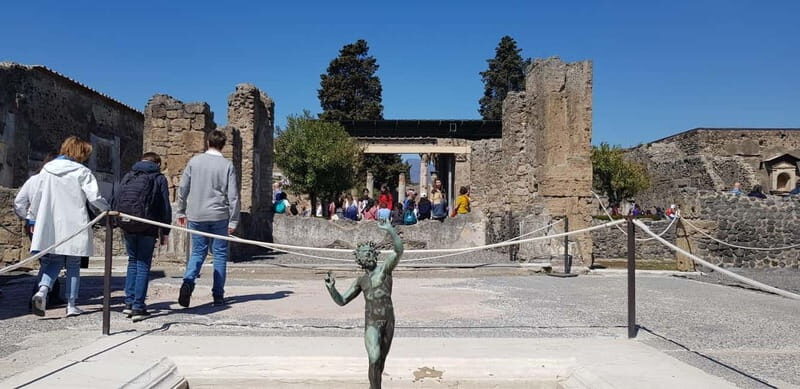
Pompeii isn’t just ruins. It’s a whole city that was paused mid-life. The eruption buried homes, shops, public buildings, and even the paths between them. That’s why the place hits so hard: you’re not looking at random columns. You’re moving through streets that once carried people, noise, errands, and gossip.
You’ll see Pompeii as a mix of public and private worlds. The forum area shows the civic heartbeat—politics and community life. Then you shift to homes and villas, where wealthier residents decorated walls with frescoes and floors with mosaics. It’s the contrast that makes it work so well in a single visit.
If you're still narrowing it down, here are other tours in Rome we've reviewed.



Guide vs Audio Guide: Picking the Right Way to See Pompeii
You can go guided or go at your own pace with an optional English audio guide. Both options can be smart—here’s how I’d choose.
A guided tour works best when you want your time to feel tight and meaningful. You’ll hear the “why” behind what you’re seeing—how Pompeii functioned day to day and what the eruption likely changed overnight. The structure matters because Pompeii is big, and a guide can point you to the most impactful sights without you guessing.
The audio guide option is ideal if you like control. You can linger over frescoes or walk back through an area you missed. Just know that without a person to answer your questions, you’ll rely on the narration to connect the dots.
Either way, you’ll have access to Pompeii Archaeological Park entry, so your visit is anchored to the core site.
The Forum and Amphitheater: Pompeii’s Public Face
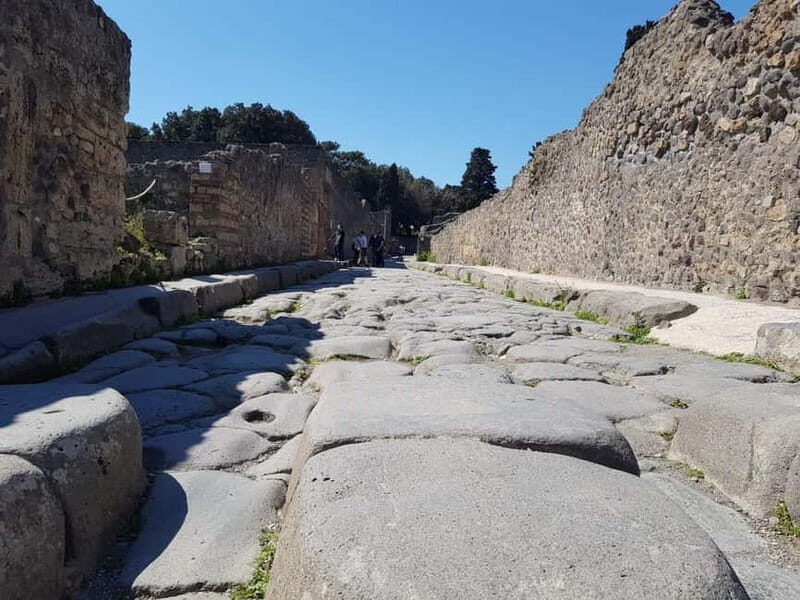
Two names you’ll hear right away at Pompeii are the forum and the amphitheater. These are the “public stage” parts of the city, and they’re worth treating like headline attractions.
The forum is where Roman civic life happened. Think assemblies, announcements, and the practical social mix of people going about their business. Even in ruins, the layout helps you understand how authority and community energy were built into daily movement.
Then comes the amphitheater, the kind of place that tells you how entertainment shaped public rhythm. Seeing it after the forum helps you notice something: Pompeii’s public buildings weren’t only for power. They were for gathering, spectacle, and shared experience.
If you’re short on time, this is where a guide can really help you prioritize—getting you oriented fast before you start poking into side streets and houses.
Houses, Villas, Frescoes, and Mosaics You Can Actually See
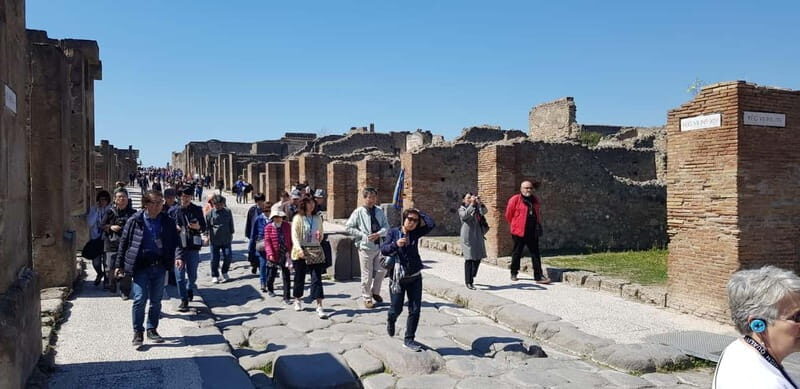
Pompeii gets famous for its domestic spaces, and this ticket doesn’t skim over them. You’ll have stops tied to major homes and villas, including the House of the Vettii and the Villa of the Mysteries.
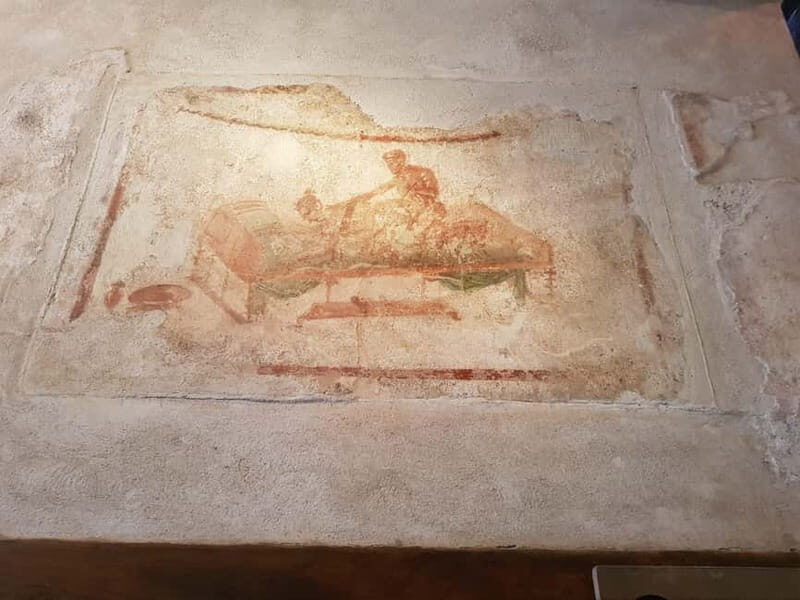
Why these matter: they show how Romans lived when they weren’t in official buildings. The wealthier homes reveal taste—wall paintings, mosaic floors, and the careful way rooms were arranged around light, privacy, and status. In many cases, what you’re seeing isn’t a guess. You can often identify the scenes and decorative choices that once signaled where someone sat in the social ladder.
There’s also a strong emphasis on the daily-life side of Pompeii: baths, bakeries, and shops. These stops keep the visit grounded. They remind you that a city is made of routines, not just monuments.
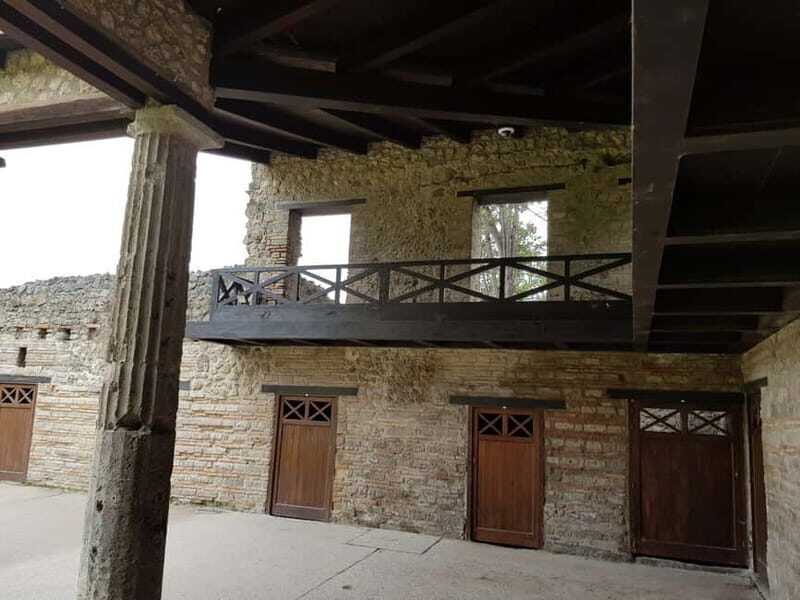
One practical note: Pompeii involves walking through uneven stone surfaces and ramps. You’ll want sturdy shoes and a plan for breaks, especially if you’re traveling in warm weather.
The Plaster Casts: The Stop That Stays With You
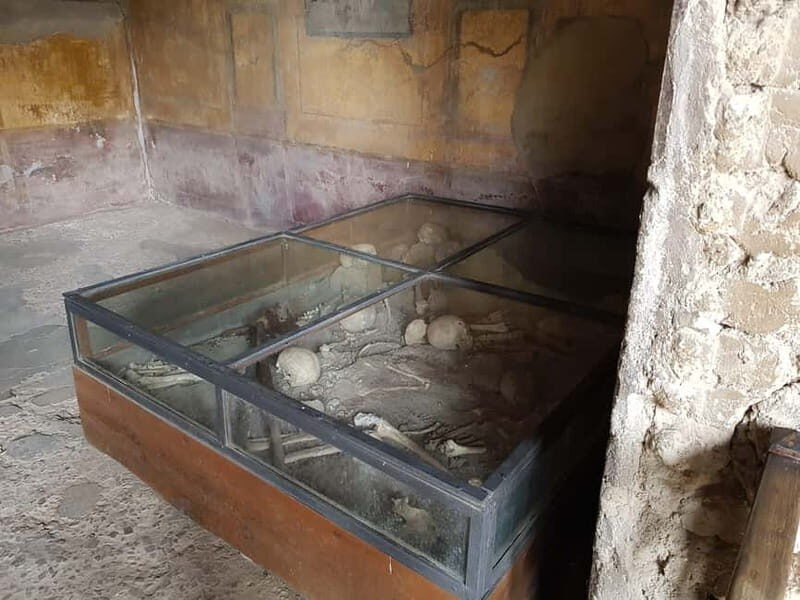
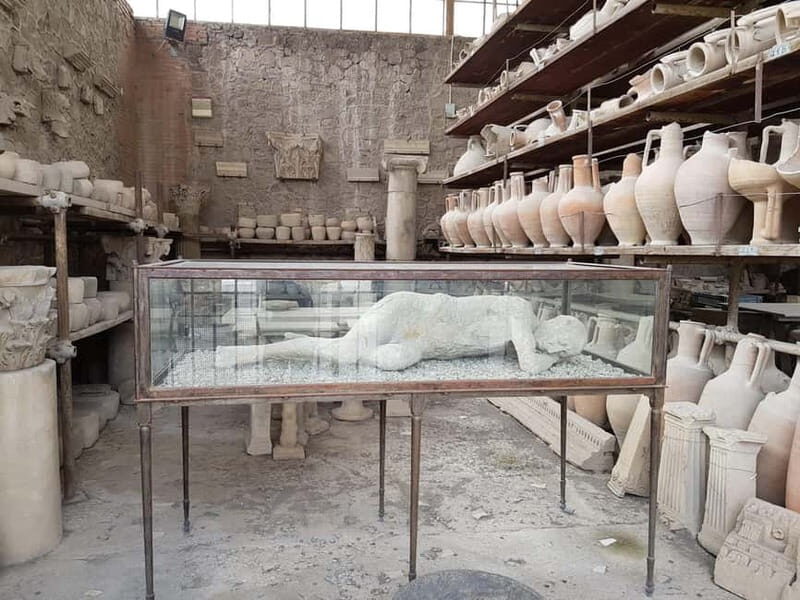
The plaster casts are the emotional center of Pompeii. You’ll see casts of victims—people frozen in the moment—so the site stops being only historical. It becomes personal.
What I appreciate most is how the casts create a bridge between the big story (a catastrophic eruption) and the human scale (a person trying to survive). Once you’ve seen them, the ruins around you feel heavier. Even the quieter corners of houses and streets carry more weight.
This is also a reason to schedule your visit with your head and heart in mind. If you tend to rush through uncomfortable moments, you might want to plan a little extra time in the area where the casts are displayed so you don’t feel pushed.






Getting There from Rome: Transfers, Meeting Points, and Day Timing
This experience can include round-trip transportation from Rome, depending on the option you choose. The ride itself matters more than you’d think. When transfers are included, you avoid the common headache: figuring out trains, bus schedules, and where exactly you need to be before you ever reach the ruins.
The transfers are described as bus or train through the Italian countryside, which means you get a bit of scenery along with the logistics. Not included is hotel pickup and drop-off. So you’ll meet at a stated meeting point that can vary by option, and the tour ends back at that meeting point.
Duration is listed as 2 to 12 hours, with exact timing depending on the departure schedule. That range tells me two things: you should check the specific start time you’re booking, and you should treat this as a serious day commitment when you pick the Rome-transport option.
Tours run rain or shine unless officials close the monument for safety reasons. Pompeii is an outdoor archaeological site, and weather changes how it feels. If you’re packing, think layers, because the ground and the shade can make the temperature feel different than in Rome.
Price and Value: What $5.55 Gets You (and What It Doesn’t)
You’ll see a price listed at $5.55 per person, plus the note that you should check availability for starting times. Since transportation may or may not be included and duration varies by option, I treat value here as a “package fit,” not just a single number.
Here’s the value equation based on what’s included:
- Entry to Pompeii Archaeological Park is included.
- If you pick the guided option, you get a guided tour of Pompeii.
- If you pick the Rome option, you get round-trip transportation from Rome.
What you shouldn’t expect:
- No hotel pickup/drop-off.
- No food or drinks in the vehicle.
- No oversized luggage or large bags allowed.
So the real question is: are you paying for entry only, or for entry plus planning help (guide) and logistics help (transfers)? If you’re coming from Rome and don’t want to deal with the trip on your own, the transfer-inclusive choice usually makes the whole day feel smoother.
Who This Day Trip Suits Best
I’d point this tour toward a few kinds of travelers:
- Couples who want a structured day with enough freedom to look around.
- Solo visitors who like safe, organized transport and a clear plan at the site.
- Families, especially when you want the outing to stay engaging rather than turning into a long walk with kids asking why everything is broken.
- History lovers who want both the big public sights (forum, amphitheater) and the personal spaces (villas, homes, daily shops and baths).
The one clear mismatch: it’s not suitable for wheelchair users or people with mobility impairments. Pompeii’s surfaces can be uneven and the walking is unavoidable.
Should You Book This Pompeii Ticket with Guide or Audio?
Book it if you want Pompeii without friction. The combination of park entry, optional guide or audio, and the possibility of round-trip transfers from Rome is exactly what makes this kind of day trip work. I also like that the experience focuses on more than one kind of sight: public buildings, private homes, and the human-scale plaster casts.
Don’t book it if your mobility needs are flexible but your route isn’t. Pompeii is tough terrain, and this experience doesn’t position itself as accessible.
My final advice is simple: double-check what option you’re choosing—audio vs guide, and whether you’re taking the Rome transfers—so you know what kind of day you’re actually buying.
FAQ
How long is the Pompeii tour?
The duration is listed as 2 to 12 hours, depending on the starting time and option you select. Check availability to see the exact schedule for your date.
Is there a guided tour or an audio guide?
You can choose either a guided tour of Pompeii (if that option is selected) or an optional English audio guide.
Does this include transportation from Rome?
Round-trip transportation from Rome is included only if you select the option that includes transfers. Hotel pickup and drop-off are not included.
What stops or sights are included in Pompeii?
The experience includes Pompeii highlights such as the forum and amphitheater, plus stops tied to the House of the Vettii and the Villa of the Mysteries. It also includes areas connected to daily Roman life like baths, bakeries, and shops, and it includes plaster casts of victims.
Is this activity good for families?
It’s listed as running as a day trip with structured exploration, and it’s described as well organized for young and old. If you want history that stays engaging, this is the kind of outing to consider.
Can I cancel for a full refund?
Yes. Free cancellation is available up to 24 hours in advance for a full refund.
Is this tour wheelchair accessible?
No. It is not suitable for wheelchair users or for people with mobility impairments.
What are the rules about luggage and food?
Oversize luggage and large bags aren’t allowed. Alcohol and drugs aren’t allowed, and food and drinks are not allowed in the vehicle.
Does the tour run in bad weather?
Tours run rain or shine unless officials close the monument for safety reasons.
If you tell me your travel dates and whether you’re choosing Rome transfers and guide vs audio, I can help you pick the best option for the kind of day you want.