REVIEW · NAPLES
Herculaneum Guided Group Tour from Naples
Book on Viator →Operated by Worldtours · Bookable on Viator
Roman houses, minus the hassle. This Herculaneum guided group tour turns a potentially messy logistics day into a smooth, timed visit, with hotel/port pickup and a live local archaeological guide doing the heavy lifting. I love the convenience of being carried there by air-conditioned minibus, and I love how the route focuses on standout house interiors rather than wandering. One possible drawback: the site can feel a bit strenuous if you have mobility issues, so plan accordingly.
What makes this trip especially appealing is that you’re not just seeing ruins—you’re getting a guided storyline for how people lived, right down to everyday objects that survived under volcanic material. You’ll also have a simple rhythm: a longer main stop, then a few focused house visits that keep the pace moving.
English is available, with tickets delivered digitally (a mobile ticket), and the group capped at 40. There’s also a small-group option in the mix, with upgrades that can run as few as eight people for a more personal experience—worth considering if you dislike big crowds and long waiting.
In This Review
- Key things to know before you go
- Car-Free Naples to Herculaneum, With Pickup and Timing That Actually Works
- Price and Value: Why $82 Is More Than Just a Ride
- Parco Acheologico Di Ercolano: The Volcanic Time Capsule
- Casa dei Cervi (House of the Deer): A Short Stop That’s All About Interior Detail
- Casa del Bicentenario: A Quick Room-By-Room Story
- Partem Domus Lignea: Wooden Sliding Panels and the Wonder of How Things Worked
- Guide Style, English Clarity, and Why Small Groups Can Change Everything
- Walking, Heat, and How to Prep for a 3-Hour Archaeology Sprint
- Pompeii vs. Herculaneum: What This Tour Helps You Compare Fast
- Getting the Most From the Tour: A Simple Game Plan
- Should You Book This Herculaneum Guided Group Tour?
- FAQ
- How long is the Herculaneum guided group tour from Naples?
- What language is the tour offered in?
- Where does the tour start in Naples?
- What time does the tour begin?
- Is hotel or port pickup included?
- Are entrance tickets included?
- Is lunch included?
- How many people are in the tour?
- What should I bring or plan for?
Key things to know before you go
- Pickup from Naples (and the hassle-free return): round-trip transport is part of the package.
- Skip-the-line access: you’re not relying on your own ticket-chasing at the gate.
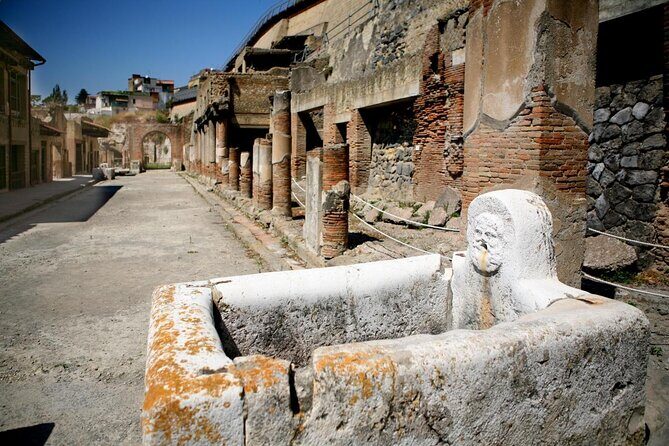
- House-focused route: you’ll see multiple named dwellings in a short window.
- Short main stop plus quick hits: the route is built for about 3 hours total.
- English-guided is the goal: the tour lists English, with possible multi-lingual mixing depending on the group.
- Weather-ready planning: it operates in all weather, so dress for heat or chill.
Car-Free Naples to Herculaneum, With Pickup and Timing That Actually Works
Getting to Herculaneum from Naples can be easy on paper and annoying in real life. Traffic, parking, and figuring out where the site begins can eat up your energy fast. This tour is built to stop that problem at the door: they collect you in Naples from several pickup points and bring you back to the same starting area, so you don’t burn your day on transportation math.
The tour runs for about 3 hours, starting at 1:00 pm. That timing matters because you’re not committing to a half-day detour. It’s also long enough to cover the key areas of Herculaneum without feeling like you’re sprinting nonstop. I especially like that the transport is air-conditioned and that bottled water is included—small things that make a real difference when the weather turns hot.
If you’re arriving by cruise ship, plan extra attention to the details they ask for (the cruise name) and be ready for pickup coordination based on where ships drop people off. Many visitors find the main meeting point in Naples workable once you have the exact pickup instructions in hand, but you’ll still want to arrive a few minutes early because groups depend on everyone showing up.
If you're still narrowing it down, here are other tours in Naples we've reviewed.
Price and Value: Why $82 Is More Than Just a Ride
At $82.06 per person, this is not the cheapest option, but it’s also not overpriced for what’s included. Here’s the value equation as I see it:
- You’re paying for convenience: hotel/port pickup, drop-off, and an air-conditioned minibus.
- You’re paying for a guide: a live archaeological guide is included, with the listing stating live guide coverage is guaranteed with a minimum group size.
- You’re paying for time savings: the package includes skip-the-line entry.
That combo is what makes the price feel fair. If you went on your own, you’d still need tickets, route planning, and someone to translate the site’s layout into something meaningful. Here, the guide does that work so you can spend your energy looking at the houses instead of reading maps and guessing what’s important.
One thing to note: the itinerary details say the main Parco Acheologico Di Ercolano admission ticket is not included, while the package description says the Herculaneum entrance fee is included with skip-the-line access. In practice, this usually means the tour handles the entry so you don’t scramble for tickets at the gate. Still, when you book, I’d double-check your confirmation message to make sure you know exactly what you’re covered for—especially if you like to travel with zero surprises.
Parco Acheologico Di Ercolano: The Volcanic Time Capsule
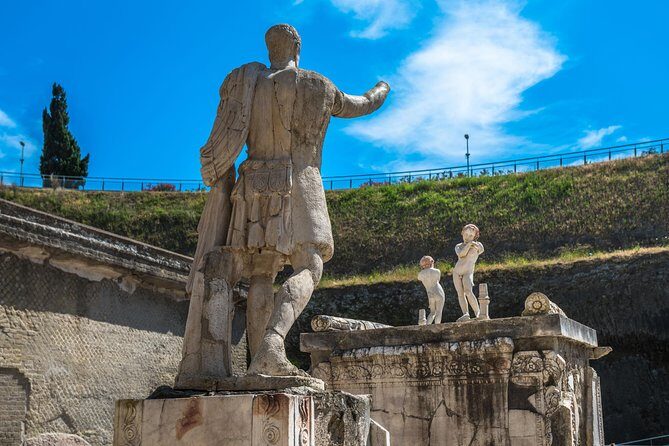
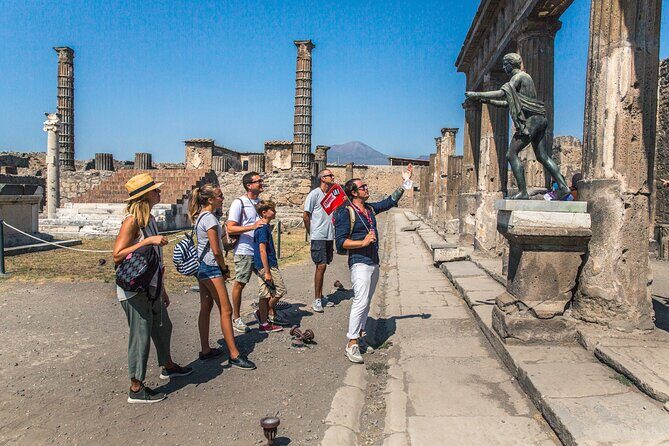
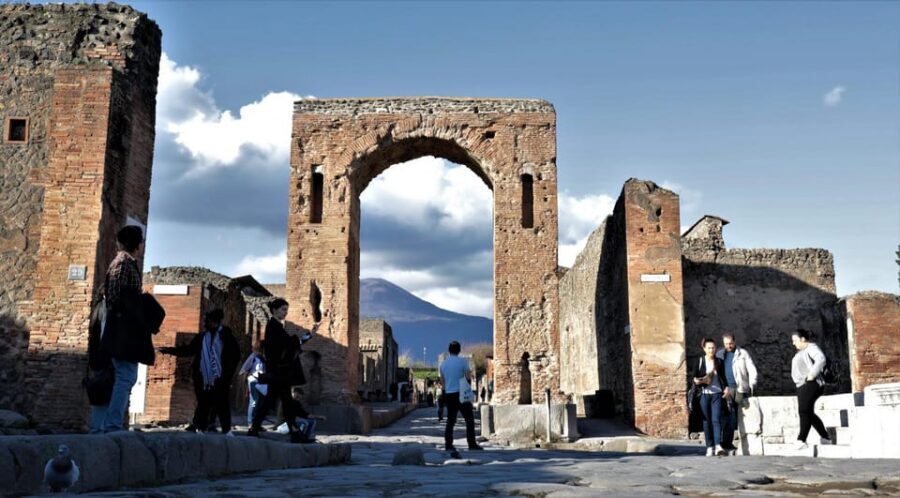
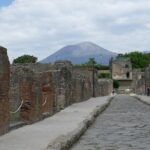
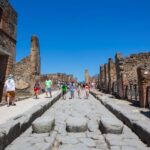
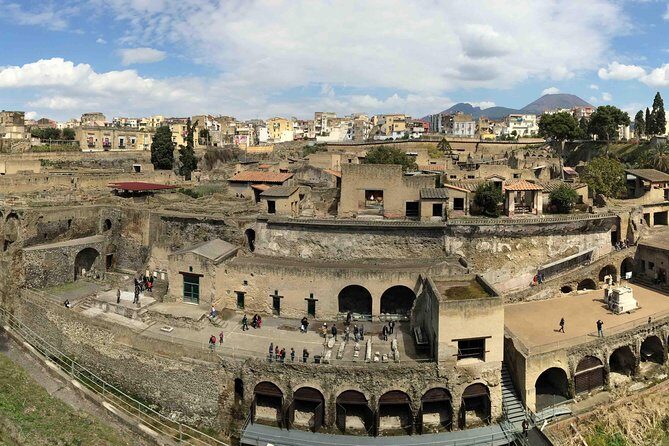
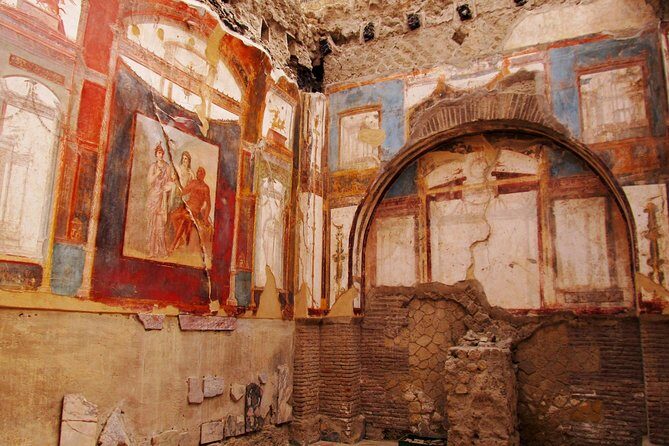
Your biggest block of time goes into the archaeological site itself: about 2 hours at Parco Acheologico Di Ercolano. Herculaneum was discovered in the 18th century, and that matters because the site has had centuries of study. You can feel that history in the way the ruins are presented: not just as broken walls, but as a whole town frozen at a specific moment.
Why this stop is the heart of the tour: Herculaneum is famous for what it preserved. Many surfaces and objects survived in a way that feels almost unfair—small things like household items can look startlingly familiar compared with what you’d expect from ancient ruins. A good guide helps you notice those details instead of treating the site like a generic outdoor museum.
The main stop also sets up the later house visits. By the time you reach the named dwellings, you’re not walking into the next building blind. You understand what you’re looking at—entry points, room layout, and what the space suggests about daily life.
Tip: In this first section, stay alert in the spaces where the guide gives context. If you’ve visited Pompeii before, you’ll likely recognize the broader Roman patterns—but Herculaneum’s preserved atmosphere can shift how you interpret what you see.
Casa dei Cervi (House of the Deer): A Short Stop That’s All About Interior Detail
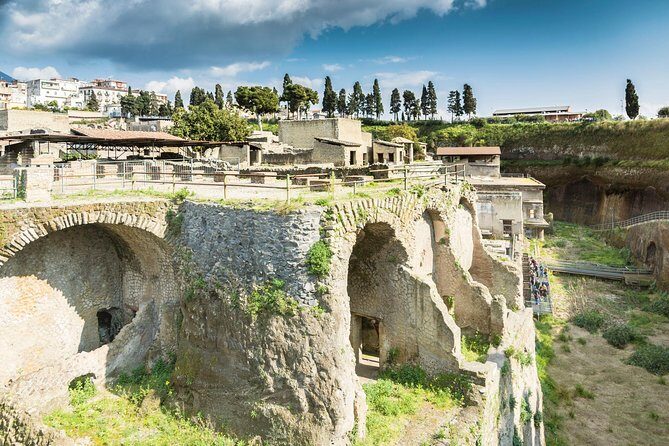
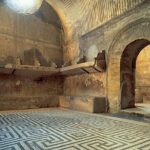
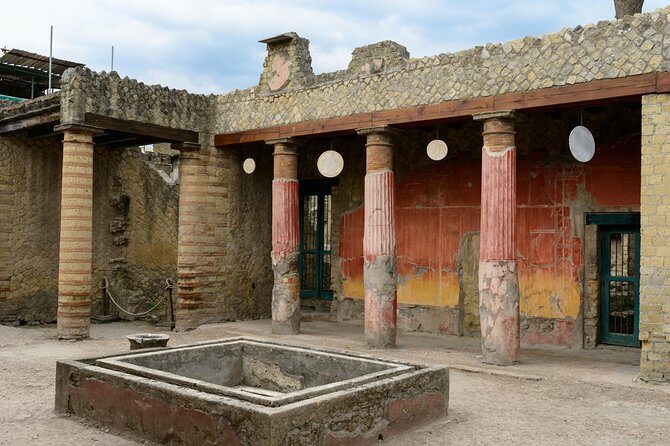
Next up is Casa dei Cervi, the so-called House of the Deer. It’s a quick stop—about 15 minutes—and the time is deliberate. The goal is not to drown you in every room. It’s to get you into the kind of interior scene that makes Herculaneum so compelling: a lived-in sense of space, not just stone outlines.
Even with a short window, this kind of house visit can be powerful because you’re learning how people moved through rooms and how domestic life was organized. The guide’s job here is to point out what’s preserved and why those details matter, including how you read a building interior when you don’t have the original furnishings.
Admission at this specific stop is listed as free, which fits the idea that the tour is spending its ticket resources on entry and skip-the-line handling rather than charging you per room on top of everything else.
If you’re the type who loves photographs, this is also where you’ll probably pause the most—so keep your phone charged and your expectations realistic. You’re not going to capture every micro-detail in the time allowed. Instead, aim for a few strong reference shots you can use later to remember the layout.
Casa del Bicentenario: A Quick Room-By-Room Story
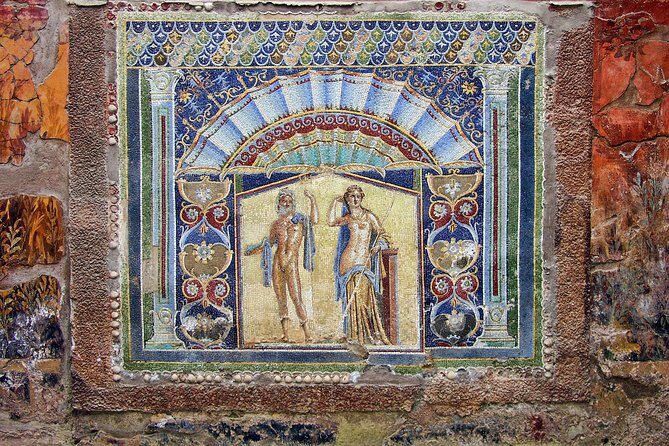
Casa del Bicentenario is even shorter—around 10 minutes. It may feel like a blink, but that’s often the smart way to do Herculaneum. The site has multiple highlights, and the tour is designed to string them together like chapters, not treat each house as a full standalone museum visit.
With only about 10 minutes here, you’ll get the essential points: what the house is known for, how it fits into the larger town layout, and what the preservation lets you infer about everyday routines. A good guide turns that into a small narrative you can follow, even if you’re moving fast.
Admission is listed as free at this stop as well. Practically, that’s one less thing to worry about during the tour, and it keeps the pacing simple. In a short visit, simplicity matters.
If your English listening stamina drops after the main site section, this is a good place to rely on your visual attention. Watch how your guide gestures to key areas of the structure and then look back at those same spots so the explanation sticks.




Partem Domus Lignea: Wooden Sliding Panels and the Wonder of How Things Worked
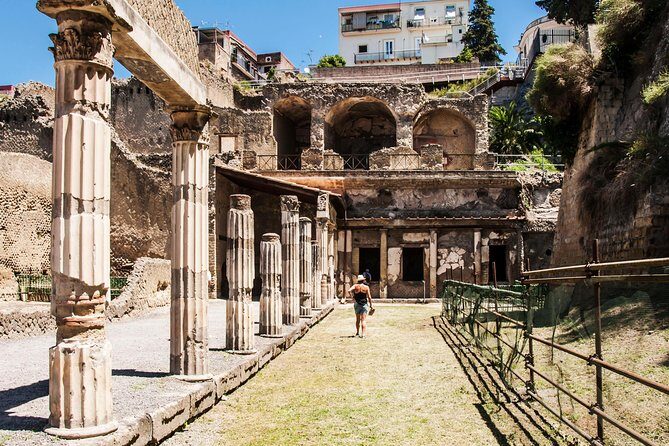
The last named stop is Partem Domus lignea – Casa del Tramezzo di Legno, also about 10 minutes. This is the part of the route that sounds a little technical—and that’s a good thing. It’s one thing to see a wall. It’s another to learn how Roman buildings used wood elements and how partitions shaped rooms.
This stop revolves around the so-called house of wooden sliding panels. Even if you don’t catch every term, the concept is easy to grasp: Roman interior spaces could flex in function, not just stay fixed. When you connect that to a household’s needs—privacy, separation, and practical circulation—it stops being trivia and starts feeling like a window into how the home lived.
Again, admission is listed as free at this stop. And since the time is short, your best move is to follow your guide’s directions and not get stuck photographing everything endlessly. One good understanding beats ten blurry “maybe it mattered” images.
Guide Style, English Clarity, and Why Small Groups Can Change Everything
The tour lives or dies by the guide. When it clicks, you leave feeling like Herculaneum is more than pretty ruins. The guide explains what you’re seeing and why it survived, and they help you build a mental map of the town.
In the best cases, guides combine history with humor and clear explanations. Names that have come up include Lello, Axel, Carmen, Carmela, Frederica (as a guide in one reported case), and Rafaelo—people praised for energy, expertise, and explaining in English. That’s exactly what you want for a short tour: a guide who can compress a lot of context without losing you.
But there are also real-world friction points to know about. Some visitors reported difficulty understanding a guide due to a heavy accent and a lack of audio support (no microphone or similar system). Others mentioned waiting during pickup segments or changes in timing when mixed-language groups were involved.
Here’s how you can protect your experience:
- Bring patience for group timing: the tour is capped at 40, and people can be late.
- Choose small-group upgrade if you can: the option that can run with as few as eight people is often the difference between hearing everything and feeling crowded.
- If you’re sensitive to audio, consider using any personal audio tool you might already have (nothing is listed as included for audio beyond the live guide).
English is listed as the offered language, but some tours can run with multiple languages inside one group. If you prefer pure English interpretation throughout, a small-group upgrade gives you the best shot at that.
Walking, Heat, and How to Prep for a 3-Hour Archaeology Sprint
Your physical fitness needs are described as moderate. That’s a polite way of saying: expect uneven surfaces and time on your feet. One review called the Herculaneum portion a bit strenuous for mobility problems. So if you use a cane, have knee issues, or tire quickly on stairs and uneven ground, I’d treat this as a “plan carefully” outing.
The other big variable is weather. The tour operates in all weather conditions, so you can’t count on rain to cancel it. On hot days, it can be intense. One person reported a 98-degree day and felt that 2 hours at the site was too long under those conditions. Bottled water helps, but it doesn’t replace shade and comfort.
Practical packing:
- Comfortable walking shoes for uneven ancient surfaces.
- Sun protection if you’re going in summer heat.
- Light layers if you’re visiting in cooler seasons and moving between bus and ruins.
- A small towel or something that helps you manage sweat can be surprisingly useful.
Since the tour is only about three hours, your goal is not endurance. Your goal is staying comfortable enough to pay attention.
Pompeii vs. Herculaneum: What This Tour Helps You Compare Fast
If you’ve already visited Pompeii, this tour is a great companion because it flips the contrast quickly. Herculaneum is closer to Naples, and it’s surrounded by a more compact neighborhood footprint. A guide can help you understand why Herculaneum can feel more intimate and sometimes better preserved in certain areas.
One visitor who had been to Pompeii twice said Herculaneum felt different in how much was preserved—like artifacts and even household pieces that can look surprisingly current. That’s the key takeaway for you: Herculaneum’s survival story isn’t just about ruins. It’s about everyday life continuing to be readable.
There’s also a balancing note to keep in mind. Some parts of Herculaneum can involve restoration work, including roof elements added in certain areas. That can slightly change the visual “authenticity feel,” depending on where you’re standing. A guide helps you interpret that, so you don’t mistake restoration for the original preserved state.
If you only have time for one site, Pompeii often wins on sheer scale. But if you want a sharper focus on daily domestic life, Herculaneum often hits harder—and this guided format helps you reach that conclusion without spending hours figuring it out yourself.
Getting the Most From the Tour: A Simple Game Plan
Because the schedule is tight, you’ll enjoy it more if you travel with a plan. Here’s what I recommend so you don’t miss the best parts:
- Arrive early to your Naples pickup point so the group doesn’t wait and so you’re not stressed.
- Follow the exact pickup instructions sent about 24 hours after booking. Your pickup time and meeting details can change by day.
- Treat the main site as the foundation (the first big stop). If you get the context, every house afterward lands better.
- Use the short house stops strategically: pick one or two moments you want to understand deeply, then let the rest be “quickly grasped.”
Also, if you’re a fan of museums and objects, don’t be surprised if you wish the visit had more time. Short tours have a ceiling. The trick is to come in ready to appreciate highlights rather than expecting a fully relaxed walkthrough.
Should You Book This Herculaneum Guided Group Tour?
Book it if you want a car-free, time-friendly way to see Herculaneum from Naples with a live archaeological guide and skip-the-line access. It’s a good fit for first-timers who want structure, and it’s also a solid second-site choice if you’ve already done Pompeii and want a different preservation story.
Consider passing or upgrading if you strongly need quiet, clear English and you dislike hearing difficulty in groups. If you have mobility limits, also think twice and plan for uneven ground and standing time.
Bottom line: for most people, this is a smart way to spend a few hours in Roman history without turning your day into a logistics project. You’ll get the highlights, a guided storyline, and a smooth return to Naples—exactly what you want when you’re traveling light and short on time.
FAQ
How long is the Herculaneum guided group tour from Naples?
The tour is about 3 hours total (approximately).
What language is the tour offered in?
The tour is offered in English.
Where does the tour start in Naples?
It starts at Starhotels Terminus, Piazza Giuseppe Garibaldi 91, 80142 Napoli, Italy.
What time does the tour begin?
The start time listed is 1:00 pm.
Is hotel or port pickup included?
Yes. Hotel/port pickup and drop-off are included, and you’ll be collected from several Naples pickup points.
Are entrance tickets included?
The package description says the Herculaneum entrance fee is included with skip-the-line. The itinerary note also says the main site admission is not included, so I recommend confirming your specific booking message to see what’s covered for entry.
Is lunch included?
No. Lunch is not included.
How many people are in the tour?
The maximum size is listed as 40 travelers. There is also an upgrade option for a smaller group, with as few as eight people.
What should I bring or plan for?
You should have a moderate physical fitness level. The tour operates in all weather conditions, so dress appropriately, and bottled water is included.