REVIEW · NAPLES
From Naples: Pompeii & Herculaneum with Archaeologist Guide
Book on GetYourGuide →Operated by Askos Tours · Bookable on GetYourGuide
Two Roman towns, one eruption.
What makes this tour special is how it pairs Herculaneum and Pompeii in one day with an archaeologist guide walking you through everyday life and sudden disaster. I really like that you start with Herculaneum first, where the mud burial helped preserve wall art, mosaics, and even carbonized wooden objects. I also love the small group feel (limited to 20) and the modern minibus that keeps you comfortable between sites. One heads-up: you do a fair amount of walking on uneven ground and stairways, so it is not the best match if mobility is limited.
The Herculaneum stop is where the day starts to feel like time travel. I like the way the guide points out details you’d miss on your own, from the Temple of the Augustali to the beach area where more than 300 skeletons were found. Then you shift to Pompeii, with a focused 2-hour walk that hits the big public spaces and key homes, plus plaster casts to show what hasn’t survived. A possible drawback is simple: with only so many hours, you will see the highlights, not every corner you might want to linger in for an hour.
If you want a well-structured day that hits both sites without spending half of it stuck in lines, this is a strong option. The skip-the-line entry and the tight pacing make it feel efficient, and the archaeologist guidance keeps it from turning into a checklist tour. Just plan for a long day on your feet, and bring rain protection because it runs in rain or shine.
In This Review
- Key things that make this tour worth your time
- Getting from Naples: Starhotels Terminus to the archaeological sites
- Herculaneum’s preserved details: 20-meter burial and all those rooms
- The lunch break and the drive to Pompeii: keep your energy steady
- Pompeii’s two-hour highlight walk: Marina Gate to plaster casts
- Skip-the-line tickets: saving time without skipping the experience
- Price and value: what you’re really paying for
- Guides that make the day click: what to expect from the instruction style
- Who this fits best (and who should rethink it)
- Quick practical tips before you go
- Should you book this Pompeii and Herculaneum day trip?
- FAQ
- How long is the tour?
- Where do we meet in Naples?
- Is the tour a small group?
- Do we get skip-the-line entry tickets?
- What sites are included?
- Is lunch included?
- How long is the guided time at each site?
- What language is the guide?
- Is this tour suitable for people using wheelchairs?
- What should I bring, and what is not allowed?
Key things that make this tour worth your time
- Archaeologist-led focus at both sites, with English-language interpretation throughout
- Skip-the-line entry that helps you use your hours for actually seeing things
- Small group size (up to 20 people) for a calmer pace than big bus tours
- Herculaneum’s preservation: intact paintings, mosaics, and carbonized wooden objects
- Two different burial stories that connect into one Vesuvius outcome
- A modern minibus with a professional driver, so the day feels smoother between stops
Getting from Naples: Starhotels Terminus to the archaeological sites
Your day starts at Starhotels Terminus, in front of the entrance opposite the station. Look for the guide holding an Askos Tours sign, and you’ll get picked up from there along with the rest of the group.
From Naples you’re transferred by shared minibus. The ride is part of the plan: you’re not fighting the logistics of buses, trains, and ticket offices. And because this is a smaller vehicle than the giant coaches, it feels easier to manage when you’re moving as a group. Expect roughly 45 minutes to reach the Ercolano area (often called the Herculaneum side of things) and then more driving as the day moves between sites.
Why this matters: Pompeii and Herculaneum are popular enough that timing is everything. You’ll get the benefit of arriving with a plan rather than wandering around hoping you’ll beat the crowds.
Quick reality check: luggage or large bags are not allowed, so travel light. If you’re bringing a daypack, keep it easy to carry because you’ll be switching locations and walking.
If you're still narrowing it down, here are other tours in Naples we've reviewed.
Herculaneum’s preserved details: 20-meter burial and all those rooms
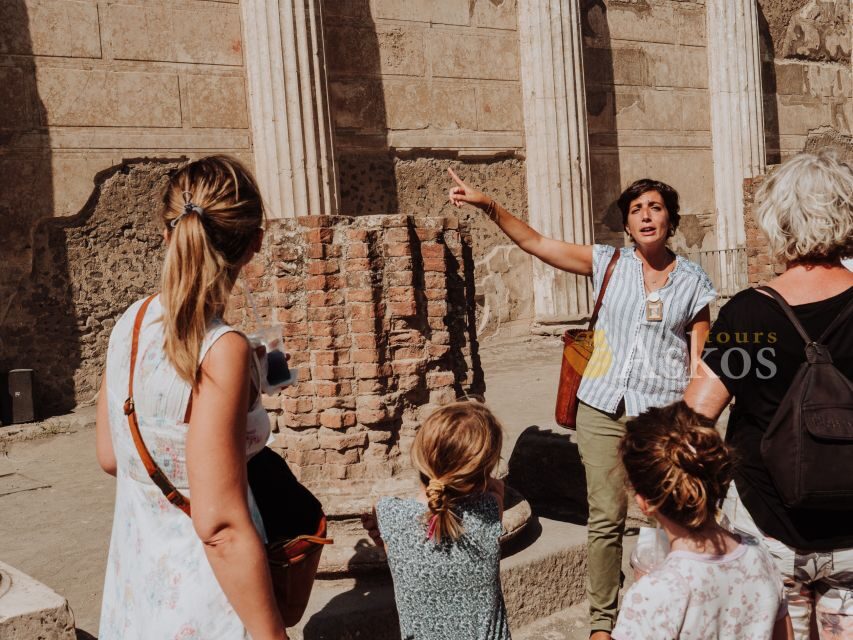
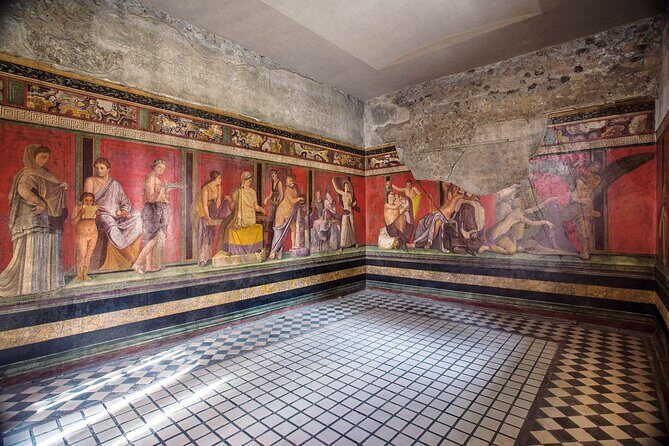
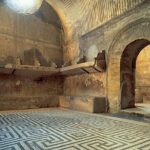
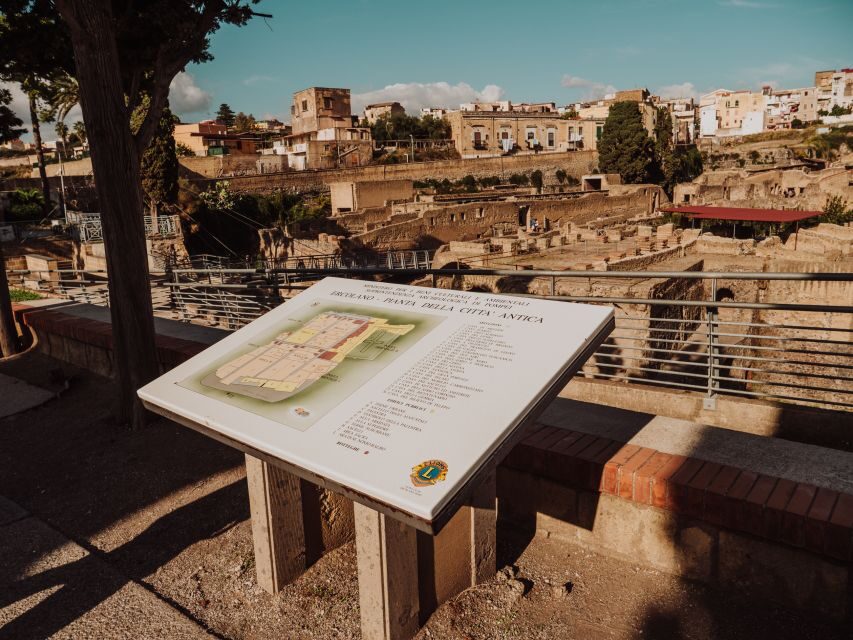
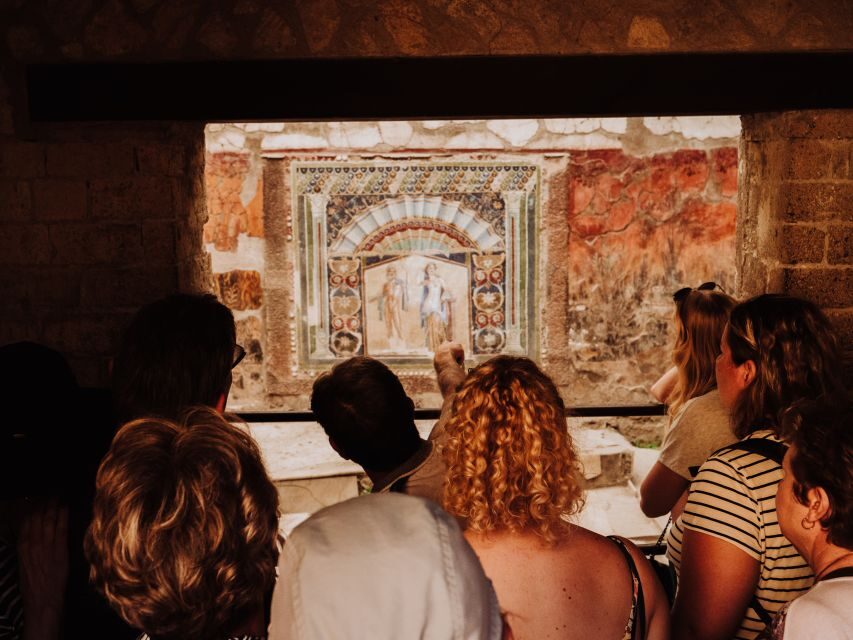
You’ll arrive at Ercolano for about 2 hours of guided touring at Herculaneum. This site is famous because it didn’t just get buried. It got buried hard, under mud from a landslide layer, about 20 meters deep. That changes what survives. In Pompeii, you often see outlines and floors. In Herculaneum, you can sometimes see more of the original surfaces and objects because the conditions were different.
This is where the tour gets very practical, because the guide helps you connect what you’re seeing to what it meant for daily life. You’ll get stops built around major landmarks, including the Temple of the Augustali and the Thermal Baths. You’ll also hear about the beach area where more than 300 skeletons were found. That detail is heavy, but it’s the kind of specific information that makes the site feel real rather than abstract.
One of my favorite categories of things to watch for here is artwork and everyday materials:
- Intact paintings
- Mosaics
- Carbonized wooden objects
Those items are not just curiosities. They help you understand the wealth of the town and how people decorated homes and public spaces. The guide’s job is to translate preservation into context—what survived and why, and how that shapes what archaeologists can say about the Roman world.
You’ll also pass through or see areas such as the Forum, the Samnite House, the Gymnasium, and the House of the Dears. Each one gives a different angle on how Herculaneum worked: civic life, leisure, and domestic space. If you like museums, you’ll probably find yourself thinking of a collection. If you like cities, you’ll start imagining movement—what streets and doorways likely felt like.
The day’s pacing is tight but not rushed. Still, keep in mind that the terrain and stairways can be demanding. If you’re not used to climbing and descending, this part of the day can be where you feel it most.
The lunch break and the drive to Pompeii: keep your energy steady
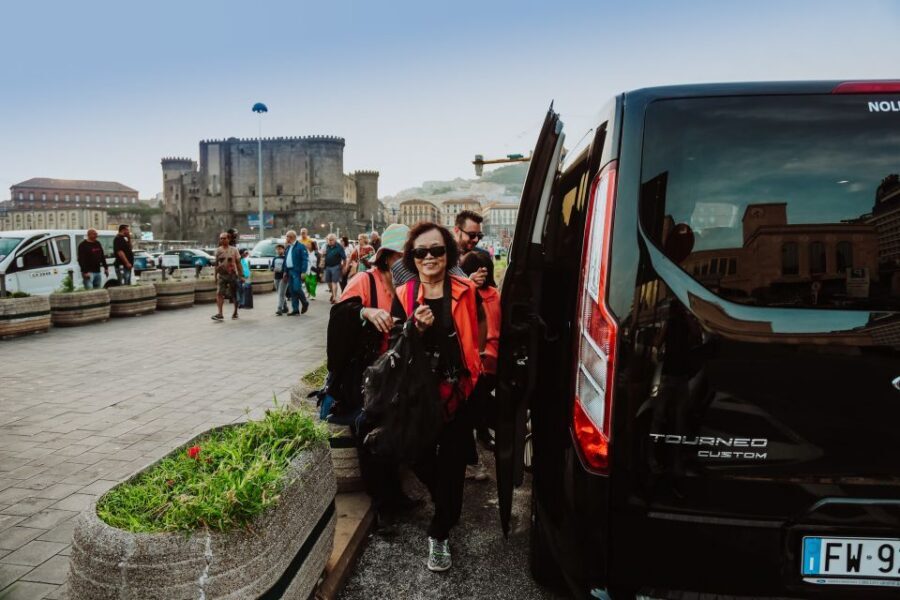
After Herculaneum, you’ll transfer by minibus for about 30 minutes to Pompeii. Then there’s a 45-minute break labeled as a break time / lunch window.
Meals are not included, so you’ll need to plan. A practical move is to bring your own snack or light meal so you can control costs and avoid losing your appetite. If you do decide to buy food on the spot, remember you’ll likely be paying tourist prices and possibly waiting. That matters because you’ll want to arrive at Pompeii with enough energy to walk for another stretch.
This is also a good moment to do a quick reset:
- drink water if you have it
- check blister situation early
- put on sunscreen if you forget it in the morning
Then you head back into the main event: Pompeii.
Pompeii’s two-hour highlight walk: Marina Gate to plaster casts
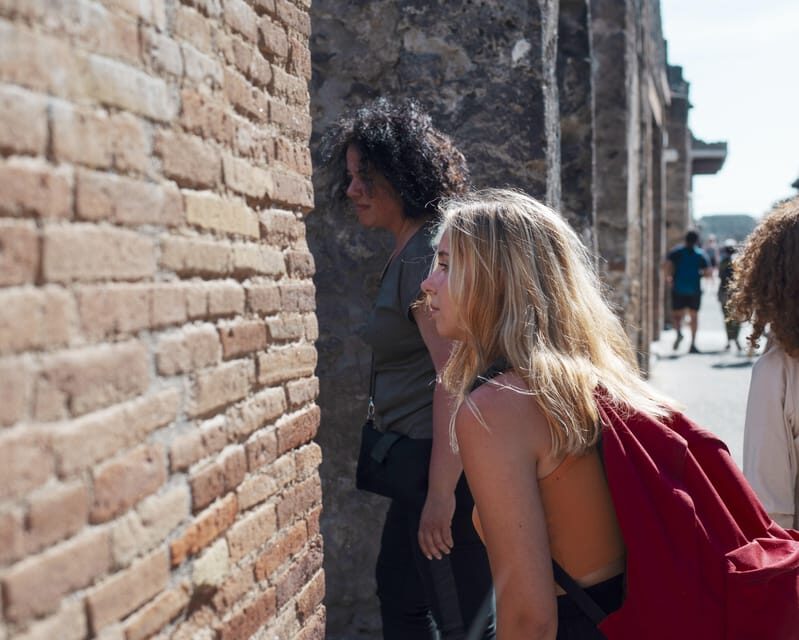
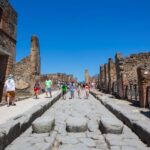
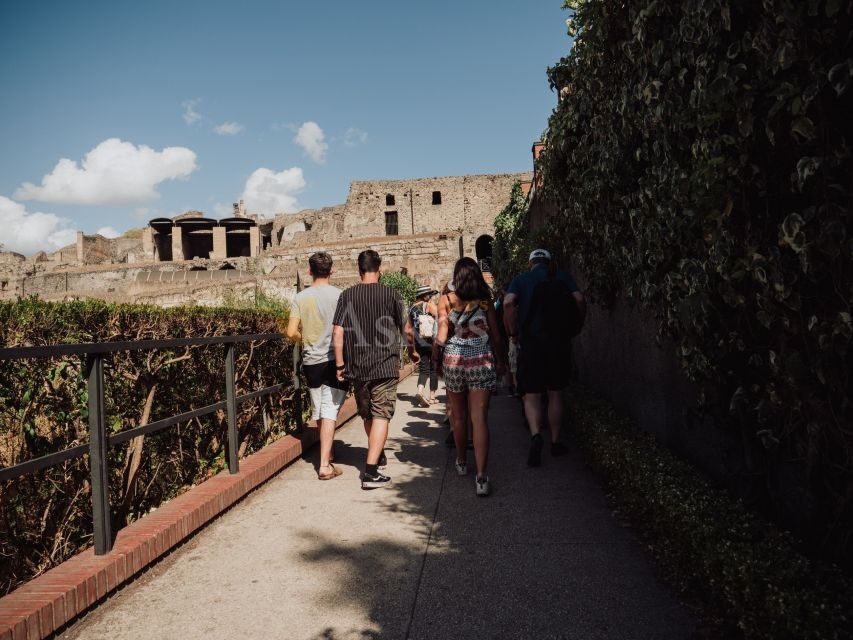
Pompeii is the louder name, and it delivers fast. You’ll get 2 hours of guided walking through the Pompeii Archaeological Site, and the route is designed to show what most people come for—big public buildings, major streets, and several of the most meaningful private houses.
You’ll start with major entrances and civic highlights, including the Marina Gate and then important anchors like the Basilica and the Forum. This is the heart of how the Romans organized social and commercial life. Watching the flow of the space helps you see Pompeii not just as a dead city, but as a place built for crowds: meetings, commerce, public events, and everyday errands.
From there you’ll hit additional points such as:
- Forum Baths
- Lupanar (the brothel)
- Bakery
- Termopolium Capuano (a fast-food style counter for hot items)
- House of Faun
- House of Tragic Poet
- Plaster casts
Those plaster casts are a big deal. They show you what many people were like at the moment of disaster. It’s one thing to read that there were victims. It’s another to see shaped forms that archaeologists recreated. The guide’s explanations help you interpret what you’re looking at without turning it into sensationalism.
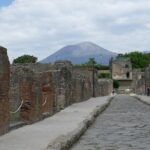
And yes, you’ll get the core explanation that connects everything: Pompeii was buried by volcanic ashes from Mount Vesuvius in 79 AD. The guide ties the eruption story to the physical changes in what you can still see today.
Is two hours enough? For the highlights, yes. If your dream is to linger in a single house with zero pressure to move on, you might want a longer standalone visit. But for a one-day plan from Naples that covers both sites, this duration is realistic.
One more tip: wear shoes you trust. This is a walk. Even the best organized tour will still have you dealing with uneven ground.
Skip-the-line tickets: saving time without skipping the experience

Skip-the-line sounds like a convenience feature, but in places like Pompeii and Herculaneum it directly affects the quality of your day. Long queues turn into lost hours in the sun (or rain), and that is time you can’t get back once you’re deep into the day.
Here, you enter with skip-the-line tickets for both sites, and that pairs with the schedule so you can spend your energy on the guided walk rather than waiting behind other groups. You’ll feel this especially at Pompeii, where the crowd flow can be intense.
The best part is that you’re not sacrificing access. The guide still takes you to a structured set of stops, so you’re not wandering trying to find the best things on your own.
If your main goal is efficiency—see the big pieces, learn the meaning, avoid the line drama—this is one of the tour’s strongest value points.




Price and value: what you’re really paying for
At $168.79 per person for about 7 hours, this is not a cheap day trip. But it also isn’t paying only for transportation and a ticket swipe. You’re paying for:
- Shared minibus from Naples with a professional driver
- Archaeologist guide in English
- Skip-the-line entry
- Entry tickets for Herculaneum and Pompeii components (including Pompei Express and Herculaneum ticket)
- Tolls and parking expenses
The value is in the combination. If you booked the sites separately, you’d still need a way to get there, manage timing, and interpret what you’re seeing. Here, you trade a chunk of money for a chunk of guidance and saved time.
Also, the small group size helps you get more consistent attention. In past similar tours, big groups can mean you hear less or move at a pace that doesn’t fit you. Here, with a limit around 20 people, the day tends to feel manageable.
The only cost you might not love is lunch since meals are not included. But that’s easy to manage with snacks from Naples before you leave, or by budgeting for an on-site meal.
Guides that make the day click: what to expect from the instruction style
The tour is built around an archaeologist-led explanation, and that shows up in how the sites are interpreted. Several guides from this type of tour have been praised for connecting details to Roman daily life, including names like Raphael, Michele, and Juliano (noted as archaeologists in the feedback). Others like Roberta, Vito, Gennaro, and Giarno also get mentioned for keeping the pace organized and the explanations clear.
Even without knowing which guide you’ll get, the pattern is consistent: you don’t just walk by objects. You hear why they matter. You get small, specific details that change the way you see:
- how households were laid out and used
- how civic spaces worked
- what preservation at Herculaneum means for your understanding
One practical advantage is that you’ll likely be using some kind of audio support so you can follow along without straining (headsets have been mentioned in feedback). If your group is talking to you, you can still hear the guide.
Who this fits best (and who should rethink it)
This tour is a great match if you want:
- One-day coverage of both Pompeii and Herculaneum from Naples
- An English-speaking archaeologist guide
- A small group rather than a massive bus crush
- The time savings of skip-the-line entry
It’s less ideal if:
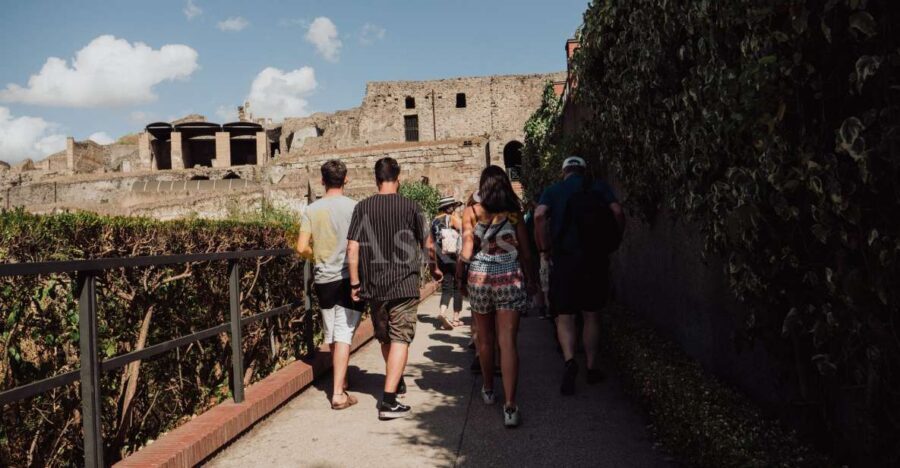
- You have limited mobility. The tour involves stairways and grades, and it is not recommended for wheelchair users or people with mobility impairments.
- You want lots of time to wander slowly through every room. This is a highlights route designed to work within about 7 hours.
If you’re the type who reads museum labels and also likes street-level city layout, you’ll have a good day. If you want a relaxed pace with no pressure to move, consider adding extra time on your own after the tour (if your schedule allows) or choosing a different format.
Quick practical tips before you go
A few things to keep the day smooth:
- Bring passport or ID card
- Wear comfortable walking shoes because you’ll be climbing and descending
- Pack a raincoat since the tour runs rain or shine
- Plan for no luggage or large bags
- If you’re running late, the driver waits up to 5 minutes
And if lunch costs are a concern, it can help to eat something light before the Pompeii segment so the 45-minute break doesn’t vanish completely on lines and ordering.
Should you book this Pompeii and Herculaneum day trip?
I’d book it if you want a guided, structured day that covers both sites without the time-wasting parts. The value is strongest when you use all the ingredients together: small group size, English archaeologist guidance, skip-the-line entry, and a schedule that keeps you moving efficiently between Herculaneum and Pompeii.
Skip this one if you need fully accessible terrain, or if your dream day is to spend half your time in one single house or building. For most people, though, this strikes a smart balance: you get the big sights, the most memorable preservation details from Herculaneum, and the major public and private highlights in Pompeii—all in one coherent day from Naples.
FAQ
How long is the tour?
The tour duration is 7 hours.
Where do we meet in Naples?
Meet in front of the Starhotels Terminus entrance, opposite the station. Look for the guide holding an Askos Tours sign.
Is the tour a small group?
Yes. The group is limited to about 20 participants.
Do we get skip-the-line entry tickets?
Yes. Skip-the-line entry is included for the archaeological sites on the itinerary.
What sites are included?
The tour includes the archaeological site of Herculaneum (Ercolano area) and the archaeological site of Pompeii.
Is lunch included?
No. Meals are not included, and there is a break time around the middle of the day.
How long is the guided time at each site?
You’ll have about 2 hours of guided touring at Herculaneum and about 2 hours of guided touring at Pompeii.
What language is the guide?
The tour guide provides live commentary in English.
Is this tour suitable for people using wheelchairs?
No. It is not suitable for wheelchair users and people with mobility impairments.
What should I bring, and what is not allowed?
Bring a passport or ID card. Luggage or large bags are not allowed. The tour runs rain or shine, so a raincoat can help.