REVIEW · NAPLES
From Naples: Day Trip to Herculaneum with skip the line
Book on GetYourGuide →Operated by Napoli Official Tour · Bookable on GetYourGuide
Herculaneum feels paused in time. This Naples day trip is interesting because you get there by shuttle and walk into the ruins fast with skip-the-line admission. You then spend your limited window exploring at your own pace, which is the right kind of freedom when you’re looking at details 2,000 years old.
I especially like the practical transport and the helpful guidance you’ll hear on the bus before you arrive. I also love the self-paced time inside Herculaneum, so you can linger where you actually care—street corners, house layouts, and the preserved wooden elements.
My main caution is logistics: some visitors reported late buses, confusing pickup details, or unclear signage around where to meet and where to return.
In This Review
- Key highlights to decide fast
- Herculaneum in a 4-hour window: what self-guided time really means
- Naples shuttle pickup: where it can help and where it can go wrong
- Skip-the-line entry: saving time you actually feel
- What you’ll see in Herculaneum: mud-and-lava time capsules
- Villas, houses, and the preserved details that grab your attention
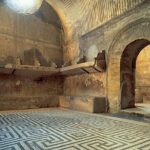
- Thermal baths and public buildings: where the town feels communal
- No guide included: how to make self-guided work for you
- Price and value: why $71 can be fair or frustrating
- Common snag points: late buses, meeting confusion, and return signage
- Who should book this Herculaneum day trip from Naples?
- Should you book this tour?
- FAQ
- How long is the Naples to Herculaneum day trip?
- What does the $71 per person price include?
- Does this tour help me avoid waiting at the entrance?
- Is there a guide or audio guide provided?
- Where does the shuttle pickup happen in Naples?
- What time does the shuttle leave?
- Are children charged, and what ID is needed?
Key highlights to decide fast
- Skip-the-line entry gets you into Herculaneum without the wait.
- Round-trip shuttle from central Naples removes the biggest hassle of planning.
- Free time on site means you choose your own route and speed.
- Roman town preservation is striking, including intact wooden structures in some areas.
- Public buildings and thermal baths let you go beyond villas and private homes.
- No guide included means you rely on site information and your own phone/audio choices.
Herculaneum in a 4-hour window: what self-guided time really means

A day trip like this lives or dies by how well it handles time. With a total duration of 4 hours, you’re not trying to see everything in one go. You’re trying to see the best parts closely enough that Herculaneum stops feeling like a photo and starts feeling like a place.
The big value here is that you enter with skip-the-line and then get free time. That matters because Herculaneum rewards attention. The preserved structures—especially the wooden parts—aren’t things you want to race past while someone tries to keep a group moving.
You’ll also be walking in an ancient town that was buried by the mud and lava from Mount Vesuvius in 79 A.D. That one fact changes how you look at the streets. Instead of ruins that feel distant, you get the sense of an interrupted daily life.
The trip is also a nice match for travelers who don’t want to buy into a rigid schedule. If you’re the type who likes to choose what to linger on—then this format usually works.
Still, because you only have a few hours, you’ll want a quick mental plan before you step inside: pick a couple of priorities (houses/villas, thermal baths/public buildings, and any area featuring preserved wood) and then let curiosity fill the gaps.
If you're still narrowing it down, here are other tours in Naples we've reviewed.


Naples shuttle pickup: where it can help and where it can go wrong
The shuttle is the whole point of making this easy. You get round-trip transportation and pickup is included at a designated city bus stop. That saves you from figuring out which bus to take, where to transfer, and whether you’ll end up walking in circles with a dead phone battery.
But this is also where a few people ran into trouble. Some reported buses arriving late and pickup points that were hard to identify, with return locations lacking clear signage. A couple of comments also point to the reality of approximate timing: the departure time is approximate, and the exact time is confirmed the day before by the local operator.
So here’s the practical advice: before you go, double-check the meeting point details and treat them like a critical ticketed reservation, not a casual suggestion. If the meeting spot instructions don’t feel crystal clear, look for alternate confirmation methods the day before (message/email/screenshot of the pickup map, if provided).
Also, pick your meeting point carefully if the booking offers options. The departure time may vary by meeting location, so selecting the correct stop helps your whole day run smoother.
If you’re traveling with kids, this gets even more important. Bring what the info asks for—passport or ID card for children—and keep your meeting routine simple.
The good news: when everything clicks, the shuttle turns Herculaneum into an easy half-day adventure instead of a logistics project.
Skip-the-line entry: saving time you actually feel
With archaeology, delays have a way of stealing your mood. Skip-the-line entry isn’t just a perk—it protects your limited sightseeing window.
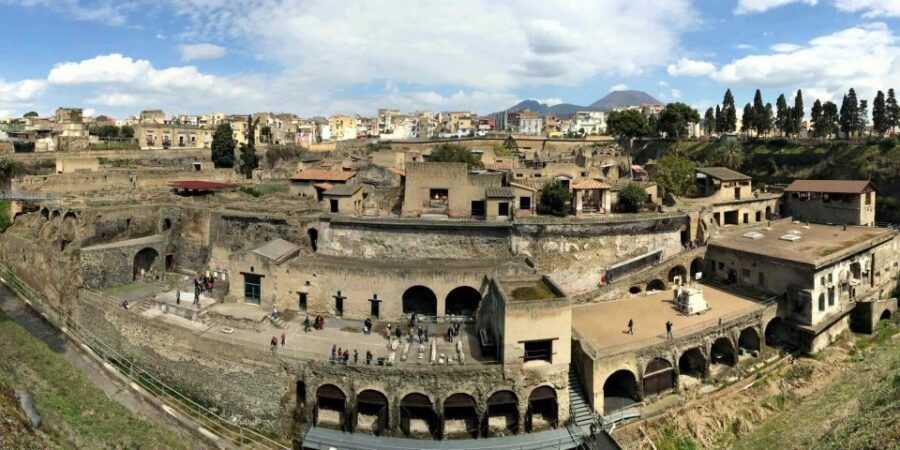
In Herculaneum, your time matters because you’re not sightseeing a single viewpoint. You’re walking through a buried Roman town where the layout is part of the story: streets, building fronts, and the spaces where people lived and worked.
If you arrive and are stuck waiting, you’ll end up rushing. With a skip-the-line ticket, you remove that risk and can head into the site while you still have energy.
And because this tour is self-guided, entering smoothly makes a bigger difference than you might expect. A quiet moment at the start—when you first see the scale and preservation—sets the tone for everything after.
One more thing: skip-the-line doesn’t replace the need to be oriented. You’ll still need to use the site signage and whatever audio option you choose, since a guide or audio guide isn’t included.
Think of skip-the-line as buying yourself breathing room: time to orient, then time to really look.
What you’ll see in Herculaneum: mud-and-lava time capsules
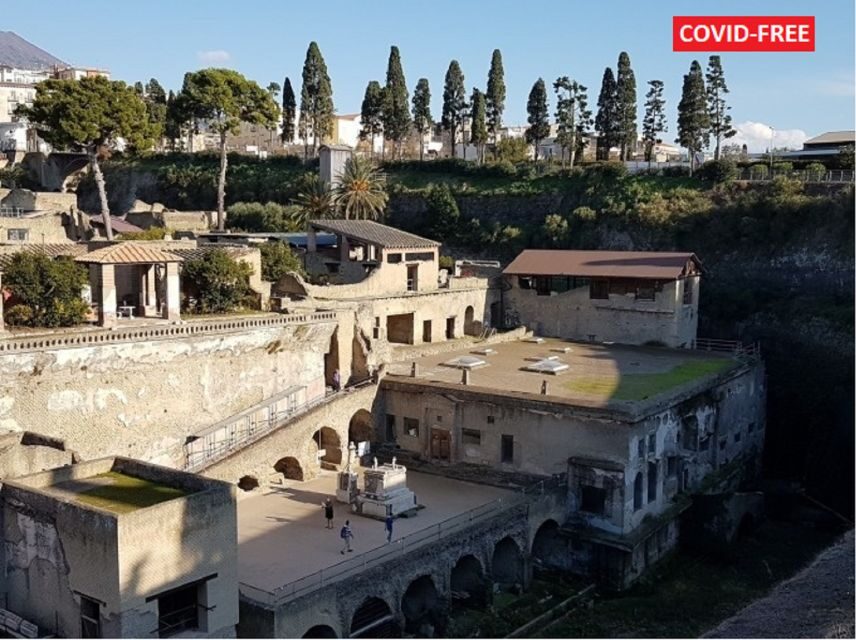
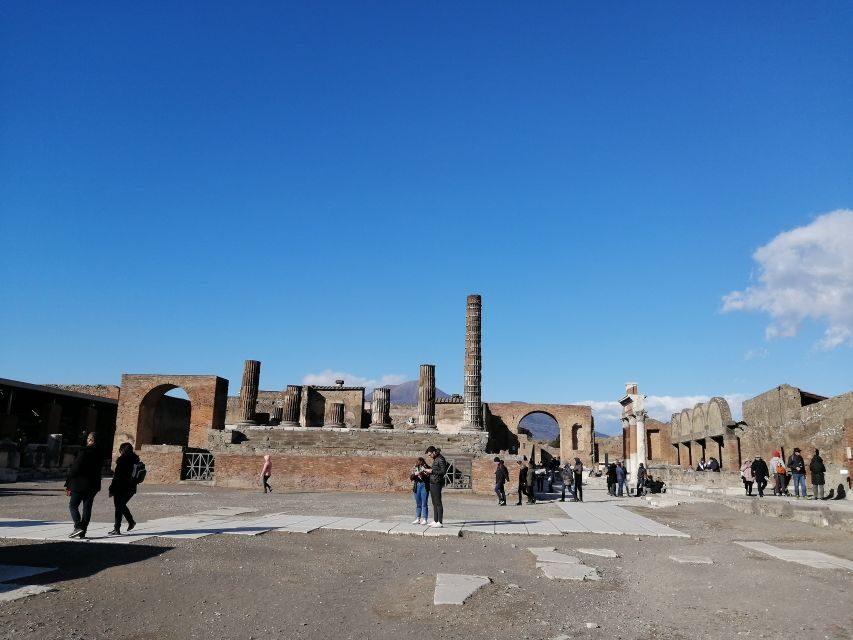
Herculaneum was covered by mud and lava during the eruption of Mount Vesuvius in 79 A.D. That destruction is the reason the ruins feel so different from many other sites. The town wasn’t slowly excavated over centuries as a tidy museum exhibit. It was preserved by catastrophe.
The highlight many people point to is the state of preservation, and in particular the presence of intact wooden structures in some areas. This is a big deal because wood usually decays. When you can still see something that once formed walls or dwellings with expensive furnishings and ornamentation, the whole place turns more human.
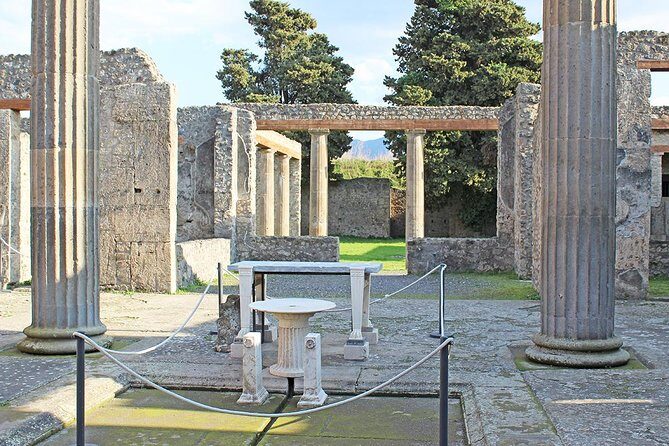
You’ll also walk past the buildings of an ancient Roman town that was destroyed in the eruption. The sense you get is not just ruins, but a snapshot of daily life cut short. That’s where Herculaneum often feels more evocative than other famous sites, because preservation helps you imagine how rooms functioned.
As you wander, pay attention to transitions: thresholds, street edges, where one building ends and another begins. Even without a live guide, those lines help you read the town like a map.
And since the tour gives you free time, you can match your interest to your route. If you’re drawn to domestic life, focus on the villas and dwellings. If you’re more curious about how people gathered and used public space, you’ll want to target the areas for public buildings and thermal facilities.
Villas, houses, and the preserved details that grab your attention
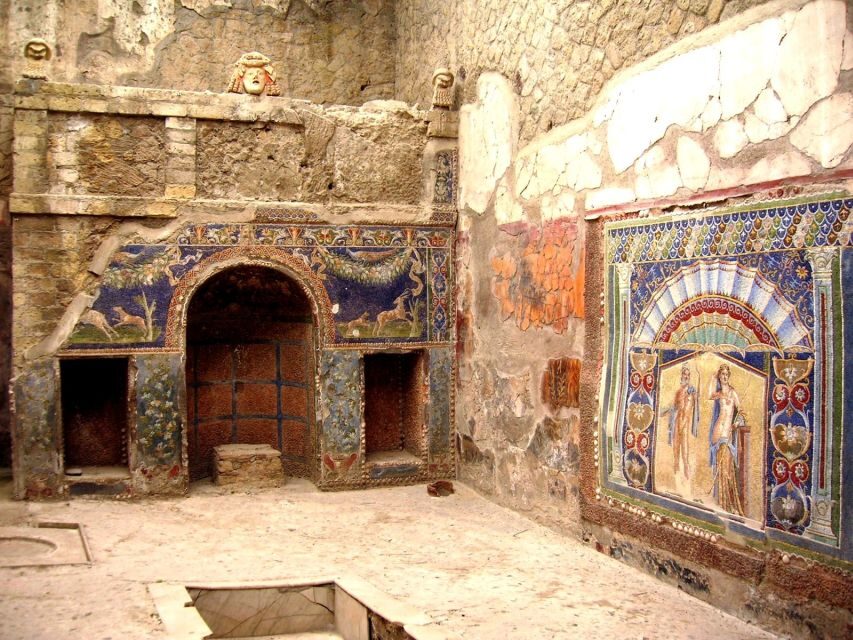
This trip is especially strong if you like close-looking. Herculaneum is not just about big walls; it’s about the small evidence that suggests wealth, everyday routine, and craftsmanship.
The experience description flags the intact wooden structures and the idea that some dwellings had expensive furnishings and ornamentation. That means you should slow down when you spot wood elements and room features, because that’s where the site earns its reputation.
Here’s my practical approach for self-guided exploring: choose a handful of spots where you want to spend time, then move with a purpose between them. Don’t try to cover every corner equally. Instead, pick the areas that match what you’re curious about, and let your route follow your curiosity.
If you find yourself wishing you had a guide, remember you’re not stuck. You can use your own phone-based research before you arrive or use audio options while you walk. Just note that a guide and audio are not included with the tour.
Also, because the site is older and often uneven underfoot, wear shoes you trust. You’ll be walking enough that comfort becomes part of the experience.






Thermal baths and public buildings: where the town feels communal
Herculaneum isn’t only villas and private spaces. The tour description includes important public buildings and the thermal baths, and that’s a smart mix for a short visit.
Thermal baths were social spaces. They weren’t just for cleaning; they were places to talk, relax, and show up as part of the community. When you visit these areas, the town stops being only a set of homes and starts feeling like a functioning city.
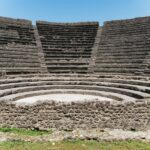
Public buildings matter for a different reason too: they help you understand how Romans organized shared life. You get a sense of civic priorities—where people gathered, how movement worked, and how the town served residents beyond the wealthy houses.
If you’re short on time, thermal baths/public buildings are often a good “second focus” after domestic areas. They give you variety without requiring deep background knowledge to enjoy.
And because the tour lets you explore at your own pace, you can decide how much time to allocate here without worrying about a group schedule.
No guide included: how to make self-guided work for you
This is a self-guided-style day trip. The info is clear: a guide or audio guide isn’t included.
That can be a downside if you want someone to explain what you’re looking at in real time. Some visitors did find ways to use an audioguide app, while others weren’t happy about needing to buy audio on top of the ticket price.
So how do you avoid disappointment? Decide your audio plan before you go.
You can:
- Rely on site information signage and take your time reading.
- Use a phone audioguide app if you already know which one you want.
- Be ready for the possibility that paid audio options exist once you arrive.
If you hate extra costs, prioritize reading signage and accept that you’ll learn at your own pace. If you enjoy context, plan on audio—just know it may not be included.
I like self-guided travel when I can control my pace, but I also like having some narration or background so I’m not guessing what I’m seeing. If that’s you, do a little prep and save yourself the on-site stress.
Price and value: why $71 can be fair or frustrating
At $71 per person for a 4-hour trip, you’re paying for convenience: round-trip shuttle and skip-the-line entry. You’re also paying for someone to handle the transport rhythm so you don’t wrestle Naples bus routes during a time-limited day.
That value tends to make sense if:
- You don’t want to plan public transport.
- You care about not waiting at the entrance.
- You prefer exploring without a live guide but still want the site access handled for you.
It may feel less worth it if:
- You strongly want a guided explanation included.
- You end up paying extra for audio or other items to fill the storytelling gap.
- The shuttle logistics get messy—late arrivals, unclear meeting points, or drop-offs that don’t feel obvious.
One detail worth keeping in mind: bus issues can turn a time-saver into a time-waster. Even if the skip-the-line part works perfectly, the day still depends on getting you from Naples to the entrance smoothly and getting you back.
If you’re the kind of traveler who handles uncertainty well, this tour can be a good deal. If you get stressed by unclear pickup points, be cautious and consider a more structured guided option.
Common snag points: late buses, meeting confusion, and return signage

The theme in the less positive feedback is not the site itself—it’s the edges around it.
A few issues show up:
- Buses arriving late.
- Pickup points being hard to find, sometimes without enough visual guidance.
- Return instructions being unclear, including a lack of signage where to go for the shuttle.
- Stops not being announced clearly enough in the language you need.
This is where your preparation matters more than you’d think. Since the departure time is approximate and confirmed the day before, you should treat that confirmation as your anchor.
Pack patience, but also pack a plan:
- Screenshot the pickup location and any landmarks mentioned.
- Give yourself buffer time at the meeting stop.
- If you’re unsure, find a nearby official-looking spot and ask for directions toward the specific designated pickup.
If you’re the type who dislikes risk around time-critical meetings, a DIY trip with well-marked transit routes might feel easier. If you’re okay with a little friction in exchange for convenience, this can work.
Who should book this Herculaneum day trip from Naples?
This experience fits best if you want:
- A fast entry into Herculaneum through skip-the-line access.
- A self-guided walk where you choose what to see.
- Easy shuttle transportation from central Naples.
It’s likely less ideal if you:
- Want a full guided narrative included (there’s no guide).
- Struggle with meeting-point ambiguity.
- Need exact, perfectly communicated timing every step of the way.
For couples and solo travelers who enjoy wandering and photography, this format often feels just right. Families can also do well, especially because the tour includes transport and time on site, but keep the pickup details extra sharp and bring the required IDs for children.
Should you book this tour?
Book this Herculaneum day trip if the two things you care about most are skip-the-line entry and easy round-trip shuttle. The site is the star, and having free time to explore is a big plus—especially in a place where preservation lets you see details at close range.
Skip it (or reconsider) if you need a guaranteed, clearly communicated bus plan and a guide to explain what you’re seeing. In that case, the missing guide plus any pickup/return confusion can make the day feel more stressful than it should be.
My practical bottom line: if you can follow meeting instructions carefully and you’re happy to learn as you walk, this tour is a solid way to get to Herculaneum without wasting your short day waiting around.
FAQ
How long is the Naples to Herculaneum day trip?
The duration is 4 hours total.
What does the $71 per person price include?
It includes round-trip shuttle transportation, free time to visit the archaeological site, and skip-the-line entrance to Herculaneum.
Does this tour help me avoid waiting at the entrance?
Yes. You get a skip-the-line ticket for entry, so you can enter without delay.
Is there a guide or audio guide provided?
No. A guide or audio guide is not included.
Where does the shuttle pickup happen in Naples?
Pickup is included at a designated city bus stop. You’ll need to choose the desired meeting point from the proposed list.
What time does the shuttle leave?
The departure time is approximate. The exact time is confirmed the day before by the local operator.
Are children charged, and what ID is needed?
Children up to 3 years old are free. Children between 4 and 17 years old have a reduced price. You should bring a passport or ID card for children.