REVIEW · NAPLES
Day Trip of Pompeii, Herculaneum and Vesuvius from Naples
Book on Viator →Operated by Di Sarno Car Service - Tours & Excursions · Bookable on Viator
Three ancient stops. One long day in Naples. This trip connects Herculaneum and Pompeii with a Vesuvius crater climb, using a comfortable minibus and English commentary while you ride. I especially like how Herculaneum feels easier to read and walk through, and how Vesuvius adds a real physical payoff at the end. The main drawback is that you’re not being led by a licensed guide inside the ruins, and you’ll pay site entry for Pompeii and Herculaneum.
Pick-up and drop-off are handled for you (including at the Cruise Terminal in Stazione Marittima or the Ramada by Wyndham Naples), and you’ll have free time to explore each site on your own pace. You also get onboard live commentary from your driver/host—use it like a game plan before you step out.
In This Review
- Key Points You Should Know Before You Go
- The Big Idea: Why This Combo Works From Naples
- Price and Logistics: Where the Money Actually Goes
- Pickup, Timing, and How to Start the Day Well
- Stop 1: Herculaneum at Parco Acheologico di Ercolano
- The realistic drawback
- Stop 2: Mount Vesuvius National Park and the Crater Rim
- Weather can change your day
- Stop 3: Pompeii Archaeological Park
- What to prioritize in Pompeii
- The realistic drawback
- Driver Commentary vs. Site Guidance: The Expectation Gap
- How to Plan Your Visit to Avoid Rushing
- Who This Day Trip Suits Best
- Should You Book This Pompeii, Herculaneum, and Vesuvius Day Trip?
- FAQ
- Where are the pick-up locations?
- How long is the trip?
- What is included in the price?
- Do I need separate tickets for Pompeii and Herculaneum?
- Is a site guide included inside Pompeii and Herculaneum?
- Is lunch included?
- What language is the commentary?
- Is Vesuvius entry included even if you don’t climb?
- What happens if the tour can’t run due to weather or low bookings?
Key Points You Should Know Before You Go
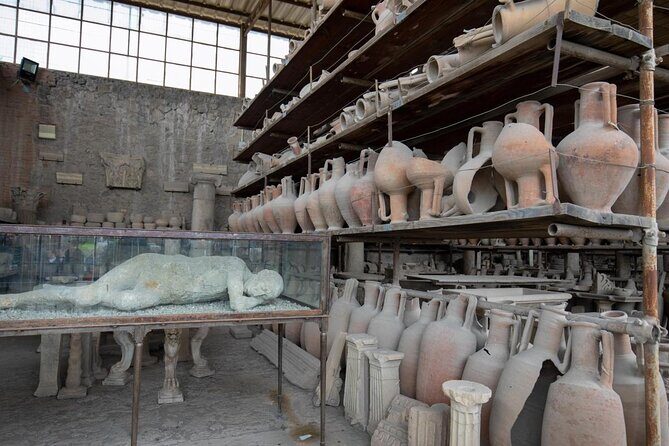
- UNESCO pair in one day: Pompeii and Herculaneum are both UNESCO World Heritage Sites, and doing them together saves major hassle.
- Vesuvius admission is included: you’re covered for entry to Vesuvius National Park in the tour price.
- You explore on your own at each ruin: bring your patience and do a little planning before you arrive.
- Herculaneum’s preservation is the star: the pyroclastic surge sealed the city in a way that makes ruins feel “complete.”
- Pompeii rewards smart time management: it’s huge, so you’ll need priorities (or you’ll rush).
- Crater access depends on conditions: the day requires good weather and Vesuvius can be affected by wind or closures.
The Big Idea: Why This Combo Works From Naples
If you’re staying in Naples for a short visit, this is the practical way to hit the big three: Herculaneum, Pompeii, and Mount Vesuvius. You avoid the “how do I get there, and back, and on time” problem that can turn a perfect day into a logistical stress test.
This day trip is built around transport + onboard guidance, not full museum-style guiding at every stop. That’s a good fit if you like wandering, reading signs, and setting your own pace—especially when each site is so extensive that a strict guided loop can feel rushed.
The value is strongest when you want one day that’s big on atmosphere and efficient movement, and when you’re okay handling the ruins part independently. If you want a licensed guide to walk you through every room, you’ll likely need to add that separately.
If you're still narrowing it down, here are other tours in Naples we've reviewed.
Price and Logistics: Where the Money Actually Goes
The headline price is listed at $145.12 per person for about 8 hours, with Vesuvius National Park entry included. The key detail: entrance tickets for Herculaneum and Pompeii are not included.
Based on the provided fees, you should plan on:
- Herculaneum: €13.00 per person
- Pompeii: €18.00 per person
Add those two and your day becomes a lot more predictable. What won’t be predictable for everyone is how much extra you’ll spend on optional items like a licensed guide or a timed add-on. A few people also reported that lunch wasn’t built into the schedule, so plan to eat when you can rather than expecting a dedicated stop.
One more practical note: Vesuvius is the only site where entry is included. Everything else is on your own ticketing plan. I’d treat this as a “chauffeured ruins day” rather than an all-inclusive guided tour, and you’ll feel much happier with the math.
Pickup, Timing, and How to Start the Day Well
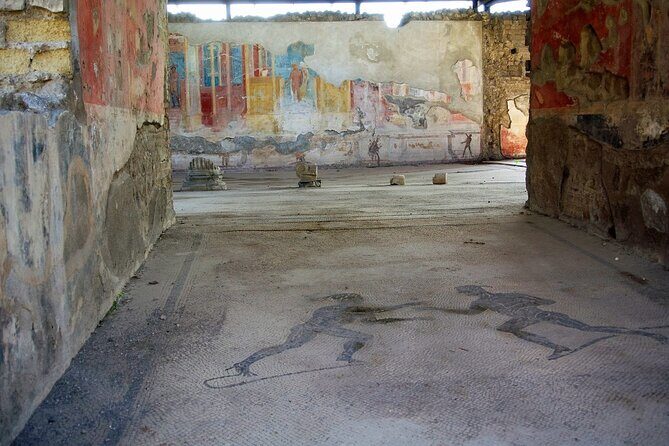
You’ll be picked up either at Stazione Marittima (the Cruise Terminal area) or at the Ramada by Wyndham Naples. That matters because Naples is busy, and matching your start time to the right meeting point can save you a lot of wandering.
The itinerary order can be adjusted based on conditions or group preferences, but you’re essentially set up to do three stops in one day: Herculaneum first, then Vesuvius, then Pompeii. That sequencing is common because it lets you climb Vesuvius while you still have energy, then spend the remainder of the day deep in Pompeii.
You’ll also get fresh water onboard, which is genuinely helpful in the summer heat. Still, I recommend you bring your own simple snacks if you tend to get hungry during long museum walking. The day can run from “fine” to “why am I suddenly starving” before you notice.
Stop 1: Herculaneum at Parco Acheologico di Ercolano
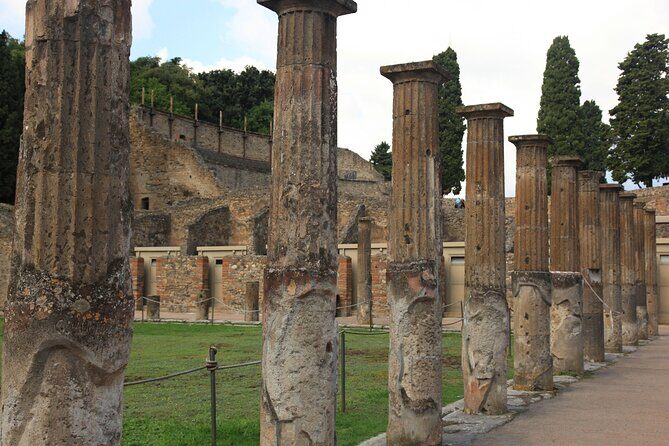
Herculaneum is smaller than Pompeii, and that’s part of why it’s so powerful. The site is preserved by volcanic material from Mount Vesuvius’s eruption in 79 AD, creating an unusual “frozen in time” feel. Instead of reading ruins that are mostly foundations, you can often make out more complete spaces—streets, rooms, and building details that make the ancient city feel lived-in.
One place I’d prioritize is the Villa of the Papyri. It’s famous because the villa is tied to ancient scroll finds, and it helps explain why this area mattered beyond everyday street life. You also have structures and homes such as the House of the Deer, where sculptures and ornamentation bring Roman grandeur into sharper focus.
What makes Herculaneum different from Pompeii is the kind of destruction. Herculaneum was engulfed by a pyroclastic surge, sealing it differently. In plain terms: you get a clearer sense of the city’s layout and daily environment. If you like ruins that feel readable, Herculaneum is often the relief stop.
The realistic drawback
Herculaneum is still a lot of walking. If you’re trying to see every attraction, your time can vanish fast. Come with a short list of what matters to you—villa, bath area, market spaces—so you don’t spend 45 minutes deciding once you’re already tired.





Stop 2: Mount Vesuvius National Park and the Crater Rim
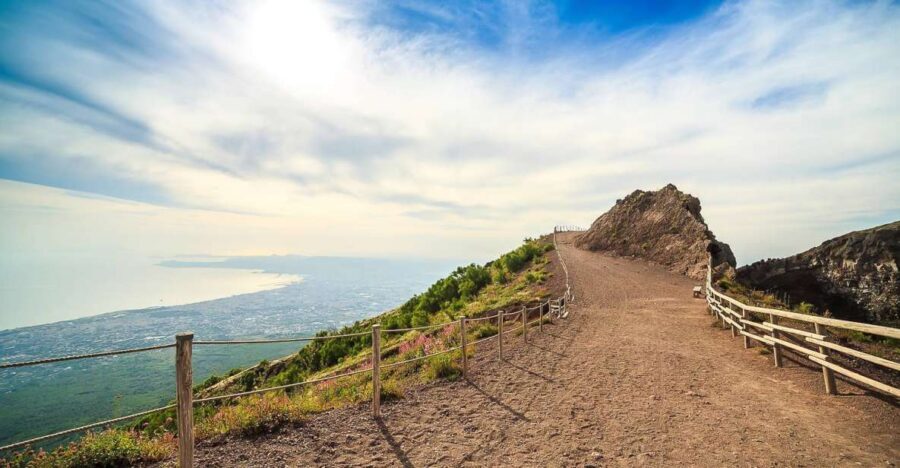
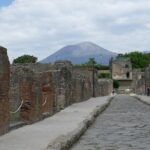
Vesuvius is the only active volcano on mainland Europe, and locals call it the Good Giant—an affectionate way of saying the mountain is part of the Naples story, not just background scenery. The big reason people do this stop is the switch from ancient streets to real-world geology.
You’ll have about 1 hour 30 minutes at Vesuvius, and you should assume that includes time for the walk to the crater rim (not just standing). Several reviews emphasize that you need to be in decent shape. It’s not an extreme technical climb, but it is physical, and the stairs and uneven paths add up.
The payoff is the view: the Bay of Naples, the city stretching out below, and distant islands on clear days. Standing at the crater’s rim gives you a different mental picture than any museum model. You can almost “place” what happened in 79 AD into a modern geography.
Weather can change your day
This is a weather-dependent part of the trip. The experience requires good weather, and wind or fires can lead to schedule changes. In those cases, your day might shift to another activity rather than a crater hike. It’s smart to keep your expectations flexible here.
Stop 3: Pompeii Archaeological Park
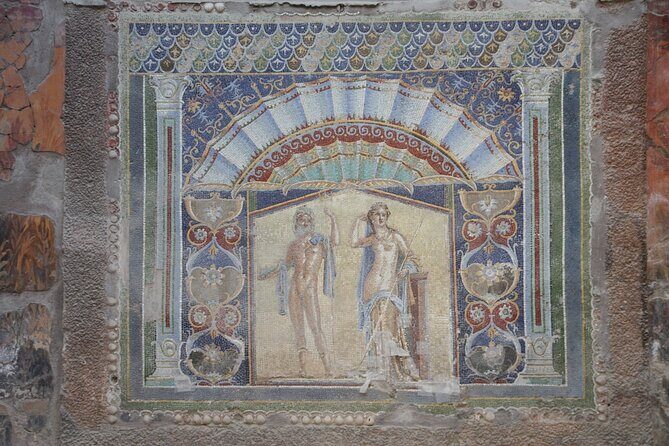
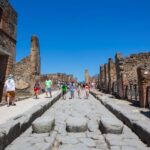
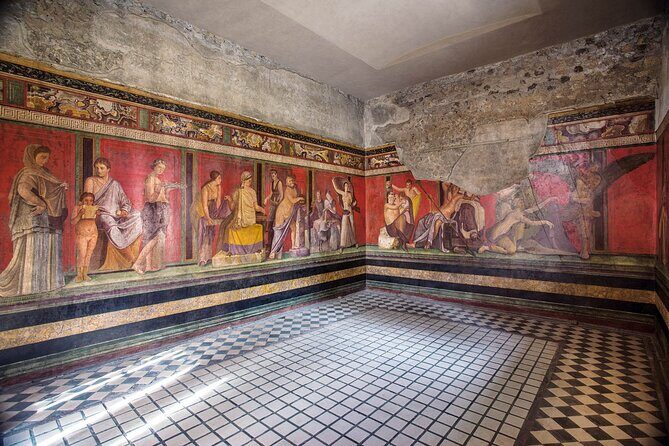
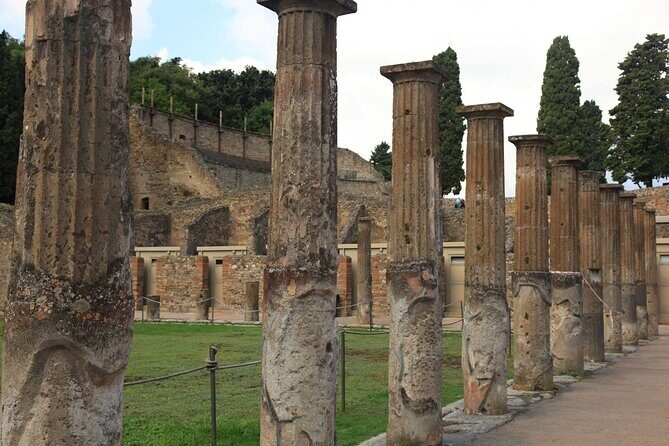
Pompeii is the one most people picture when they think of Roman ruins: preserved streets, mosaics, frescoes, sculptures, and the feeling that a whole city paused mid-day because of catastrophe.
You’ll get about 2 hours, which sounds like plenty until you remember that Pompeii is huge. If you try to see everything, you’ll end up rushing. I prefer a smarter approach: pick a “must-see loop” so you can slow down in the places that matter.
What to prioritize in Pompeii
If you like iconic sights, look for:
- Temple of Apollo: one of the major religious anchors of the city
- Casa del Fauno: elegant Roman domestic space
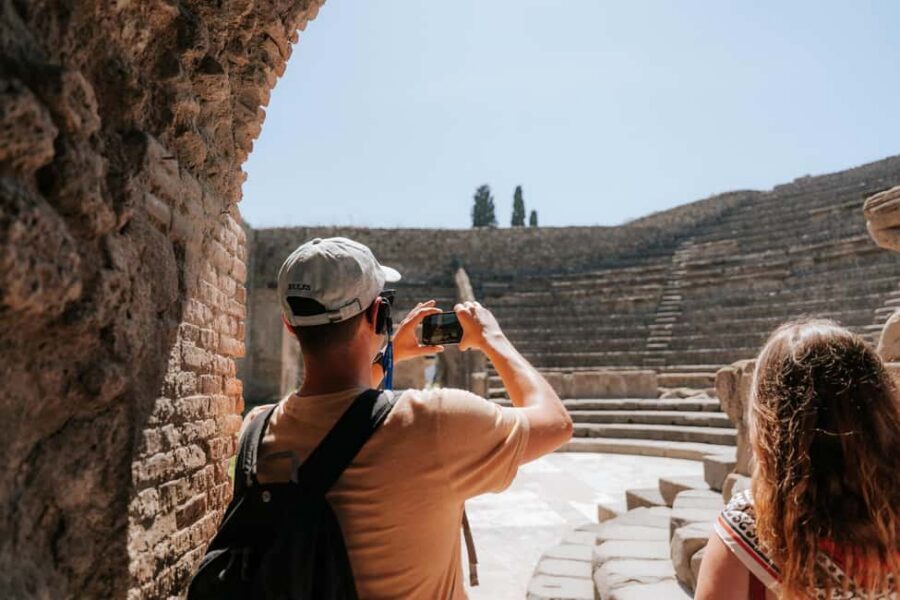
- Amphitheater: among the best-preserved amphitheaters of its kind
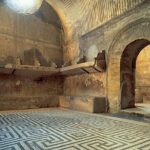
You’ll also want to keep an eye out for mosaics and frescoes. Even when you can’t stop for long, these details do a lot to bring the city back. Pompeii is famous for a reason: it’s not just stones. It’s visual evidence of daily life.
One nice bonus near the ruins area is the modern craftsmanship. The tour includes mention of an older coral factory where artisans create pieces inspired by ancient Greek-Roman designs. If you have even a little interest in crafts, it can help connect the ancient world to what people still make today.
The realistic drawback
At Pompeii, you’re on your own inside the site. Some people feel they would have gotten more out of the day with an actual licensed guide walking with them. If you love context—who lived here, what a room sign means, why a certain mural matters—budget time to use your phone for quick self-guided explanations, or consider adding a guide at Pompeii if the price fits your comfort level.
Driver Commentary vs. Site Guidance: The Expectation Gap
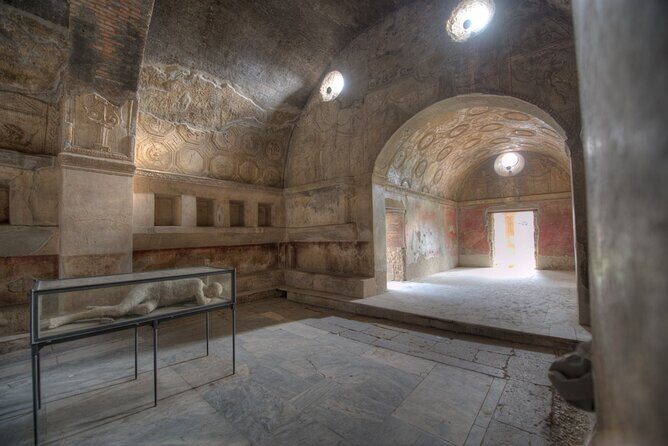
This is where the experience can feel either great or frustrating, depending on what you expect.
You will have an English-speaking driver/host and live commentary while you ride between sites. In many cases, people have praised drivers for keeping the day lively—names like Mary, Luca, Polly, Enzo, and Rosita have shown up in feedback for being helpful and entertaining while pointing out what to look for.
But once the minibus doors open at Herculaneum, Pompeii, and Vesuvius, you’re generally exploring independently. That can still work well, especially if you’re motivated to wander and you don’t mind finding your way with a map.
If what you want is a step-by-step guided walk through the ruins, plan to add a licensed guide at the sites. The tour itself is best understood as transportation with guidance on the drive, plus timed free exploration.
My advice: read your priorities like a checklist. If you’re a “show me the story” person, add a guide. If you’re a “let me wander and absorb” person, this day trip can be exactly the right pace.
How to Plan Your Visit to Avoid Rushing
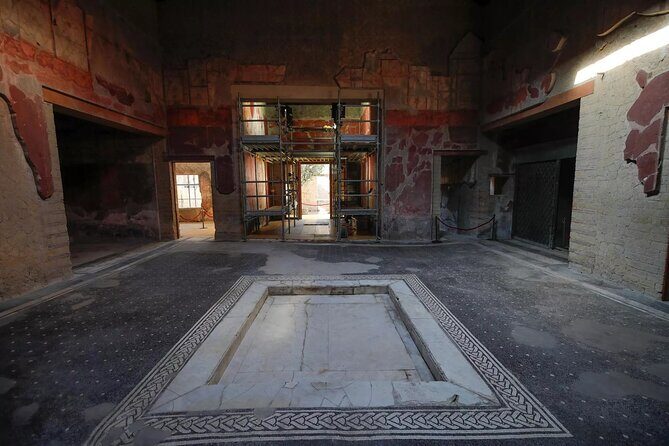
Pompeii gets most visitors, but both sites require walking. To make your 8 hours feel less chaotic, do two things before you go:
1) Choose your “top 5 stops” at each ruin
At Herculaneum: villa, a bath-related area, market spaces, and a couple of decorated homes.
At Pompeii: Amphitheater, Temple of Apollo, Casa del Fauno, plus mosaics and frescoes you can spot quickly.
2) Get your tickets for each site promptly
Pompeii and Herculaneum tickets are not included, and some people reported that Pompeii tickets can sell out for specific days/times. If your schedule is fixed, buy tickets as soon as you can after booking your tour. Also double-check names on tickets match identification to prevent avoidable entry problems.
This is how you get the best version of the day: less stress at the entrance, more time enjoying what you came for.
Who This Day Trip Suits Best
This works best for:
- First-timers who want the big headline sites without hiring separate transportation
- People who like free time and self-paced exploration
- Short-stay visitors who only have one day to spend in the area
It might not be ideal if:
- You want a licensed guide walking with you inside Pompeii and Herculaneum for the full time
- You hate the idea of extra tickets beyond what’s included
- You prefer slow travel and long stays at fewer locations
If you’re traveling with older adults or anyone with mobility challenges, consider that the day includes walking at three sites and a climb to the crater rim. Most people can participate, but you’ll still want to be realistic about stamina.
Should You Book This Pompeii, Herculaneum, and Vesuvius Day Trip?
Book it if you want one efficient day that delivers the highlights: Herculaneum’s well-preserved feeling, Pompeii’s unforgettable scale and art, and Vesuvius’s crater-rim viewpoint with the thrill of a real climb. The driver-led commentary between stops can make the day feel connected rather than random.
Think twice if your ideal tour is a full guided walkthrough inside every ruin, or if you dislike handling additional tickets and extra planning. In that case, you may spend the money twice—once for the transportation, and again to fill in the guidance you expected to be included.
If you do book, go in with the right mindset: this is a well-managed day of transport and timing, and your reward is two UNESCO sites plus the Good Giant’s crater views—if you plan your priorities and keep expectations aligned with how the day is structured.
FAQ
Where are the pick-up locations?
Pick-up is available at either the Cruise Terminal (StazioneMarittima) or the Ramada by Wyndham Naples.
How long is the trip?
The duration is about 8 hours.
What is included in the price?
The tour includes premium minibus transport, live English onboard commentary, fresh water on board, and entrance ticket to Vesuvius National Park.
Do I need separate tickets for Pompeii and Herculaneum?
Yes. Entrance tickets for the Archaeological Sites of Pompeii and Herculaneum are not included in the base price.
Is a site guide included inside Pompeii and Herculaneum?
No. The tour includes an English-speaking driver/host with commentary while on board, but it does not include a licensed guide inside the archaeological sites (unless arranged separately).
Is lunch included?
No. Lunch is not included.
What language is the commentary?
The commentary is provided in English. Multilingual commentary is not available.
Is Vesuvius entry included even if you don’t climb?
The tour includes entrance to Vesuvius National Park in the price. Actual crater access can depend on conditions, since the experience requires good weather.
What happens if the tour can’t run due to weather or low bookings?
The experience requires good weather. If canceled due to poor weather, you’ll be offered a different date or a full refund. If canceled due to minimum passenger requirements, you’ll also be offered a different date/experience or a refund.