REVIEW · NAPLES
Walking Tour of Herculaneum with Local Guide
Book on Viator →Operated by Worldtours · Bookable on Viator
Two hours, and Herculaneum makes sense. This guided Herculaneum walking tour is built for people who want the biggest hits without eating your whole afternoon, plus a prebooked entry ticket to cut down on waiting. With a licensed local guide speaking English, you can follow what you’re seeing instead of just wandering through ruins.
The main catch is pacing. The route is tight, with brief stops at each highlight, so you need to be comfortable moving on when the group does.
In This Review
- Key things to know before you go
- Where Herculaneum Really Wins: Daily Life, Not Just Big Ruins
- Price and Value: What You’re Paying For (and What You’re Not)
- Your Two-Hour Walk: A Stop-by-Stop Plan That Makes Sense
- Stop 1: Salone della Barca di Ercolano (Roman boat on display)
- Stop 2: Antiquarium di Ercolano (furnishings, furniture, jewels)
- Stop 3: Casa dei Cervi (a standout patrician villa)
- Stop 4: Casa del Rilievo di Telefo (another patrician villa)
- Stop 5: Grande Taberna (Roman fast food, Thermopylae style)
- Stop 6: Vestibolo della Palestra (gym and swimming pool)
- Stop 7: Partem Domus lignea – Casa del Tramezzo di Legno (wooden doors and beams)
- Stop 8: Terme Del Foro (thermal baths)
- Stop 9: Casa di Nettuno e Anfitrite (mosaics you can actually appreciate)
- The Guide Factor: When Explanations Make the Ruins Click
- How to Plan Your Day Around This Tour
- Should You Book This Herculaneum Walking Tour?
- FAQ
- FAQ
- How long is the Walking Tour of Herculaneum?
- What is the meeting point?
- Where does the tour end?
- Is the Herculaneum entrance ticket included?
- What is included besides the ticket?
- Is transportation from Naples included?
- What language is the tour offered in?
- What should I bring for the weather?
- What fitness level do I need?
- How many people are in a group?
- Is food included?
Key things to know before you go
- Prebooked Herculaneum entry: your ticket is handled so you spend less time in line and more time inside the site
- Licensed local guide in English: you get explanations while you walk, not after you’re already lost
- A “greatest hits” route: Roman boat, villas, baths, gym, mosaics—compressed into about two hours
- Inside-the-site walking tour: you’ll move through the archaeological areas on foot with the group
- Small-ish group size: up to 20 people, with a minimum of 4 for the departure to run
Where Herculaneum Really Wins: Daily Life, Not Just Big Ruins
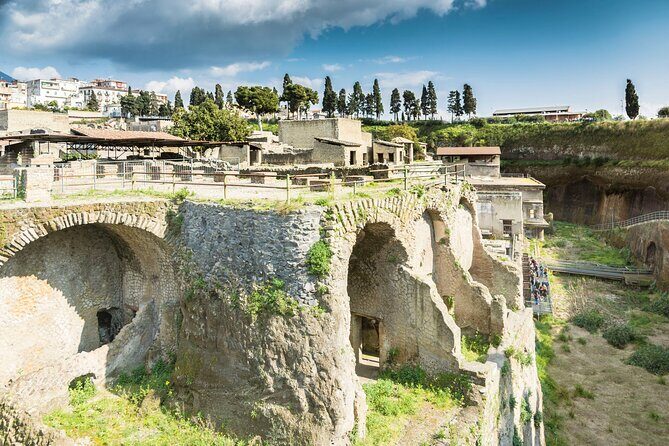
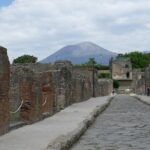
If you’ve seen Roman ruins before and thought, That’s impressive, but I still don’t get what life was like—Herculaneum often fixes that. This site preserves more of the everyday stuff because many structures and objects were protected in a way that feels unusually intimate. Instead of only imagining the past from stone outlines, you get to picture rooms, objects, and routines.
This tour is also a smart fit for a short Naples stay. Herculaneum sits in the Ercolano area, and a two-hour format means you can add it without derailing your whole day. You’ll get a guided sweep across several top areas, so you come away with a clearer sense of how people lived, worked, exercised, ate, and bathed.
And yes, a big part of the value here is practical: entry is included, and the tour is designed to avoid wasted time. When you’re paying for a guide, that time matters.
If you're still narrowing it down, here are other tours in Naples we've reviewed.
Price and Value: What You’re Paying For (and What You’re Not)
At about $48.16 per person for roughly two hours, this isn’t a cheap add-on—but it’s not just paying for footsteps. Your price includes:
- Herculaneum admission
- A licensed expert guide
- A walking tour inside the archaeological site
What’s not included is also straightforward: transportation to and from Naples and food and beverages. That’s typical for tours like this, but it’s worth planning so you don’t get stuck figuring things out after the tour ends.
In real terms, you’re buying convenience and interpretation. The guide’s job is to help you connect what you see—boat, mosaics, villas, baths—to what those things meant. Prebooked entry helps too. In an archaeology site, minutes can vanish fast, so saving time at the start is more valuable than it sounds.
Your Two-Hour Walk: A Stop-by-Stop Plan That Makes Sense
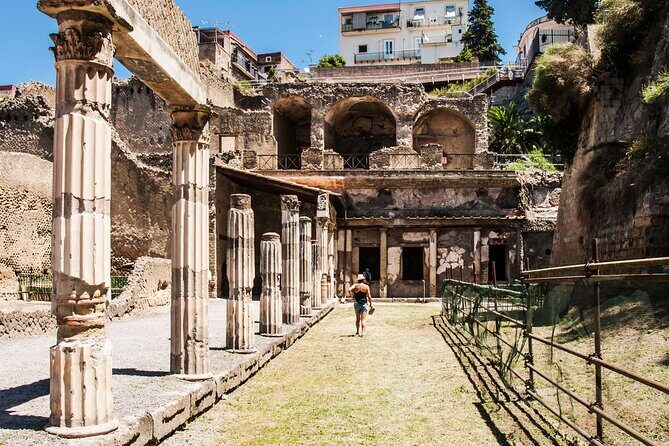
This is a highlight route with nine stops. Some are quick photo sprints; others are short museum-style explanations. The trick is knowing what each stop is doing for your understanding.
Here’s what you can expect, in the order you’ll likely encounter it:
Stop 1: Salone della Barca di Ercolano (Roman boat on display)
You begin with the Salone della Barca di Ercolano, a small museum space built around an ancient Roman boat. The standout detail is that the boat is on display in excellent condition. For many people, this is a fast mental switch: you’re no longer only thinking about houses and mosaics. You’re thinking about trade, travel, and the movement of goods in the Roman world.
This opening stop works well because it gives you a broader context right away. Before you start walking through domestic spaces, you get a clue about how the city interacted with the sea.
Tip for your visit: use this stop to get your Roman vocabulary going—if the guide mentions how boats were used, keep listening. That context will make later “everyday life” stops easier to picture.
Stop 2: Antiquarium di Ercolano (furnishings, furniture, jewels)
Next is the Antiquarium di Ercolano, a focused exhibition of items found during the excavations. You’ll see furnishings, furniture, and jewels—objects that help you understand what people owned and how homes were equipped.
This is the stop that turns ruins into routine. Big columns and walls are one thing; small everyday objects are another. Even when you only have a short visit, this kind of museum stop gives your brain something to anchor to.
Possible drawback: because the tour is short, you won’t have time for a long museum drift. If you prefer slow pacing, treat this as a guided highlight, then consider giving the museum areas extra time on another visit.


Stop 3: Casa dei Cervi (a standout patrician villa)
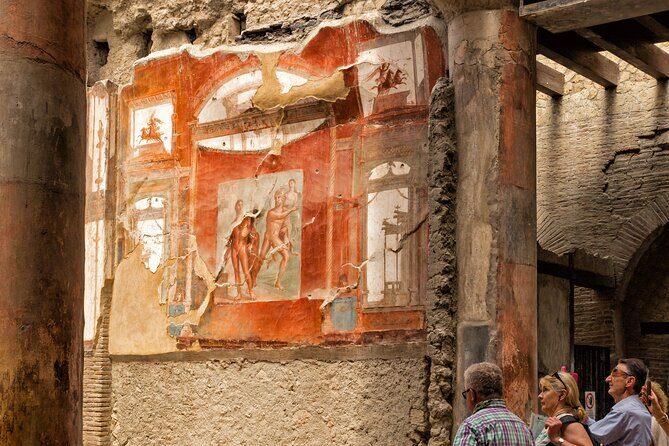
Casa dei Cervi is one of the best-preserved buildings at Ercolano. It’s a patrician villa, which means it was built for wealthier residents. This stop helps you understand domestic architecture at a higher level: how elite homes were arranged and what “well-preserved” really looks like in Herculaneum.
The guide’s explanation matters a lot here. Rooms and corridors can look similar when you’re just passing through. With a guide, you’re better able to connect the layout to function—where people gathered, how spaces were used, and what preservation reveals.
Stop 4: Casa del Rilievo di Telefo (another patrician villa)
Casa del Rilievo di Telefo is shorter—about five minutes. It’s still a patrician villa, so it continues the theme of elite domestic life. Think of this as a quick reinforcement: you already saw one major villa; now you get another example to compare.
In a short tour, these fast stops are about variety. You’re meant to leave with a sense that Herculaneum didn’t just have one type of residence—it had multiple patterns, with different decorative and architectural choices.
Stop 5: Grande Taberna (Roman fast food, Thermopylae style)
Then you hit the Grande Taberna, described as a thermopylae, meaning an ancient fast food stop. If you’ve ever wondered what Romans ate on the go, this is the answer in architectural form.
This is one of the coolest “daily life” moments on the route because it’s not about elite leisure. It’s about routine: people grabbing food quickly and moving on.
The main value here is perspective. When you can connect a villa to a nearby food counter, you stop thinking of the ancient city as a museum model and start seeing it as a place where regular life happened.
Stop 6: Vestibolo della Palestra (gym and swimming pool)
After the food stop, you move into the Vestibolo della Palestra. This area includes a gymnasium and swimming pool. It’s a reminder that exercise, bathing, and social life were tangled together in Roman culture.
For many visitors, this is where the tour feels most different from other “ruins-only” experiences. It’s one thing to see baths; it’s another to see the gym and pool connected to how the site was used.
If you’re the type who likes to learn how people spent their afternoons, you’ll probably enjoy this stop a lot.
Stop 7: Partem Domus lignea – Casa del Tramezzo di Legno (wooden doors and beams)
One of the signature features of Herculaneum is wood preservation, and this stop leans into that. Partem Domus lignea (Casa del Tramezzo di Legno) highlights preserved wooden doors and beams. In many archaeological sites, wood vanishes. Here, that absence didn’t happen in the same way.
This stop matters because it changes your sense of scale and material. Seeing wood where you expect only stone helps you understand the physical feel of the place: doorways, partitions, construction methods, and how interiors likely looked and functioned.
This is also the kind of stop where a guide can make details click—so don’t rush through it just to get the photos.
Stop 8: Terme Del Foro (thermal baths)
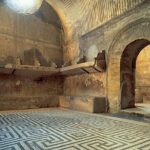
Then comes Terme Del Foro, the thermal baths. Baths were a major part of Roman urban life—part hygiene, part social time, part daily ritual.
In a short tour, baths can either feel like another room of broken tiles—or they can become a real timeline of what the day might have looked like. With an English-speaking guide, you get help turning it into a story: where people might have entered, how bathing flowed, and why this mattered to civic life.
If your travel style is “show me how people lived,” you’ll get a lot out of this.
Stop 9: Casa di Nettuno e Anfitrite (mosaics you can actually appreciate)
You end at Casa di Nettuno e Anfitrite, known for one of the most beautiful mosaics of the excavations. This is a quick stop in time (around five minutes), but it’s a strong finish because it gives you something visually memorable.
Mosaics are tricky on tours if you’re overloaded and tired. Here, the trick is that the route builds toward it. You’ve seen villas, social spaces, exercise, and baths. Then you finish with art that signals wealth, taste, and daily beauty inside a home.
The Guide Factor: When Explanations Make the Ruins Click
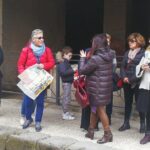
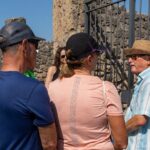
This tour includes an expert licensed tour guide, and that’s the difference between a walk you enjoy and a walk you remember. In this case, English is the offered language, and the tour can be bilingual depending on the group.
A name that has come up in guide quality is Mr Raphael. Even if you don’t get the same guide, it’s a good sign that the tour operator invests in people who can explain what you’re seeing in plain language.
One more practical point: the tour is capped at a maximum of 20 travelers. That usually helps with questions and keeping the group moving at a pace that still feels guided rather than herded.
Still, if you have very specific language needs, double-check your expectations before you go. Small-group formats can create mixed language situations when participant numbers shift.
How to Plan Your Day Around This Tour
This is built to end where you start—back at the meeting point near the Herculaneum Ticket Office. So you don’t have to worry about a complicated drop-off.
Also, time it with realism. The tour is about two hours, and the experience runs in all weather conditions, but cancellation can happen due to poor weather. In plain terms: dress for damp or changeable conditions, bring layers, and accept that your comfort matters when you’re standing and walking through an outdoor site.
Transportation from Naples isn’t included, so plan your arrival and return time accordingly. If you’re juggling a tighter itinerary, make sure your connection time isn’t too optimistic.
Should You Book This Herculaneum Walking Tour?
I’d book it if:
- You want Herculaneum highlights in about two hours
- You prefer a guided walk where someone explains what you’re looking at
- You appreciate paying for entry + interpretation rather than self-guiding your way into confusion
- You’re on the fence about Herculaneum versus Pompeii and want a clearer, more personal view of everyday Roman life
I’d think twice if:
- You love slow, long museum-style wandering. This route is quick by design.
- You need a specific language format. English is the main offered language, and bilingual situations can vary.
If you’re seeking value, this tour is a good bargain in the sense that you get admission handled and a tight, curated path through major sights—without spending half your day on logistics.
FAQ
FAQ
How long is the Walking Tour of Herculaneum?
It runs for about 2 hours.
What is the meeting point?
The tour starts at the Herculaneum Ticket Office, 80056 Ercolano, Metropolitan City of Naples, Italy.
Where does the tour end?
It ends back at the meeting point.
Is the Herculaneum entrance ticket included?
Yes. The tour includes the entrance ticket of Herculaneum.
What is included besides the ticket?
You get an expert licensed tour guide and a walking tour inside the archaeological site.
Is transportation from Naples included?
No. Transportation to and from Naples is not included.
What language is the tour offered in?
It is offered in English. The tour can also be bilingual.
What should I bring for the weather?
The tour operates in all weather conditions, so dress appropriately for conditions.
What fitness level do I need?
A moderate physical fitness level is recommended.
How many people are in a group?
The tour has a maximum of 20 travelers per group, and it requires a minimum of 4 people to run.
Is food included?
No. Food and beverages are not included.
If you want, tell me your travel dates and whether you’ll be coming from central Naples or closer to Ercolano, and I’ll help you time the tour with a realistic schedule.