Pompeii can feel like sensory overload. This private tour from Sorrento is designed to hit the best ruins fast while an English guide keeps you oriented. You get a timed route that links the city’s biggest landmarks—from temples to theaters to the Forum—without wasting energy on guesswork.
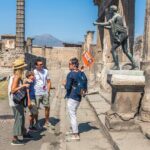
I especially like the way guides build a clear story as you walk. The group is small (just your party), so you can ask questions and get answers that actually fit what you’re seeing. I also like the practical flow: the day centers on a train round trip and a curated set of stops, so you’re not stuck wandering in circles.
One thing to plan for: the Pompeii Archaeological Park ticket isn’t included. The guide has priority for ticket purchasing, but you still need to budget for entry into the main site.
In This Review
- Key things that make this Pompeii tour work
- From Sorrento to Pompeii: the day runs on trains, not stress
- The itinerary logic: Pompeii highlights without random wandering
- Skip-the-line style: priority ticket buying, plus one budget note
- Stop by stop: what you’ll actually see and why it’s worth your time
- Pompeii Archaeological Park (the big one)
- Temple of Apollo (brief, but memorable)
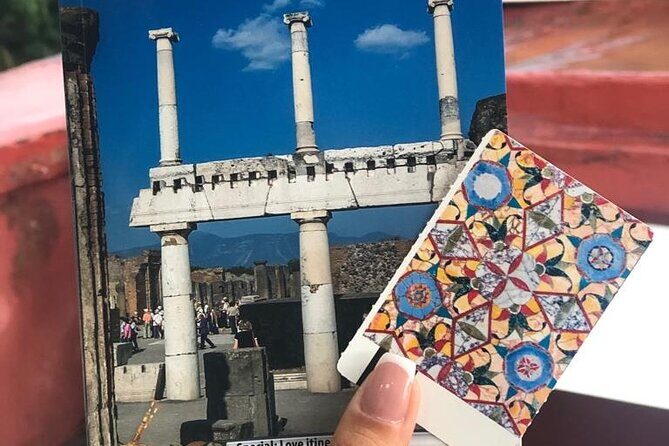
- Foro de Pompeya (main square)
- Granai del Foro (museum stop)
- Terme del Foro (the Forum baths)
- Casa del Poeta Tragico (mosaic power)
- Via dell’Abbondanza (the main street)
- Casa del Cinghiale (mosaics again)
- Teatro Grande (drama and comedy)
- Lupanar (the famous adult venue)
- What makes the guides feel “worth it” (not just another walking group)
- Price and value: what the $132.45 really buys you
- Who this Pompeii tour suits best
- Should you book Skip the line Private tour of Pompeii from Sorrento?
- FAQ
- How long is the Pompeii tour?
- Is this tour private?
- What language is the tour in?
- Does the tour include train tickets from Sorrento?
- Is the Pompeii entry ticket included?
- Which sites have admission included besides the main Pompeii park ticket?
- What’s the meeting point and where does it end?
- Are mobile tickets provided?
- Is this suitable for most travelers?
Key things that make this Pompeii tour work
- Priority ticket purchasing by your guide helps you avoid dead time at the entrance.
- A smart, short stop list (Apollo Temple, Forum, mosaics, theater, Lupanar) that covers real highlights.
- Private by default: only your group joins, so the pace and questions stay personal.
- English-speaking guides known for clear explanations and crowd-savvy route choices.
- Train round trip included, so you don’t have to solve transportation on your own.
From Sorrento to Pompeii: the day runs on trains, not stress
Sorrento is a good base, but Pompeii is a long enough day that transportation matters. This tour starts in Sorrento (meeting at 80067 Sorrento) and includes train round-trip tickets, plus pickup. That’s a big deal when you consider how much energy a walk-filled site demands.
What makes the train approach practical is simple: you’re not squeezing in extra connections, parking decisions, or timetable panic. It also makes the tour easier to enjoy for families. In at least one case, the guide met the group at the train station in Sorrento and walked them through the day from the moment everyone arrived.
If you’re thinking about doing Pompeii on your own, the hardest part usually isn’t finding sights. It’s keeping your bearings and deciding what to see first when the crowds are thick. This format tries to solve that before you even step into the ruins.
If you're still narrowing it down, here are other tours in Sorrento we've reviewed.


The itinerary logic: Pompeii highlights without random wandering
The full experience is listed as about 3–4 hours. On the ground, that usually translates into a focused route rather than a full, slow roam of the entire park. That’s not a negative. Pompeii is massive, and time is limited for most visitors.
This itinerary strings together major “anchors,” so you don’t just see isolated ruins. You move from the entrance zone into the core civic areas, then into the residential and cultural highlights, and finally toward the theater and the Lupanar (Pompeii’s well-known adult entertainment district). Each stop is timed to keep momentum.
The payoff is mental clarity. When you’re done, you’ll have a more complete picture of how Pompeii functioned—public life in the Forum, daily life along the main streets, and entertainment venues that show what people did for fun. One guide style that really comes through in the experience: guides use what you’re standing in front of to build a story, so the city makes more sense as you go.
Skip-the-line style: priority ticket buying, plus one budget note
The tour title leans on skip-the-line expectations, and the practical version here is priority purchasing for the Pompeii tickets. That means your guide is positioned to get you in faster than if you were figuring it out solo.
Still, there’s an important budget note: the Archaeological Park Pompeii ticket is not included. Also, you’re not paying for every single stop individually in this itinerary—many specific sites along the route are listed as admission included (Temple of Apollo, Forum stops, museum, spas, and several of the houses and buildings).
So think of the price as covering the private guiding and the logistics that reduce friction, while Pompeii site entry remains an extra cost. If you plan ahead, this becomes smoother than it sounds. If you show up assuming everything is already paid, it can feel annoying—so check and budget for the Pompeii admission ticket.
Stop by stop: what you’ll actually see and why it’s worth your time
Pompeii Archaeological Park (the big one)
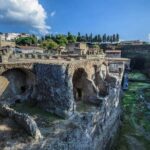
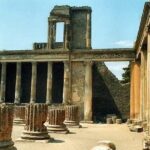
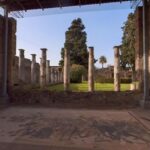
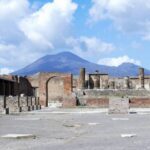
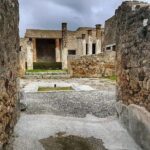
The centerpiece is Pompeii Archaeological Park, scheduled for about 2 hours. This is where you’ll visit the ruins that most people picture when they think of Pompeii: Roman streets and squares, villas, theaters, frescoes, mosaics, bakeries and trattorias, and the Lupanar area. You’ll also see the preserved casts of victims of Vesuvius, which are emotionally heavy but historically essential.
Here’s what makes this stop valuable for a first-time visit: it’s not just “wow, old stuff.” A good guide connects the dots so you can understand what you’re looking at. In guide notes from real experience, explanations often include how the city would have felt before the eruption—using the layout and buildings to paint a picture instead of throwing facts at you.
Possible drawback: 2 hours in Pompeii is not long. You will not see everything. But the tradeoff is that you’ll cover the most meaningful highlights, and you’ll do it with context.

Temple of Apollo (brief, but memorable)
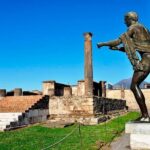
Next is Temple of Apollo for about 10 minutes. This stop is quick, but that’s fitting. It’s one of those “anchor” monuments people expect, and a focused visit keeps the day on track.
If you’re someone who likes architecture and symbolism, this is a strong moment to slow down briefly. Apollo’s temple gives you a sense of Pompeii’s religious center before you shift into civic and social life.
Foro de Pompeya (main square)
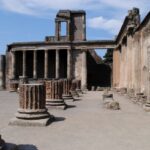
Forum/Piazza time follows, with Foro de Pompeya as a 20-minute stop. The Forum is where public life happens: governance, gatherings, and the daily “center of gravity” of the city.
You’ll get the feeling of a working urban hub rather than a museum. And with a guide, you’re less likely to miss the meaning behind what looks like scattered stones.
Granai del Foro (museum stop)
The itinerary includes Granai del Foro for about 20 minutes, listed as a museum. “Granary” spaces matter because they show how the city handled resources. It’s easy to focus only on homes and decorations, but Pompeii wasn’t just beautiful—it had systems.
A museum stop also functions as a mental reset. The light and shade inside can feel like a breather before you head back outdoors.
Terme del Foro (the Forum baths)
Terme del Foro is another 20-minute stop. These baths are listed as among Pompeii’s most beautiful spas. Baths are a great choice for a guided route because they show social patterns: meeting places, routines, and everyday leisure.
Even if you don’t care about bath design, it helps you understand that Pompeii’s public spaces weren’t only for politics. People came here to relax and socialize.
Casa del Poeta Tragico (mosaic power)
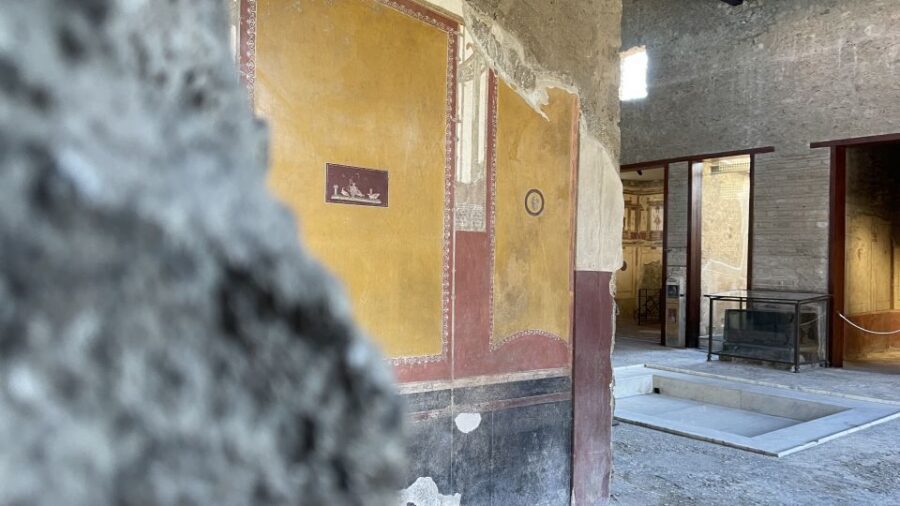
The Casa del Poeta Tragico takes about 10 minutes. This is a mosaic stop—yes, you’ll hear the word mosaic here for a reason. Pompeii houses often feel like they’re “talking” through their floors and wall art, showing taste, status, and humor.
Short visits work well for mosaic houses because the key images are the point. You don’t need hours. You need the guide to point out what to notice.
Via dell’Abbondanza (the main street)
Via dell’Abbondanza is scheduled for about 20 minutes. Think of it as the main boulevard of ancient Pompeii—what the guide calls the Beverly Hills idea, but the real value is practical: it gives you scale.
When you see the main street, shops, and movement patterns in one line, Pompeii starts to feel like a lived-in city instead of a collection of ruins. It’s also one of the best places to recognize how close different parts of city life were.
Casa del Cinghiale (mosaics again)
Next is Casa del Cinghiale for about 10 minutes—another mosaic-heavy stop. Repetition here isn’t accidental. Pompeii’s houses are famous for floor art, and seeing more than one house gives you contrast in style and emphasis.
This is also a good area to ask questions. If something puzzles you—how big a room was, what a detail might mean—guides tend to be most helpful here because the visual evidence is right in front of you.
Teatro Grande (drama and comedy)
Teatro Grande is about 20 minutes. Pompeii’s theater shows culture in action: tragedies, comedies, and public performance life.
A guided explanation helps you picture how an audience would have filled the space and what the acoustics and staging would have felt like. It’s one of the stops that turns “ancient” into real human behavior.
Lupanar (the famous adult venue)
Finally, the itinerary includes Lupanar for about 20 minutes, also called the fun house in the tour description. This is one of Pompeii’s most talked-about sites, and it’s included near the end of the route for a reason: it’s vivid, unusual, and it closes the loop on social life.
A thoughtful guide will keep it respectful and interpretive, focusing on what it reveals about the city’s economy and entertainment. If you’re visiting with kids, you’ll want to judge based on your comfort level, but the format still generally allows families to manage the experience with a good guide—one family example involved a guide who did well with children aged 7 and 11.
What makes the guides feel “worth it” (not just another walking group)
The private nature here is the multiplier. A private guide can change the experience from sightseeing to understanding. That comes up again and again in how guides are described—passionate, attentive, and good at shaping the route so you get answers fast.
Specific guide styles from real experiences that matter for you:
- Michele is described as highly passionate and giving a strong understanding of what you see.
- Romolo is credited with verbal picture-making of pre-eruption Pompeii and with practical awareness of where visitors might trip—like uneven terrain and low ceilings/doorways.
- Paolo (Paul) is described as personable and friendly, with clear, helpful guidance.
- Giusy is noted for being excellent with kids, keeping attention from start to finish.
- Josie is mentioned for easy-to-follow English and for navigating crowds to minimize waiting, plus suggesting lunch after the tour.
Those details aren’t fluff. If you’ve ever been in a giant site with a confusing route, you know the pain isn’t distance—it’s losing time and focus. These guides help you avoid the two big failure modes: standing around while everyone catches up, or rushing through without understanding.
Another practical benefit: when you’re moving as a private group, you’re less likely to get stuck behind slow walkers. That means the “3 to 4 hours” doesn’t feel like 2 hours of slow progress plus 1 hour of waiting.
Price and value: what the $132.45 really buys you
At $132.45 per person, this isn’t the cheapest way into Pompeii. The question is value: what’s included versus what you’ll still pay.
Included:
- Train round trip tickets
- Pickup in Sorrento
- Tour guide
- Priority ticket purchasing
- Mobile ticket
- English service
- Many individual admission items for stops besides the main park ticket
Not included:
- Pompeii Archaeological Park ticket
- Tip
So you’re paying for two main things: expert guidance and logistics that prevent wasted time. If you can share the reasoning—your guide will time the route, point out what matters, and help you move through crowds—then the cost starts to make sense. If you’re the type who loves slow wandering and doesn’t care about interpretation, you might feel the price is too high. But if you want a structured “best of Pompeii” with explanations, private guiding is often the difference between a blur and a memorable day.
Also, because this is private, it can feel better value for groups of two (a couple) or small families. One of the best pieces of feedback in the descriptions is that the couple-only setup makes the stops easier and the questions more personal.
Who this Pompeii tour suits best
This experience fits you best if:
- You want the highlights without planning every step.
- You prefer an English-speaking guide who can explain as you walk.
- You’d rather spend time looking at ruins than fighting through crowd logistics.
- You’re traveling with kids who do best with a guided pace and active explanations.
It might feel less ideal if you:
- Want to see the entire park with no structure.
- Have very limited mobility and need extra flexibility (Pompeii’s terrain can be uneven, and several stops involve walking on historic paths).
- Are trying to keep every cost ultra-minimal, since the main Pompeii ticket is extra.
Should you book Skip the line Private tour of Pompeii from Sorrento?
I’d book it if your goal is simple: see Pompeii’s major sights in a tight, understandable route, using a guide who helps you avoid wasted time and who can explain what you’re looking at. The private format, the train logistics, and the priority ticket purchasing work together to make the day smoother than a self-guided attempt.
Hold off or shop carefully if you hate guided structure or you’re determined to spend a long day roaming beyond the listed stops. Also, double-check your budget for the Pompeii Archaeological Park admission ticket, since that’s the main extra cost.
If your ideal Pompeii day is get your bearings fast, then understand what you’re seeing, this one is a strong match. And if you’re lucky enough to get a guide with the attention-to-detail style described in real experiences, you’ll spend less time worrying about uneven ground and more time appreciating the city before it all vanished.
FAQ
How long is the Pompeii tour?
It runs about 3 to 4 hours (approx.).
Is this tour private?
Yes. It’s a private tour/activity, and only your group participates.
What language is the tour in?
The tour is offered in English.
Does the tour include train tickets from Sorrento?
Yes. It includes train round trip tickets and pickup in Sorrento.
Is the Pompeii entry ticket included?
No. The Archaeological Park Pompeii ticket is not included. The guide has priority for purchasing tickets.
Which sites have admission included besides the main Pompeii park ticket?
Admission is included for the Temple of Apollo, Foro de Pompeya, Granai del Foro (museum), Terme del Foro, Casa del Poeta Tragico, Via dell’Abbondanza, Casa del Cinghiale, Teatro Grande, and the Lupanar.
What’s the meeting point and where does it end?
It starts in 80067 Sorrento, Metropolitan City of Naples, Italy, and ends back at the meeting point.
Are mobile tickets provided?
Yes. A mobile ticket is included.
Is this suitable for most travelers?
Yes. Most travelers can participate, and service animals are allowed.