REVIEW · NAPLES
Skip-the-Line Pompeii Guided Tour from Naples
Book on Viator →Operated by IAMME IA! - Gray Line Amalfi Coast · Bookable on Viator
Pompeii gets easier when the lines are handled. This guided skip-the-line Pompeii visit from central Naples is built for a short, high-impact day, with priority admission and a guide who turns scattered ruins into a place you can actually picture.
I really like two things about this tour. First, priority admission tickets help you spend more time inside the Archaeological Park of Pompeii and less time waiting at the entrance. Second, the route is guided by an official interpreter-style guide, so you are not just looking at stones—you’re learning what each space was for.
One thing to consider: the experience is hot and crowded at the site, and the comfort of the transfer can be a mixed bag. If you are sensitive to heat or easily stressed by late logistics, come prepared and keep expectations flexible.
In This Review
- Key highlights you’ll feel fast
- Skip-the-Line Pompeii from Naples: what you really get in 4 hours
- Getting there from central Naples: coach pickup and the comfort reality check
- Priority tickets and headphones: how the guide keeps Pompeii readable
- The Forum and Civil Forum: the “center of everything” you’ll see first
- Civil Forum, Basilica, and Temple of Jupiter
- Macellum: the market life picture
- A quick reality check
- Via dell’Abbondanza: the main street walk with shops, noise, and movement
- Stabian Baths: where public hygiene becomes a story
- House of the Faun and Via delle Ville: wealth, mosaics, and a quieter edge
- Via delle Ville and the approach to the Villa of Mysteries area
- Teatro Grande and the Basilica: entertainment and justice under one sky
- Teatro Grande: Roman public entertainment, built for thousands
- Basilica: the justice-and-commerce machine
- How much you’ll still want to explore on your own
- Price and value: is $72.01 fair for Pompeii?
- Who this tour is best for (and who should choose something else)
- Should you book this skip-the-line Pompeii tour from Naples?
- FAQ
- How long is the Pompeii guided tour from Naples?
- Where is the meeting point in Naples?
- Is Pompeii admission included?
- Do I get headphones during the tour?
- What language is the tour offered in?
- Can I cancel for a full refund?
Key highlights you’ll feel fast
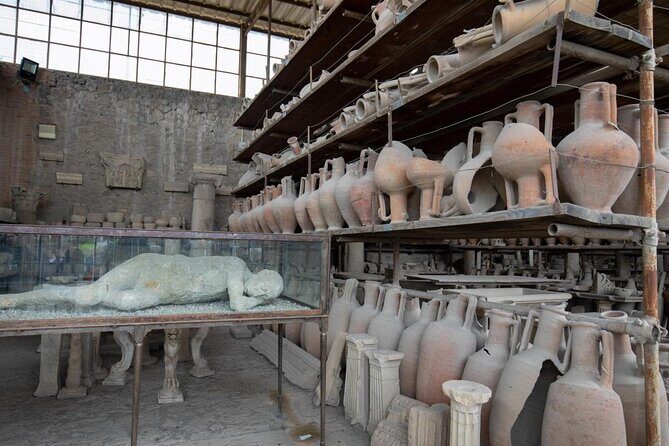
- Priority admission cuts down the most painful part of Pompeii: the entrance wait.
- Small group size (max 29) keeps the pace manageable, and headphones help if your group is over 10.
- Forum focus: the Civil Forum, Basilica, Temple of Jupiter, and Macellum show the city’s daily power and commerce.
- Street-to-baths flow on Via dell’Abbondanza and the Stabian Baths helps you connect “public life” to “how people lived.”
- Big-ticket sights in a short window, including the House of the Faun, Via delle Ville (path to the Villa of the Mysteries area), and Teatro Grande.
- Guide energy matters: I saw repeated praise for hosts and guides like Valeria and Simone, plus Vincenzo, Andrew, Josephine, and Fabrizio for keeping things clear and interesting.
Skip-the-Line Pompeii from Naples: what you really get in 4 hours
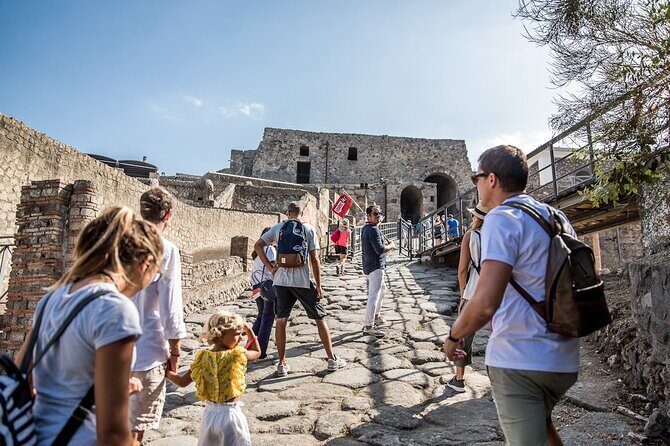
If Pompeii is on your “I can’t believe it’s real” list, this tour is a smart way to start—especially if you are staying in Naples and don’t want to burn time figuring out transport and lines. The tour runs about 4 hours, and that time is focused on the big, recognizable areas without turning your day into a museum shuffle.
The price is $72.01 per person, which is not cheap, but it starts to make sense when you factor in how much you save on logistics. You get round-trip transportation from a central Naples meeting point, priority admission to the site, and an official guide to interpret what you’re seeing across multiple zones.
You should also know what this tour is and isn’t. It’s not a slow, deep exploration where you linger in one house for an hour. It’s more like guided highlights with enough orientation that you can enjoy the ruins without feeling lost.
If you're still narrowing it down, here are other tours in Naples we've reviewed.
Getting there from central Naples: coach pickup and the comfort reality check
Your day starts at P.za Giuseppe Garibaldi, 91, 80142 Napoli. That’s convenient because it’s in a central, public-transit-friendly area—no complicated “find a tiny side street” scavenger hunt.
You travel round trip by air-conditioned vehicle, which is a big deal when the weather is warm. The catch? Comfort can vary depending on the actual vehicle and timing. Some groups noted the coach air-conditioning wasn’t as strong as they expected, and that the bus pickup can run late or require a short walk to meet it.
My practical advice: build in buffer time. Arrive a bit early, keep your water handy, and wear shoes you can walk in even if you have to move quickly to catch the group.
Priority tickets and headphones: how the guide keeps Pompeii readable
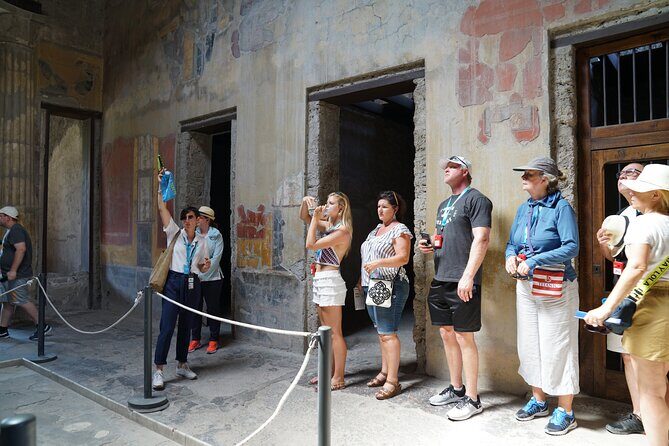
The biggest advantage here is that you are skipping the long entrance line. In Pompeii, that matters because your energy is limited. Once you’re inside, the ruins spread out and the site can feel maze-like fast.
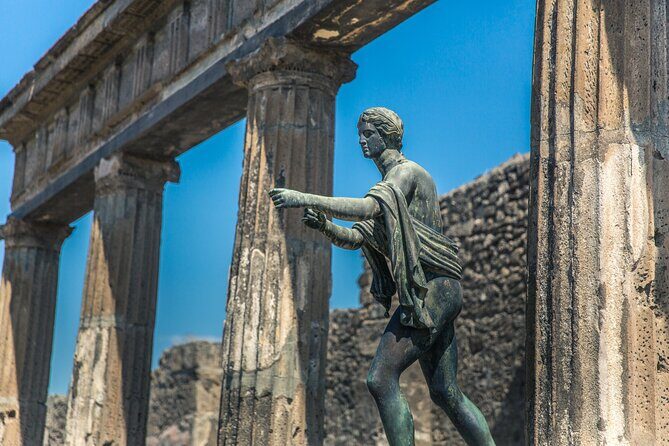
That’s where the guide really earns their place. The guide helps connect the dots: why certain buildings are clustered, what the big structures were used for, and what daily life looked like in a Roman city that was abruptly buried after the eruption of Mount Vesuvius in 79 A.D.
When the group is larger, you’ll have headphones in Pompeii so you can hear instructions clearly. That small feature can be the difference between enjoying the stories and constantly straining in a crowd.
You’ll also notice a pattern in the best experiences on this tour: guides who keep things lively and answer questions. Names that came up in guidance quality included Valeria greeting the group warmly, and Simone, Vincenzo, Andrew, Josephine, and Fabrizio for being helpful while managing the flow of people.
The Forum and Civil Forum: the “center of everything” you’ll see first
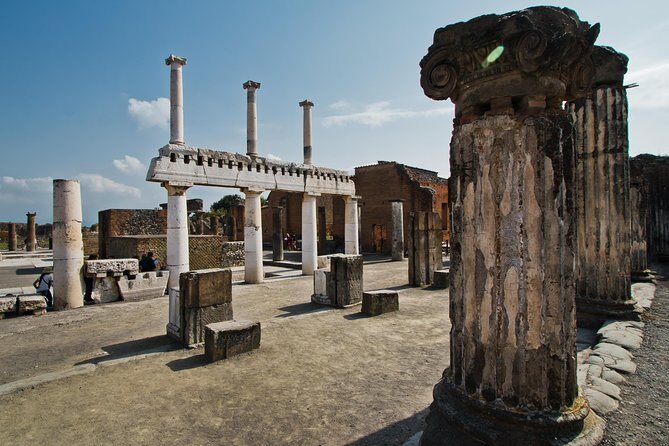
The heart of the tour experience is Pompeii’s Forum area, and it’s not chosen randomly. This was the core of daily life, where civic administration, justice, business, trade, and worship met in one compact zone. Even if you only have a few hours, this part gives you the mental map you’ll carry through the rest of the site.
Civil Forum, Basilica, and Temple of Jupiter
You’ll spend time around the Basilica, described as one of the most important buildings in Pompeii. It had an enormous footprint (about 1,500 square meters) and it functioned as a business and justice space, with a raised area where judges heard cases.
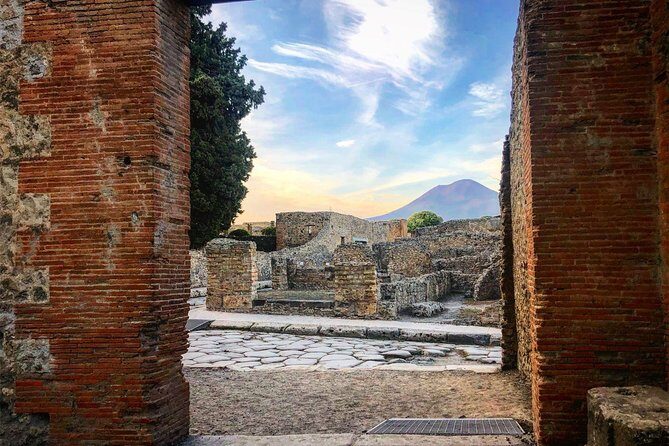
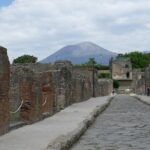
On the north side of the Forum is the Temple of Jupiter, which dominates the scene—especially with Mount Vesuvius visible in the background. The temple was renovated after the colony was founded around 80 BC, and it became a Capitolium-style setup with cult statues of Jupiter, Juno, and Minerva on a high base so they could be seen from the Forum square.
If you like understanding the “why” behind architecture, this is your moment. Instead of seeing columns and walls, you start seeing how power and belief were staged for everyday citizens.



Macellum: the market life picture
Next to these civic giants is the Macellum, a type of market center. It includes an area for worship and connects to the imperial-cult vibe too, with references to marble statues in niches and a room connected to meetings of a sacred board.
The practical payoff: the Macellum stop is where Pompeii stops feeling like a timeline and starts feeling like a place where people ate, traded, and held community rituals. It’s a reminder that public life was built into the architecture.
A quick reality check
The Forum area can be crowded because it’s central and obvious. You’ll get the most out of this stop if you listen for the guide’s landmarks and don’t worry about trying to photograph every angle. Capture a few key shots, then let the explanations do the heavy lifting.
Via dell’Abbondanza: the main street walk with shops, noise, and movement
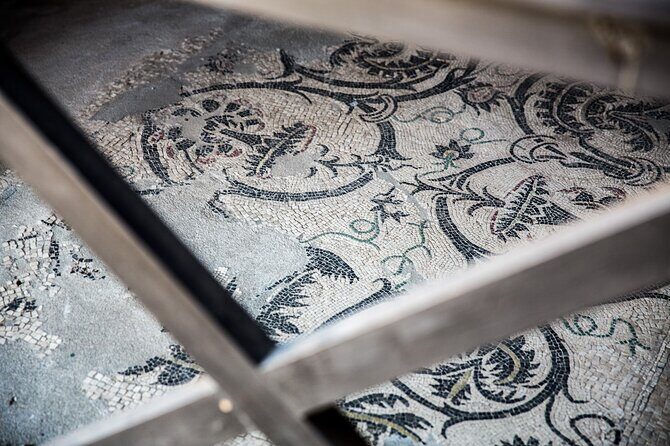
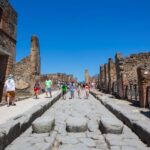
After the Forum, you walk on Via dell’Abbondanza, the ancient main street (a decumanus maximus) running east/west from the Forum area toward the Porta Sarno direction. This is one of those streets where the idea of Pompeii becomes easier: you can picture crowds, storefront activity, and quick snack breaks.
You’ll get a short guided stretch—about 10 minutes—but it hits the highlights: what kinds of spaces lined the street and why it was known for being busy with workshops and eating spots. The point here isn’t to exhaust the street. It’s to give you a “this is the downtown” feeling so you can read the ruins as a town, not a set of disconnected buildings.
My tip: keep your eyes level with the streetfronts when you’re on Via dell’Abbondanza. It helps you spot how shops and workspaces were arranged, even when the buildings are partly ruined.
Stabian Baths: where public hygiene becomes a story
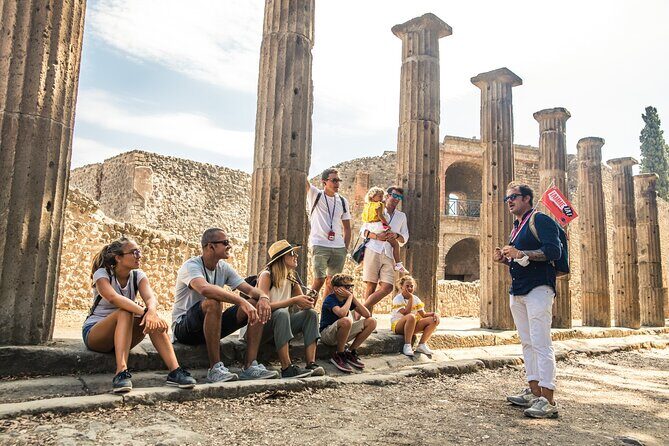
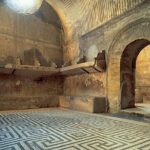
The Stabian Baths (Terme Stabiane) bring you from civic life into everyday routines. You’ll visit them briefly (about 10 minutes), but that short time works because the baths were designed around a sequence of temperature rooms and dressing areas.
Here’s what makes this stop click for visitors: the guide frames the baths as a gendered setup in the original design, with separate entrances for women and men. In the men’s section, you’re told about rooms that functioned as apodyterium (dressing room) and also as tepidarium, frigidarium, and calidarium for hot and cold bathing.
The guide also points out the real-world damage context: like many buildings in Pompeii, the baths were heavily damaged during the earthquake of 62 AD.
Why this matters for you: the baths show how “Roman culture” wasn’t only temples and politics. It was also how people relaxed, washed, and met neighbors. This stop turns the site from big monuments into human routine.
House of the Faun and Via delle Ville: wealth, mosaics, and a quieter edge
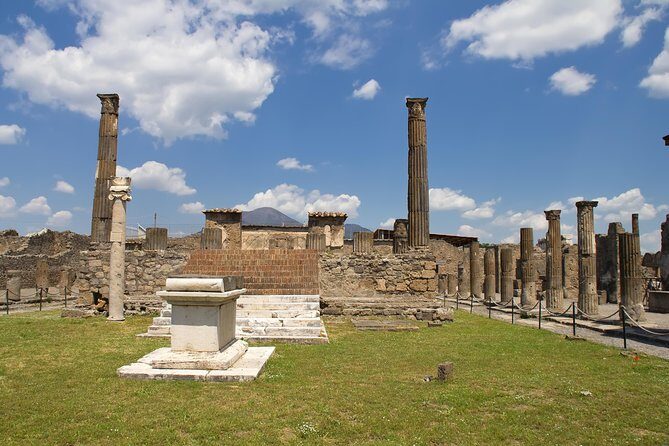
This part of the route is a favorite for many people because it shifts Pompeii’s mood. You get the House of the Faun, a large luxury residence occupying a full city block, named for the famous bronze statue of a dancing faun found in the main atrium.
The headline attraction here is the Alexander Mosaic, which depicts the battle between Alexander the Great and Darius III. The house also has two peristyle gardens and intricate floor mosaics, showing the taste and wealth of Pompeii’s elite.
Even in a short tour window, this is the kind of stop that gives you a jolt: you realize you’re not only seeing where public life happened—you’re seeing how the well-off lived.
Via delle Ville and the approach to the Villa of Mysteries area
Then comes Via delle Ville, a scenic road outside the city walls that runs from the Porto Ercolano gate area and connects the urban center to suburban zones. This route is known for a necropolis lined with tombs, and it leads toward the area associated with the Villa of the Mysteries, famous for frescoes depicting Dionysian rites.
The value of including this road in a time-limited tour is contrast. After the Forum and street energy, Via delle Ville feels like a change in air and pace. It’s a reminder that Pompeii had an edge—where city life tapered into burial spaces and country-style estates.
One consideration: because your tour time is limited, don’t plan on absorbing every detail like you would on a self-paced day. Use this portion to understand the city’s outward connections, then decide if you want to return later.
Teatro Grande and the Basilica: entertainment and justice under one sky
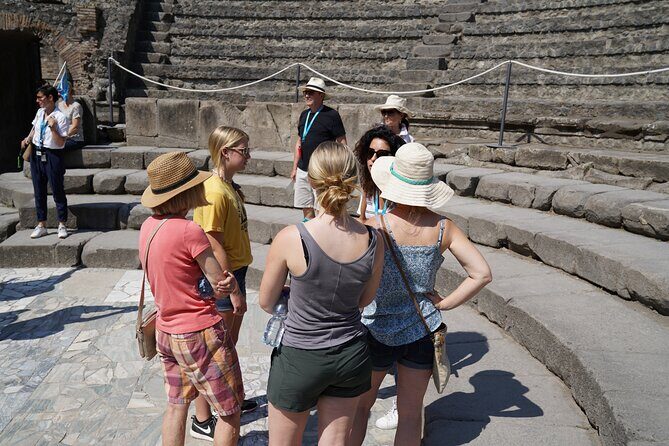
Two more stops tie the day together: Teatro Grande and another look at the Basilica as a major civic engine.
Teatro Grande: Roman public entertainment, built for thousands
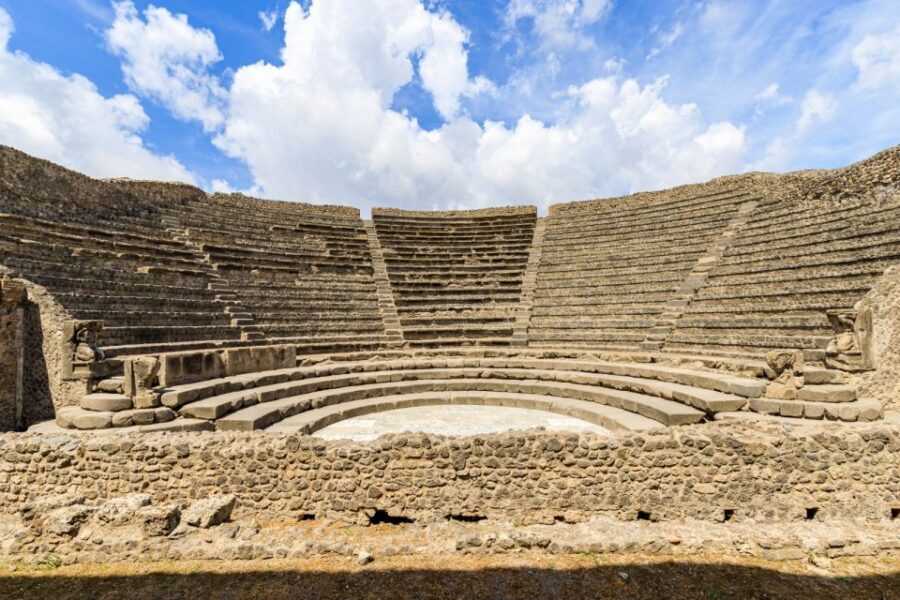
The Theater Grande is horseshoe-shaped and built into a natural hillside, designed to hold around 5,000 spectators. It dates to the 2nd century BC and is the first Greek-style stone theater in Pompeii.
What I find useful here is the guide framing it as a primary venue for comedies, tragedies, and pantomimes—so you know this wasn’t a decorative ruin. It was a place where common citizens and elites shared the same kind of mass entertainment.
Basilica: the justice-and-commerce machine
The Basilica again reinforces the theme of civic life. Built in the 2nd century BC, it served as Pompeii’s main center for legal and commercial activity. You’ll hear about the central nave, towering columns, and the raised tribunal where judges presided.
If you’ve ever wondered why Roman cities feel so “organized,” this stop gives you the answer: civic and economic structures weren’t afterthoughts. They were built into the city’s bones.
How much you’ll still want to explore on your own
One reason this tour scores well is that it builds your bearings fast. After a few stops across the Forum, main street, baths, elite houses, and the theater, you start recognizing what you’re looking at when you wander later.
But remember: the whole experience is about 4 hours. That means you get highlights plus guided context, not hours of total free roaming. The Archaeological Park of Pompeii is massive, and the preserved streets and houses can tempt you into slow walking.
My suggestion: if you’re the kind of traveler who loves lingering, schedule a little extra time in Pompeii on another day or after the tour. If you’re short on time and want the best return for your day, this tour is a strong fit.
Price and value: is $72.01 fair for Pompeii?
Let’s be real about value. Pompeii is expensive in effort even when you do it on your own: transport, tickets, lines, navigation, and decision fatigue. This tour packages a lot of those pain points.
For $72.01, you’re paying for:
- Priority admission to reduce entrance waiting
- An official guide to interpret complex ruins
- Round trip transport from Naples in an air-conditioned vehicle
- Pompeii site entry included
- Headphones for clearer listening on larger groups
That combination is especially valuable if you want structure without paying for a private guide. The group size cap at 29 also helps keep it from turning into a chaotic herd.
The one place you have to invest effort is your personal prep: water, sunscreen, and shoes you can handle on uneven ground in summer heat. When you do that, the tour feels like a good deal for what you get.
Who this tour is best for (and who should choose something else)
This Pompeii skip-the-line guided tour from Naples works best if you:
- want priority entry and a guide to make the site legible
- have limited time in Naples and want a focused Pompeii experience
- prefer a small-to-medium group over a crowded free-for-all
You might choose a different option if you:
- want to spend lots of time in one house or one chapel-like corner
- dislike hot, crowded ruins and need long quiet breaks
- get anxious with tight meeting points and variable transfers
For most people, the sweet spot is time vs. insight: you get enough explanation to enjoy Pompeii, and enough guidance to avoid wasting your energy on confusion.
Should you book this skip-the-line Pompeii tour from Naples?
I’d book it if your top goal is seeing the major Pompeii highlights with priority entry and a guide who helps you understand what mattered in Roman daily life. For the price, the inclusion of transport, official guiding, site admission, and skip-the-line access is a solid bundle.
If you’re worried about heat, crowd noise, or pickup logistics, plan smart: show up early, bring water, wear sunscreen, and keep some flexibility in your head for a big famous site.
If you want a first-time Pompeii experience that starts off right and keeps moving, this is a very practical choice.
FAQ
How long is the Pompeii guided tour from Naples?
The tour runs for about 4 hours (approx.).
Where is the meeting point in Naples?
The meeting point is at P.za Giuseppe Garibaldi, 91, 80142 Napoli NA, Italy.
Is Pompeii admission included?
Yes. Entry/Admission to the Pompeii Archaeological Site is included.
Do I get headphones during the tour?
You get headphones in Pompeii to hear the guide clearly for groups bigger than 10 passengers.
What language is the tour offered in?
The tour is offered in English.
Can I cancel for a full refund?
Yes. You can cancel up to 24 hours in advance for a full refund. If you cancel less than 24 hours before the start time, the amount you paid won’t be refunded.