REVIEW · NAPLES
Private Herculaneum for Families: Kids Archaeology Adventure
Book on Viator →Operated by Leisure Italy · Bookable on Viator
Ancient Pompeii gets the spotlight, Herculaneum doesn’t, and this private family tour helps you see why. Beneath Vesuvius’s 79 AD eruption, the town was sealed under volcanic material, so you can still spot wooden doors, mosaics, and everyday shop scenes. I like having a Blue Badge accredited guide who can explain it clearly without turning it into a lecture.
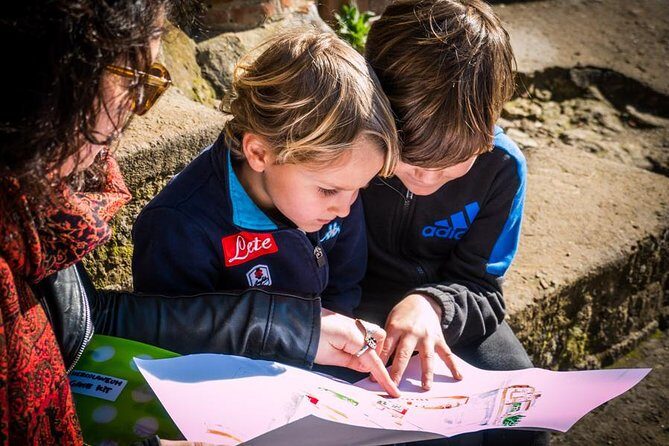
I also love the way the commentary is built for kids, with family games and active clue-making so even little ones can latch on. You get a site map keepsake plus a Herculaneum4Kids package to keep learning going after you leave. The one thing to plan for is pace: there is a decent amount of walking, and warm days call for water, hats, and sunscreen.
In This Review
- Key moments for families in Herculaneum
- Why Herculaneum Works So Well for Kids (and Grown-Ups)
- Your Private Family Plan: Duration, Pickup, and What’s Included
- Start With Vesuvius Views Before You Enter the Ruins
- Parco Acheologico di Ercolano: Roman Neighborhood Details That Feel Modern
- Antiquarium, Boat Pavilion, and Charred Wood Clues
- Homes Kids Can Picture: Casa dei Cervi, Neptune Mosaics, Baths, and Wood Partitions
- Street Scenes and Imperial Faith: Thermopolium, Ad Cucumas, and Sacello Augustali
- Ending at the Ancient Shoreline: Shelter Chambers and Sensitive Storytelling
- Should You Book This Tour?
- FAQ
- How long is the private Herculaneum family tour?
- Where does the tour start, and can we meet somewhere specific?
- Is admission included?
- What language is the tour offered in?
- Is pickup included?
- Is this tour okay for kids, and what should we wear?
Key moments for families in Herculaneum
- Blue Badge–accredited guide: professional interpretation tailored to families
- Kid-friendly storytelling and games that keep attention moving
- Preserved wooden finds (from furniture to doors) that make the past feel real
- Boat Pavilion surprises: a Roman boat and sailor gear tied to Naples-area waters
- Everyday-life stops from a street-food counter to baths and a gymnasium
- A powerful finale at the shoreline shelters told with care for younger visitors
Why Herculaneum Works So Well for Kids (and Grown-Ups)
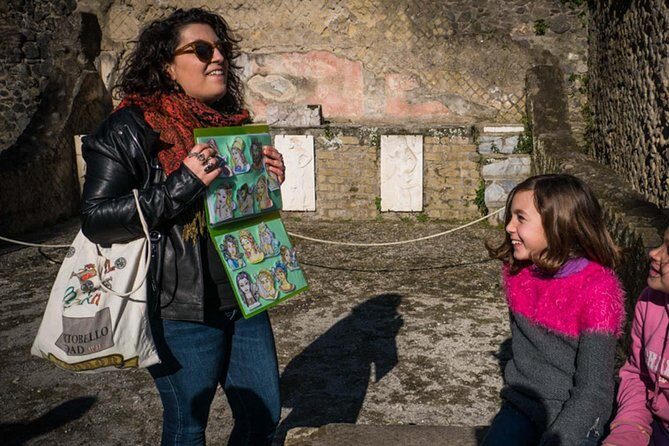
Herculaneum is the kind of site that turns kids into detail detectives. Because the town was buried under a deep protective blanket during the Vesuvius eruption, you don’t just see walls—you see what life looked like day to day. Wooden doors, furniture, colorful frescoes, mosaics, and even traces tied to food survive in a way you rarely get at Roman sites.
Another reason it clicks for families is scale. The town is compact, so you’re not constantly fighting distance. Streets are close together, and buildings feel like part of a neighborhood, not separate museum exhibits. Kids usually pick up fast when a guide points out something they can picture—like a bathhouse feature, a shop element, or myth figures tucked into decoration.
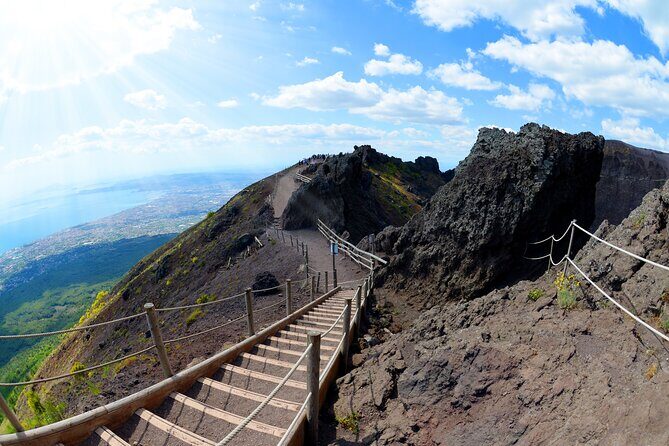
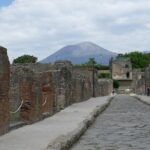
And if you’re coming from Naples, you also get a built-in wow factor. As you look back toward Vesuvius—first from the protected park area around the volcano, then with the mountain still in view once you’re down in the ruins—you get the sense that this place isn’t frozen history. It’s geography plus drama, still shaping what you see today.
If you're still narrowing it down, here are other tours in Naples we've reviewed.
Your Private Family Plan: Duration, Pickup, and What’s Included
This is a private tour, so it’s just your group. That matters with kids because you can set a pace that fits nap schedules, snack needs, and energy dips—without getting stuck behind a slow stroller or a fast-moving crowd.
Plan on roughly 2 to 4 hours. That range is realistic here because Herculaneum rewards stopping for details. Your guide is there to pace you through scenes kids can understand: shops, homes, baths, a gymnasium, and the shoreline story at the end.
Price is $221.70 per person, and what makes it feel more like value than just a ticket is the mix of included elements:
- Admission ticket included
- Mobile ticket
- A professional Blue Badge–accredited guide
- A keepsake site map and a Herculaneum4Kids package
- Pickup is available in the premium option, and meeting points are flexible (just tell them where you want to meet)
One more practical point: this tour tends to get booked well ahead. That’s not a reason to panic, but it is a hint to reserve early if you’re traveling in peak season.
Start With Vesuvius Views Before You Enter the Ruins
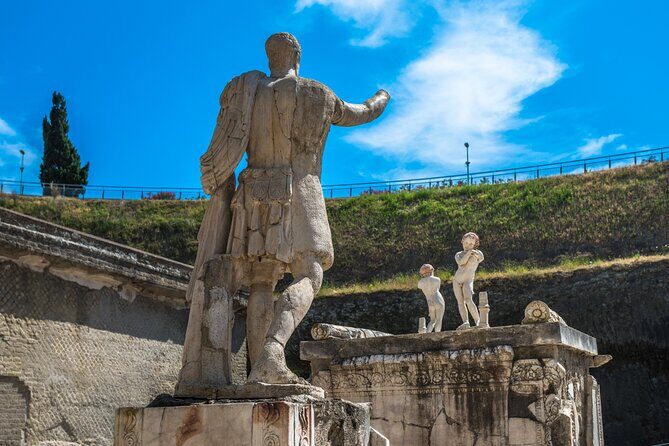
Before you even fully step into the archaeological area, you’ll have moments where the volcano becomes a visual anchor. Families often connect quickly when they can point at what caused the destruction. Even from a distance, the crater’s profile helps you understand what kind of event you’re dealing with—big enough to change a town’s fate in a single historical moment.
Once you’re inside the area, the volcano can still sit dramatically in the background. That creates a clear before-and-after feeling as you look from modern surroundings to ancient streets. For kids, it turns abstract dates into something they can point to: That mountain is why those buildings are still here.
Parco Acheologico di Ercolano: Roman Neighborhood Details That Feel Modern
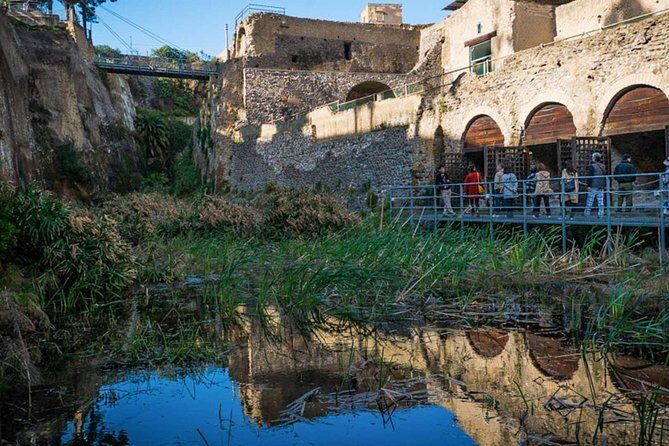
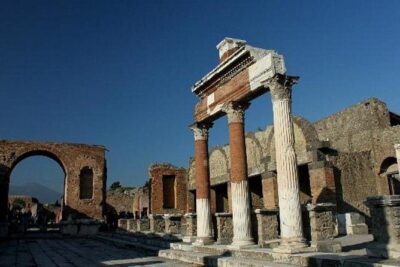
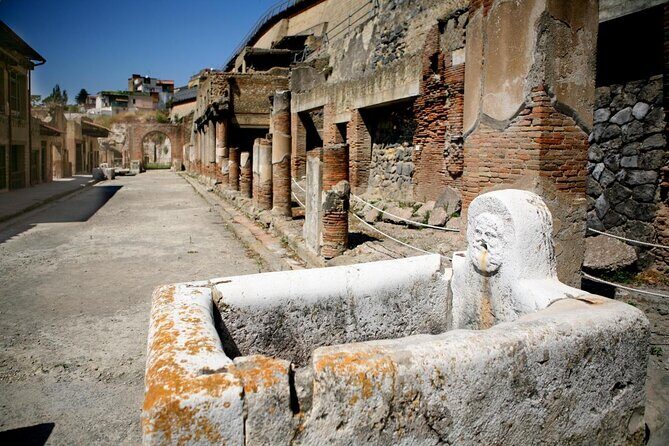
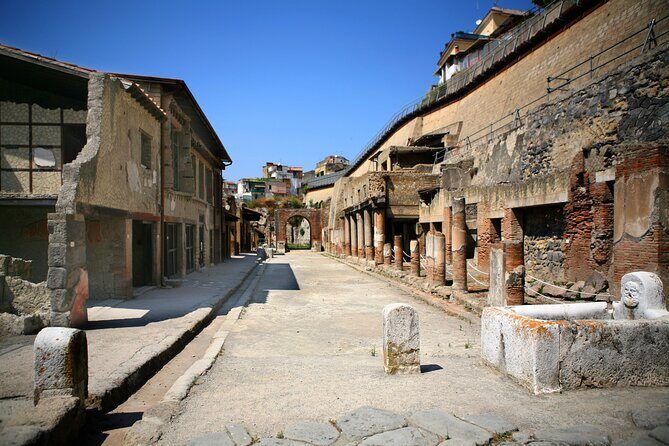
At the Parco Acheologico Di Ercolano, you walk through a Roman town that feels like it paused mid-routine. The guide’s job is to help you read the ruins like clues. Instead of staring at stone, you’re learning to notice what would have made daily life work.
Herculaneum often surprises families because of what it preserved. You’re not stuck with generic ruins. You can spot the kinds of details kids naturally hunt for—things tied to domestic life, street activity, and public routines. Adults tend to love how the preservation supports real-world imagination: wooden doors and household items don’t just look like art; they let you picture what people used in their actual rooms and doorways.
A small consideration: because the site is active and you’ll be moving between zones, comfortable shoes really matter. You’ll get more out of the tour if you’re not doing it in slick sandals or shoes with worn tread.
Antiquarium, Boat Pavilion, and Charred Wood Clues
When you need a brain break from walking, the Antiquarium is one of the best ways to reset. It introduces daily life in Herculaneum through objects that feel surprisingly relatable: jewelry, coins, writing tools, household items, and children’s belongings. Kids often handle museum-style learning better here because the guide can turn objects into puzzles.
One feature that grabs almost everyone is the surviving charred wood. It looks dark and heavy, like burned fragments—but it’s still real wood, preserved through carbonization rather than total ash. That detail is a gift. It’s a science story, but told simply: intense heat changed what materials became, and those conditions helped organic items survive.
Then the Boat Pavilion flips the story toward the sea. You’ll see a remarkably preserved Roman boat that once sailed along the Bay of Naples, plus tools and equipment connected to sailors. For kids, the wooden hull is immediate and visual. For adults, the payoff is how the exhibit brings Herculaneum back into the larger region—trade, travel, and the idea that this wasn’t an isolated village.
If your family loves hands-on learning, this museum stretch is a good sign. It’s where the guide can make you look closely, ask questions, and connect the objects to the town you just walked through.


Homes Kids Can Picture: Casa dei Cervi, Neptune Mosaics, Baths, and Wood Partitions
Houses are where Herculaneum turns into a real-world story. One standout is Casa dei Cervi, known for a spacious courtyard and marble statues depicting stags attacked by hunting dogs. Kids usually respond well to the animals. Adults tend to enjoy how the house communicates status through art, materials, and layout.
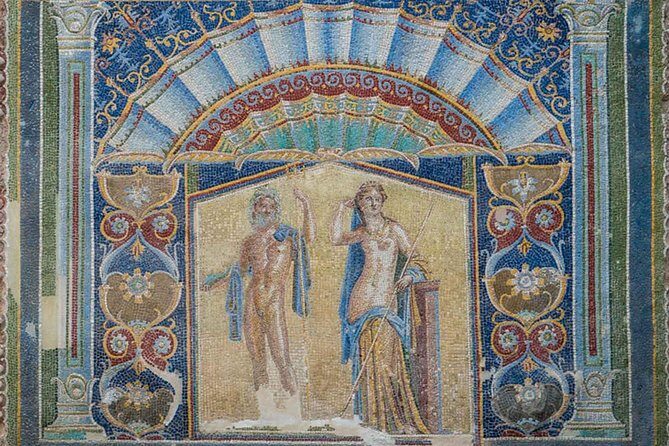
Another house highlight is Casa di Nettuno e Anfitrite, famous for its mosaic of Neptune and Amphitrite. The figures are built from small glass tesserae, and the color and detail are exactly why mosaics work on kids. It’s not just a picture. It’s a whole craft lesson in how tiny pieces create an image that still reads clearly today.
Then come the stops that show how Roman routines worked. The Palestra (gymnasium) gives you a window into training and social life for young Romans—running, wrestling, and ball games in a courtyard, with shaded porticoes for discussion and rest. If you have kids who like movement, this is one of the more forgiving stops because it’s about physical space, not just looking.
The Women’s Baths are equally important, especially if your family likes “how did they live?” questions. You move through changing rooms into warm and hot spaces, noticing mosaic floors, marble benches, and heating systems engineered beneath the floors. The guide can explain it in a way that makes it feel like a spa routine, while still keeping it grounded in archaeology.
Finally, two house stops underline a unique reason Herculaneum is special: wood preservation. Casa del Tramezzo di Legno features a large folding screen made of carbonized wood. It’s striking because it’s still shaped like a functional interior divider, so you can imagine the house’s rooms separating and reconfiguring.
And if your family enjoys a little mystery, Casa dello Scheletro lives up to its name. It gets attention from a skeleton discovery during early excavations, and today it’s a chance to see refined wall paintings and decorative niches, using those details to reconstruct routines and tastes.
Street Scenes and Imperial Faith: Thermopolium, Ad Cucumas, and Sacello Augustali
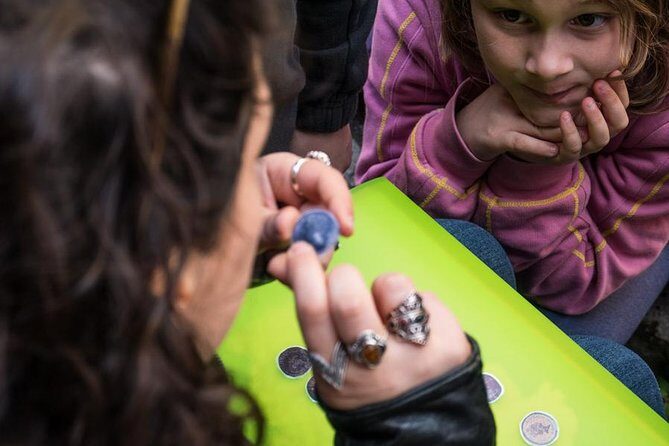
Not every stop has to be “look at art.” Some of the best family moments are about everyday commerce and belief.
The Thermopolium is basically a Roman street-food counter. You’ll see terracotta jars set into a decorated countertop, like containers for hot meals, along with painted signage and traces connected to ingredients. Kids get the idea instantly because it feels familiar: grab food from a counter, not from a home kitchen.
Right next door to the idea of commerce is Ad Cucumas, a wine advertisement painted directly onto a shop façade. It’s a perfect “marketing before screens” moment. Kids can spot the symbols and images and guess what it means. Adults appreciate how seamlessly commerce and art mixed into daily street life—no printed menus, just painted cues.
For the faith and politics angle, the Sacello Augustali gives you the religious side of Herculaneum. You can see statues and decorated panels that would have formed the background for rituals tied to the imperial cult. It’s not just a temple stop. It’s a way to understand how Romans linked religion to civic identity and the emperor as a symbol.
These stops also help with pacing. You’ll swing between houses, street life, and ritual spaces, which keeps kids from getting stuck in one type of learning for too long.
Ending at the Ancient Shoreline: Shelter Chambers and Sensitive Storytelling
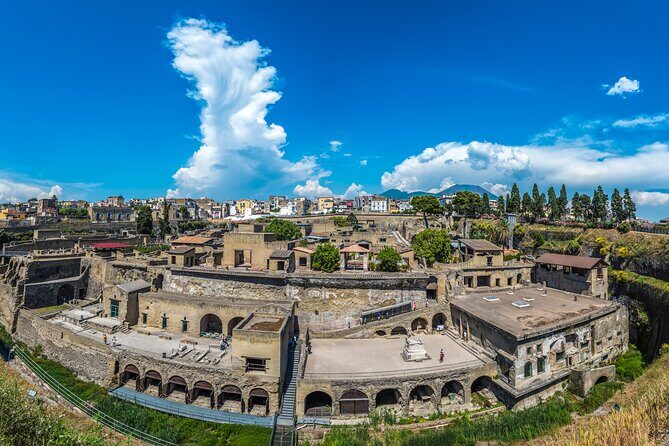
The tour’s finale is the emotional one. Reaching the ancient shoreline area lets you look into vaulted chambers where hundreds of skeletons were found. The guide connects this to people seeking shelter when superheated gases swept through the town.
This is the moment where a family-first guide matters most. The story needs to be handled with sensitivity for younger listeners while still staying true to the archaeology. Parents tend to appreciate the balance: you don’t turn it into a scary horror show, but you also don’t flatten it into vague sadness. You connect the human choices to the physical evidence you’re seeing.
If your family tends to get quiet during heavy moments, that’s normal here. Build in a little extra time for the emotional processing. A few seconds of silence or questions can do more than racing on to the next photo spot.
Should You Book This Tour?
Yes, I’d book it if your family wants Herculaneum in a way that feels like learning you can actually do together. The private format, the Blue Badge guide, and the family games approach are what make the difference versus wandering on your own with a basic audio guide. You get tangible takeaways too: a site map and the Herculaneum4Kids package, which helps the trip keep working after you leave.
I’d think twice only if your group struggles with walking and staying focused in warmer weather. There is a decent amount of movement through sites, so plan for snacks, water, and sun protection when you visit in May through September.
If you’re doing Naples and you want a Roman day that doesn’t feel like a repeat of Pompeii, Herculaneum is the better fit. It’s closer, more intimate, and far more “what did people use and touch every day?” than “look how big the ruins are.”
FAQ
How long is the private Herculaneum family tour?
It runs about 2 to 4 hours, depending on pace and how long you spend at the key stops.
Where does the tour start, and can we meet somewhere specific?
The meeting point is at 80056 Ercolano, Metropolitan City of Naples, Italy, and it ends back at the meeting point. Pickup meeting details are flexible—tell the provider where you want to meet.
Is admission included?
Yes. An admission ticket is included.
What language is the tour offered in?
The tour is offered in English.
Is pickup included?
Pickup is included in the premium option of this tour.
Is this tour okay for kids, and what should we wear?
It’s designed for families and includes kid-focused activities. You should have a moderate physical fitness level and wear appropriate shoes; from May to September, sun gear is recommended.
If you want, tell me your kids’ ages and your travel month, and I’ll suggest a simple game plan for timing breaks and snacks around the walking-heavy parts.