REVIEW · NAPLES
Pompeii Guided Walking Tour – Skip-the-Line Priority Access
Book on GetYourGuide →Operated by Napoli Official Tour · Bookable on GetYourGuide
Pompeii is quiet, then suddenly not. This skip-the-line walking tour gets you into the excavations fast with an official, professional guide, so you lose less time to waiting and more time to walking.
I especially love the clear focus on Pompeii’s central core: you’ll move from the harbor gate into the Forum, then through the public spaces most people want to see.
One thing to keep in mind: Pompeii is enormous, and in just 2 hours you’ll cover only a slice—so if you want every stop to be ultra-detailed or you prefer a slower pace for photos, you may feel a bit pressed.
In This Review
- Key things to know before you go
- Porta Marina Inferiore to Piazza Esedra: the start that sets the pace
- From Porta Marina to the Forum: seeing Pompeii’s engine room
- Basilica and temples: turning stone into Roman civic life
- Forum Baths and Stabian Baths: the social schedule behind the walls
- Via dell’Abbondanza: shops, bakeries, taverns, and street rhythm
- House of the Faun: mosaics, status, and how elites lived
- The Lupanar: leisure, social customs, and what survives
- Recently excavated areas: why new finds matter even in a short tour
- Skip-the-line priority access: does it justify $47?
- First Sunday free entry: a smart plan if you’re flexible
- Who this Pompeii guided walking tour suits best
- Should you book it?
- FAQ
- Where do I meet the guide?
- How long is the Pompeii guided walking tour?
- What is included in the price?
- Is transport included?
- Does this tour really help with long lines?
- What languages are available?
- What should I bring?
- Is there a free-entry day in Pompeii?
- Can I cancel if my plans change?
- Can I reserve and pay later?
Key things to know before you go
- Priority access to buy tickets helps you avoid the biggest lines
- Authorized guide + live tour means you’re not just wandering around on vibes
- Porta Marina Inferiore sets the tone right away, with an entrance tied to the harbor
- Forum highlights like the Basilica and temples help you read what you’re seeing
- Public spaces and street life show how people actually spent time
- Central-area route in 2 hours is efficient, not exhausting
Porta Marina Inferiore to Piazza Esedra: the start that sets the pace
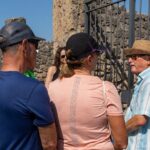
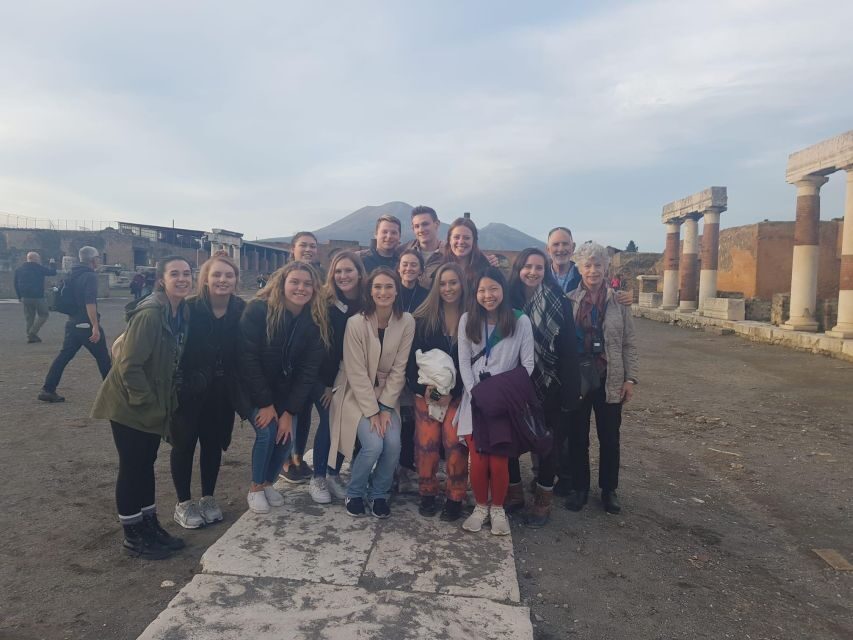
Meeting point matters at Pompeii, because the site is all paths and stone, not a neat little downtown grid. You’ll meet your guide at Porta Marina Inferiore, in Piazza Esedra, and look for a board with the local tour operator logo. From the start, I like that this tour is built to get you moving quickly. You’re not standing around trying to figure out where your group went.
This is also where timing becomes real. The tour is 2 hours, so you’ll want to arrive early enough to take a breath and get oriented. Comfortable shoes are non-negotiable here. Even if you walk light, the ground can be uneven, and you’ll be spending a couple hours on stone that was never designed for sneakers with good grip.
Good to know: the tour runs in English and Italian with a live guide (you’ll see them, not just hear a recording). That’s a big plus in Pompeii, because details like building purpose, street layout, and social context make the ruins feel like a place instead of a pile of rocks.
If you're still narrowing it down, here are other tours in Naples we've reviewed.
From Porta Marina to the Forum: seeing Pompeii’s engine room
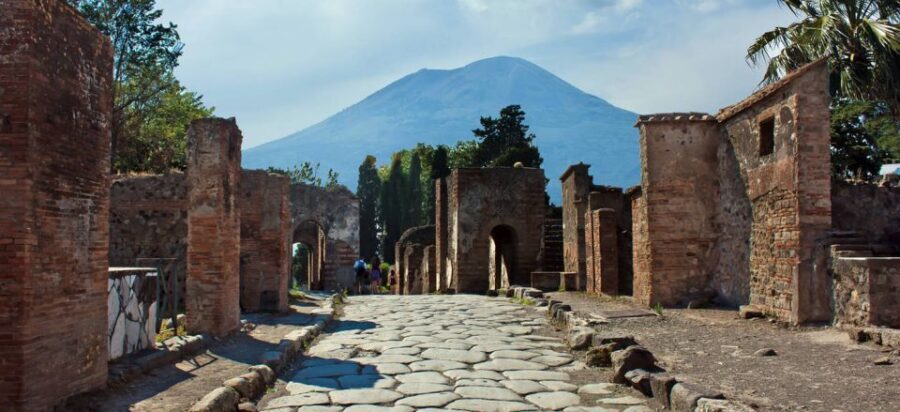
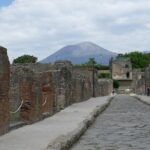
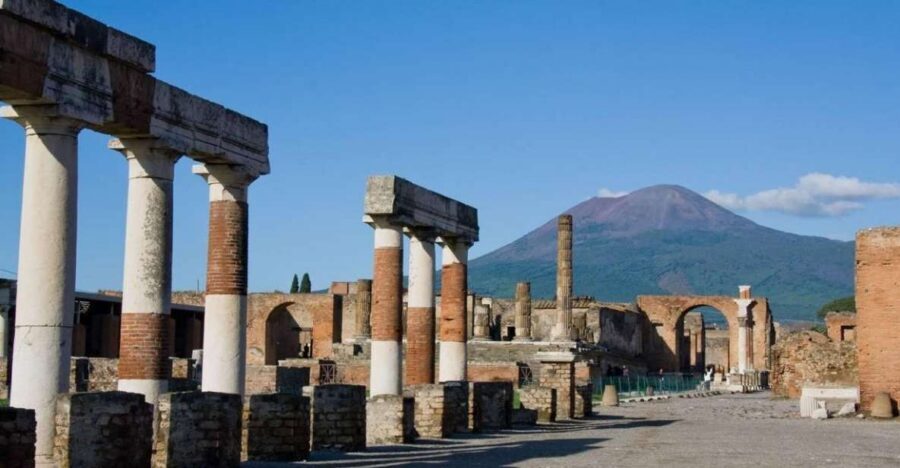
The walk begins with an entrance that once connected Pompeii to its harbor—Porta Marina. That detail isn’t just trivia. It helps you understand the city’s geography and why certain streets and institutions mattered. You’ll step into Pompeii through the main gateway, then follow original Roman streets toward the heart of the city.
Your destination is the Forum, the political, religious, and commercial center. This is the kind of stop that benefits from a guide, because you’re surrounded by monumental structures that can look similar until someone tells you what they were for. You’ll pass by the Basilica, the Temple of Jupiter, and the Temple of Apollo. With a guide, those aren’t random names on signs—they become clues to how Roman civic life worked.
One practical advantage of this route: it’s central. You’re not spending your limited tour time zig-zagging across the whole site. Instead, you’re concentrating on the places that give you the clearest “Pompeii at a glance,” then letting you explore further on your own afterward.
Basilica and temples: turning stone into Roman civic life
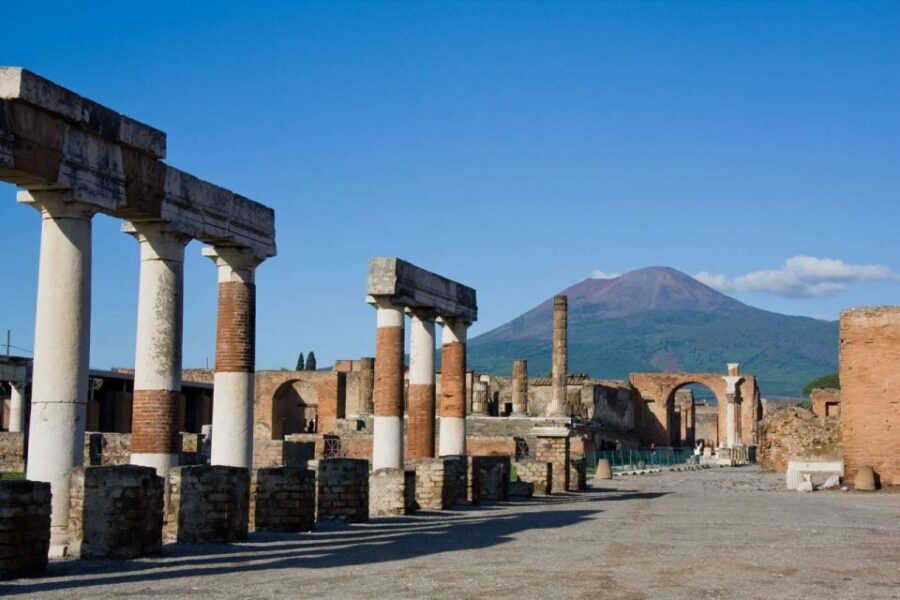
It’s easy to look at the Basilica and think, okay, big building. But once you connect it to the civic rhythm of Pompeii, it becomes more meaningful. On this tour, you’ll learn how the Forum functioned—where people gathered for public affairs, religion, and commerce.
The temples you’ll see—Jupiter and Apollo—also help you make sense of the city’s priorities. Pompeii wasn’t just homes and shops. It was a Roman town with public beliefs and public spaces that structured daily life. Even if you’re not a classicist, you’ll get enough context to follow along.
This is one area where guide quality shows. The better your guide is, the less you have to guess. And the tour is positioned for exactly that: you get an authorized, professional guide who can explain what you’re looking at while you’re standing in front of it.
A small reality check: Pompeii can overwhelm your senses—so don’t expect a perfect “every detail” pace in 2 hours. The benefit is that you’ll come away with a working mental map. Then, if you want to slow down, you know where to go next.
Forum Baths and Stabian Baths: the social schedule behind the walls
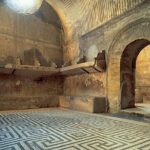
After the Forum area, the tour moves into public life with time at the Forum Baths or Stabian Baths. Baths in Roman culture weren’t only about hygiene. They were meeting points. People talked. They relaxed. They built social connections.
This tour’s value here is the shift in perspective. Temples and civic buildings tell you what the city believed and governed. The baths tell you how people spent downtime. That everyday angle is exactly why many visitors enjoy Pompeii beyond the big monuments.
If you’re hoping for a lot of back-and-forth discussion about everyday Roman habits, keep your expectations realistic. This is still a guided walking tour designed around the central highlights. You’ll learn enough to make the baths feel human, but you may not get every minute detail about daily routines and social rules. Still, even a short stop can give you a meaningful framework, especially when the guide connects what you see to how people gathered.
Via dell’Abbondanza: shops, bakeries, taverns, and street rhythm
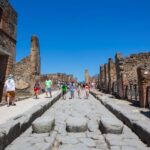
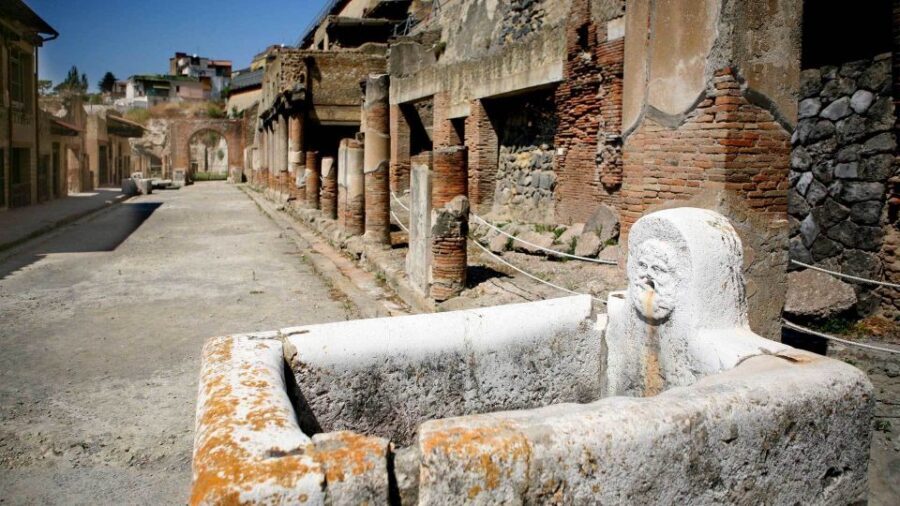
One of the most satisfying parts of Pompeii is seeing it as a street system, not just isolated monuments. That’s why Via dell’Abbondanza is such a good inclusion. You’ll walk lively stretches lined with the kinds of businesses that made the city work—ancient shops, bakeries, and taverns.
I like this segment because it turns the ruins into something you can picture in motion. You can almost imagine deliveries, conversations, and the daily flow of people moving through the same corridors of stone. The guide helps you connect storefront spaces and street layout to daily life almost 2,000 years later.
There’s also a practical benefit: walking streets between major sights keeps the tour from feeling like a parade of standing still. Pompeii’s scale can tire you quickly. A route that mixes public buildings with streets keeps your energy steady, which matters in a 2-hour format.





House of the Faun: mosaics, status, and how elites lived
Then comes the contrast. The tour includes elite residences, including the House of the Faun, noted as one of the largest and most luxurious private homes in Pompeii. You’re not just seeing wealth—you’re seeing how elite space was organized.
In Pompeii, mosaics are a big reason people fall in love with the place. Even if you only catch glimpses, the visual language of floor art and refined architecture signals status and investment. Your guide’s job here is to help you see the house as a system: where the household likely moved, where social life could happen, and why certain design choices were made.
I also appreciate that this tour doesn’t pretend you’re touring every mansion in sight. It gives you the chance to understand the lifestyle differences between public life and private luxury, without turning the whole experience into an endurance test.
If you’re a fan of architecture and visual details, this is one of the stops where your brain will keep working after the tour ends.
The Lupanar: leisure, social customs, and what survives
The Lupanar is a tough subject, but it’s also one of the most historically revealing spaces in Pompeii. This tour includes a visit to a brothel and explains how citizens spent leisure time.
I’ll be straight with you: Pompeii doesn’t sanitize itself. The value of seeing the Lupanar with a guide is that it stays grounded in context. Without that, it’s easy to turn everything into shock value. With the guide, you can understand it as part of a larger social system—Roman attitudes toward commerce, leisure, and public life.
This segment is also a good reminder that Pompeii was a real city. People worked. People played. People had complicated lives. And some of that complexity survives in stone rooms and street-adjacent spaces.
Recently excavated areas: why new finds matter even in a short tour
One of the most interesting touches on this experience is mention of recently excavated areas and new archaeological findings. That matters because Pompeii isn’t a museum diorama frozen in time. Excavation keeps changing what we know—sometimes in surprising ways.
In a 2-hour tour, you won’t get the full research story. But you can still benefit from the idea that what you’re seeing today may not be exactly what another visitor saw years ago. It adds a sense of living scholarship to the visit.
If you like tours that give you both the main story and a hint of what still remains unknown, this part helps. It also encourages you to explore with sharper questions when you break off on your own—like what else might have been uncovered, and what evidence supports the conclusions.
Skip-the-line priority access: does it justify $47?
Let’s talk value, because $47 can feel like either a bargain or a splurge depending on how you travel. Here, the price includes a 2-hour guided tour with an authorized professional guide, priority access to buy entrance tickets, and the entrance fee. Transport is not included.
For me, the biggest value is the time saved. Pompeii’s main complaint isn’t that it’s hard to reach—it’s that lines and ticket logistics can eat up the day you came to spend in the ruins. Priority access helps you avoid that. And in a short 2-hour tour, every minute counts.
Is it worth it if you like slow, independent wandering? Maybe not. If you’re the type who wants to roam without any schedule, you could do it on your own. But if you want a guided “map” of Pompeii’s core highlights—Forum, baths, streets, elite homes, and even the Lupanar—this is a pretty efficient way to get oriented.
One more practical note: tours like this are designed around the central area. If you treat the tour as your starting point, then head out afterward with your bearings, you’ll likely feel you got your money’s worth.
First Sunday free entry: a smart plan if you’re flexible
There’s a special scheduling wrinkle. On the first Sunday of each month, entrance is free of charge. The catch is that tickets can’t be reserved ahead of time, so entry is not guaranteed.
If you’re visiting on that day, you might still want the tour for the guide and walking route, but don’t assume you’ll sail in without uncertainty. For planning purposes, I’d treat free Sunday as a bonus—possible, not guaranteed.
Who this Pompeii guided walking tour suits best
This is a great fit if you:
- Want a guided orientation to Pompeii’s central highlights in a short, controlled time window
- Appreciate explanations while you’re standing in the Forum, on major streets like Via dell’Abbondanza, and inside key public spaces
- Prefer an authorized guide instead of piecing together Pompeii from signs
- Value priority access because you’d rather walk than wait
It might be less ideal if you:
- Want to spend a long time at each site and take lots of photos without pacing pressure
- Prefer an even deeper focus on everyday life details rather than a broader sweep across major highlights
- Struggle with meeting points unless someone has very clear instructions—arrive a bit early and look for the board with the operator logo at Porta Marina Inferiore
Should you book it?
I’d book this Pompeii tour if you want the smart move: get oriented fast, see the biggest central landmarks, and leave with a mental map you can build on. At $47, the value comes from three things working together—an authorized guide, entrance included, and priority access that can cut down the time cost of ticket logistics.
If your ideal Pompeii day is slow, solo, and heavily photo-driven, you might feel the 2-hour structure. But if you’d rather arrive at Pompeii, get the storyline straight, and then explore with confidence, this tour is a solid choice.
FAQ
Where do I meet the guide?
You meet at Porta Marina Inferiore, in Piazza Esedra. The guide will have a board with the local tour operator logo.
How long is the Pompeii guided walking tour?
The tour lasts 2 hours.
What is included in the price?
The price includes the 2-hour guided tour with an authorized professional guide, priority access to buy the entrance ticket, and the entrance fee.
Is transport included?
No. Transport is not included.
Does this tour really help with long lines?
It includes skip-the-line priority access so you can buy your entrance ticket faster than standard entry lines.
What languages are available?
The live guide is available in English and Italian.
What should I bring?
Wear comfortable shoes. Children should bring a passport or ID card.
Is there a free-entry day in Pompeii?
Yes. On the first Sunday of each month, entrance is free of charge. Since tickets can’t be reserved ahead of time, entry is not guaranteed.
Can I cancel if my plans change?
Yes. You can cancel up to 24 hours in advance for a full refund.
Can I reserve and pay later?
Yes. You can reserve now and pay later.