REVIEW · NAPLES
Pompeii and Herculaneum: Private Tour with Transportation
Book on GetYourGuide →Operated by Askos Tours · Bookable on GetYourGuide
Pompeii and Herculaneum hit different when you go with a guide. This private tour strings together Herculaneum’s eerily preserved streets and Pompeii’s big public landmarks, with the added comfort of round-trip private transportation from the Amalfi Coast, Sorrento, Naples, or Salerno. I love that the walking stops are focused on the most meaningful scenes, and I also love how Herculaneum’s preservation helps you picture everyday Roman life, not just stone ruins.
One drawback to plan for: Pompeii is intense on foot, and the day is long enough to feel busy. You will see the major highlights, but you will not see everything unless you turn it into a multi-day obsession.
In This Review
- Key things I’d focus on before you book
- Private Transport From Amalfi, Sorrento, Naples: The Real Value
- Herculaneum’s Two-Hour Walk: Mud, Paint, and the Temple of the Augustali
- Pompeii’s Western Highlights: Forum Life, Everyday Shops, and the Lupanar
- The Order of the Day: Pompeii First, Then Herculaneum
- Lunch Break: A Reset Point, Not a Full Meal Included
- Tickets and the Skip-the-Line Advantage
- Price and Value: Is $623.90 Per Person Worth It?
- Pace, Walking, and What You Can Realistically See in 7 Hours
- Who This Tour Suits Best
- What You’ll Learn Along the Way (Without Feeling Like School)
- Should You Book This Private Pompeii and Herculaneum Tour?
- FAQ
- How long is the Pompeii and Herculaneum private tour?
- How much time do you spend in Pompeii and how much in Herculaneum?
- Where can you be picked up?
- Is transportation private?
- Are entrance tickets included?
- Is lunch included, and are drinks included?
- What languages are offered for the live guide?
- What should you bring?
- Is the tour wheelchair accessible?
Key things I’d focus on before you book
- Herculaneum’s conservation story: mud buried it, so mosaics and even carbonized wooden items survived
- A proper two-hour guided walk in each site: less wandering, more understanding
- Skip-the-line setup: your guide can buy tickets quickly (about 10 minutes) so you spend more time inside
- Real Pompeii targets: Forum, Basilica, Lupanar, bakery, Termopolium Capuano, plus plaster casts
- Lunch stop included as a break: you get time to reset before the second archaeological site
Private Transport From Amalfi, Sorrento, Naples: The Real Value
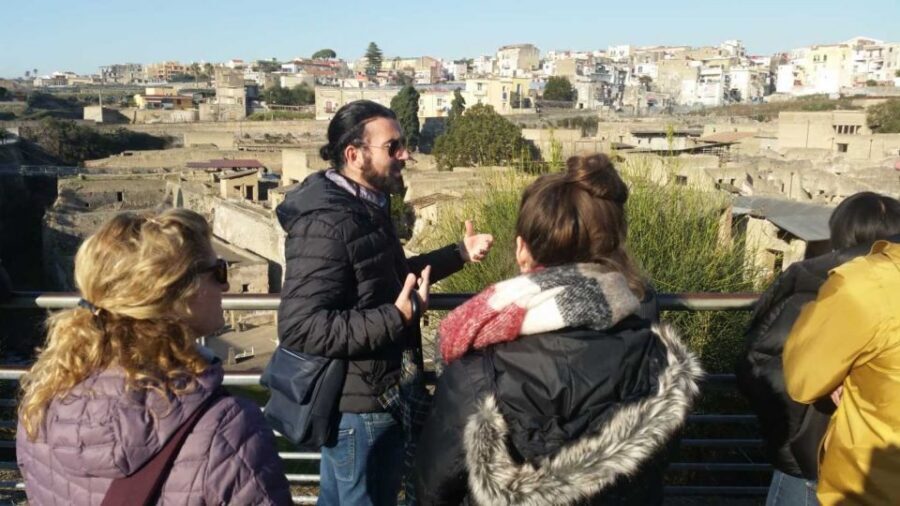
This is one of those days where logistics can either ruin the mood or protect it. With pickup options from Amalfi, Positano, Salerno, Sorrento, and Naples, you avoid the “how do we get there and back” headache and keep the day moving. You ride in a van for short transfer stretches, then you get dropped at the right moments for Pompeii and Herculaneum.
I especially like the private group setup. It means you can take your time with photos and questions without feeling like you’re being rushed to match a crowd. It also matters because this area is all about walking: smooth planning helps you enjoy the ruins instead of calculating routes.
One practical note: no luggage or large bags are allowed. If you’re traveling light, this is easy. If you’re not, plan for that early.
If you're still narrowing it down, here are other tours in Naples we've reviewed.
Herculaneum’s Two-Hour Walk: Mud, Paint, and the Temple of the Augustali
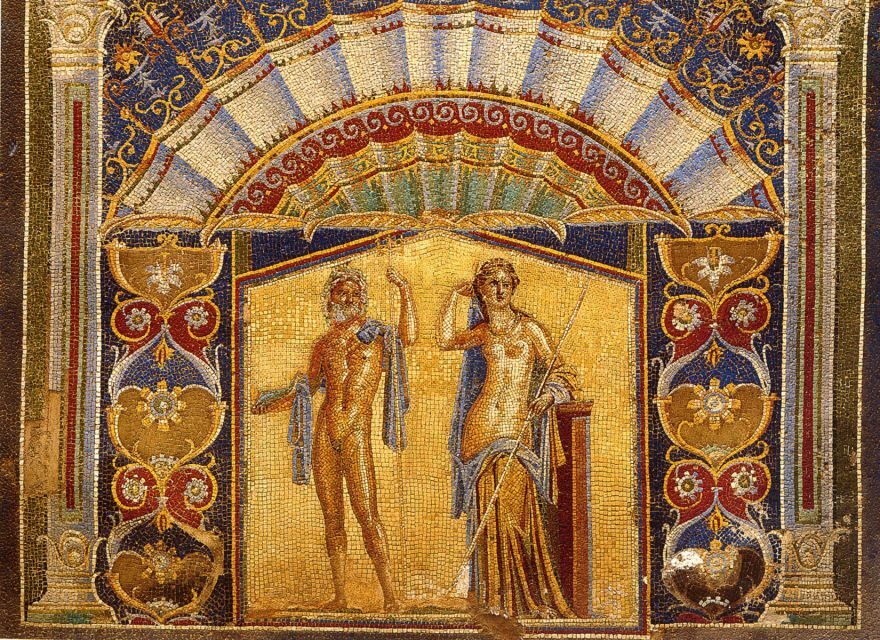
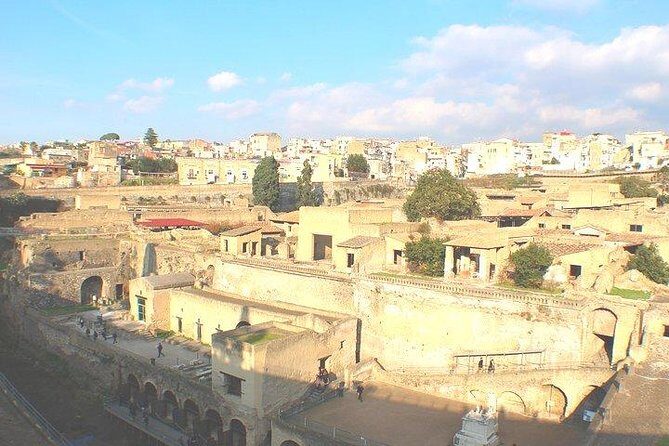
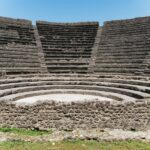
Herculaneum is smaller than Pompeii, but it’s often the emotional winner because it’s so well preserved. The basic story helps: while Pompeii was covered by several meters of ash, Herculaneum was buried by a deep landslide of mud. That difference is why you can still grasp what people saw and touched—intact paintings, mosaics, and even carbonized wooden objects are part of what makes the site feel unusually real.
Your guided time here is about two hours, so it’s not a quick drive-by. Your guide points out major stops and explains what they mean in daily life. You’ll work through highlights like:
- Temple of the Augustali: a key stop for understanding local religious life and public identity
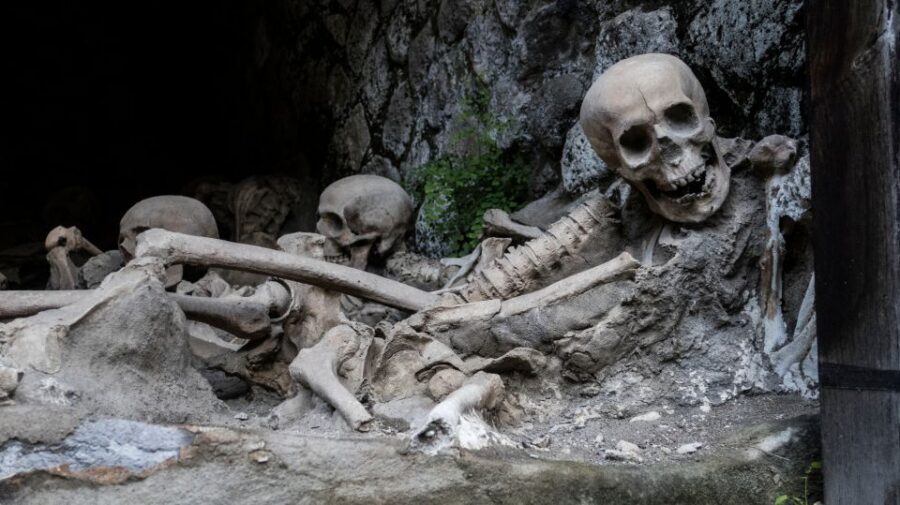
- The beach with over 300 skeletons discovered: a sobering reminder of how sudden the catastrophe was
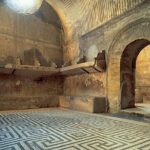
- Thermal baths: proof that public routine and comfort were built into city life
- The forum: the civic heart, where community space mattered
- House of Neptune and Amphitrite: a standout for the way art and status show up in homes
- Samnite house and the gymnasium: useful for connecting architecture with social habits
- House of the Deers and more: excellent for seeing how wealthy households decorated ordinary living spaces
Here’s the thing I’d tell you to watch for: Herculaneum is “small,” but it still has a lot of meaning packed into a walkable area. With a guide, you get the why behind the what. Without that help, you can easily end up looking at walls and thinking, Okay, that’s a cool layout. With the guide, you start thinking, This is how people gathered, ate, bathed, prayed, and worked.
Pompeii’s Western Highlights: Forum Life, Everyday Shops, and the Lupanar
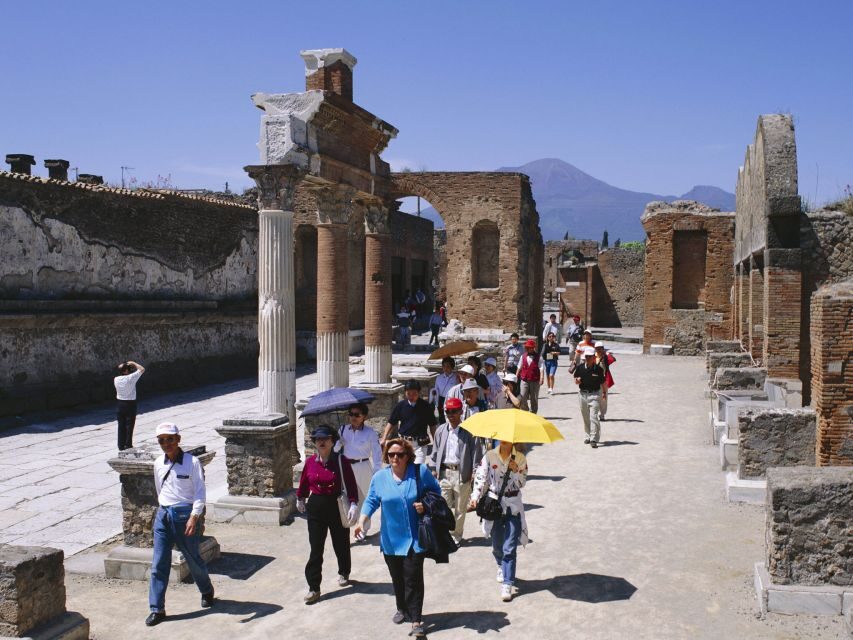
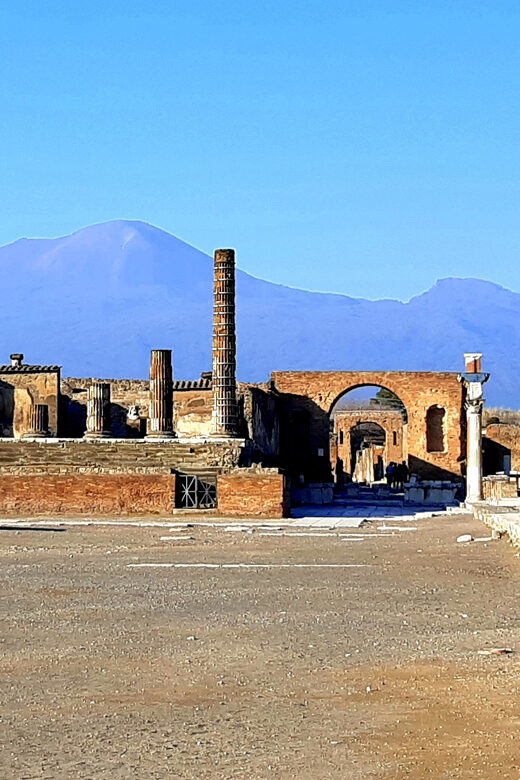
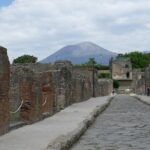
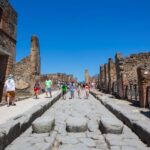
Then you head to Pompeii for another two-hour guided walk, focused on the western part of the ancient town. Pompeii can feel overwhelming at first. The scale is massive, and it’s easy to treat it like a photo scavenger hunt. The guided structure helps you understand which buildings mattered most and how different spaces fit together.
On your Pompeii walk, you’re set up to see major public and private highlights, including:
- Marina Gate: a useful way to orient yourself to how the city connected
- Basilica: a big civic structure that signals how business and public life worked
- Forum and Forum baths: the kind of central area where daily routine and official life overlapped
- Lupanar (brothel): a blunt but important window into how Roman society included commerce and regulated behavior
- Bakery and Termopolium Capuano: food culture, street life, and quick-service reality—so much more human than monuments
- House of Faun and the House of the Tragic Poet: homes that show how wealth and art were displayed
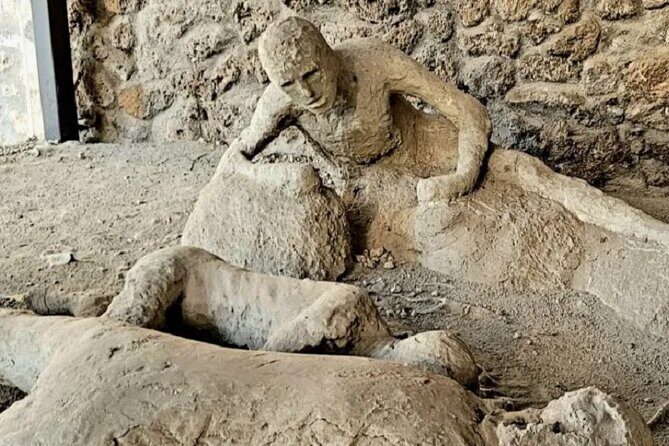
- Plaster casts: one of the most powerful ways the site communicates the human tragedy
Let’s be real about the physical side. Pompeii is a very intense walk. Even when you focus on the important highlights, you’re moving constantly over uneven ground and through crowds at peak times. If you’re the type who wants to read every inscription, you’ll feel rushed. If you’re okay with a targeted tour—major beats plus context—you’ll leave feeling you actually understood the place.
A nice bonus from this format: you get a break before the next site. That matters because Pompeii fatigue can creep in fast.
The Order of the Day: Pompeii First, Then Herculaneum
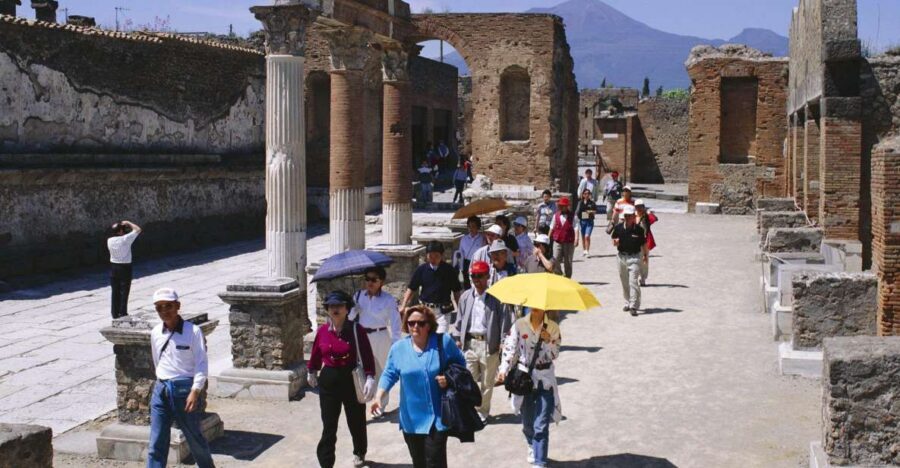
This tour runs in a way that makes sense for many schedules: you start with Pompeii, take your guided time, then you get a lunch break, and later you move to Herculaneum for the more preserved, more intimate walk.
That order helps in a practical way. Pompeii first gives you the big-picture “city of systems” feeling—forums, baths, civic buildings, and homes. Then Herculaneum arrives like a more personal chapter. The second site often feels emotionally quieter and visually clearer because of the preservation.
One small caution: with transfers and two separate archaeological visits, the day fills up. If you’re sensitive to long sitting in a van or to constant walking, plan rest in between and keep expectations realistic.
Lunch Break: A Reset Point, Not a Full Meal Included
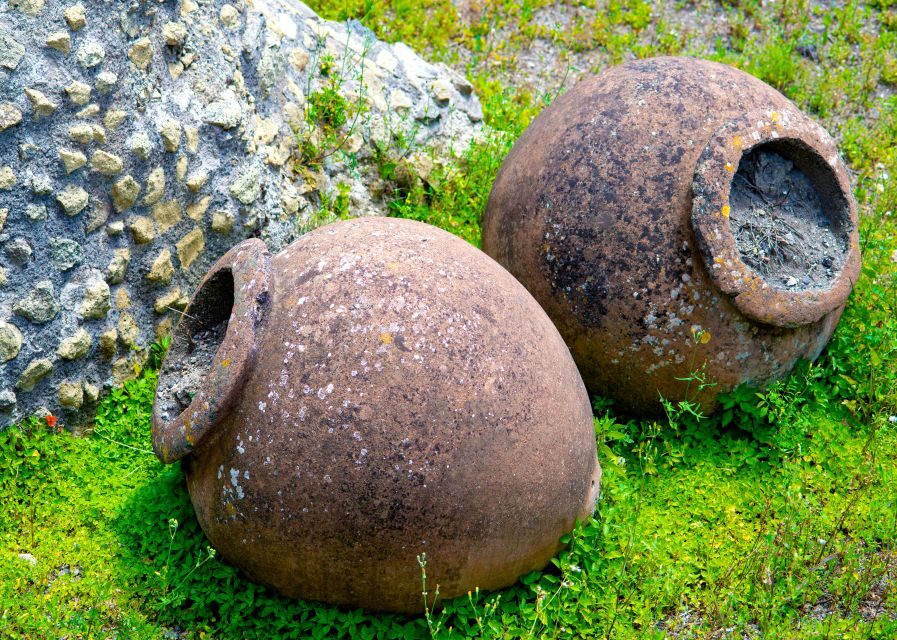
Lunch is built into the day as a stop for a typical restaurant, winery, or pizzeria, but food and drinks are not included. That’s pretty common for tours like this, yet it still affects how you plan.
What you should do: decide in advance how you want to handle the break. If you love using lunch as a slow moment, you may want to keep your expectations aligned with a short reset. If you prefer eating quickly and rejoining the flow, you’ll likely do well with this schedule.
Your guide can provide restaurant suggestions, which is useful because you’re dealing with a specific area at a specific time. It’s one less decision for you.



Tickets and the Skip-the-Line Advantage
A quiet win here is that entry management is handled for you. You get a Pompeii Express entry ticket and Herculaneum entry ticket included (listed at 16,00 euros each). Also, you can skip the ticket line because your guide can purchase tickets in about 10 minutes.
Why this matters: Pompeii and Herculaneum can have lines, and lines turn sightseeing time into waiting time. Even if it looks manageable, waiting is waiting. Here, it’s capped by the guide’s ability to buy tickets quickly.
Price and Value: Is $623.90 Per Person Worth It?
At $623.90 per person, this tour is not cheap. The value question depends on what you would otherwise do with your day.
Here’s when I think it makes sense:
- You want private transportation from the Amalfi Coast area (Amalfi, Positano, etc.), where timing and connections can be annoying
- You care about context. Pompeii especially rewards guided interpretation, and Herculaneum feels much more meaningful with explanations
- You want to avoid splitting the day into separate ticket lines, separate transfers, and separate planning sessions
Here’s when you might pause:
- If you’re traveling solo or on a tight budget, the cost per person may be hard to justify when you can visit independently
- If you dislike structured walking, a tour format may feel too scheduled for your style
- Since food and drinks aren’t included, you’ll still add a lunch bill on top
The best way to judge value is to compare this not to a generic museum tour, but to the total cost of a guided day with transport from multiple possible pickup points plus ticket entry with line-skip.
Pace, Walking, and What You Can Realistically See in 7 Hours
The duration is about 7 hours, including transfers and breaks. Each site gets around two hours of guided walking. That’s a smart compromise if your goal is to hit the major highlights without turning the day into a marathon you remember mainly for blisters.
This is also why you should mentally frame Pompeii as a guided sampler. Even with the best route, you won’t cover the whole city. Pompeii is huge, and the ruins are spread out in a way that encourages repeat visits. The format here is built for a single strong day: you’ll see key landmarks, major streetscape examples, and the big emotional hit of plaster casts.
In Herculaneum, you’ll likely feel like you’re walking through a preserved slice of Roman life rather than just reviewing stones. That’s the advantage of the site and the advantage of having time with a guide instead of rushing through.
Who This Tour Suits Best
This is a great fit if you:
- Want a private guide who can connect buildings to daily life
- Prefer a day plan that handles transport and ticket entry
- Are staying on the Amalfi Coast, Sorrento, or Naples and want to avoid fiddly logistics
It may not suit you if:
- You need wheelchair accessibility (this tour is marked not suitable for wheelchair users)
- You plan to bring large bags or luggage (not allowed)
- You dislike walking on uneven ground and don’t want a full schedule
If you’re a history fan, you’ll get more than “what this is.” If you’re more of a casual visitor, you still get enough structure to avoid feeling lost.
What You’ll Learn Along the Way (Without Feeling Like School)
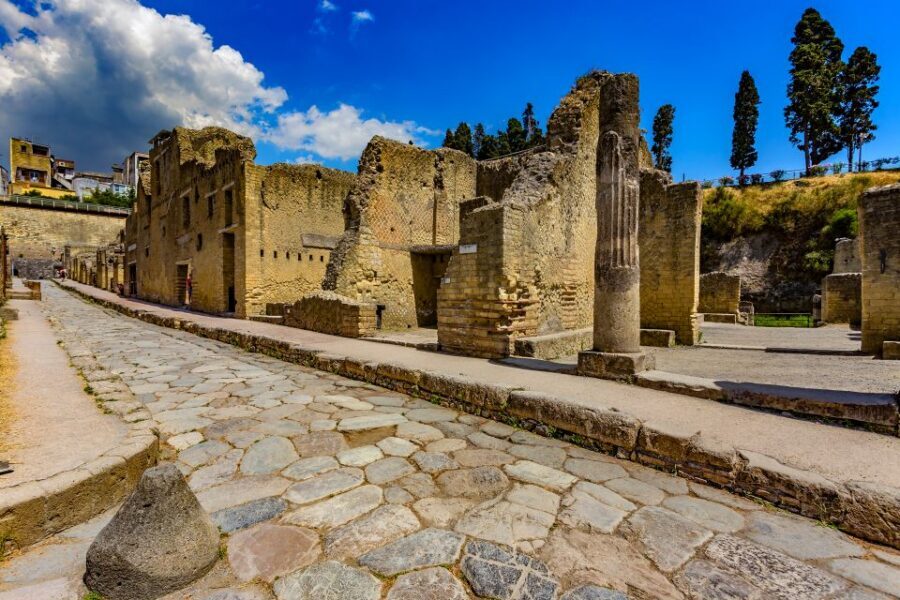
A good guide can make these sites click fast. When the explanations land, you start noticing patterns: how forums functioned, how baths and food spaces show routine, and how houses communicated status. You also start seeing why the tragedy matters beyond the headlines—Roman city life was organized, social, and intensely human.
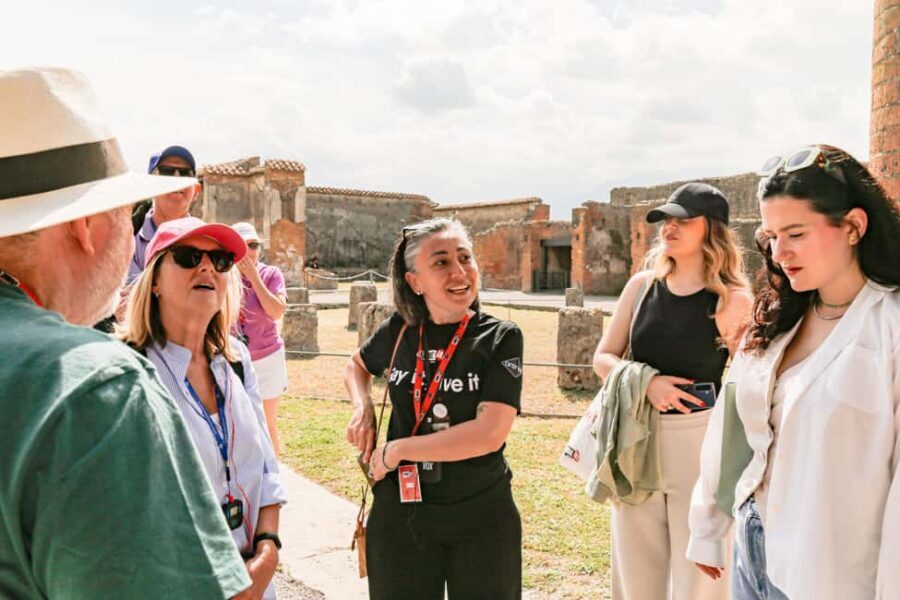
Some guides you may encounter have a real knack for making the culture feel personal. In past experiences with guides such as Alfredo, Francesco, and Gabriella (with drivers like Luca handling the transfers smoothly), the common thread was clear: focus on the meaning of the stops and making sure you get the main hits without feeling spun around.
Should You Book This Private Pompeii and Herculaneum Tour?
Book it if you want a smooth, guided, high-impact day and you’re traveling from the Amalfi Coast or Sorrento and don’t want to gamble on transport timing. The mix of private guide + private transport + ticket line-skip is where the money goes, and it’s the difference between seeing ruins and understanding them.
Skip it or consider another format if you’re budget-first, you hate structured walking, or you want to spend hours wandering without a plan. Pompeii and Herculaneum can absolutely be done on your own, but this tour is designed to compress the best parts into a single day with context.
If you’re the type who likes to get your bearings fast and then enjoy the details, this is a strong pick.
FAQ
How long is the Pompeii and Herculaneum private tour?
The tour duration is 7 hours.
How much time do you spend in Pompeii and how much in Herculaneum?
You get a guided visit of about 2 hours at Pompeii and about 2 hours at Herculaneum.
Where can you be picked up?
Pickup is available from Amalfi, Positano, Salerno, Sorrento, and Naples.
Is transportation private?
Yes, you get private transportation with a driver.
Are entrance tickets included?
Yes. The tour includes the Pompeii Express entry ticket and the Herculaneum entry ticket (16,00 euros each). It also includes the ability to skip the ticket line.
Is lunch included, and are drinks included?
Lunch is included as a stop during the tour, but food and drinks are not included.
What languages are offered for the live guide?
The guide languages listed are Spanish, English, French, German, Italian, Chinese, Japanese, Portuguese, and Russian.
What should you bring?
You should bring a passport or ID card for children.
Is the tour wheelchair accessible?
No, it is marked not suitable for wheelchair users.