REVIEW · NAPLES
POMPEI Half Day TOUR – Departure from NAPLES Centre (TICKET INCLUDED)
Book on Viator →Operated by MADE IN WORLD Agency · Bookable on Viator
Pompeii without the crush sounds great. This half-day tour from Naples pairs early arrival with skip-the-line entry and a mobile ticket, so you spend more time inside the ruins and less time stuck outside. I especially liked how guides like Erica and Luigi keep the visit lively and well paced, with plenty of detail on what you’re seeing. I also like the value angle: you get the Pompeii entrance fee included, plus round-trip transport in an air-conditioned vehicle. One thing to watch: the pick-up location in Naples can be a bit picky, so you’ll want to double-check whether you’re going to the Central Station or the Port/cruise terminal.
You’ll start at 8:00 am with a shared transfer, then ride about 30 minutes toward Pompeii while looking over Naples from the road. Once you’re there, you get expert commentary for roughly 2 hours on site, covering the big stops most people miss when they go on their own. After the tour, you’re back in Naples in time for lunch, which is a smart move if you’ve only got one day or you want downtime later.
In This Review
- Key Things I’d Not Forget About This Tour
- Why a Half-Day Pompeii Tour Works From Naples
- Getting There: Central Station vs Port Pick-Up (And Why It Matters)
- Entering Pompeii: Skip-the-Line, Early Arrival, and a Clear Plan
- The Forum, Baths, and the Lupanare: Public Life Meets Private Life
- Casa dei Vettii and the Wealthy Side of Town
- Streets, Thermopolies, Victims’ Casts, and Teatro Grande
- Guides Like Erica, Luigi, Viktoria, Elisa, Francesca, and Michael
- Price and Value: Is $150.17 Worth It?
- Who This Tour Suits (And Who Might Prefer More Time)
- Tips to Make This Morning Run Smooth
- Should You Book This Pompeii Half-Day Tour From Naples?
- FAQ
- What time does this Pompeii tour start?
- How long is the tour?
- Is the Pompeii ticket included?
- Do I need to speak Italian?
- What is the group size limit?
- Where do the pickup and drop-off happen?
- If I arrive by cruise ship, do I get picked up at the port?
- Is the vehicle air-conditioned?
- What if the weather is bad?
- Can I cancel for a full refund?
Key Things I’d Not Forget About This Tour
- Early entry means a quieter start and smoother access to Pompeii
- Skip-the-line admission plus a guide saves time and turns ruins into stories
- Specific sights you’ll hit: Forum, Baths, Lupanare, Casa dei Vettii, and Teatro Grande
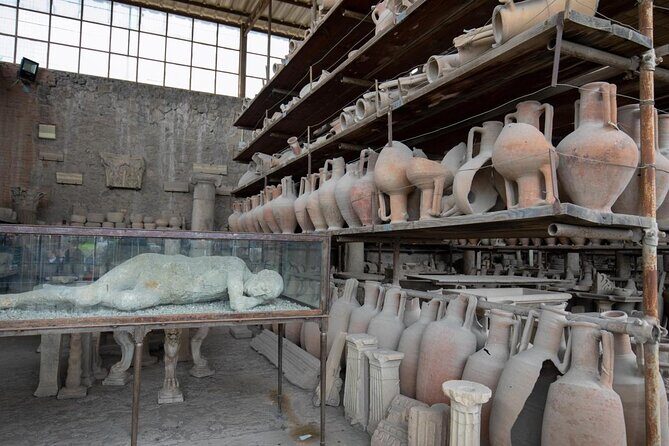
- Real-life Pompeii details like shops/thermopolies and victims’ casts
- Short but solid on-site time (about 2 hours) that fits a half-day schedule
- Pick-up clarity matters: choose the right Naples meeting point (station vs port)
Why a Half-Day Pompeii Tour Works From Naples
Pompeii is huge. Even if you only want the highlights, you’re still dealing with a warren of streets, temples, homes, public buildings, and art you’ll want to stop and look at longer than planned. That’s exactly where a half-day format can be a smart fit.
This one is built around timing: a morning departure from Naples, priority access, and about two hours of guided time inside Pompeii. For you, the payoff is focus. Instead of wandering and guessing what matters, you get a route that hits major public spaces and a few standout private details, so you leave understanding what kind of place Pompeii was—political and social life in the Forum, everyday habits in the shops, and wealthy domestic life through houses like the Casa dei Vettii.
Another reason it works: it’s designed to protect your afternoon. You return to Naples with enough time for lunch and to do something easy later. That matters if Naples is your base and you don’t want to burn your whole day in transit and lines.
The balance is not perfect for everyone. If you’re the type who wants to read every inscription, compare every mosaic, and take slow photos in every corner, you might feel rushed. But for most first-timers, this timing is a good match for seeing a lot without burning the day.
If you're still narrowing it down, here are other tours in Naples we've reviewed.


Getting There: Central Station vs Port Pick-Up (And Why It Matters)
You’re picked up in Naples at either the Central Station or at the Port/cruise terminal, depending on what you select during booking. If you arrive by cruise ship, the tour can pick you up right at the port, but you’ll need to specify your ship name.
This is more than an admin detail. Naples logistics can be tricky: narrow streets, limited vehicle access, and meeting points that are close but not always right at your exact hotel door. I’d treat the meeting point as part of the experience. If you’re staying near the route, great. If you’re far from it, you’ll need to walk.
The guides themselves seem to do a great job once you’re in the group. The friction shows up around the transfer handoff: one person had to locate the bus in a different spot than expected, and another mentioned that getting messages via WhatsApp helped prevent pickup confusion. So here’s the practical takeaway: keep your phone available on the morning of the tour, and be ready to follow the pickup instructions quickly.
Also note the vehicle is air-conditioned, and the transfer is about 30 minutes. That short ride is part of the fun. You get a first look at the Naples area before Pompeii takes over your attention.
Entering Pompeii: Skip-the-Line, Early Arrival, and a Clear Plan
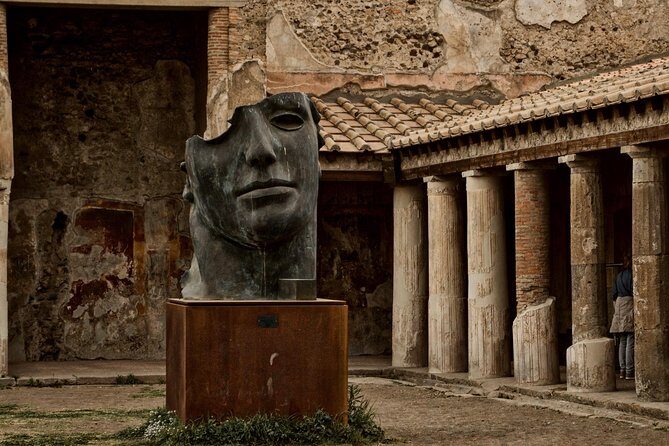
The biggest “quality of life” feature here is priority entry. When you’re traveling with limited time, skipping long lines is the difference between a calm start and a stressful scramble.
Once you’re inside, the tour is organized like a guided walking route with a sensible pace. The goal isn’t to see everything—it’s to see the right pieces in a way that makes the rest of Pompeii click in your head. You’ll also get staff assistance and basic orientation so you know where to go and how long you’ll spend at key parts.
You start with the Forum and other central areas, then move through baths, private-life spaces, wealthy homes, and public entertainment. Along the way, the guide ties together what looks like separate attractions: politics and public meetings in one area, daily routines and services nearby, and then the art and domestic style that show what wealthy Pompeians valued.
A detail that you should keep in mind: the Lupanare includes explicit frescoes related to private life. If that kind of content might bother you, it’s better to know upfront so you can decide how long you want to linger.
The Forum, Baths, and the Lupanare: Public Life Meets Private Life

This is where Pompeii becomes more than a stop on your map. The Forum and Square is the political and social heart—think of it as the place where civic identity lived. When you stand there, you start to understand why Pompeii functioned like a real city rather than a preserved museum.
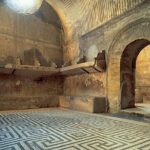
Next are the Baths. These aren’t just old bathrooms. They’re a window into Roman wellness culture and social habits. In practical terms, the baths are also a helpful contrast to the Forum: public life shifts from politics and movement to routine and leisure.
Then comes the Lupanare. It’s famous, and for a reason. You’ll see frescoes that reflect private aspects of Pompeian life. The guide’s job here is to keep it contextual, not just sensational. Still, it’s a spot where your personal comfort matters.
The clever thing about this sequence is that it trains your eye. You’re learning how Pompeii worked: civic centers, service spaces, leisure spaces, and homes. If you’ve ever left ruins confused about what happened where, a guide-led route like this is how you prevent that.
Casa dei Vettii and the Wealthy Side of Town
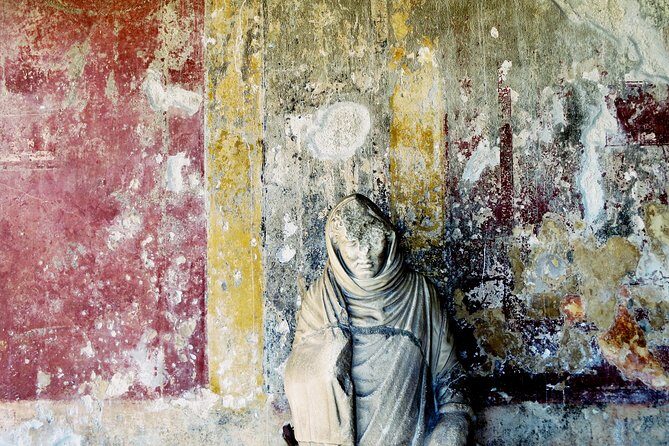
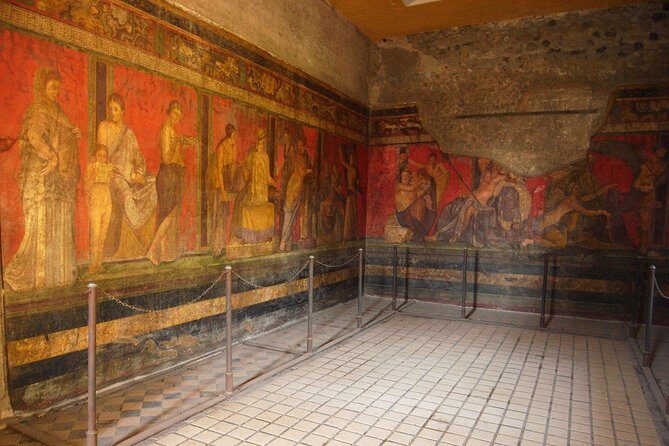
After public spaces and more everyday structures, the tour shifts into domestic life. One highlight is the Casa dei Vettii, known for mythological frescoes of rare beauty. This house is a reminder that Pompeii wasn’t only about temples and streets. It was also about rooms with art on the walls and the kinds of stories families wanted to display.
This is also where a great guide makes a real difference. People like Francesca and Elisa (both mentioned by name in guide feedback) are praised for turning the artwork and layout into understandable stories instead of just pointing and moving on. When it works, you start noticing details that you would otherwise miss: how space is organized, what artwork signals, and how daily life connected to wealth.
Even if you’re only in Pompeii for about two hours, focusing on a standout house like this helps you take home a clearer mental picture. Without it, you’d see a lot of stone but struggle to feel the human side.






Streets, Thermopolies, Victims’ Casts, and Teatro Grande
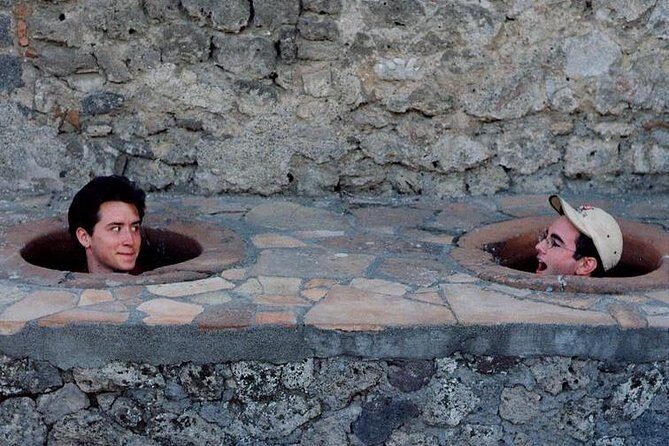
Pompeii’s streets can feel simple until you realize how planned the city is. Walking through the ancient lanes helps you spot shops, thermopolies (casual food-serving places), and everyday design choices that reflect how people lived.
You’ll also see the casts of victims—tragic, but important. They bring the eruption from a historical event into something painfully human. The guide’s explanation is key here, because the point isn’t only emotion. It’s also understanding what you’re looking at and why it has the power it does.
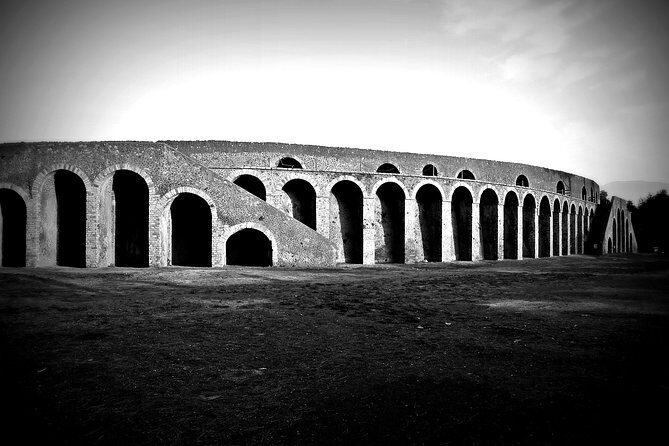
Then there’s Teatro Grande, a major performance space that hosted shows and comedies. This stops the tour from becoming one long museum-style march. You get a sense of culture and entertainment, which makes Pompeii feel more like a place people chose to live in.
A word on timing: with limited hours, you’ll never have the luxury of lingering everywhere. The good news is this tour route is designed to leave you with the feeling of having seen the essential Pompeii puzzle pieces.
Guides Like Erica, Luigi, Viktoria, Elisa, Francesca, and Michael

One theme that keeps showing up in feedback is that the guide can turn Pompeii into a story you remember.
Erica is singled out for strong knowledge paired with humor and a pace that doesn’t drag. Luigi is praised for being courteous and super knowledgeable on the ride and inside Pompeii. Viktoria is mentioned for energetic teaching, with some people receiving a short Naples walking orientation plus Pompeii. Elisa is praised for conversational explanations with jokes and stories. Francesca is noted for being friendly, funny, and focused on the right amount of time. Michael is mentioned as knowledgeable about Pompeii and the ruins.
You don’t need to memorize their names to benefit. The real takeaway is what you should look for when choosing a guided Pompeii tour: do they explain what you’re seeing, and do they keep you moving at a pace that fits the time you have?
This tour seems built for that. The on-site time is around two hours, and the route includes both big landmarks and human details. When the guide has personality and structure, you don’t just walk through Pompeii—you understand it.
Price and Value: Is $150.17 Worth It?
Let’s talk value honestly. You’re paying $150.17 per person for a half-day that includes:
- Pompeii entrance ticket (18 euros)
- a professional tour guide
- pickup at Naples Central Station or the port
- round-trip shared transfer
- an air-conditioned vehicle
- mobile ticket
The entrance fee alone is a small piece of the overall cost, but it’s not nothing. The bigger value is the combination: paid guide time plus the transport plus the priority entry advantage. Priority entry matters because Pompeii’s most time-sensitive bottleneck is often not the site—it’s getting in and settling down before the day gets busy.
Also, think about what you’re buying with a guided route: fewer dead ends, a more efficient walk, and the chance to understand key buildings and art without relying on guesswork or expensive audio rentals.
Could you do it cheaper on your own? Sure. But if you’re short on time, or you want the ruins interpreted in plain language, this kind of package is often a good deal. It’s less about being the cheapest option and more about being the least stressful option.
Who This Tour Suits (And Who Might Prefer More Time)
This tour is a strong choice if:
- you only have half a day in Naples and want Pompeii to be a sure win
- you prefer guided structure over wandering
- you want to be back in Naples for lunch and an easy afternoon
- you like learning as you walk, not reading alone at monuments
It may be less ideal if:
- you want a full-day, slow, photography-heavy experience with long stops
- you’re sensitive to explicit fresco content in the Lupanare
- you strongly prefer independent pacing and detailed exploration of every corner
One more practical note. The maximum group size is listed as up to 99 travelers, and you’ll be in a shared vehicle. That doesn’t automatically mean it feels crowded inside Pompeii, especially with early entry, but it does mean you should show up ready to follow the guide’s timing and meeting points.
Tips to Make This Morning Run Smooth
Here are a few practical moves that help you get the best version of this tour:
- Wear comfortable, grippy shoes. Pompeii’s stones can be uneven.
- Bring sun protection. Even with a guide, you’ll be outside for a while.
- Keep your phone charged. You’ll have a mobile ticket, and pickup messages may come through your contact method.
- If you plan to use any phone audio or an app, bring headphones.
- Double-check your pickup selection: Central Station vs Port/cruise terminal.
Also, mental prep helps. Pompeii is emotional and visually intense. If you go in expecting a quick photo stop, you’ll be disappointed. If you go in expecting a curated route that teaches you how the city worked, you’ll leave feeling like you got it.
Should You Book This Pompeii Half-Day Tour From Naples?
If you’re trying to make Pompeii happen without losing your whole day, I think this is a smart booking. You get early access, a guided route through the core sights, and the entrance ticket is already included. Plus, being back in Naples for lunch is a big win.
I’d book it especially if you want a lively guide experience—people have specifically praised guides like Erica, Luigi, Francesca, and Elisa for keeping things moving with humor and clear explanations. Just take the logistics seriously: pick the right Naples meeting point and stay reachable on the morning of the tour.
If you want a slow, ultra-detailed Pompeii day with lots of free time, you may prefer a longer, more flexible option. But for most first-timers with limited time, this hits a very practical sweet spot.
FAQ
What time does this Pompeii tour start?
It starts at 8:00 am.
How long is the tour?
The duration is about 4 hours.
Is the Pompeii ticket included?
Yes. Entrance to the archaeological excavations of Pompeii is included, and it’s listed as costing 18 euros.
Do I need to speak Italian?
The tour is offered in English, and you may be asked to indicate your nationality or preferred language among the available options.
What is the group size limit?
The tour has a maximum of 99 travelers.
Where do the pickup and drop-off happen?
Pickup is at the train station or port of Naples, and the tour ends back at the meeting point.
If I arrive by cruise ship, do I get picked up at the port?
Yes. The tour is also available for people arriving by cruise ship, with pickup directly at the port (cruise terminal). You should specify your ship name.
Is the vehicle air-conditioned?
Yes. Transfer is done in an air-conditioned vehicle.
What if the weather is bad?
The experience requires good weather. If it’s canceled due to poor weather, you’ll be offered another date or a full refund.
Can I cancel for a full refund?
Yes. You can cancel up to 24 hours in advance for a full refund.