REVIEW · NAPLES
Herculaneum – Small Group Tour
Book on Viator →Operated by Pompeiify · Bookable on Viator
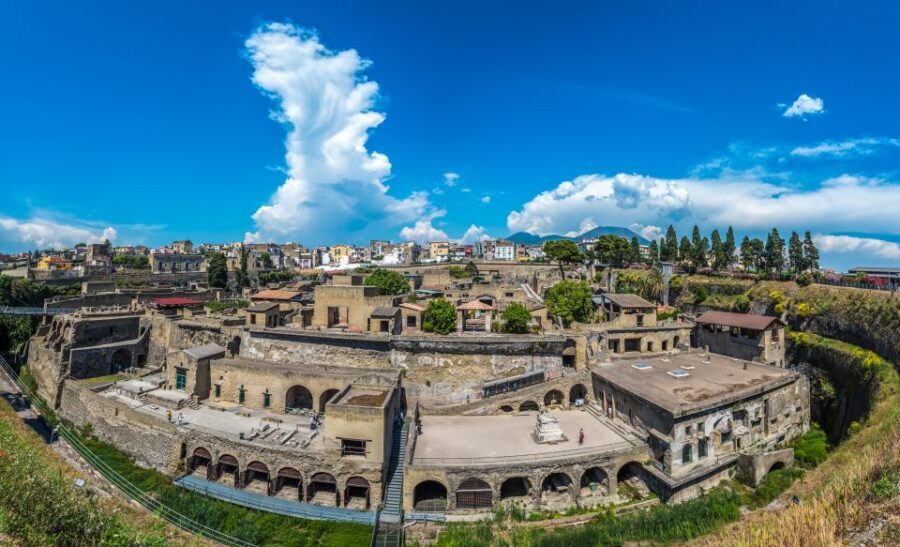
Two hours can rewrite AD 79. This Herculaneum tour focuses on the highlights you’d otherwise miss, with a small-group feel and a licensed guide (Regione Campania) who makes the eruption story make sense. You’ll also get a fast, human-sized route through Ercolano’s ruins, not a marathon of wandering.
The only real catch is heat. There’s often little shade, so in summer you’ll want a hat and a plan for the sun.
In This Review
- Key Things to Know Before You Go
- Herculaneum vs Pompeii: Why This Ruin-Walk Feels Easier
- Your Two-Hour Game Plan at Parco Acheologico di Ercolano
- Private Houses: The Rooms That Tell the Daily-Life Story
- Public Life: Roman Shops, Baths, and the Main Street
- The Seafront Stop: Beach Tragedy and a Preserved Wooden Boat
- A Licensed Guide Makes the Ruins Click (Names You Might Hear)
- What It’s Like After the Guided Part Ends
- Price and Value: What You Pay for, and What’s Extra
- Who This Tour Suits Best
- Practical Tips for a Smoother Walk in Ercolano
- Should You Book This Herculaneum Small Group Tour?
- FAQ
- How long is the Herculaneum small group tour?
- Is the admission ticket included in the tour price?
- What group size should I expect?
- Is the tour offered in English?
- Can I choose a morning or afternoon time?
- Do I get a mobile ticket?
- Are service animals allowed?
- Can I cancel for a full refund?
Key Things to Know Before You Go
- A tight two-hour hit list of Herculaneum’s most important public buildings and best-preserved houses
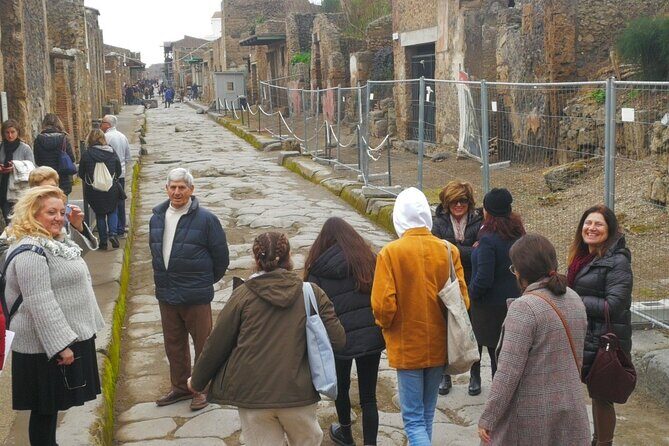
- Small groups capped at 15 for actual questions, not just listening
- Guide-led context that explains how the eruption affected daily life, not just what you’re looking at
- Seafront drama in one stop including the ancient beach area with skeletons and a preserved wooden boat
- Great follow-on time after the tour if you want to keep exploring and visit museum pieces on your own
Herculaneum vs Pompeii: Why This Ruin-Walk Feels Easier
I like Herculaneum because it’s scaled for a real visit. You’re not trying to cover an entire city. Instead, you’re guided through the most significant parts in a compact route, so you leave with names, connections, and a sense of how people actually lived.
One reason this works so well is the comparison angle. A good guide will naturally bring up the differences between Pompeii and Herculaneum as you go, especially around what the volcanic event did to buildings and everyday spaces. That makes the ruins feel less like random walls and more like a snapshot of life before disaster.
And the feel is different even when the story is the same. Herculaneum reads like a town you could picture in motion: shops, baths, main streets, and private houses with details still preserved. For many people, that adds up to an experience that lands harder than the bigger, busier site.
If you're still narrowing it down, here are other tours in Naples we've reviewed.
Your Two-Hour Game Plan at Parco Acheologico di Ercolano
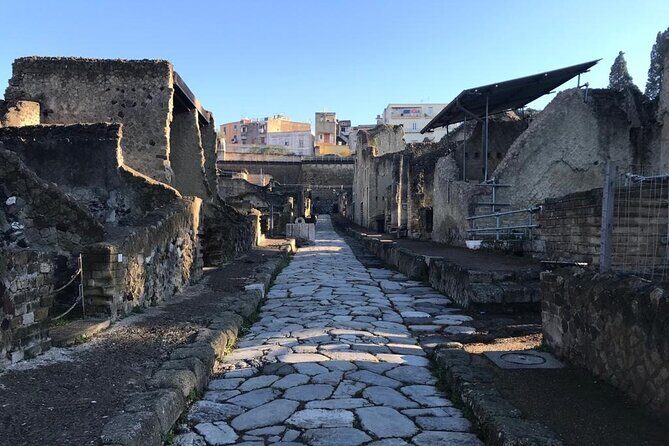
Plan on about 2 hours with your guide, and keep the rest of your time flexible. This tour is built as a focused sweep of the park’s top features, so you can understand what you’re seeing without losing the thread.
That time limit is actually part of the value. When you’re at Herculaneum in real life, it’s easy to feel overwhelmed, because there are many rooms, courtyards, and building names. A structured route helps you get your bearings fast, so you know what matters and why.
Also, you can usually match it to your day. This experience runs in either a morning or afternoon slot, which is handy if you’re juggling a train schedule, cruise port timing, or another stop around Naples.
Private Houses: The Rooms That Tell the Daily-Life Story
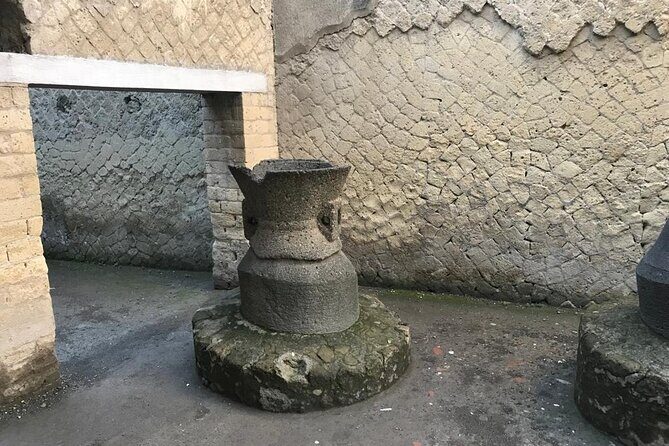
The main private-housing focus is what turns Herculaneum from impressive ruins into something personal. Your guide will take you through several standout residences, each one helping you “read” Roman life through architecture.
You’ll see homes such as the House of the Deer, plus places like the House of the Wooden Partition, the House of Neptune and Amphitrite, and the House of the Bicentenary. Even if you don’t know Roman layout terms, you can still follow the story: where people gathered, how spaces were divided, and how decoration and design reflected status and habits.
Here’s what I like about this approach: it’s not only about famous names. It’s about learning how a Roman home worked as a system. Rooms connect, pathways guide you, and the house layout supports social life. With a guide, you start noticing details you’d otherwise walk right past.
Some guides are also very good at pace control. People mention being kept in cooler spots when possible, and that matters because you’ll spend real time outdoors.
Public Life: Roman Shops, Baths, and the Main Street
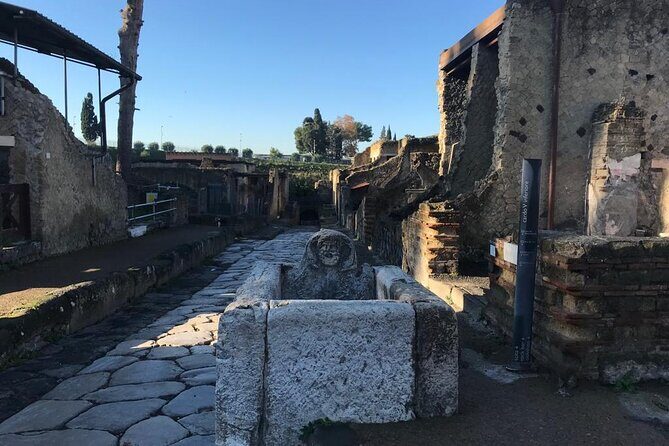
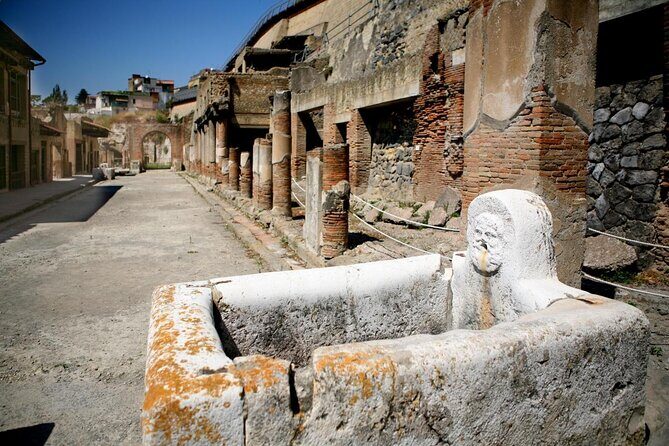
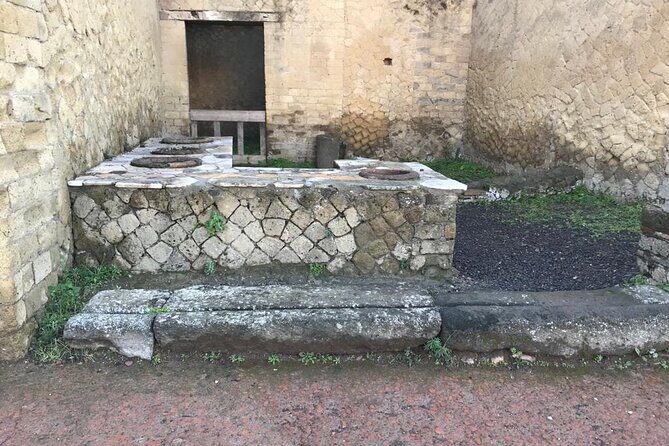
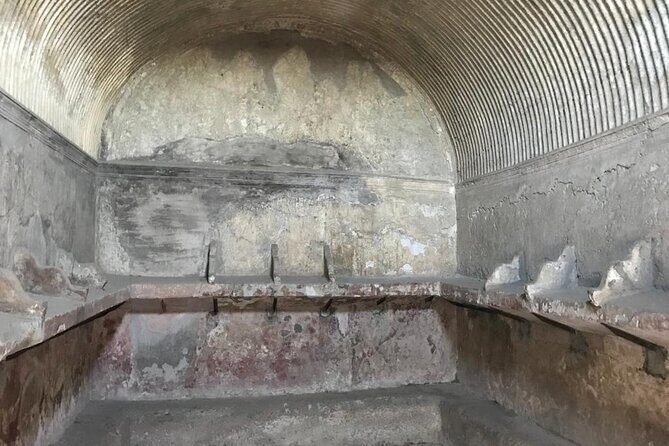
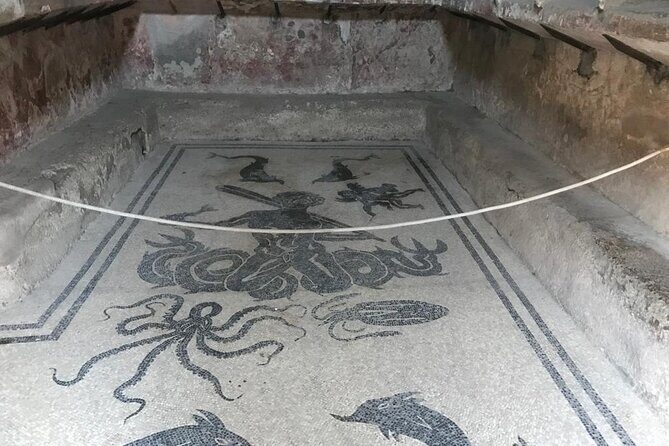
After the houses, the tour shifts to public spaces, which is where the city starts feeling like a place you could visit rather than a museum you study. You’ll cover Roman shops and major city elements, including public baths and the main street.
This part matters because it fills in the gaps. A Roman home tells you one side of life, but baths and street-level activity show the routines that crossed class lines. Shops also give you a sense of commerce and everyday services. When your guide explains what these spaces were for, you stop seeing them as ruins and start picturing the crowds, the noise, and the routines.
One practical plus: these areas are typically easier to understand quickly, because the function is readable. Bath complexes suggest hygiene and social time. Shopfronts suggest trade and exchange. Main streets connect everything. That makes the two-hour structure feel complete instead of rushed.
The Seafront Stop: Beach Tragedy and a Preserved Wooden Boat
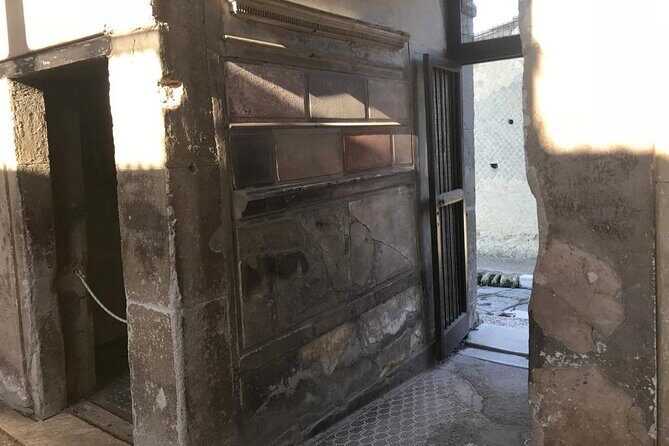
If you care about the human story, this is the stop that sticks. Your route includes the ancient beach area and the seafront features connected to the eruption.
You’ll see the seafront buildings connected to people who took shelter, including the skeletons preserved in the context of the disaster. You’ll also have the chance to view the wooden boat found on the beach, which is still described as perfectly preserved.
This is emotionally heavy, but that’s the point. Herculaneum doesn’t let you treat the event like a distant date in a textbook. When your guide ties the ruins to the timeline and the effects of the eruption, the beach scenes turn into a clear, understandable moment in history.
A good guide also helps you avoid the wrong takeaway. Instead of staring and feeling lost, you’re given a framework: what the eruption did, why these spaces were affected, and how that differs from nearby Pompeii.



A Licensed Guide Makes the Ruins Click (Names You Might Hear)
The tour includes a tour guide licensed by Regione Campania. That licensing matters because it’s not just a friendly walkthrough; you’re getting someone trained to explain the site correctly.
In real use, many people highlight guides by name, especially Francesco (including Francesco Pagano), plus names like Marco, Roberta, Marzia, and Antonella. While you shouldn’t expect a specific guide, it’s a good sign when multiple guides are described as energetic, clear, and careful about answering questions.
One detail I’d take seriously: several guides are praised for speaking clearly without a microphone, which can make the experience feel more direct and less “headset tour.” Another common theme is that good guides point out things you’d miss on your own, especially since Herculaneum can feel short on signage.
If you’re visiting because you want to leave with understanding, you’re buying more than access. You’re buying interpretation.
What It’s Like After the Guided Part Ends
This is one of those tours that doesn’t lock you in. Once your guided time is done, you can keep exploring on your own if you want. People often describe spending extra time after the two-hour walk and returning to the exit area, plus adding time to visit the museum for original pieces.
That freedom is useful because Herculaneum is visual. You’ll have a better sense of what to look for after your guide sets the context. Then your second pass becomes less aimless.
If you like photos, this is also when you can slow down. Your brain has already labeled the buildings and streets from the tour, so images start telling a story instead of just recording stone.
Price and Value: What You Pay for, and What’s Extra
The price is $50.81 per person for a tour that runs about two hours with a small group and a licensed guide. That’s not a budget deal, but it’s also not trying to be one. The value comes from the guide-led time and the fact that you’re hitting the best-known areas quickly without guessing.
One key item: admission tickets are not included. So you should budget separately for park entry. If you only compare the base price, you’ll miss the full cost of the experience.
Still, paying for a guide can be the better move in places like Herculaneum, where the buildings need explanation. Many people describe how much they got from having a knowledgeable guide, especially because you don’t always get clear on-site labels.
Given how often this tour runs with small groups and ends right around the planned two hours, I think it’s a good match for people who want maximum understanding without burning a whole day.
Who This Tour Suits Best
This works well if you:
- want a strong overview in two hours rather than a slow, full-day plan
- care about Roman daily life and want a guide to connect houses, shops, and baths
- prefer smaller groups for questions and personal pacing
- are comparing your time between Naples area sites like Pompeii and Herculaneum
It can also be a solid choice for families with older kids. There are examples of children staying engaged when the guide keeps the story moving and answers questions.
If you’re sensitive to heat, pick a less hot slot when you can and bring sun protection. Even if the guide tries to manage shade, the reality is that the park is outdoors.
Practical Tips for a Smoother Walk in Ercolano
Bring a hat and plan for sun. People note there is no shade, and one tour description emphasizes how hot it can be in late July. Wear breathable clothes and bring water.
Wear shoes that work on uneven ground. Herculaneum has steps and ledges, and some guides are praised for helping people step down when needed. If you have mobility concerns, it’s worth thinking ahead about walking comfort and asking your guide for help if you need it.
If you’re taking trains or coming from Naples area connections, the tour is described as near public transportation. That helps you avoid major schedule headaches, especially if you’re combining this with other stops.
Also, you’ll receive a mobile ticket, which is convenient on your phone and reduces the risk of losing paper confirmations.
Should You Book This Herculaneum Small Group Tour?
Yes, if your goal is understanding fast. This tour is designed to cover the key parts of Herculaneum in about two hours, with a licensed guide and a small-group size that supports questions. The best part is that the guide helps you turn preserved spaces into a clear story about how people lived before AD 79 and what the eruption changed.
Book it especially if you’re the type who gets more out of a site when you can ask, pause, and get names attached to places. And don’t skip the prep: admission is extra, and summer sun is real—bring shade protection and plan your pace.
FAQ
How long is the Herculaneum small group tour?
It lasts about 2 hours.
Is the admission ticket included in the tour price?
No. Admission ticket is not included.
What group size should I expect?
The tour has a maximum of 15 travelers.
Is the tour offered in English?
Yes, it’s offered in English.
Can I choose a morning or afternoon time?
Yes, you can choose between a morning or afternoon tour.
Do I get a mobile ticket?
Yes, the tour uses a mobile ticket.
Are service animals allowed?
Yes, service animals are allowed.
Can I cancel for a full refund?
Yes. You can cancel up to 24 hours in advance for a full refund.