REVIEW · NAPLES
From Naples: Transfer to Positano with Pompeii Guided Tour
Book on GetYourGuide →Operated by Askos Tours · Bookable on GetYourGuide
Two cities, one efficient plan. I like the private door-to-door transfer plus the built-in guided walk through Pompeii, so you don’t waste time sorting transport. The trade-off is that the whole experience moves fast for just 4 hours, so you’ll want decent walking comfort.
The route is timed so you travel from Naples to the Sorrento peninsula in an air-conditioned private minivan, with stop-and-see moments along the way. Then you get a focused 2-hour guided visit at Pompeii, seeing big public sights like the Marina Gate, Basilica, and the Forum—plus stops in the quieter, daily-life parts of the city.
I’d especially consider this if you’re starting your Positano stay and you also want Pompeii without planning a whole separate day. Just remember it’s not suitable for wheelchair users and it’s a walking-oriented tour, even with a guide doing the heavy lifting for you.
In This Review
- Key points to know before you go
- Naples to Positano transfer: the easy way to start in Positano
- Pompeii guided tour at your pace: what you’ll actually see
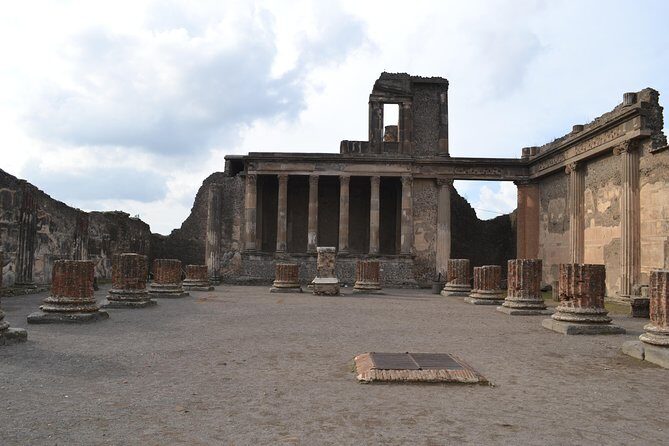
- Marina Gate, Basilica, and the Forum: the city’s public face
- Forum baths, the Lupanar, bakery, and Termopolium Capuano: street-level Pompeii
- Houses, plaster casts, and the feel of a city after the moment
- The 4-hour schedule: how to avoid feeling rushed
- Price and value: what $443.22 buys you
- Who this tour suits best (and who should rethink it)
- Should you book it?
- FAQ
- How long is the Naples to Positano transfer with Pompeii?
- What’s included in the price?
- Where does pickup happen in Naples?
- Which Pompeii sites are covered during the guided tour?
- What languages are available for the live guide?
- Is this a private group tour?
- Is it wheelchair accessible or suitable for limited mobility?
Key points to know before you go
- Private Naples pick-up to Positano drop-off saves you from transfers with multiple tickets and schedules.
- A 2-hour Pompeii guided walk hits the major set pieces without turning into a marathon.
- Skip the ticket line means more time spent inside Pompeii.
- See public buildings and street-level life: Forum baths, Lupanar, bakery areas, Termopolium Capuano.
- The tour guide works for your language choice (Spanish, English, French, German, Italian).
- Not mobility-friendly: the route and site walking aren’t set up for wheelchair users.
Naples to Positano transfer: the easy way to start in Positano
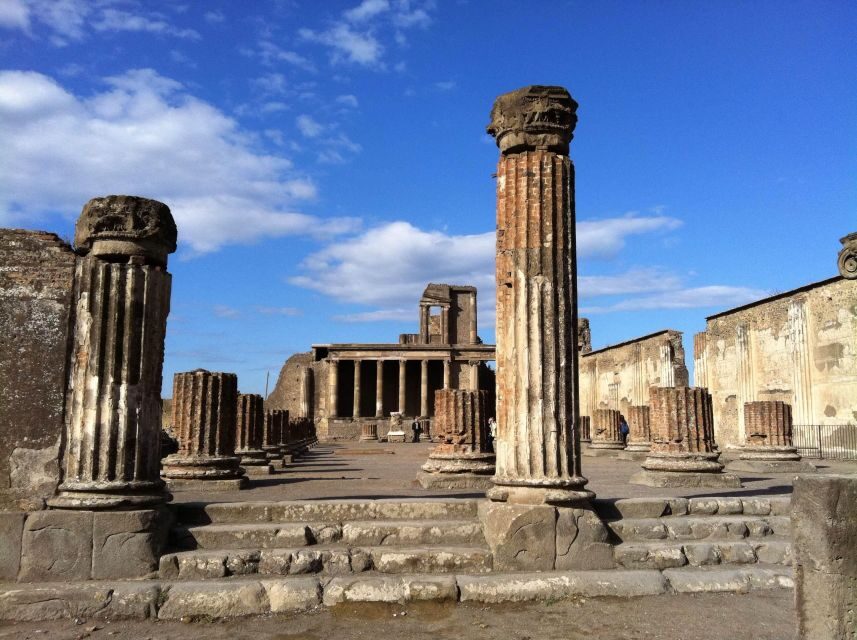
This is a one-way day plan that starts in Naples and ends in Positano (84017). The big appeal is simple: you’re not juggling trains, buses, or shared shuttles while carrying luggage. You’re picked up at your hotel or accommodation within the Naples metro area, then driven in a private air-conditioned minivan.
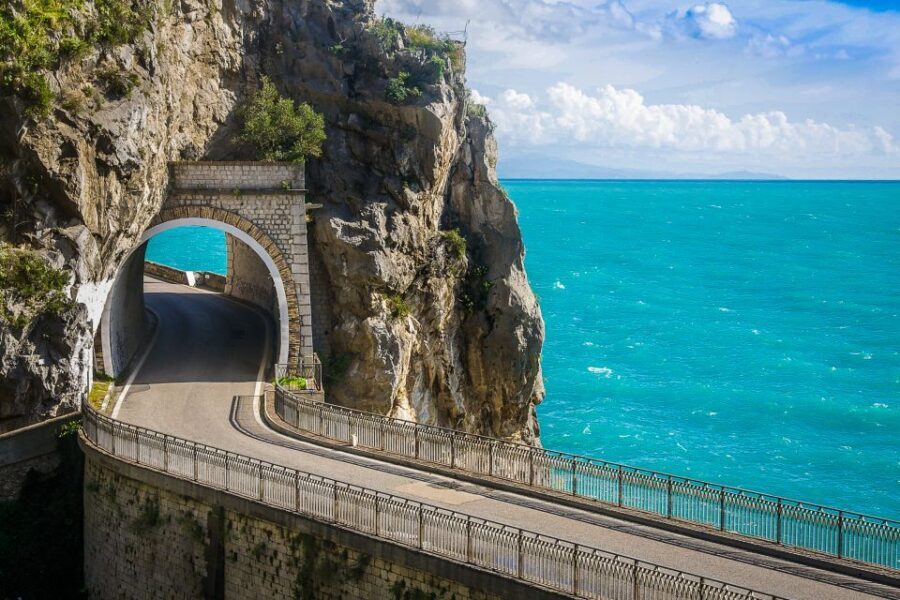
The drive itself matters. The road from Naples toward the Sorrentine peninsula is winding, with big views over the bay of Naples and out toward Capri. Even if you’ve already seen photos of the coast, this is one of those rides where the scenery slowly unspools as you head south—useful if you’re arriving and want to feel the region right away.
You also get sensible “vehicle time” built into the schedule: a drive component right before Pompeii, then another drive segment after. That structure helps you avoid that awkward trap of arriving too early or waiting too long, which can quickly turn a short trip into a long one.
One practical note: this is a private group, so you’re not packed in with strangers. That’s a plus when you want the guide to keep the pace moving and still answer questions.
If you're still narrowing it down, here are other tours in Naples we've reviewed.


Pompeii guided tour at your pace: what you’ll actually see

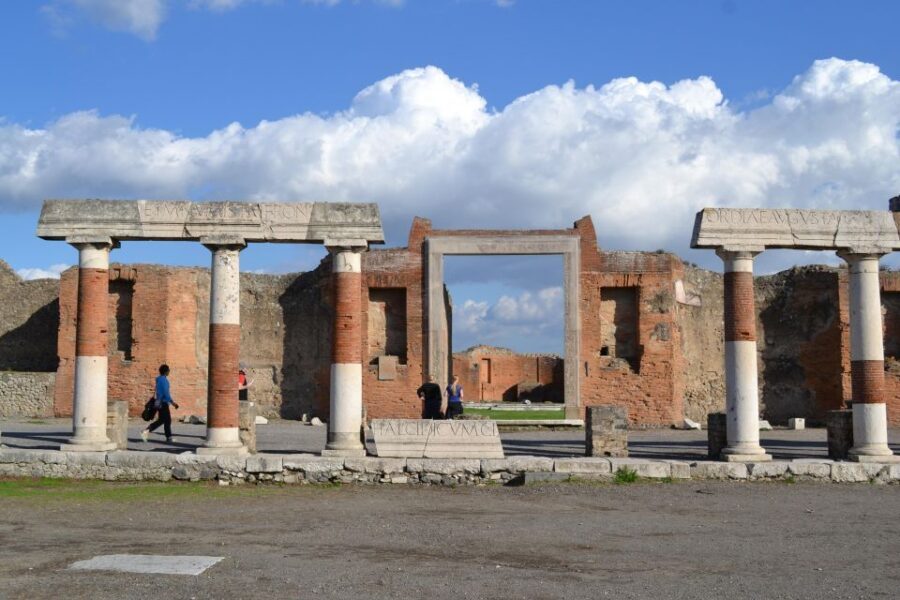
Pompeii is enormous, so the real value here is focus. Instead of trying to cover everything on your own, you get a 2-hour guided walk through the key parts of the city with an archaeological guide. You’ll see the main public landmarks and several points that help you understand daily life, not just architecture.
The tour route includes:
- Marina Gate (the main entrance area tied to movement and access)
- The Basilica (a major civic hub)
- The Forum (the social and political center)
- Forum baths (a place built for public routines and leisure)
- Lupanar (the well-known brothel area)
- Bakery (the city’s everyday food production)
- House of the Faun (a standout residential highlight)
- Termopolium Capuano (a Roman snack-and-drink counter type of spot)
- House of the Tragic Poet
- Plaster casts (the famous preserved outlines of victims and what they imply)
If you’re the kind of traveler who gets frustrated by “see everything” tours, you’ll likely appreciate how this one prioritizes recognizable, high-impact areas. A guide can also help you read what you’re seeing—where you are, why a building was important, and how these spaces fit together inside the city grid.
The guide language options also help. The live guide can work in Spanish, English, French, German, or Italian, which means you don’t lose the meaning of the ruins to translation gaps.
Marina Gate, Basilica, and the Forum: the city’s public face
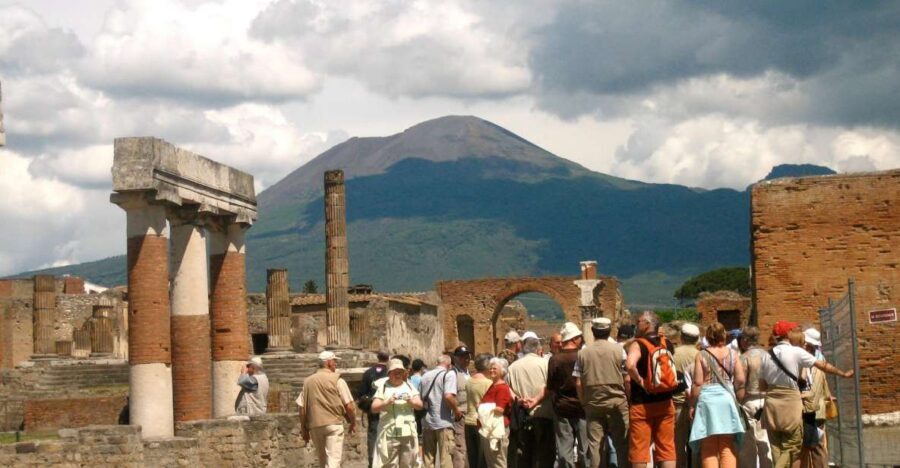
The start of the Pompeii walk is smart because it orients you. You begin with the Marina Gate, then move through the monumental civic spaces like the Basilica and the Forum.
Here’s what those stops do for you as a first-time Pompeii visitor (or even a return visit):
- Marina Gate helps you imagine entry and circulation—where people would arrive and flow into the city.
- Basilica shows how Pompeii handled business and civic life. This isn’t just a pretty ruin; it’s a building type tied to administration and public meetings.
- Forum is the heart. It’s where you can better sense the city’s rhythm: gatherings, commerce, speeches, and public activity.
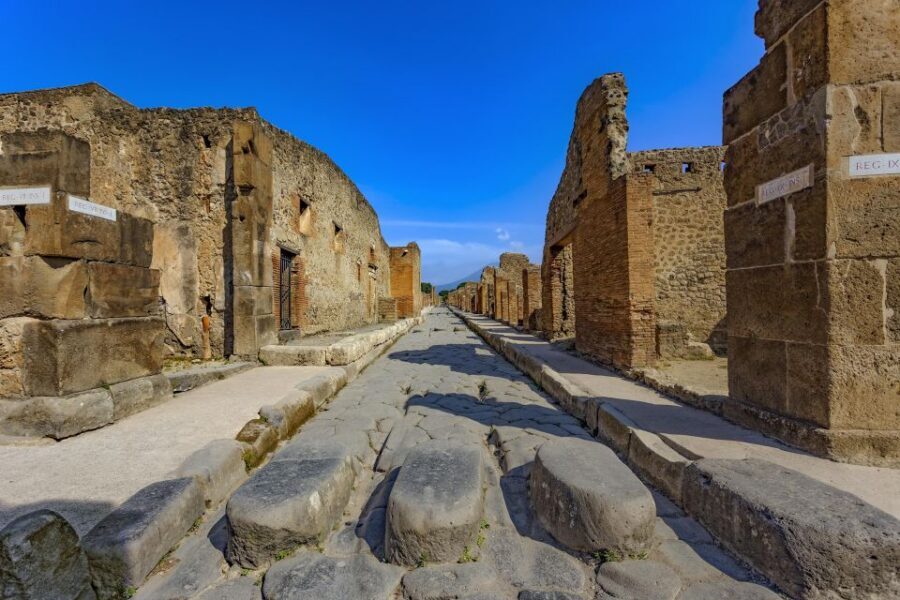
These are the places you want to see with a guide because details matter. In a self-guided wander, it’s easy to look at stones and miss the logic of the layout. With a guide, you’re more likely to leave with mental maps: where the city’s power sat, where people gathered, and how public buildings relate to each other.
Also, these are some of the easiest sites to “get” quickly. Even if the rest of your group finds some of Pompeii’s residential areas a bit technical, civic spaces tend to hit the same way for most people.
Forum baths, the Lupanar, bakery, and Termopolium Capuano: street-level Pompeii

Public squares are only half the story. One of the things I like about this tour plan is that it doesn’t stop at the big show buildings. You also get stops tied to routine life.
The guided walk includes the Forum baths, plus the Lupanar, a bakery area, and the Termopolium Capuano.
Why these stops are worth your time:
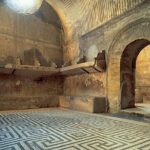
- Forum baths: It’s not just about “there were baths.” It’s about learning how public life was built around bathing routines and social time.
- Lupanar: Pompeii is famous for this area, but a guided stop helps you interpret it as part of the city’s commercial and social ecosystem, not just a shock factor.
- Bakery: Food production is one of the fastest ways to humanize ruins. You start thinking about supply chains and daily needs.
- Termopolium Capuano: This is a great “snack stop” type of structure. It helps you picture that Pompeii had places where people grabbed food and drinks quickly—almost like street-level convenience.
This is also where the 2-hour limit works in your favor. You get a mix of serious public space and everyday life in a short window, so you’re not stuck only with temples and forums. It’s a better “whole-city” snapshot.
Just plan on walking at an active pace. Even if you’re not rushing, these stops are spread out enough that your legs will get a workout.
Houses, plaster casts, and the feel of a city after the moment
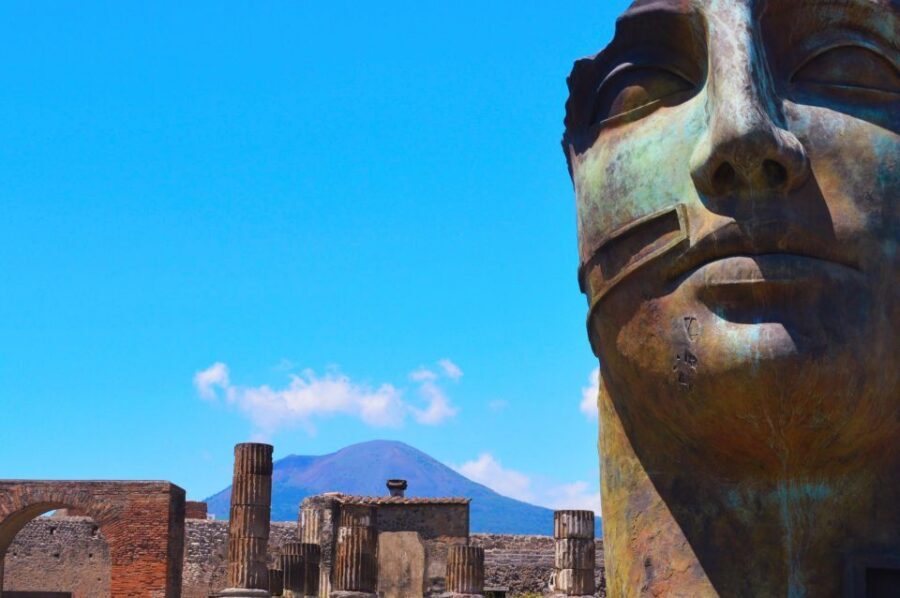
Pompeii hits hardest when you shift from public buildings into domestic life and preserved evidence. This tour includes major residential areas like the House of the Faun and the House of the Tragic Poet, then finishes with the plaster casts.
The domestic stops do something different from the Forum. You’re moving from civic routines into how wealthy or prominent households lived—layout, scale, and the sense of personal space. The House of the Faun is especially useful as a reference point: it gives you a “wow, this was a real city” moment.
Then you reach the plaster casts. This is where Pompeii becomes more emotional. You’re not just looking at building ruins; you’re looking at preserved outlines that force you to picture what happened to people in their final moments. Whether this is your first time at Pompeii or not, it tends to hit because it’s so immediate and human-scale.
If you’re hoping for a purely archaeological lecture, you may want a longer, deeper tour. But if you want a guided experience that covers the major emotional and structural beats, this blend is well set up.






The 4-hour schedule: how to avoid feeling rushed
This is a short day by design: it’s scheduled for 4 hours total, with a 2-hour Pompeii guided stop. The drive segments around that visit matter because they influence how you’ll feel when you reach Pompeii.
Here’s the practical way to think about it:
- You’re not going for a slow meander. Pompeii is a “see a lot, learn a lot, keep moving” place in this format.
- You’ll spend most of your time in Pompeii on the walking tour, not on waiting around.
- You’ll get driven to Positano after, so you’re not stuck trying to find your way across the Sorrentine peninsula.
I’d treat this as a smart “first-day value” choice: it gets Pompeii done without stealing an entire travel day from Positano. If you’re arriving in Naples and then heading to the coast, this can help your trip feel less like a series of logistics and more like a plan.
The one caution: Pompeii can be tiring even when the route is curated. Wear shoes you trust on uneven stone, bring a light layer in case the weather shifts, and keep your expectations realistic for a 2-hour guided walk inside a huge archaeological site.
Price and value: what $443.22 buys you
The price is listed as $443.22 per person. For many people, the key question is whether that’s worth paying compared to doing things separately.
In this case, the value comes from the bundle:
- One-way private transfer from Naples to Positano by air-conditioned minivan
- Pickup and drop-off
- Live guide for the Pompeii portion
- Admission ticket
- Skip the ticket line
- Private group setup
When you price those items separately—especially private transport and guided admission—it often adds up quickly. This option can be a good deal if:
- you want door-to-door pickup in Naples,
- you don’t want to manage schedules,
- you prefer a guide to compress Pompeii into a high-learning route,
- and you’re traveling at a time when public connections are annoying.
It’s not a cheap option, but it can be efficient. Also, meals aren’t included, so budget for an actual food plan either before you go or after you arrive in Positano.
If you’re solo or in a small group and you care more about time than cost, this is exactly the kind of “pay for convenience” experience that tends to make trips smoother.
Who this tour suits best (and who should rethink it)
This tour makes sense for:
- people who are going from Naples to Positano anyway and want Pompeii without extra days,
- visitors who’d rather have a guide explain what they’re seeing than spend hours trying to plan a route,
- travelers who prefer a private group and a set schedule.
It may not suit you if:
- you need wheelchair access or extra mobility support (it’s listed as not suitable for wheelchair users and people with mobility impairments),
- you hate walking on uneven ground for a guided route,
- you want a long, slow Pompeii experience with time for deep wandering.
Also, car seats for babies are available, which helps if you’re traveling with a young child—just confirm details when you book.
Should you book it?
I’d book this Naples-to-Positano transfer with Pompeii if you want Pompeii done well without turning your whole day into transportation math. The combination of private driving, a multilingual archaeological guide, and admission included makes it a strong value when you’re short on time.
Skip it if your priority is a slow, flexible Pompeii day or if mobility needs make walking hard. In that case, a more specialized format—or more time on your feet—will likely feel better.
If you fall into the “I want it organized and I want the big Pompeii highlights” camp, this one’s a clear yes. It’s a practical way to start your Positano stay with one of Italy’s most unforgettable stops already checked off.
FAQ
How long is the Naples to Positano transfer with Pompeii?
The total duration is 4 hours, including a 2-hour guided visit at Pompeii.
What’s included in the price?
It includes air-conditioned private minivan transportation, one-way private transfer from Naples to Positano, pickup and drop-off, a live guide, and an admission ticket.
Where does pickup happen in Naples?
Pickup is included at your hotel or accommodation within the Naples metropolitan area. You provide the exact pickup details at booking.
Which Pompeii sites are covered during the guided tour?
The tour covers major public buildings and areas such as the Marina Gate, the Basilica, the Forum, Forum baths, the Lupanar, the bakery, the House of the Faun, the Termopolium Capuano, the House of the Tragic Poet, and plaster casts.
What languages are available for the live guide?
The guide is available in Spanish, English, French, German, and Italian.
Is this a private group tour?
Yes, it’s listed as a private group.
Is it wheelchair accessible or suitable for limited mobility?
No. The tour is not suitable for wheelchair users and not suitable for people with mobility impairments.